
OSHA regulations shape how Seattle businesses maintain safe, clean workplaces. Non-compliance can lead to fines, liability issues, and employee health risks that damage your bottom line.
We at Bumble Bee Cleaning Services help commercial clients meet these standards consistently. Our approach covers everything from proper chemical handling to documentation practices that protect your business.
What OSHA Actually Requires From Seattle Businesses
OSHA regulations focus on three core areas that directly impact commercial cleaning: chemical safety, worker protection, and documentation. The Occupational Safety and Health Administration doesn’t dictate how often you clean your floors, but it absolutely mandates how you handle the products used to clean them.
Chemical Safety and Hazard Communication
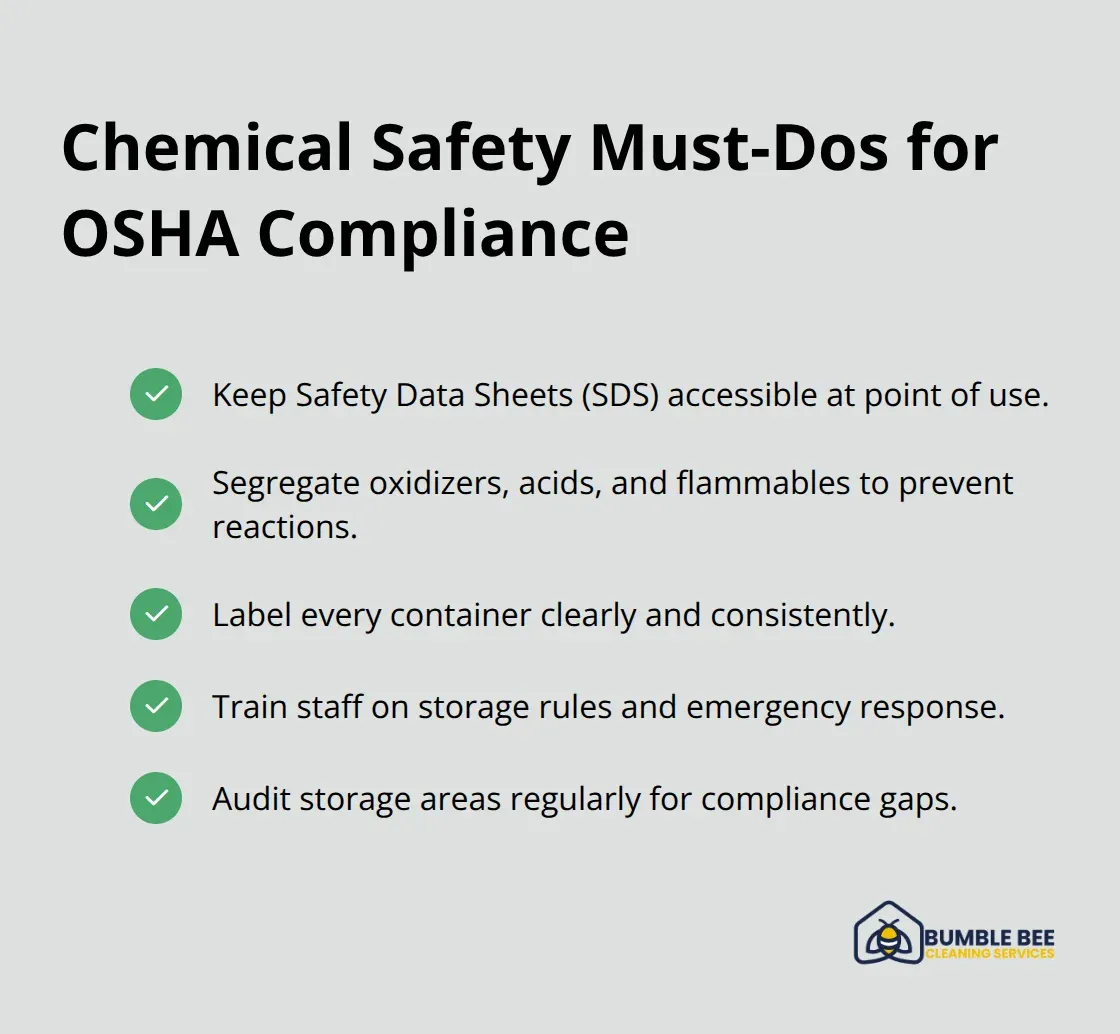
According to OSHA’s Hazard Communication standard, every cleaning chemical in your facility must have an accessible Safety Data Sheet (SDS) that your staff can reference immediately. This isn’t optional paperwork-it’s a legal requirement. Seattle businesses face additional pressure because Washington State Department of Labor & Industries enforces OSHA-level employer safety obligations, and the Seattle-King County Public Health Department applies some of the strictest commercial cleaning standards in the U.S.
Non-compliance penalties range from $500 to $5,000 per violation under Seattle Municipal Code, and repeated infractions can trigger temporary facility closures. Chemical storage must follow strict segregation rules to prevent hazardous reactions, and improper labeling alone can trigger violations. Storing oxidizing agents near acids or flammable materials creates explosion and toxic gas risks that OSHA treats as serious violations.
Personal Protective Equipment and Worker Safety
Personal protective equipment (PPE) requirements vary by task-gloves and goggles for surface disinfection, respirators for certain chemical applications-and employers must train staff on when and how to use each item correctly. Respiratory hazards from ammonia or bleach are particularly serious in enclosed spaces like small bathrooms or server rooms, yet many Seattle facilities assume standard ventilation is sufficient.
Ergonomic injuries from repetitive motions and heavy lifting represent another major OSHA concern in janitorial work, yet many Seattle businesses overlook this area entirely. Training must cover safe operation of equipment like floor buffers and carpet cleaners, not just chemical handling.
High-Touch Surfaces and Disinfection Standards
OSHA compliance intersects directly with CDC guidance on high-touch surfaces like doorknobs, light switches, elevator buttons, and shared workstations. These areas require frequent disinfection to reduce pathogen transmission, and the EPA maintains a list of approved disinfectants that actually work against bacteria and viruses.
Using unapproved or expired disinfectants creates liability exposure-you’ve documented the cleaning but provided no real protection. Contact time matters too; many disinfectants require 10 minutes of wet contact to be effective, yet rushed cleaning staff often spray and immediately wipe, rendering the product useless. This gap between appearance of compliance and actual compliance is where most Seattle businesses fail.
Documentation becomes critical here because OSHA inspectors want to see cleaning logs that show what was cleaned, when, and with which product. Digital tools now make this feasible; facilities can photograph high-touch areas before and after disinfection, timestamped and geotagged, creating an auditable record that satisfies both OSHA and client expectations.
Violations That Cost Seattle Businesses Money
The most frequent OSHA violation in janitorial services is inadequate hazard communication-staff cannot locate or read SDS documents when they need them. Providing a binder in a locked office doesn’t meet the standard; employees need mobile-friendly digital access at the point of use.
The second leading violation involves improper PPE use and supply; employers purchase gloves and respirators but never train workers on proper fit or when each type is required. The third violation involves chemical storage and segregation; improper disposal of cleaning waste, particularly hazardous chemicals, violates both OSHA and King County environmental regulations. Phosphate-containing detergents are banned in King County specifically, and non-compliance can result in dual penalties from occupational safety and environmental agencies.
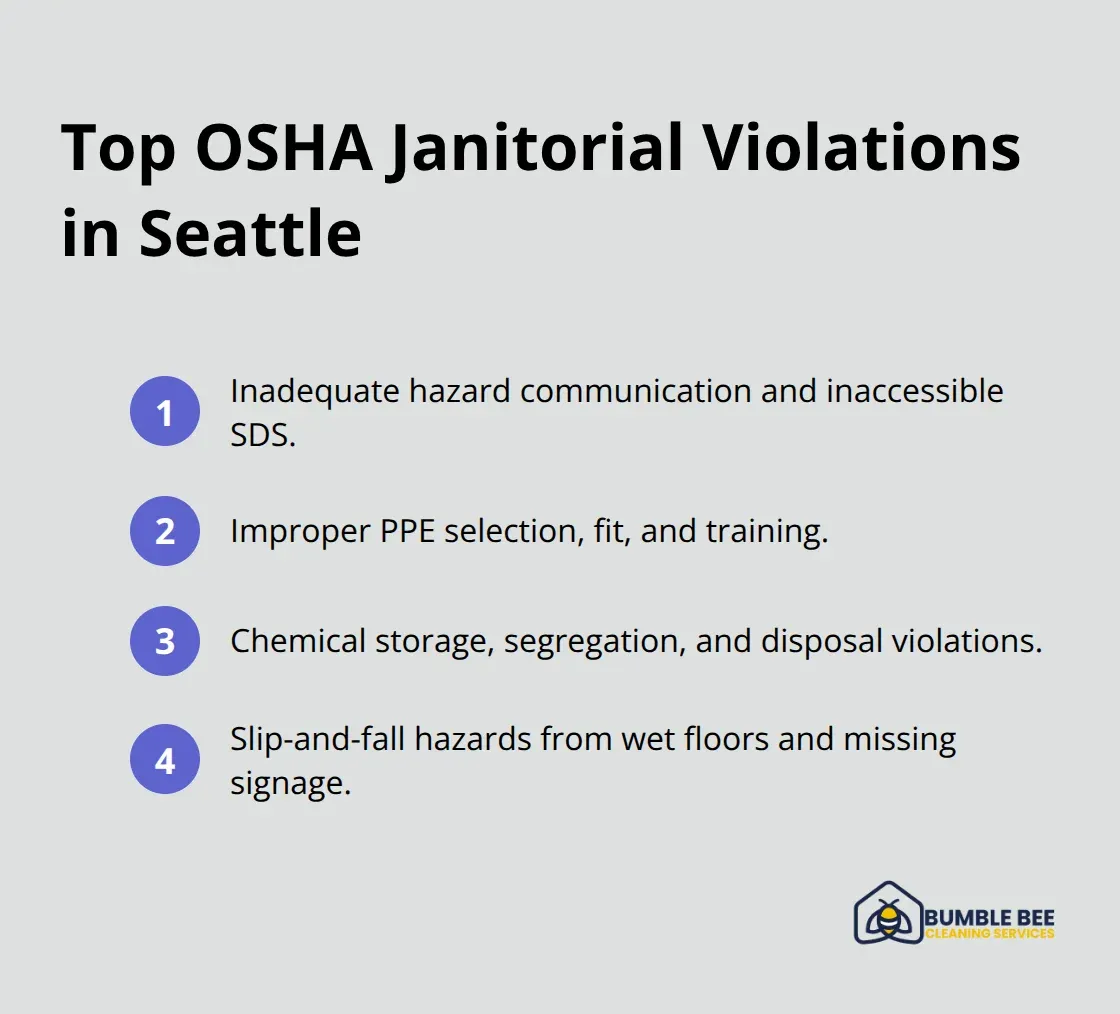
Slip-and-fall hazards from wet floors constitute another major category-wet floor signs must be placed before cleaning begins, and floors must be allowed to dry before reopening areas to foot traffic. Many facilities skip this step to maintain productivity, creating liability that far exceeds the time saved. These violations share one common thread: they all stem from gaps between documented procedures and actual execution on the job site.
How Bumble Bee Cleaning Services Meets OSHA Compliance
Industry Certifications That Validate Compliance
We at Bumble Bee Cleaning Services hold ARCSI and IICRC certifications, which means your facility receives cleaning from professionals trained in industry-standard protocols that exceed basic OSHA requirements. ARCSI certification covers infection control and sanitation practices that align directly with OSHA’s hazard communication and worker safety standards. IICRC certification ensures our staff understands proper cleaning and restoration techniques for different surface types, reducing damage claims and liability exposure. These certifications matter because they represent third-party validation that our team knows the regulations, understands the science behind effective disinfection, and can document their work in ways that satisfy inspectors. Many Seattle cleaning companies claim compliance, but certified professionals can actually explain why contact time matters for disinfectants or why certain chemicals cannot be stored together.
EPA-Approved Products and Safe Chemical Handling
We use EPA-approved disinfectants exclusively, which means every product on your facility has documented efficacy against specific pathogens. This eliminates the compliance gap where cleaning appears to have occurred but provides no actual protection. Our team maintains digital access to Safety Data Sheets for every product we use, available to your staff and accessible during inspections. This mobile-friendly approach prevents the common violation where SDS documents exist but remain inaccessible to workers who need them. Eco-friendly cleaning products certified by EPA Safer Choice and EcoLogo meet OSHA safety requirements while reducing respiratory hazards for your staff and occupants. These products work effectively without the chemical risks associated with traditional ammonia or bleach-based cleaners, which is particularly important in Seattle facilities where worker safety standards are enforced rigorously by the Washington State Department of Labor & Industries.
Training, Documentation, and Quality Verification
Our training program covers chemical handling, proper PPE selection, ergonomic practices for repetitive tasks, and documentation procedures that create auditable records for inspections. Staff receive ongoing instruction on high-touch surface disinfection, including the critical detail that contact time determines effectiveness. We photograph and timestamp cleaned areas using digital tools, creating timestamped records that demonstrate compliance during facility inspections. This documentation approach transforms cleaning from an invisible service into a verifiable, auditable process that protects your business. Quality assurance walkthroughs occur daily, with supervisors verifying that cleaning tasks meet specified standards and identifying gaps before they become violations. This proactive approach catches issues like improper wet floor signage or inadequate disinfection contact time before an OSHA inspector does. Your facility receives consistent, documented cleaning that satisfies regulatory requirements and provides the evidence inspectors expect to see.
Best Practices for Maintaining OSHA Compliance Between Cleanings
Your facility doesn’t stay clean between professional cleaning visits without intentional daily practices. OSHA compliance isn’t something you achieve once and then maintain passively-it requires consistent execution of specific tasks by your team, paired with documentation that proves those tasks happened. The gap between what your staff thinks they’re doing and what actually gets done is where most Seattle businesses stumble during inspections.
Daily Disinfection of High-Touch Surfaces
High-touch surfaces like doorknobs, light switches, and shared equipment need disinfection multiple times daily in high-traffic areas, not just during scheduled cleanings. According to CDC guidance, this frequency directly reduces pathogen transmission, yet many facilities treat daily disinfection as optional busywork rather than a critical control.
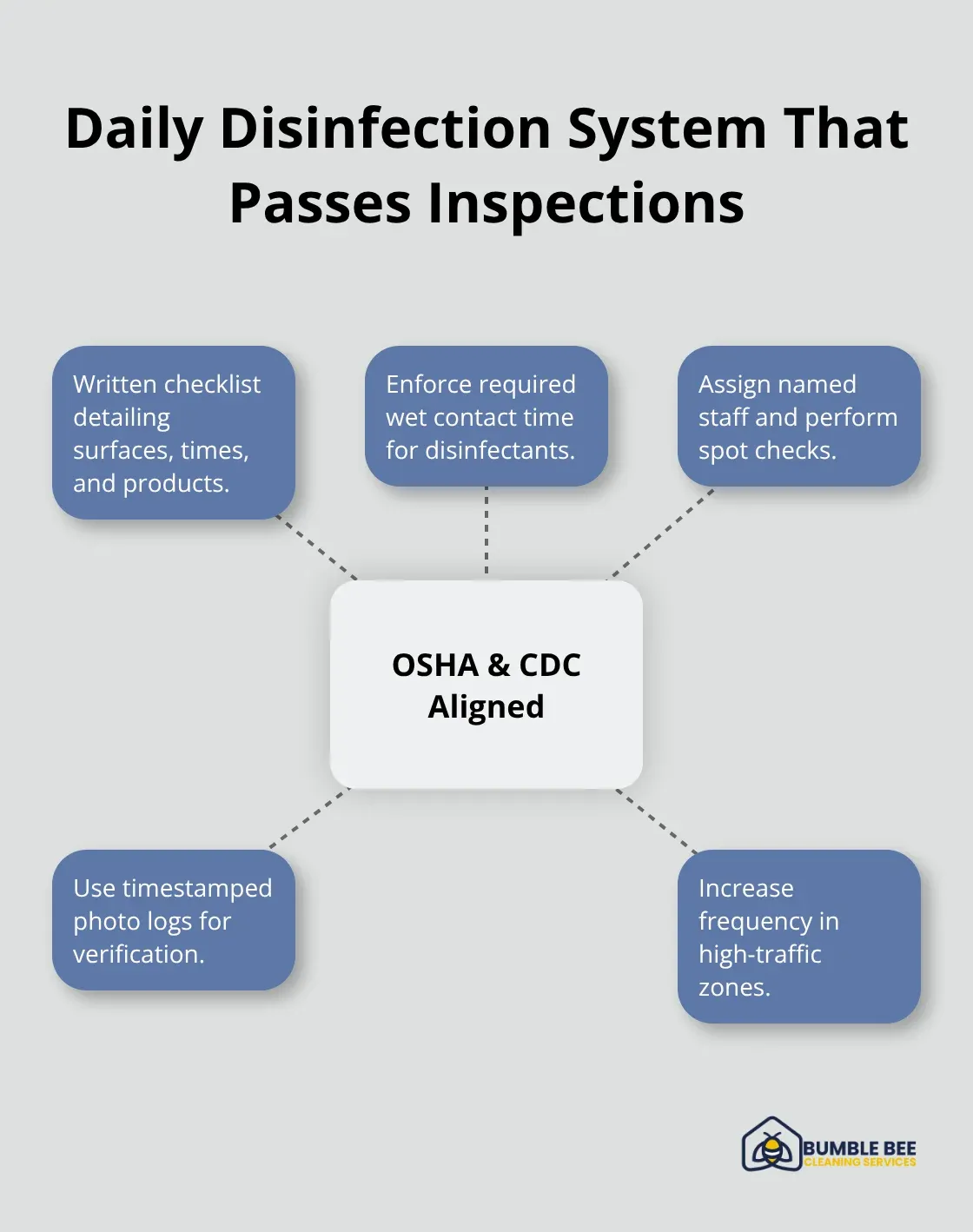
Your team needs a written checklist that specifies exactly which surfaces get cleaned at what time, using which product, and crucially, how long that product must remain wet before wiping. Contact time matters-spraying a surface and immediately wiping it clean defeats the entire purpose of using an EPA-approved disinfectant. Assign specific staff members to specific tasks and hold them accountable through spot checks, not through trust. Digital tools like timestamped photo documentation of high-touch areas make this verification immediate and auditable.
Chemical Storage and Segregation Requirements
Cleaning products stored improperly in your facility can create hazardous reactions, respiratory exposure, or spills that violate both OSHA and King County environmental regulations. Separate oxidizing agents from acids and flammables-this isn’t a suggestion, it’s a legal requirement under OSHA’s hazard communication standard. Your storage area should be well-ventilated, away from occupied spaces, and clearly labeled so anyone accessing the area understands what they’re handling. Provide your staff with mobile access to Safety Data Sheets for every product stored on-site; a locked binder in a manager’s office doesn’t satisfy OSHA requirements when a worker needs immediate information during an exposure incident.
Staff Training and Knowledge Retention
Training must cover not just what to do but why-workers who understand that mixing bleach with ammonia creates toxic chloramine gas are far more likely to follow segregation rules than those who follow procedures mechanically. Documentation of this training, including dates and attendee names, becomes critical evidence during inspections. Monthly refresher training prevents knowledge degradation and addresses staff turnover, ensuring new employees receive proper instruction. Keep records of all training sessions, all chemical incidents (even minor ones), and all cleaning tasks completed between professional visits. This documentation transforms your cleaning program from an invisible daily routine into a verifiable compliance system that protects your business during inspections and liability disputes.
Final Thoughts
OSHA compliance protects your Seattle business from fines, facility closures, and liability exposure that can cost hundreds of thousands of dollars. A single serious violation damages your reputation and triggers lawsuits that extend far beyond the initial penalty. When your facility meets commercial standards for chemical handling, worker protection, and documentation, you eliminate the gap between appearing compliant and actually being compliant.
Professional cleaning services reduce your liability by transferring responsibility to trained, certified professionals who understand OSHA regulations and maintain the documentation that satisfies inspectors. We at Bumble Bee Cleaning Services hold ARCSI and IICRC certifications, which means your facility receives cleaning from staff trained in industry protocols that exceed basic requirements. Our team uses EPA-approved disinfectants, maintains digital access to Safety Data Sheets, and creates timestamped records of every cleaning task completed.
Audit your current cleaning program against the OSHA standards outlined in this post and identify gaps in chemical storage, PPE training, high-touch surface disinfection, and documentation. If your internal team cannot consistently meet these requirements, professional cleaning services eliminate that risk entirely. Contact Bumble Bee Cleaning Services today to secure your Seattle workplace with comprehensive commercial cleaning solutions and the certifications that validate compliance.
For more information about our cleaning services in Seattle and Atlanta, or to request a cleaning quote, call or text us at 425-786-1360 or email us at info@qbclean.com
