
Seattle basements create the perfect environment for basement allergens to thrive. Moisture, dust mites, and mold spores accumulate in these spaces, triggering sneezing, congestion, and respiratory problems for your family.
We at Bumble Bee Cleaning Services know that standard vacuuming won’t cut it. Professional deep cleaning removes the hidden allergens that DIY methods miss, giving you real relief.
What Allergens Lurk in Seattle Basements
Seattle’s damp climate creates basement conditions where allergen colonies absolutely thrive. Dust mites, mold spores, and pet dander accumulate in these spaces because humidity levels stay elevated year-round. Indoor mold and dust mites rank as the top two allergens in the Pacific Northwest, and they prosper in exactly the kind of moist environment your basement provides. A single dust mite produces roughly 20 waste pellets daily, and these microscopic particles embed themselves deep into carpet backing, upholstery padding, and ductwork where standard vacuuming cannot reach them. Dust mite allergies affect approximately 20 million people across the U.S., and the American College of Allergy, Asthma and Immunology reports that 84% of homes contain detectable dust mite populations, primarily concentrated in bedding and basement fabrics.
Humidity Drives Mold and Dust Mite Growth
Your basement’s moisture problem directly fuels allergen reproduction. The EPA recommends keeping indoor humidity between 30 and 50%. When Seattle’s rainfall and groundwater moisture push humidity above these thresholds, dust mites multiply rapidly and mold spores germinate on surfaces, inside HVAC ducts, and within wall cavities. Basements and crawl spaces collect moisture from leaks, poor drainage, and general humidity, creating conditions where mold establishes itself within 24–48 hours of water exposure. This moisture also prevents basement allergens from drying out, which means they persist and accumulate across months and years.
How Basement Allergens Trigger Respiratory Problems
People spend roughly 90% of their time indoors, which means persistent basement allergens directly impact your household’s daily respiratory health. Symptoms often present as persistent upper-respiratory issues-sneezing, runny nose, and congested sinuses-that feel like a chronic cold rather than a temporary illness. When your HVAC system pulls air from or through contaminated basement spaces, it circulates these hidden allergen reservoirs throughout your entire home, spreading dust mite colonies and mold spores to bedrooms, living areas, and workspaces.
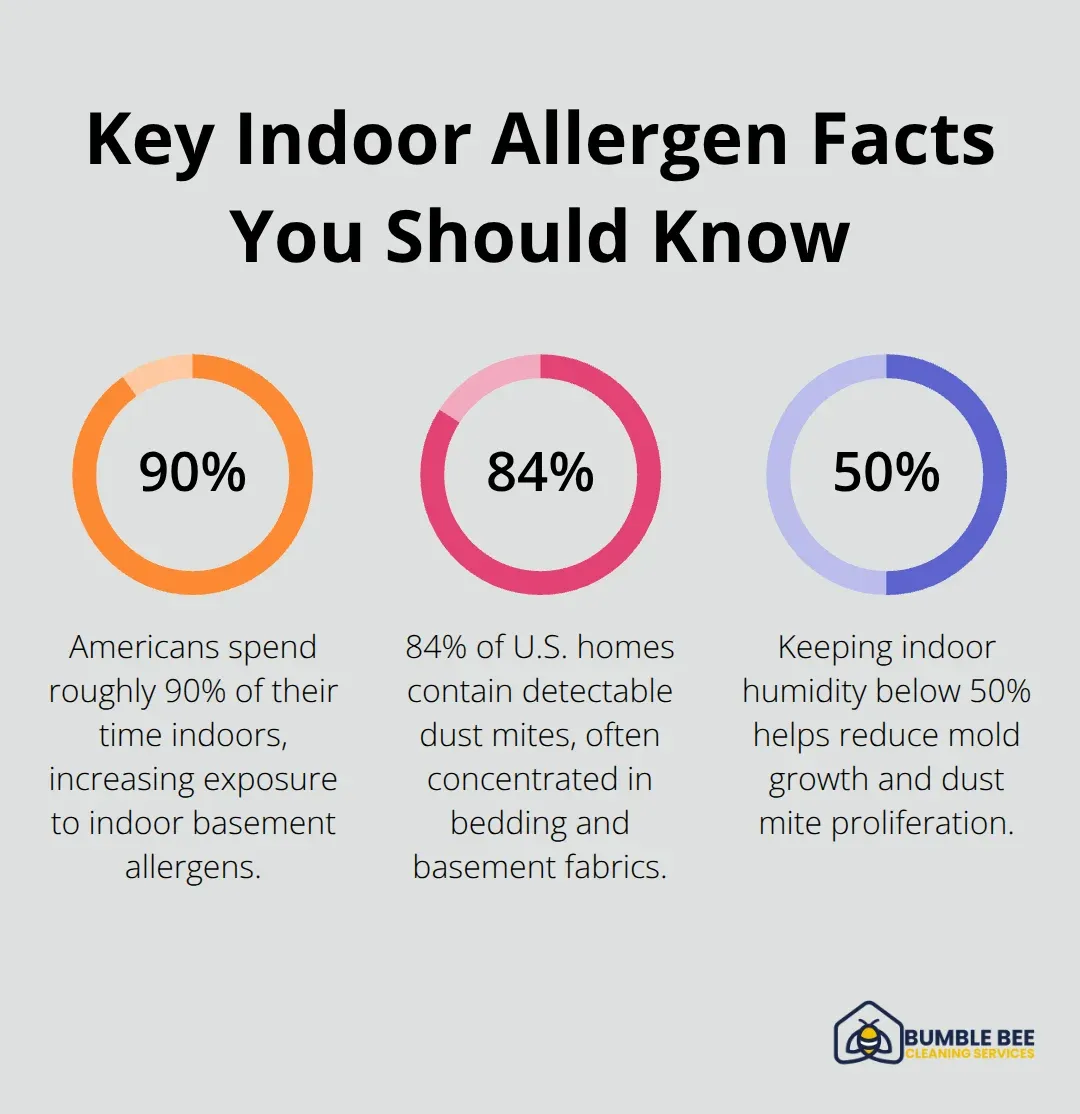
Standard surface cleaning leaves 60–70% of embedded allergens in carpet backing and upholstery padding, meaning basic cleaning perpetuates the problem rather than solving it. Your basement’s moisture and allergen load doesn’t stay isolated-it becomes a source of year-round respiratory irritation for your family, which is why professional deep cleaning targets these hidden reservoirs that DIY methods simply cannot address.
How Professional Deep Cleaning Removes Hidden Basement Allergens
HEPA Filtration and Deep Allergen Extraction
HEPA filtration captures 99.97% of particles at 0.3 microns according to EPA standards, meaning allergens get removed rather than recirculated through your basement and home. Professional deep cleaning uses HEPA-equipped vacuums on carpets and upholstery to lift dust mites and their waste pellets from carpet backing and padding where they hide. Hot-water extraction reaches deeper into fabric fibers than surface vacuuming, pulling embedded allergen colonies that have accumulated over months.
For your basement’s air quality, HEPA-filter air purifiers run continuously to trap airborne particles that escape during and after cleaning. The American College of Allergy, Asthma and Immunology confirms that positioning these units away from walls improves capture efficiency significantly.
Mold Remediation and Moisture Control
Mold remediation starts with identifying moisture sources-foundation cracks, leaking pipes, or poor drainage-and addressing them directly rather than just cleaning surfaces. After professionals remove visible mold with appropriate solutions, humidity control becomes non-negotiable. Dehumidifiers maintain indoor humidity between 30 and 50%, which stops both dust mites and mold from re-establishing.
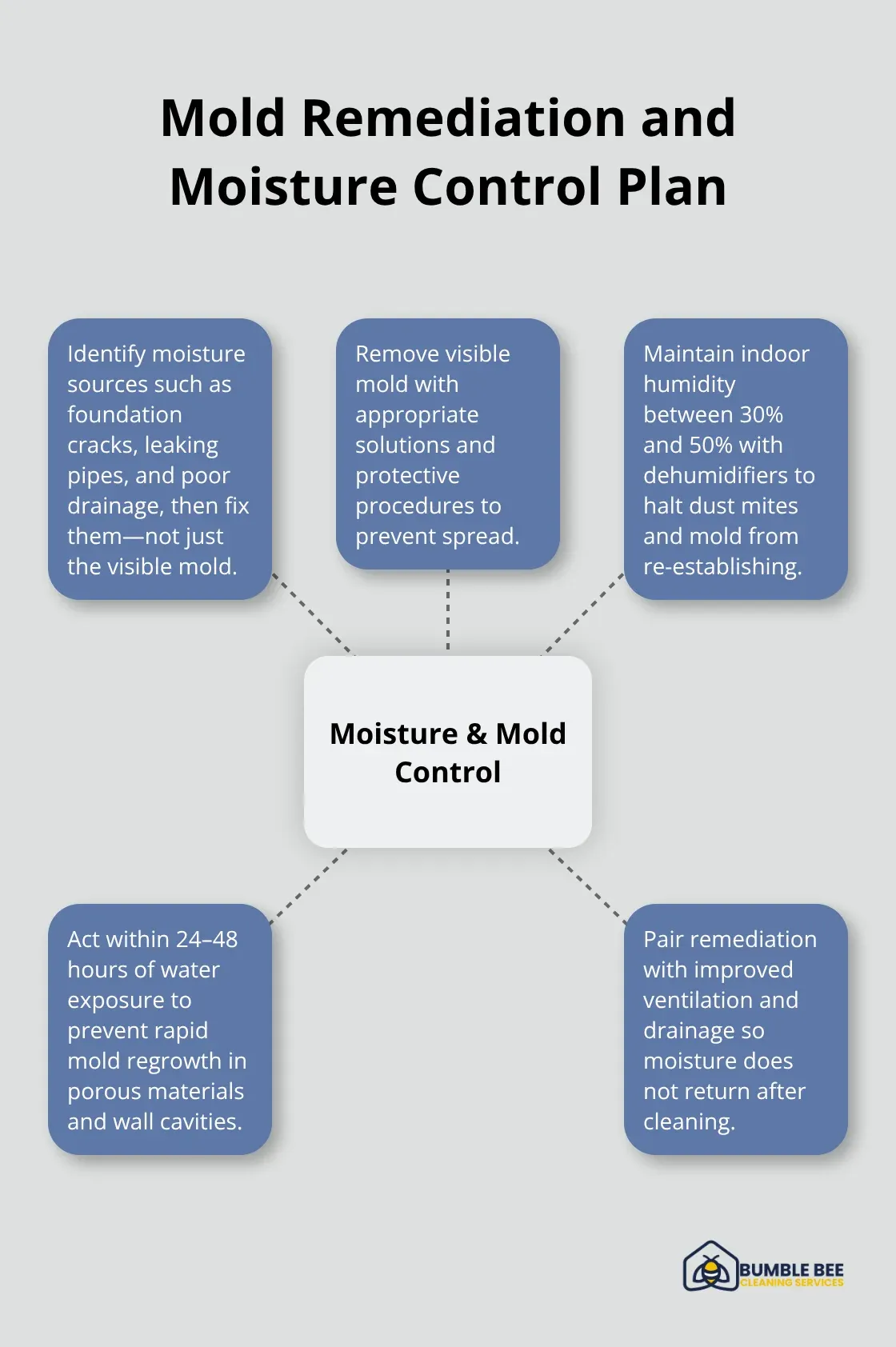
Mold needs attention within 24–48 hours to prevent rapid regrowth, so catching moisture problems early prevents allergen colonies from returning after cleaning. This proactive approach stops mold from re-establishing after professional remediation.
Sanitizing Hidden Surfaces and Ductwork
Hidden surfaces in basements harbor the most persistent allergens, which is why professional teams sanitize behind appliances, inside crawl spaces, and around HVAC ducts where standard cleaning never reaches. Air duct cleaning directly reduces mold and dust circulation throughout your home’s entire ventilation system. Focus shifts to areas where clutter and moisture combine-under stairs, behind appliances, and in storage corners-because these spaces accumulate trapped dust and mold spores that contaminate basement air.
Sanitizing high-touch surfaces and frequently occupied basement areas with eco-friendly, hypoallergenic products removes bacteria-driven odors without introducing chemical irritants that trigger asthma symptoms. Fragrance-free cleaners prevent the respiratory irritation that scented products cause for allergy sufferers.
Sustaining Results Through Ongoing Maintenance
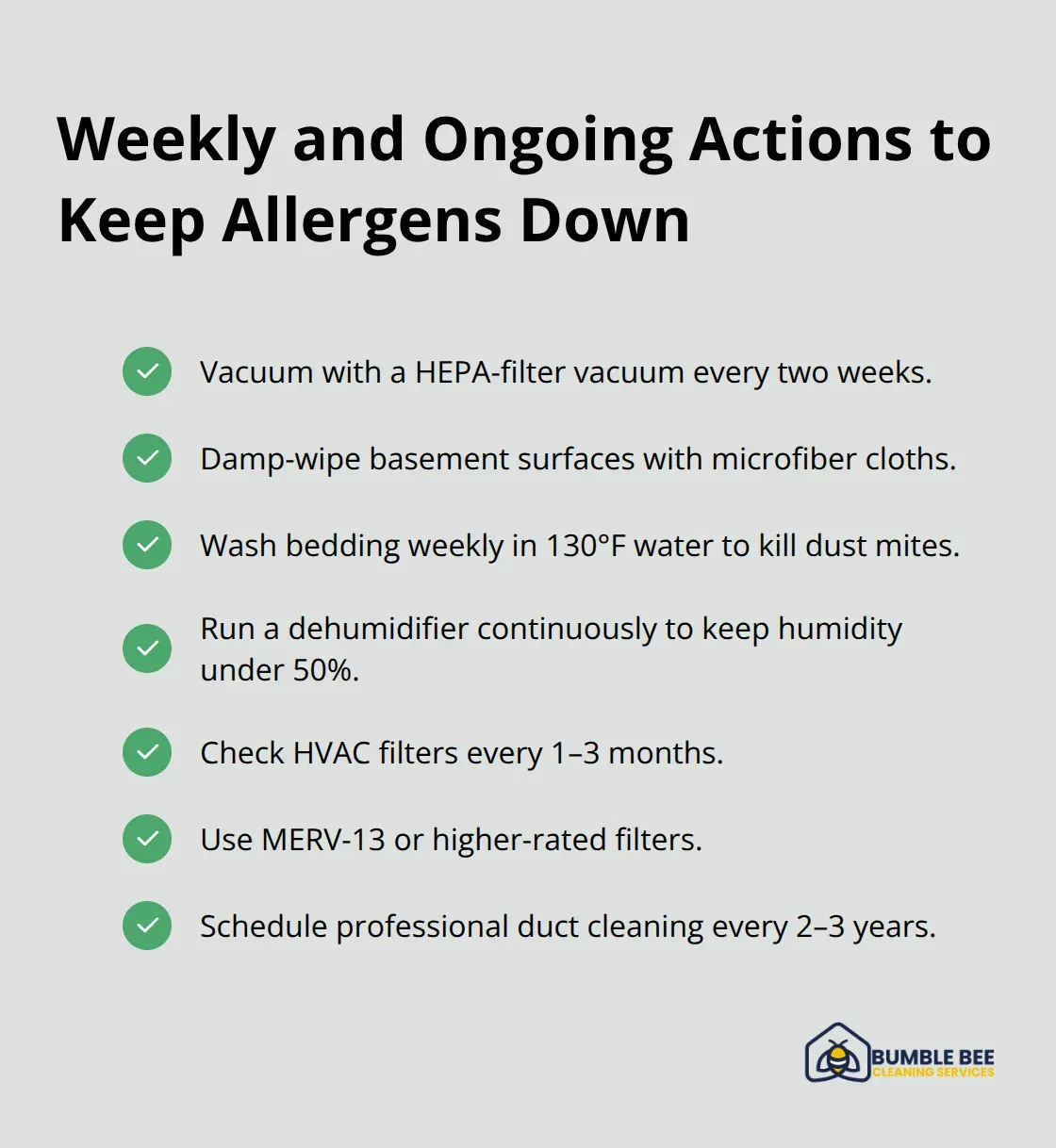
After deep cleaning, ongoing maintenance sustains the allergy relief that professional remediation delivers. Vacuuming with HEPA filters every two weeks for homes with pets or allergies captures particles before they settle. Damp-wiping surfaces with microfiber cloths captures rather than kicks up allergens, and washing bedding weekly in water heated to 130°F kills dust mites at their source.
This combination of professional remediation and consistent household routines prevents allergen reaccumulation. The real question becomes whether your basement stays clean long-term-and that depends on what happens after the professionals leave.
Results You’ll See After Professional Basement Cleaning
Immediate Symptom Relief Within Days
Relief from basement allergies arrives quickly after professional deep cleaning. HEPA extraction removes 60–70% of embedded allergens that standard vacuuming leaves behind in carpet backing and upholstery padding. You’ll notice fewer sneezing episodes, less nasal congestion, and clearer sinuses within the first few days as airborne dust mite waste pellets and mold spores get pulled from the air and fabric surfaces. This isn’t theoretical-the American College of Allergy, Asthma and Immunology confirms that deep cleaning targeting hidden allergen reservoirs produces measurable symptom reduction, especially when combined with humidity control below 50%. Your family will sleep better and experience fewer nighttime allergy flare-ups.
Long-Term Air Quality Improvements Over Weeks
The longer-term benefit arrives over the next two to four weeks as your HVAC system circulates cleaner air throughout your home. Mold spore counts drop significantly when dehumidifiers maintain indoor humidity between 30 and 50%. Your basement stops feeling like a source of perpetual respiratory irritation, and family members stop fighting what feels like a chronic cold. This sustained improvement depends on what happens after professionals leave your home.
Weekly Maintenance That Prevents Allergen Reaccumulation
Sustaining these results demands consistency, not perfection. Vacuum with a HEPA-filter vacuum every two weeks to capture dust mites before they embed themselves again. Damp-wipe basement surfaces with microfiber cloths to prevent allergen clouds from becoming airborne during cleaning. Wash bedding weekly in 130°F water to kill dust mites at their source and stop colonies from rebuilding in mattresses and pillows.
Equipment and Seasonal Checks
Your dehumidifier becomes non-negotiable equipment in Seattle basements-run it continuously to prevent moisture from creeping back above 50%, which would restart mold germination and dust mite reproduction within days. Check your HVAC filter every one to three months and use MERV-13 rated filters or higher to prevent allergen recirculation through ductwork. Professional duct cleaning every two to three years removes accumulated mold and dust that filters alone cannot capture, keeping your ventilation system from becoming an allergen distribution network.
The Difference Between Temporary and Lasting Relief
This maintenance schedule prevents the rapid reaccumulation that makes DIY methods feel pointless. The difference between temporary relief and lasting improvement comes down to what happens in the weeks and months after cleaning ends-and that responsibility sits with you.
Final Thoughts
DIY basement cleaning leaves behind the allergen reservoirs that cause year-round respiratory problems. Standard vacuums and surface wiping address only what’s visible, while dust mites embed themselves 60–70% deeper into carpet backing and upholstery padding than household equipment can reach. Professional deep cleaning targets these hidden basement allergens with HEPA filtration, hot-water extraction, and ductwork sanitization that DIY methods simply cannot match.
Investing in professional basement allergen removal pays dividends beyond immediate health improvement. Homes with controlled moisture and low allergen levels command higher resale value because buyers recognize the long-term maintenance advantage. Your family avoids the constant battle against respiratory irritation, sleep disruption, and the medical costs that accompany untreated allergies.
We at Bumble Bee Cleaning Services use professional-grade equipment to eliminate basement allergens at their source, then guide you through the maintenance steps that sustain relief. Contact us today to schedule your professional deep clean and reclaim the respiratory health your family deserves.
For more information about our cleaning services in Seattle and Atlanta, or to request a cleaning quote, call or text us at 425-786-1360 or email us at info@qbclean.com
