
Your office’s air quality directly affects how your team feels and performs. Dirty ducts circulate dust, allergens, and contaminants that harm employee health and spike energy bills.
We at Bumble Bee Cleaning Services know Seattle’s humidity and pollen create unique challenges for office ventilation systems. Professional duct cleaning removes years of buildup, improves air quality, and cuts HVAC costs.
How Clean Ducts Protect Your Seattle Team’s Health
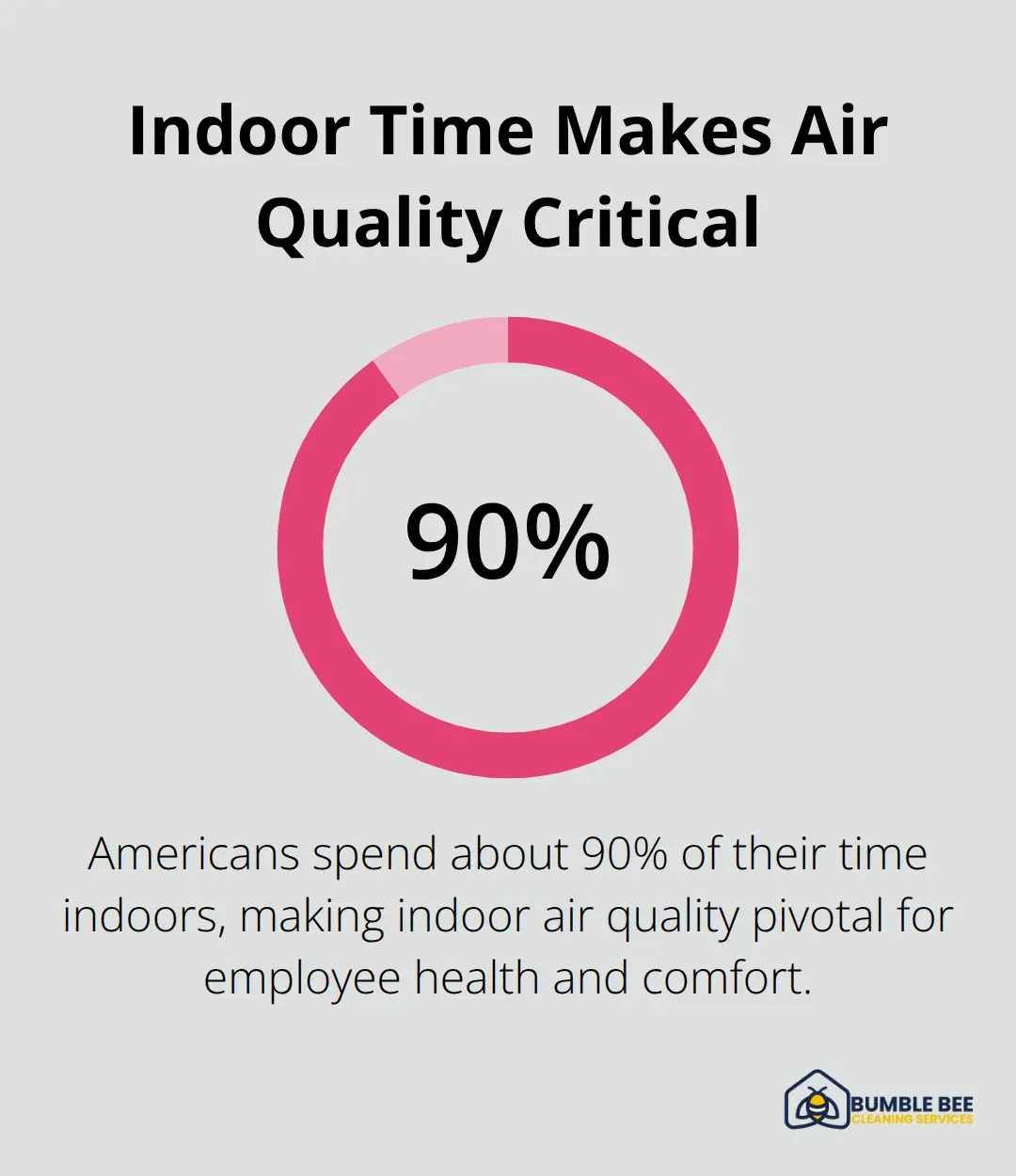
Dirty ducts don’t just look bad-they actively harm the people working in your office. The EPA reports that Americans spend about 90% of their time indoors, where pollutant concentrations can be 2–5 times higher than outdoors. Your ductwork circulates dust, pollen, pet dander, mold spores, and other contaminants directly into the breathing space where your employees spend eight hours a day. Professional duct cleaning removes this buildup before it becomes a health problem.
Dust and allergens recirculate constantly
When dust and allergens accumulate on duct walls, they re-circulate every time your HVAC system runs, creating a constant source of respiratory irritation. Asthma triggers commonly found in buildings include dust mites, mold, pet dander, and particulate matter-many of which settle inside ductwork. Weak airflow, visible dust around vents, and rapidly clogging filters signal that your ducts need attention. If your team reports more colds, allergies, or breathing issues during work hours, your ductwork may be the culprit.
Mold grows fast in Seattle’s wet climate
The Pacific Northwest’s moisture creates ideal conditions for mold growth inside ducts. High humidity and seasonal rain mean your HVAC system handles more moisture than systems in drier regions. If condensation forms inside ducts or around coils, mold can appear within weeks. Mold spores trigger headaches, respiratory problems, and aggravate existing asthma. Professional cleaning removes visible mold, but the real fix is addressing the moisture source-ensuring condensate drains work properly and ducts stay dry. Lab testing for mold costs around $50 and confirms whether contamination is present before you commit to cleaning.
Prevention stops contamination before it starts
The most effective strategy is stopping contamination before it starts. Use high-MERV filters matched to your system and change them monthly rather than waiting until they clog. Check your filters during routine inspections; clogged filters force your HVAC to work harder and circulate less fresh air. Clean your coils and drain pans during annual maintenance-this prevents moisture buildup and mold growth at the source.
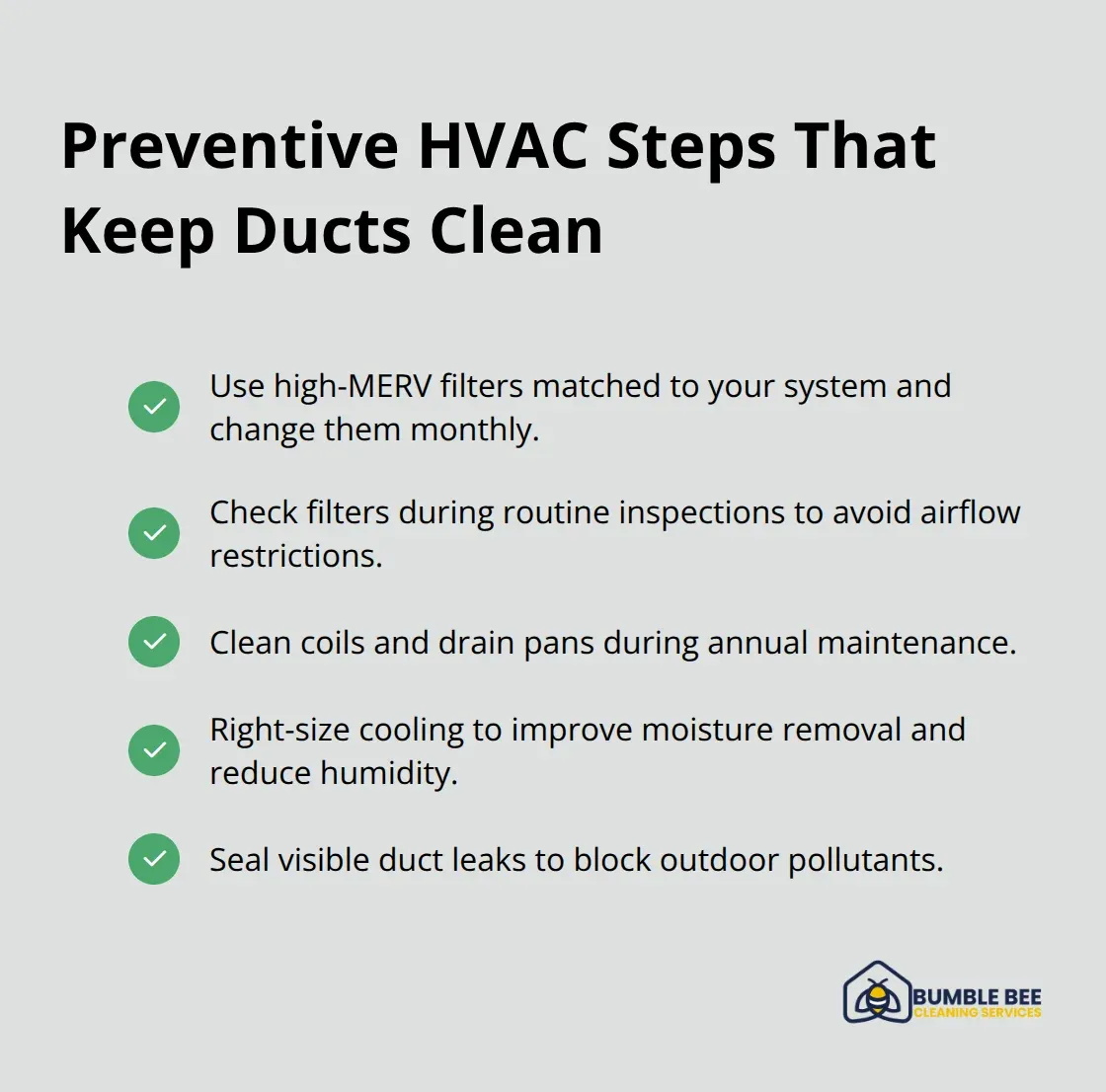
Properly size your cooling system to prevent it from being oversized, which reduces the system’s ability to remove moisture from the air. Seal any visible leaks in ductwork to prevent outdoor pollutants from entering. These steps cost far less than emergency duct cleaning and keep your office air consistently clean year-round.
Your office’s HVAC system also affects how much you spend on energy each month-and dirty ducts waste thousands of dollars annually.
How Clean Ducts Cut Your Office Energy Bills
Dirty ducts force your HVAC system to work harder than it should, burning energy and money every single day. When dust and debris clog ductwork, airflow restrictions increase pressure on your equipment, causing it to run longer cycles to reach target temperatures. A system struggling against buildup consumes significantly more electricity than one with clean, unrestricted ducts. Professional duct cleaning removes years of accumulated dust, restores proper airflow, and immediately reduces the strain on your equipment.
Immediate Energy Savings After Cleaning
The payoff appears directly on your energy bills within the first month after cleaning. Your system cycles less frequently, runs shorter, and uses less power to heat or cool your office space. Restricted airflow forces motors to work overtime, and removing that restriction cuts electricity consumption noticeably. Offices in Seattle see particularly sharp savings during peak heating and cooling seasons when systems run almost continuously.
Equipment Lifespan Extends With Clean Ducts
Equipment lifespan is where the real financial advantage emerges. HVAC systems forced to fight against restricted airflow wear out faster, accumulate damage to internal components, and fail prematurely. Coils get dirtier, fans work harder, and motors burn out sooner when ducts remain clogged. Clean ducts extend equipment life by years, delaying replacement costs that typically range from $5,000 to $15,000 for commercial office systems.
Combine professional duct cleaning with regular filter changes, annual coil cleaning, and drain pan maintenance, and your system performs reliably for its full lifespan. Preventive maintenance costs a fraction of emergency repairs or premature replacement. Seattle’s seasonal temperature swings near Lake Washington mean your systems cycle more often than in stable climates, making maintenance even more critical to avoid unexpected failures during peak heating or cooling seasons.
Temperature Control Improves Across Your Office
Optimized airflow means more consistent temperature distribution across your office, eliminating hot and cold spots that force occupants to adjust thermostats constantly. Stable temperatures reduce system cycling, lower energy consumption further, and create a more comfortable work environment where employees spend their productivity hours. When your HVAC system distributes air evenly, no single zone overworks while another sits idle.
These energy and equipment benefits compound over time, but they only materialize if your ducts stay clean and your system receives proper care. The next section examines the specific environmental factors that make Seattle offices particularly vulnerable to duct contamination.
Why Seattle’s Climate Demands More Frequent Duct Cleaning
Moisture and Condensation Accelerate Mold Growth
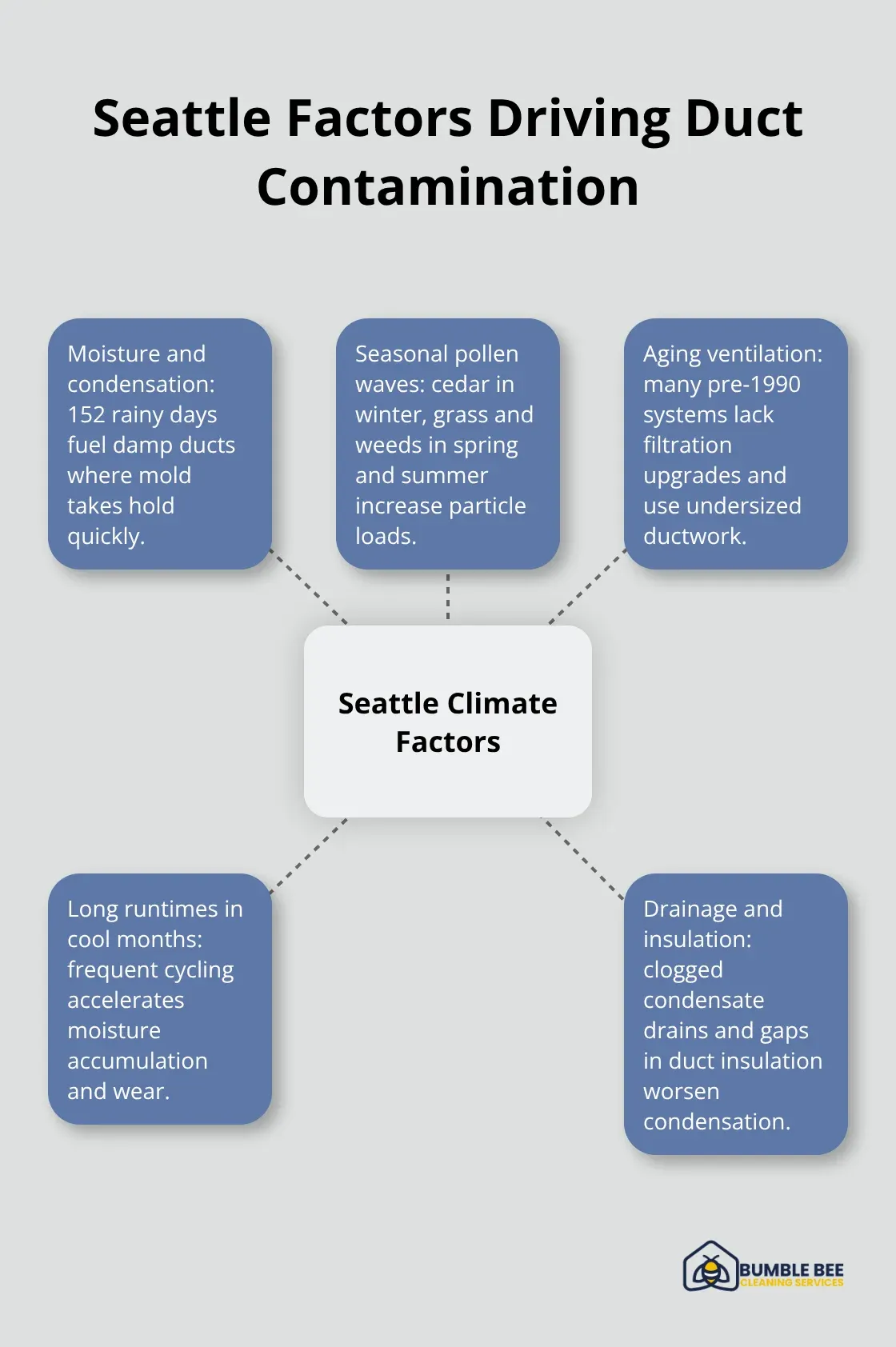
Seattle’s wet environment accelerates duct contamination far faster than drier regions. The Pacific Northwest averages 152 days of precipitation annually, and moisture infiltrates your HVAC system through condensation, leaks, and humid air cycling through ducts. When warm air from your heating system meets cold ductwork, condensation forms on interior surfaces, creating a moist environment where mold colonies establish themselves.
Your condensate drain pans must function flawlessly, or water backs up into ducts and feeds mold growth directly. Check these drains quarterly during Seattle’s rainy season; a clogged drain costs nothing to clear but leads to thousands in remediation if mold spreads unchecked. Insulated ducts perform better in this climate because they prevent temperature differentials that trigger condensation, so inspect your duct insulation for gaps or damage that expose bare metal to humid air.
If your system runs constantly during Seattle’s cool months, moisture accumulates faster, making annual professional inspections non-negotiable rather than optional. Visible mold inside hard-surface ducts warrants immediate professional cleaning, but wet or moldy duct insulation cannot be salvaged and must be removed and replaced entirely to prevent recurrence.
Seasonal Pollen Loads Compound Moisture Problems
Seattle’s pollen load compounds the moisture problem significantly. Cedar pollen peaks December through February, while grass and weed pollen dominate late spring and summer, creating seasonal spikes in airborne particles that your HVAC system pulls directly into ductwork. Outdoor air infiltrates through gaps around windows, doors, and foundation cracks, depositing these particles into your mechanical system where they stick to damp duct surfaces.
These seasonal surges mean your filters clog faster and your system works harder to maintain airflow. Professional duct camera inspections reveal whether pollen accumulation has reached levels that restrict airflow or harbor mold growth.
Aging Buildings Face Ventilation Challenges
Older Seattle commercial buildings, many constructed before 1990, frequently feature ventilation systems designed to minimal standards that don’t account for modern occupancy density or outdoor air quality challenges. These aging systems often lack proper filtration upgrades and rely on undersized or inefficient ductwork that concentrates dust and pollen rather than dispersing it.
Building codes have evolved significantly-current standards require higher air exchange rates and better filtration than systems installed decades ago-meaning your older Seattle office likely underperforms compared to modern ventilation requirements. Professional duct camera inspections reveal the true condition of your system and identify whether your ducts meet current standards for your building’s occupancy.
Restoration Strategies for Older Systems
If inspection shows excessive buildup, poor insulation, or undersized ductwork, professional cleaning combined with filter upgrades and seal repairs restores performance. For Seattle offices in historic neighborhoods or pre-1990 structures, this combination of moisture control, seasonal pollen management, and system upgrades directly protects both employee health and equipment longevity. High-MERV filters matched to your system capacity trap more particles before they enter ductwork, while sealed leaks prevent outdoor contaminants from infiltrating your mechanical system. These upgrades work together to counteract the limitations of older ventilation design.
Final Thoughts
Your Seattle office’s air quality and operating costs depend directly on duct cleanliness. Professional duct cleaning removes years of dust, pollen, and mold that compromise employee health, spike energy bills, and accelerate equipment wear. The health gains appear immediately-fewer respiratory irritants, reduced allergen circulation, and better protection against mold growth in our region’s wet climate-while financial benefits compound over time through lower energy consumption, extended equipment lifespan, and fewer emergency repairs.
Seattle’s humidity, seasonal pollen, and aging building stock make regular office ventilation maintenance non-negotiable. Your HVAC system works harder here than in drier climates, cycling more frequently and accumulating moisture faster, so annual professional inspections catch problems before they become expensive. Monthly filter checks, quarterly drain pan cleaning, and sealed duct leaks form the foundation of a preventive maintenance program that keeps your system performing reliably year-round.
We at Bumble Bee Cleaning Services understand Seattle’s unique environmental challenges and what it takes to maintain healthy office spaces. Contact us today to schedule your duct inspection and cleaning, and our team handles the work with minimal disruption to your office operations. Your employees deserve clean air, and your budget deserves the energy savings that follow.
For more information about our cleaning services in Seattle and Atlanta, or to request a cleaning quote, call or text us at 425-786-1360 or email us at info@qbclean.com
