
A clean office isn’t a luxury-it’s a foundation for workplace wellness. When your Seattle team works in a properly maintained space, they breathe easier, get sick less often, and feel more focused.
We at Bumble Bee Cleaning Services know that most office managers underestimate how much cleanliness affects their bottom line. The right cleaning strategy reduces illness-related absences, boosts productivity, and creates an environment where employees actually want to show up.
How Office Cleanliness Reduces Illness and Boosts Employee Health
Bacteria on Surfaces Spreads Illness Faster Than Most Managers Realize
The University of Arizona found that typical office desks harbor 400 times more bacteria than a toilet seat. Your team touches these surfaces constantly throughout the day. The CDC reports that infections spread through contaminated surfaces, meaning a single handshake or keyboard touch can trigger an outbreak. When offices skip consistent cleaning, pathogens accumulate on high-touch zones like door handles, light switches, keyboards, and conference room tables. EPA-approved disinfectants target these exact surfaces and break the transmission chain before illness takes hold.
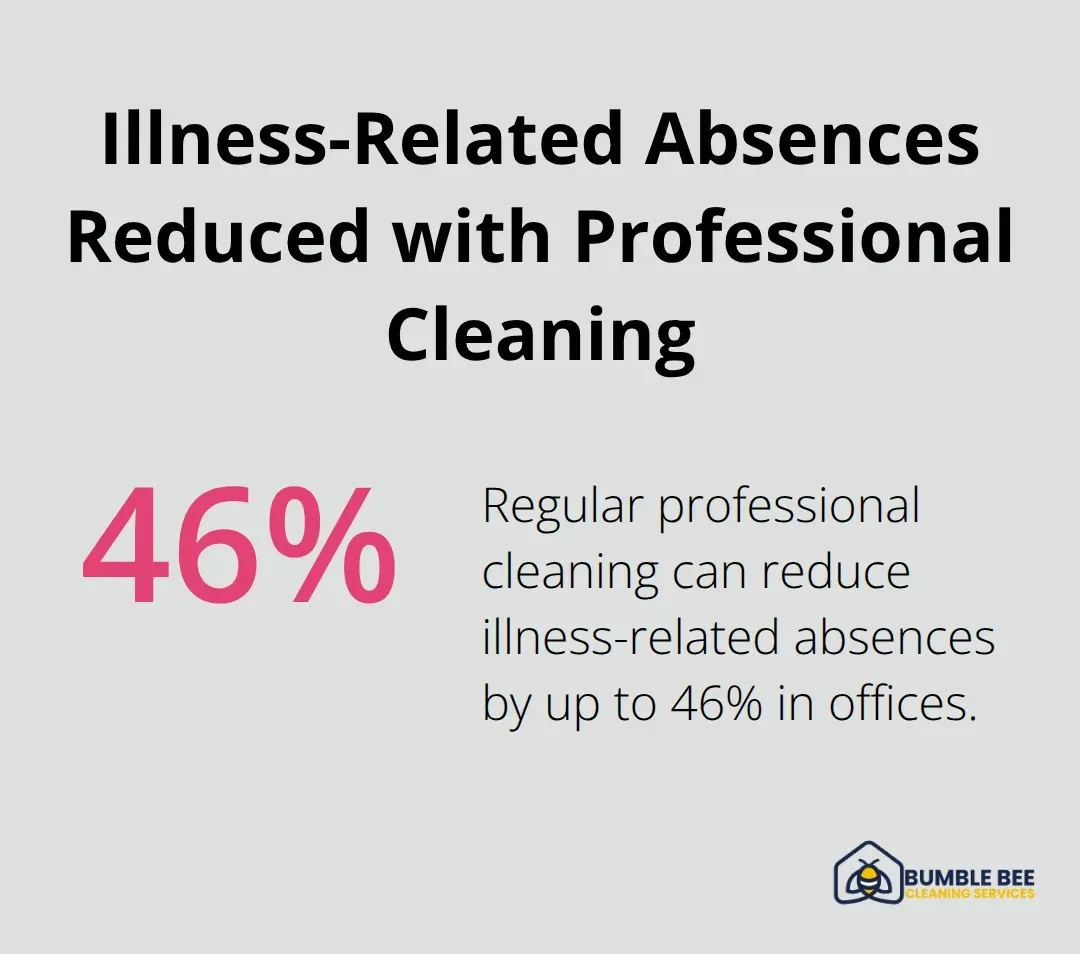
The financial impact is substantial: regular professional cleaning reduces illness-related absences by up to 46%, according to industry research. For a 50-person Seattle office, that translates to roughly 100 to 150 recovered workdays annually-a significant productivity gain when you factor in fully loaded labor costs.
Indoor Air Quality Directly Shapes Employee Focus and Health
Studies have found that levels of several organics average 2 to 5 times higher indoors than outdoors, according to EPA data. Dust, allergens, and chemical residues from standard cleaning products accumulate in carpets, blinds, and ventilation systems, degrading the air your team breathes. Eco-friendly cleaning products and microfiber techniques reduce VOC exposure while maintaining sanitization power. A study monitoring 95 work-from-home sites across the Pacific Northwest, including Seattle, found that perceived air quality and workspace cleanliness correlated strongly with employee well-being and work performance. Employees who felt satisfied with their workspace’s cleanliness reported better focus and fewer stress-related health complaints. Clean air reduces respiratory irritation, headaches, and fatigue-issues that silently drain productivity without appearing as formal absences. Switching to green cleaning formulas can also lower chemical waste disposal costs, which a typical Seattle office spends around $1,200 annually on, potentially dropping to nearly zero.
Organized Spaces Reduce Stress and Strengthen Team Morale
A cluttered, dirty office creates psychological stress that compounds over time. Employees working in visibly clean environments report higher job satisfaction and motivation. The same Pacific Northwest study found that workspace aesthetics and perceived cleanliness had stronger associations with psychological well-being than objective air quality measurements alone. This means a spotless desk, sanitized break room, and dust-free meeting space send a message that the organization values employee health. Clean offices also strengthen team morale because they signal professionalism and respect. When employees see management investing in their physical environment, they feel valued. Clean spaces reduce cognitive load-your brain doesn’t spend mental energy processing visual clutter or worrying about germs. This mental bandwidth translates directly into sharper decision-making and better collaboration. Daily cleaning of high-touch surfaces and weekly deep cleaning of break rooms and conference areas prevent the psychological weight of visible dirt and disorder.
These health improvements-reduced illness, better air quality, and lower stress-depend on consistent, targeted cleaning practices. The next section outlines exactly which cleaning tasks deliver the biggest impact and how to schedule them for maximum results.
What Seattle Offices Must Know About Cleaning Standards
OSHA Requirements Set the Baseline, Not the Target
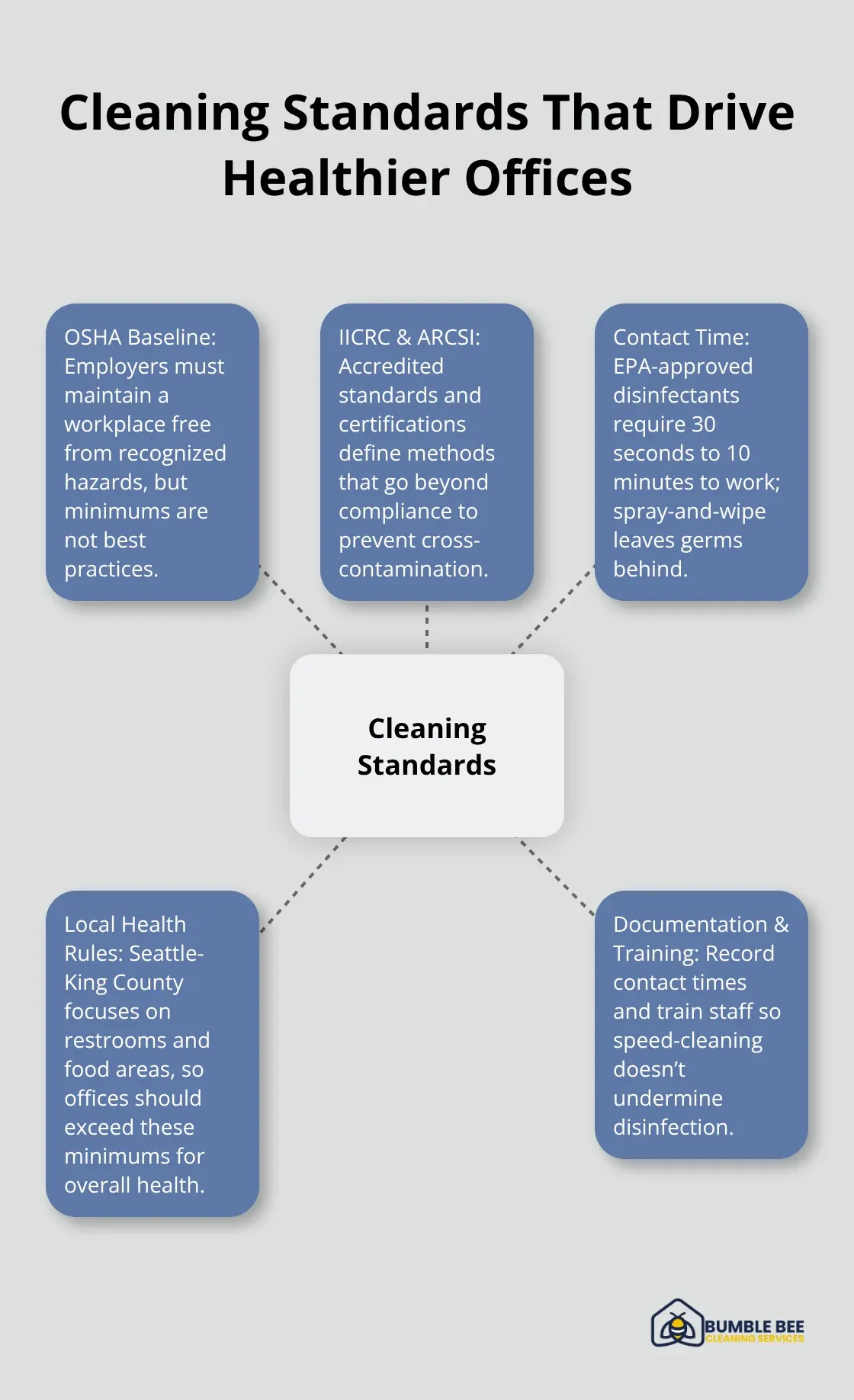
OSHA does not prescribe a one-size-fits-all cleaning frequency, but the agency requires employers to maintain a workplace free from recognized hazards that cause or are likely to cause death or serious physical harm. For Seattle offices, this means your cleaning protocol must address high-touch surfaces, restrooms, and air quality with documented consistency. The gap between compliance and employee health matters enormously: a restroom that passes health department inspection might still harbor pathogens on the sink faucet handle that employees touch hundreds of times daily. OSHA and local health departments set minimums, not best practices. Most Seattle offices operating at the minimum standard still experience preventable illness outbreaks.
Industry Standards Go Beyond Minimum Compliance
IICRC Standards are internationally recognized, ANSI-accredited guidelines that define best practices for inspection, cleaning, and restoration work. Surface sanitization and EPA-approved disinfection with proper contact time require cleaning first, then disinfecting to actually break the contamination chain. ARCSI certifies cleaning professionals in proper techniques and product knowledge, ensuring they understand why cross-contamination happens and how to prevent it. Professional cleaners trained in industry protocols go beyond minimum compliance because they recognize that high-touch zones like door handles, conference room tables, and keyboards need daily attention, not weekly spot-checks. Industry standards recommend disinfecting high-touch surfaces at minimum daily, with restrooms receiving attention multiple times per day in high-traffic offices.
Contact Time and Technique Determine Actual Pathogen Elimination
EPA-approved disinfectants must contact surfaces for the time specified on the product label-typically 30 seconds to 10 minutes-to actually kill pathogens. Many offices cut corners by spraying and wiping immediately, which looks clean but leaves 80% of germs behind. Microfiber cloths paired with proper technique outperform standard cotton rags because they mechanically trap bacteria rather than just moving it around. Seattle offices serious about employee health should request that any cleaning provider document their disinfection contact times and train staff on why speed-cleaning defeats the purpose.
The Seattle-King County Health Department Framework
The Seattle-King County Health Department does not mandate cleaning frequencies for general offices, but they do require that restrooms meet sanitation standards and that food preparation areas comply with food safety rules. This regulatory gap creates opportunity: offices that exceed minimum standards gain competitive advantages through lower absenteeism and higher productivity. The investment in standards-aligned cleaning practices pays back immediately through fewer sick days and sharper employee focus-far better than choosing the cheapest vendor who skips the science.
Understanding these standards positions your office to make informed decisions about cleaning frequency and vendor selection. The next section translates these standards into a practical, actionable cleaning schedule that your team can implement immediately.
Create Your Cleaning Schedule Around High-Touch Zones
Daily Disinfection Stops Pathogen Spread at the Source
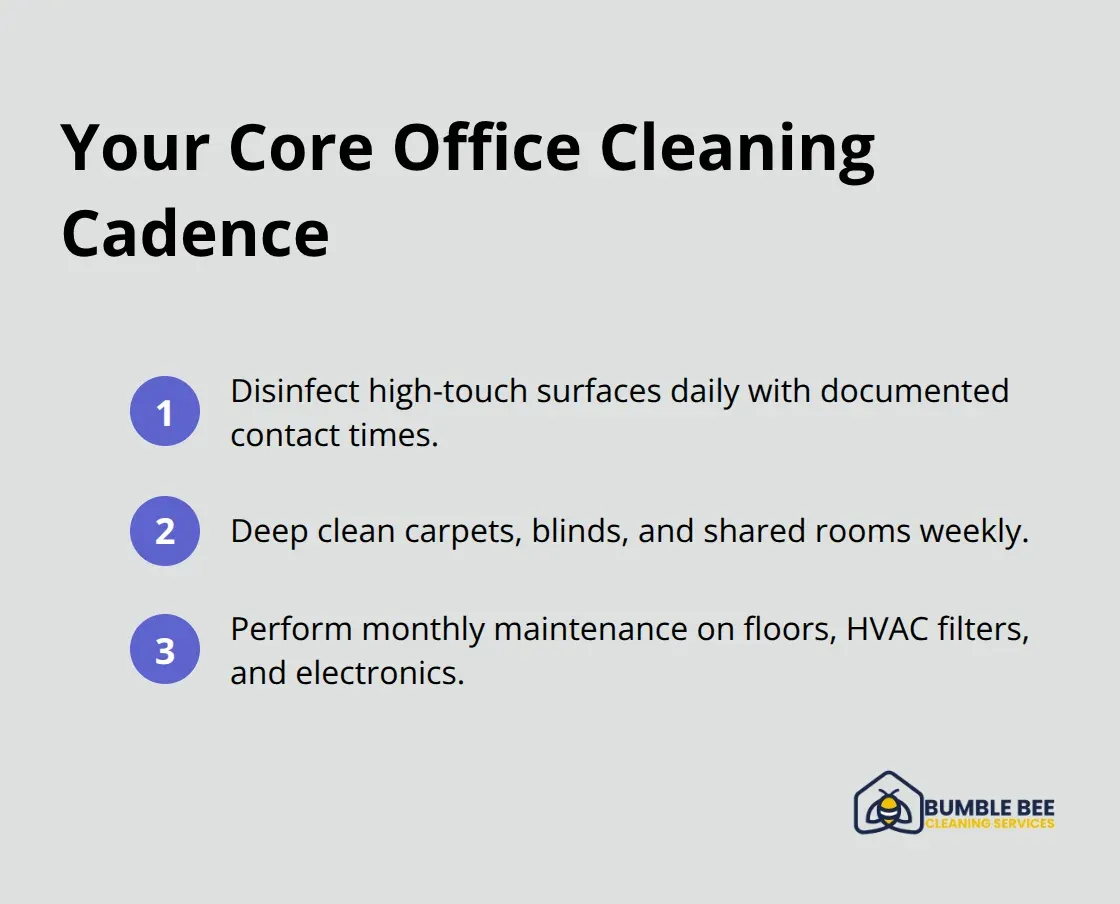
The difference between a clean office and a truly healthy one comes down to frequency and focus. Most Seattle offices waste money on generic weekly cleaning that ignores the surfaces where illness actually spreads. Door handles, light switches, keyboards, and conference room tables accumulate pathogens throughout the day because employees touch them constantly. High-touch zones need daily attention, not weekly spot-checks. EPA-approved disinfectants require proper contact time to kill pathogens, meaning a quick spray-and-wipe misses the mark entirely. Your cleaning protocol should prioritize these surfaces every single day, with documented contact times matching product labels.
Restrooms demand even more aggressive schedules in high-traffic offices. Industry standards recommend sanitizing restroom surfaces multiple times daily, especially toilet handles, sink faucets, and soap dispensers where cross-contamination happens fastest. A 50-person Seattle office with 15 daily restroom visits per person creates thousands of touch points where pathogens transfer. One contaminated faucet handle defeats your entire cleaning investment.
Weekly Deep Cleaning Targets Hidden Allergen Buildup
Weekly deep cleaning should target areas that daily cleaning misses but accumulate allergens and dust that degrade air quality. Carpets, blinds, and upholstered furniture trap VOCs and dust mites that cause respiratory irritation and fatigue even when surfaces look clean. Microfiber techniques combined with HEPA vacuuming remove embedded particles more effectively than standard mopping. Conference rooms and break rooms need weekly attention because they concentrate employee contact in smaller spaces. The EPA notes that indoor VOC concentrations often reach 2 to 5 times higher than outdoors, making air quality management non-negotiable for employee focus.
Monthly Maintenance Prevents Costly Reactive Cleaning
Monthly maintenance prevents the buildup that forces expensive deep cleaning later. This includes floor burnishing to extend carpet and hardwood life, HVAC filter changes to improve air circulation, and detailed cleaning of electronics and keyboards where bacteria accumulate at rates matching high-touch surfaces.
Most Seattle offices skip monthly maintenance and then wonder why employees report headaches and fatigue. A maintenance-first approach costs less than reactive cleaning and produces measurable improvements in employee attendance and productivity within the first quarter.
Final Thoughts
A clean Seattle office transforms into an ongoing commitment that compounds into measurable health and financial gains. Daily disinfection of high-touch surfaces, weekly deep cleaning of allergen-prone areas, and monthly maintenance prevent the illness outbreaks and productivity drains that plague offices operating at minimum compliance. Your team’s workplace wellness depends on consistent execution, not occasional deep cleans.
The financial case proves equally compelling: reducing illness-related absences by 46% translates to 100 to 150 recovered workdays annually in a 50-person office, while switching to eco-friendly cleaning products eliminates the $1,200 annual chemical waste disposal cost entirely. Preventive maintenance extends carpet and equipment lifespan, saving thousands in replacement expenses that accumulate quickly and make professional cleaning an investment that pays for itself within months. We at Bumble Bee Cleaning Services understand that Seattle offices face unique challenges-from seasonal humidity affecting air quality to high-traffic environments that demand aggressive sanitization schedules.
Start by auditing your current cleaning protocol against industry standards outlined in this post, then contact Bumble Bee Cleaning Services for a consultation. We’ll craft a tailored cleaning schedule that protects employee health, meets regulatory requirements, and delivers measurable cost savings. Your Seattle office deserves a cleaning partner who understands that workplace wellness begins with surfaces your team can trust.
For more information about our cleaning services in Seattle and Atlanta, or to request a cleaning quote, call or text us at 425-786-1360 or email us at info@qbclean.com
