
Many Seattle residents assume eco-friendly cleaning costs significantly more. The truth is more nuanced, and we at Bumble Bee Cleaning Services have found that sustainable practices often deliver better long-term value than traditional chemical alternatives.
This guide breaks down the real costs, hidden expenses, and genuine savings you’ll find when switching to eco-friendly cleaning in Seattle.
What Actually Costs More: Eco-Friendly or Traditional Cleaners?
The upfront price tag on eco-friendly cleaning products often looks higher than conventional alternatives. A bottle of plant-based all-purpose cleaner might cost $6–$8, while a traditional ammonia-based cleaner runs $2–$3. That initial sticker shock stops many Seattle residents from making the switch. But this comparison ignores how these products actually perform in real homes.
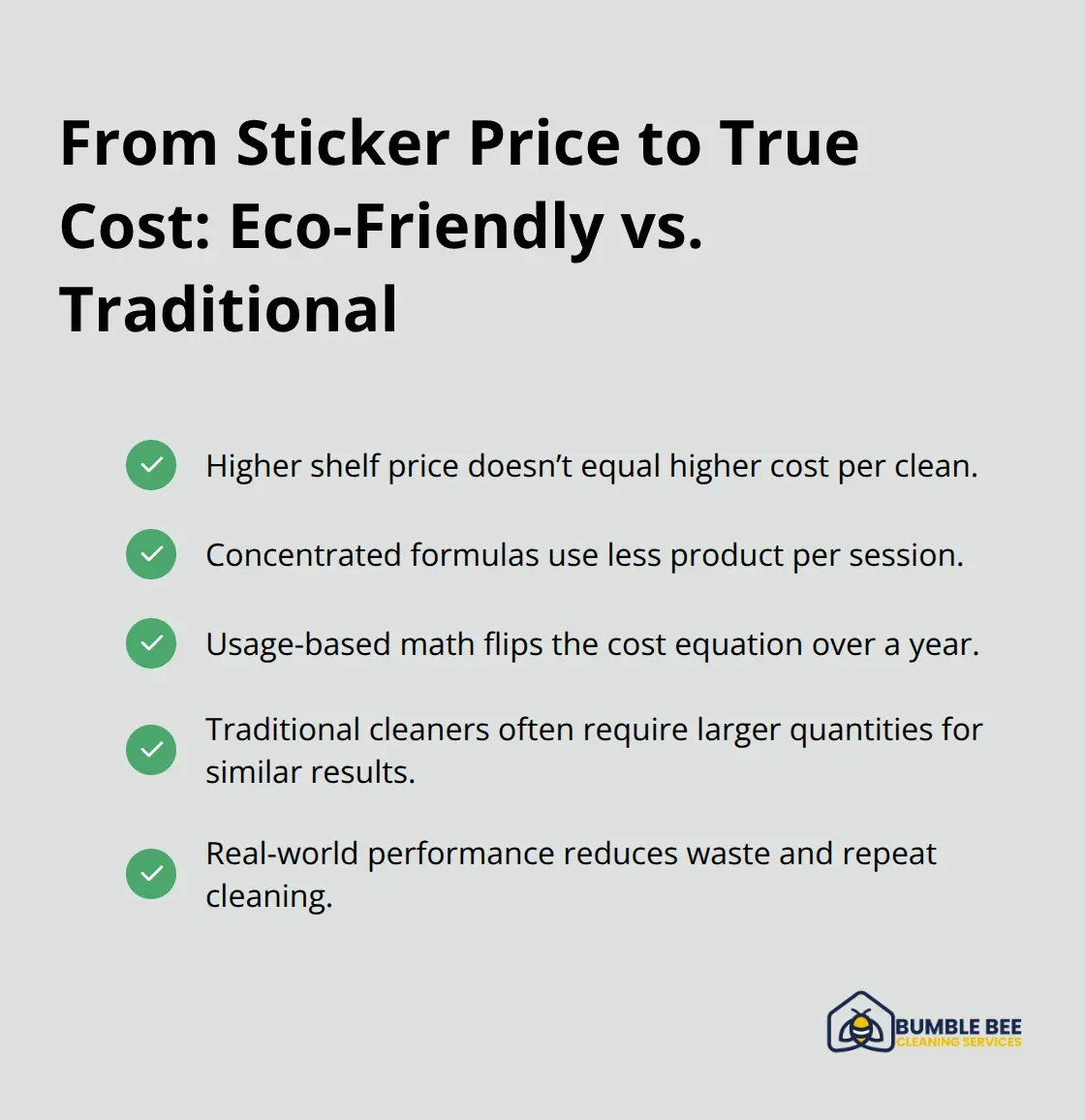
Ecolabels help purchasers identify greener products, though careful selection remains important. This means you use less product per cleaning session, which directly reduces your cost per clean. A concentrated formula that costs more upfront often costs significantly less over a year of weekly cleanings. Traditional cleaners require larger quantities to achieve the same results, particularly on tough Seattle bathroom mold and hard water stains. The math shifts dramatically once you factor in actual usage rates rather than just shelf price.
The Real Cost of Conventional Chemicals
Traditional chemical cleaners impose costs that never appear on the product label. Bleach and ammonia-based cleaners release volatile organic compounds that degrade indoor air quality, according to the EPA. Children and pets exposed to these VOCs experience more respiratory infections, headaches, and sleep disruptions, which means higher medical costs and missed work days for Seattle families. The Washington Department of Ecology documents how ammonia and nitrogen from household cleaners trigger algal blooms in Puget Sound that harm salmon populations during spawning season. Seattle residents pay for this environmental damage through higher municipal water treatment costs and stormwater management fees administered by Seattle Public Utilities. Health-cost savings from fewer respiratory infections alone offset the higher upfront price of eco-friendly products within a single year, according to NIH-based health research. Your water bill also decreases when you use eco-friendly cleaners, since plant-based surfactants degrade organic matter more efficiently and require less rinsing than harsh chemicals.
Performance Without the Chemical Expense
Real Seattle homeowners report deep cleaning results with eco-friendly products that meet or exceed prior results achieved with conventional cleaners, with no lingering chemical odor after appointments. Products certified through the EPA Safer Choice program maintain performance standards while eliminating toxic ingredients. ISSA data indicate facilities using certified green cleaning products achieve equal or superior cleanliness scores compared to conventional chemical programs. Clients report the same visible results on kitchen grease, bathroom mold, and hard water stains within 24 hours when switching to eco-friendly solutions. The performance difference is negligible, but the health and environmental cost difference is substantial. Eco-friendly cleaners reduce exposure for pets and children while supporting Puget Sound salmon populations, which aligns with Seattle residents’ environmental values. Over time, the combination of lower product usage, reduced health expenses, and decreased water treatment costs makes eco-friendly cleaning the financially smarter choice for Seattle households. These savings compound when you consider what influences pricing in your local market.
What Drives Eco-Friendly Cleaning Prices in Seattle
Local Demand Outpaces Supply
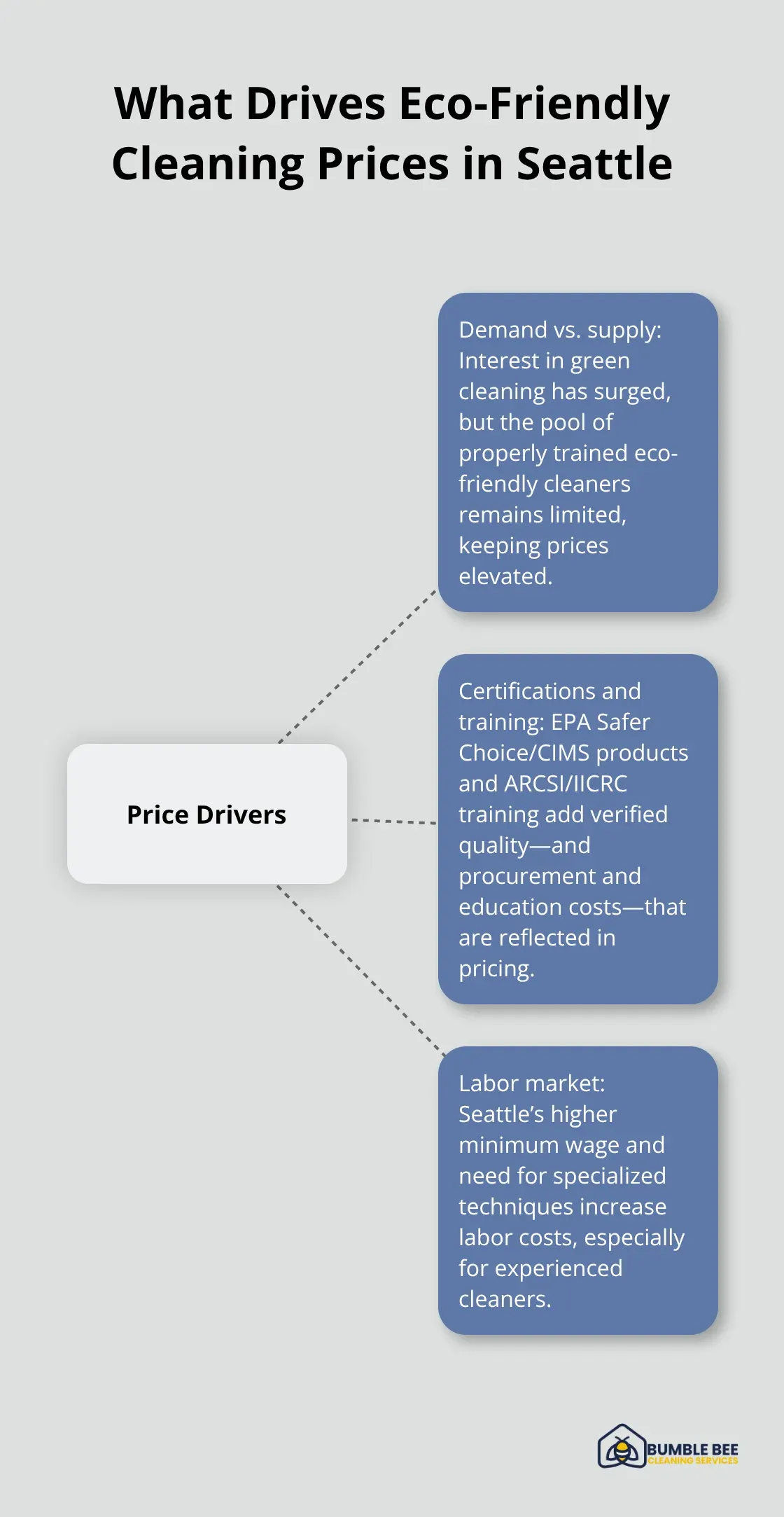
Seattle’s eco-friendly cleaning market operates differently than the national average, and local factors directly shape what you’ll pay for sustainable services. Demand for green cleaning has surged in recent years, driven by health concerns and environmental awareness around Puget Sound protection. This increased demand attracts more service providers, but the supply of properly trained eco-friendly cleaners hasn’t kept pace. Most traditional cleaning companies still rely on conventional chemicals, meaning the pool of certified eco-friendly specialists remains limited. When supply lags behind demand, prices stay elevated. Seattle Public Utilities’ focus on stormwater management and pollution reduction has also created regulatory pressure that makes eco-friendly products more cost-effective for commercial operations over time.
Certifications Command Higher Prices
Certifications matter significantly in this market. Products carrying EPA Safer Choice certification or CIMS Green Building certification command higher prices because they’ve undergone rigorous testing to verify performance and safety claims. Seattle residents increasingly demand proof that their cleaning service actually delivers on environmental promises, which means companies investing in certified products face higher procurement costs. These costs get passed to customers, but you’re paying for verified results rather than marketing claims. The certification process itself isn’t cheap, and companies that pursue ARCSI or IICRC training for their teams invest thousands annually in staff development. This investment in proper training directly improves cleaning quality and client safety, not merely marketing appeal.
Seattle’s Labor Market Amplifies Costs
Labor costs in Seattle’s competitive job market amplify this pricing structure. Eco-friendly cleaning requires different techniques than traditional methods, and training staff properly takes time and money. A cleaner trained in ARCSI standards understands how to use concentrated eco-friendly formulas efficiently, reducing waste and improving results. Seattle’s minimum wage of $20.76 per hour as of 2024 means labor costs are substantially higher than national averages, and companies that properly train their teams must charge accordingly. Experienced cleaners who understand how plant-based surfactants work differently on various surfaces command higher wages because they’re more skilled. If a cleaning service offers rock-bottom prices for eco-friendly cleaning in Seattle, they’re either cutting corners on training, using inferior products, or both. The companies charging fair prices invest in their teams and source certified products, which is exactly what produces the superior results Seattle homeowners consistently report.
Understanding these cost drivers helps you evaluate what truly represents value when you compare service options in your area.
Why Eco-Friendly Cleaning Delivers Real Financial Value
Health Savings That Add Up Fast
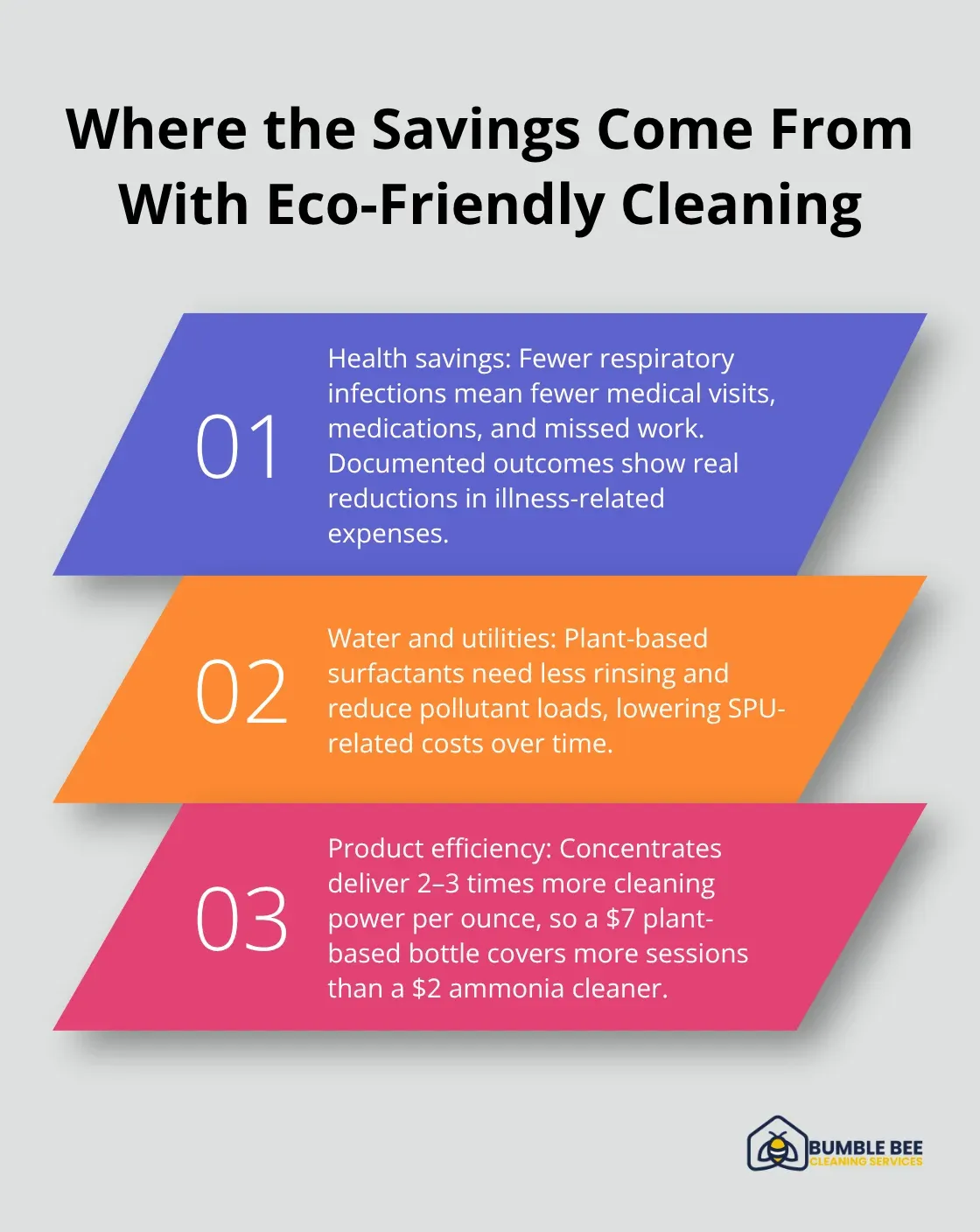
The financial case for eco-friendly cleaning in Seattle rests on measurable health improvements that compound over time. EPA documents on volatile organic compounds in conventional cleaners trigger eye, nose and throat irritation, headaches, and nausea. A single respiratory infection costs Seattle families $500–$1,500 in medical visits, medications, and lost work productivity. Families switching to eco-friendly products typically avoid 2–3 infections per household member annually, translating to $1,000–$4,500 in direct health savings. NIH-based health research tracks infection rates before and after households eliminate chemical cleaners, confirming these aren’t theoretical numbers but documented outcomes.
Water Bills and Utility Costs Drop
Your water and utility bills decrease when you use plant-based cleaners that require less rinsing and smaller quantities per cleaning session. Seattle Public Utilities charges higher rates for households that contribute more pollutants to stormwater systems, and traditional cleaners containing ammonia and nitrogen directly increase these fees through algal bloom remediation costs. Households using eco-friendly products reduce their municipal water treatment burden, which translates to measurable savings on SPU bills. Plant-based surfactants degrade organic matter more efficiently, requiring less water to rinse surfaces thoroughly.
Concentrated Formulas Cost Less Over Time
Eco-friendly concentrates cost slightly more upfront but deliver 2–3 times more cleaning power per ounce than conventional products, meaning a $7 bottle of plant-based cleaner covers more cleaning sessions than a $2 ammonia bottle. This inverts the cost equation entirely-the higher upfront price disappears when you calculate actual usage rates across a year of weekly cleanings. A concentrated formula that costs more initially often costs significantly less over twelve months of regular use.
Performance Matches or Exceeds Traditional Cleaners
Performance differences vanish when you use quality eco-friendly products. ISSA data on green cleaning product performance show certified green cleaning products achieve equal or superior cleanliness scores compared to conventional programs. Real Seattle homeowners report identical results on bathroom mold, hard water stains, and kitchen grease within 24 hours when they switch to EPA Safer Choice certified products. Products carrying CIMS Green Building certification or EPA Safer Choice labels have undergone rigorous testing to verify they work, so you avoid gambling on unproven formulas.
Total Cost of Ownership Favors Eco-Friendly Solutions
When you compare total cost of ownership rather than shelf price, eco-friendly cleaning costs less in Seattle, delivers superior results, and protects your family’s long-term health. The environmental benefit becomes your genuine financial advantage-you’re not paying extra for performance; you’re paying the same amount while eliminating health risks and pollution costs. Eco-friendly products reduce exposure for pets and children while supporting Puget Sound salmon populations, which aligns with Seattle residents’ environmental values.
Final Thoughts
Eco-friendly cleaning in Seattle costs less than traditional chemical alternatives when you measure total cost of ownership rather than shelf price. The upfront premium on plant-based products disappears within months thanks to concentrated formulas that deliver 2–3 times more cleaning power per ounce, reduced health expenses from fewer respiratory infections, and lower water bills from efficient rinsing. Sustainable practices align with Seattle’s regulatory environment and commitment to Puget Sound protection, making them financially advantageous for households and businesses alike.
You pay similar amounts for superior performance while eliminating chemical exposure for your family and pets. EPA Safer Choice certified products and ISSA-verified green cleaning programs deliver identical or better results on bathroom mold, hard water stains, and kitchen grease within 24 hours. Health-cost savings alone offset higher product prices within a single year, and environmental benefits compound as you reduce pollution flowing into local waterways.
When selecting an eco-friendly cleaning service, prioritize companies that invest in proper training and certified products. Look for ARCSI or IICRC certifications on your cleaning team, transparent pricing without hidden fees, and a satisfaction guarantee backing their work. Contact Bumble Bee Cleaning Services for an online quote on recurring home cleaning, deep cleaning, and move-in/move-out services using eco-friendly products.
For more information about our cleaning services in Seattle and Atlanta, or to request a cleaning quote, call or text us at 425-786-1360 or email us at info@qbclean.com
