
Your home harbors invisible threats. Dust, mold spores, construction toxins, and chemical residues accumulate in carpets, baseboards, and air vents-places standard vacuuming never reaches.
We at Bumble Bee Cleaning Services know that regular cleaning removes surface dirt, but deep cleaning targets the hidden buildup that affects your family’s health. This post shows you exactly how professional deep cleaning eliminates chemical contamination most homeowners don’t even know exists.
What’s Really Hiding in Your Home
Volatile organic compounds (VOCs) from paints, furniture, and cleaning products off-gas continuously, especially in poorly ventilated spaces, creating indoor air quality that the EPA reports is often worse than outdoor air. Formaldehyde from pressed-wood cabinets, benzene from adhesives, and phthalates from synthetic fragrances accumulate in dust, carpet fibers, and upholstery. These aren’t surface-level problems-chemicals embed themselves into textiles and settle in baseboards, behind appliances, and inside HVAC ducts where a vacuum never reaches.
The American Lung Association links residential exposure to cleaning products with respiratory problems and asthma onset in both children and adults. Parabens, BPA, and glyphosate residues from pesticides and food storage containers build up over months and years, creating what occupational health researchers call a chemical burden that standard cleaning cannot address.
Where Chemical Buildup Actually Happens
Carpets and upholstered furniture trap the most chemical residue. Dust settles into carpet pile and fabric fibers, holding VOCs and particulate matter that regular vacuuming leaves behind.
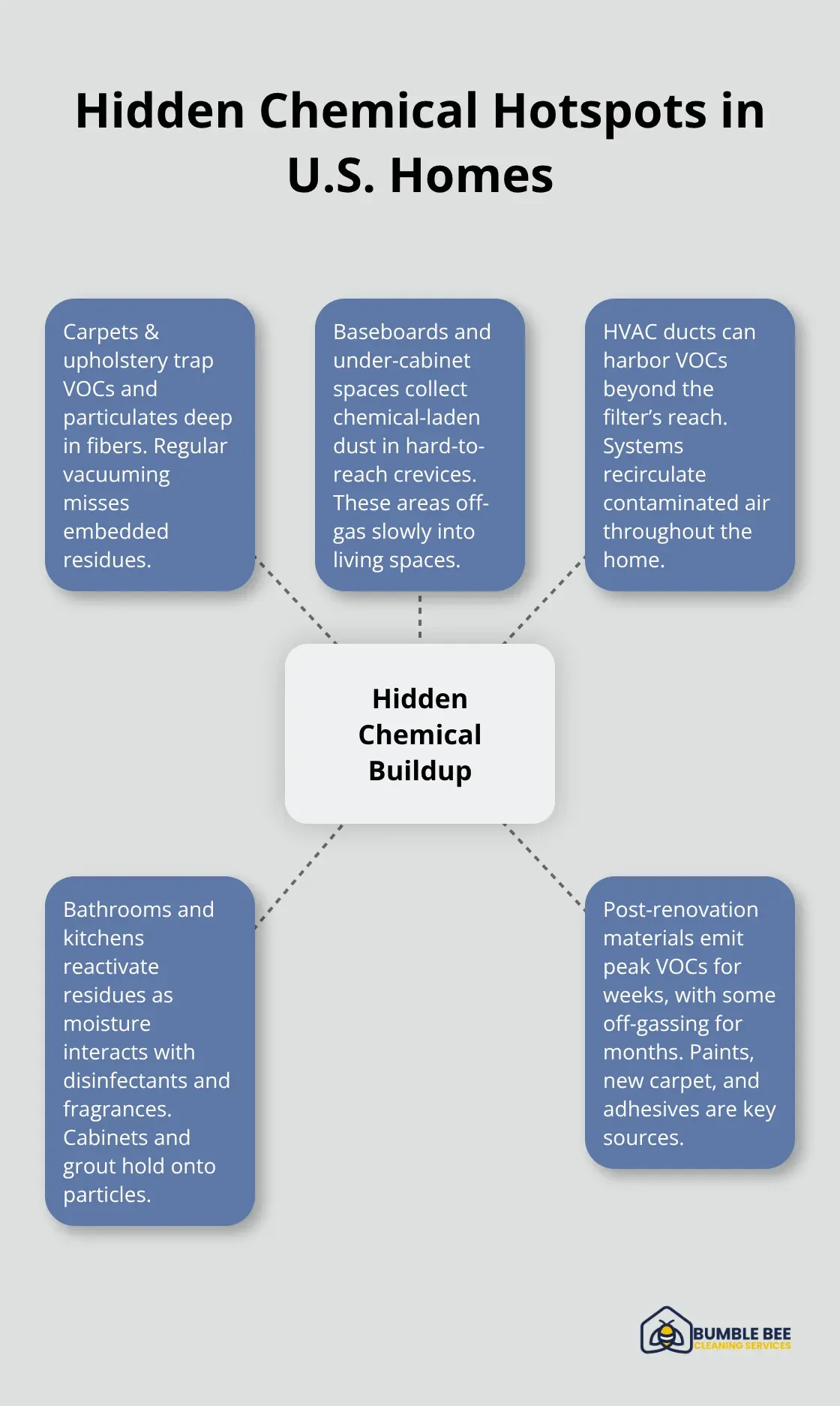
Hard-to-reach areas like baseboards, window sills, and the spaces under kitchen cabinets accumulate chemical dust that off-gasses slowly into living spaces.
HVAC systems distribute contaminated air throughout your home, and cleaning the filter alone doesn’t remove VOCs already lodged in ductwork. New renovations accelerate the problem. Fresh paint, new carpet, and adhesives from construction emit peak VOC levels for weeks, with some off-gassing continuing for months. Standard cleaning during this period fails to capture the chemical load before it settles deep into materials.
Bathrooms and kitchens present particular challenges because moisture activates off-gassing from cleaning product residues stored in cabinets and from disinfectant particles that cling to surfaces.
Why Vacuuming and Wiping Don’t Cut It
A regular vacuum with a standard filter recirculates fine particles and VOCs back into the air. HEPA filtration captures particulates but not gases. Chemical residues require activated carbon filtration to adsorb VOC molecules-something a household vacuum doesn’t provide.
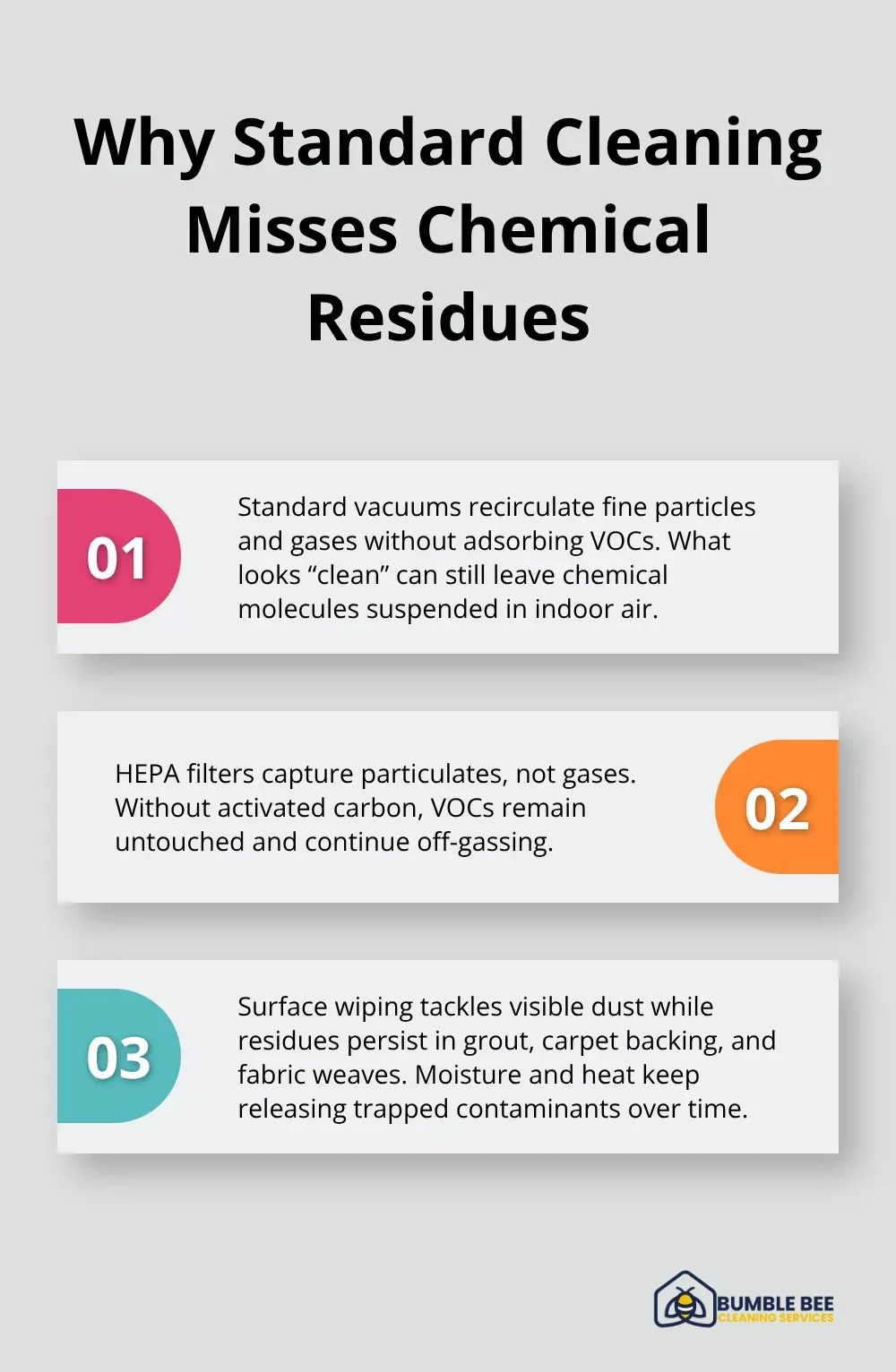
Surface wiping removes visible dust but leaves chemical buildup in grout lines, carpet backing, and fabric weaves where moisture and temperature fluctuations continue to release contaminants.
The problem intensifies in homes where cleaning products see frequent use. Each application adds new chemical layers to existing residue, compounding indoor air contamination over time. Professional-grade extraction equipment with activated carbon filtration removes trapped chemicals that everyday cleaning methods simply cannot reach, which is why the next section explores how deep cleaning actually targets these hidden contaminants.
How Professional Deep Cleaning Extracts Hidden Chemicals
Extraction Methods That Reach Hidden Residues
Hot water extraction, the industry standard recognized by the IICRC, forces pressurized water and cleaning solution deep into carpet fibers and upholstery backing where VOCs and chemical particles hide. The extraction process pulls contaminated moisture back out, removing embedded chemicals rather than just surface dirt. This method works because chemicals accumulate in the moisture and dust trapped within material layers-vacuuming alone leaves these deposits intact. Professional equipment generates extraction pressure between 500 and 1000 PSI, far exceeding what household machines deliver, allowing technicians to reach chemical buildup in grout lines, carpet seams, and fabric weaves where off-gassing continues unchecked.
Activated carbon filtration used in professional systems removes odors, gases, and volatile organic compounds (VOCs) from paint, cleaning products, and smoke-a critical difference because HEPA alone captures only particulates, not gases. Deep cleaning also targets baseboards, window sills, and HVAC ductwork through specialized tools designed to access areas where chemical dust settles. Encapsulation techniques used during deep cleaning create barriers that prevent trapped chemicals from off-gassing into living spaces, offering immediate air quality improvement that surface cleaning never delivers.
IICRC Standards and Chemical Removal
Professional deep cleaning follows established industry standards that specifically address hidden chemical residues. The ANSI/IICRC S100 Standard for Professional Cleaning of Textile Floor Coverings and ANSI/IICRC S300 for upholstery outline methods for removing chemical buildup from these high-risk areas. The IICRC S220 Standard for Professional Inspection of Hard Surface Floor Coverings and S230 Standard for Flooring Subfloors emphasize identifying hidden chemical contamination before cleaning begins, ensuring technicians know exactly where residues concentrate. This assessment-driven approach means deep cleaning removes chemicals specific to your home’s contamination profile rather than applying generic methods that miss problem areas.
Where Chemical Removal Matters Most
The chemicals removed during deep cleaning depend on what accumulates in your specific spaces. Post-construction homes benefit most because fresh paint, adhesives, and new materials emit peak VOC levels for weeks-professional deep cleaning during this period captures formaldehyde and benzene before they embed permanently into textiles and finishes. Homes using conventional cleaning products frequently show higher chemical loads in bathrooms and kitchens because disinfectant particles and fragrance compounds cling to cabinet interiors, tile grout, and ventilation surfaces where moisture reactivates off-gassing.
Carpeted areas in bedrooms and living rooms trap the broadest range of chemical residues because dust settles continuously and synthetic fragrances from air fresheners and laundry products accumulate in carpet pile. Professional cleaning addresses all these zones systematically, whereas standard cleaning targets visible surfaces only. The result appears immediately in improved air quality, reduced odors, and elimination of the off-gassing that causes headaches and respiratory irritation in family members exposed daily to chemical-laden indoor environments. Understanding which areas in your home harbor the most chemical buildup sets the stage for recognizing how deep cleaning frequency and intensity differ fundamentally from regular maintenance routines.
How Deep Cleaning Differs From Daily Maintenance
Regular cleaning and deep cleaning operate on entirely different schedules and intensities, which is why one cannot replace the other. Standard weekly or bi-weekly vacuuming removes surface dust but leaves chemical residues embedded in carpet fibers and upholstery. Professional hot water extraction penetrates carpet backing and fabric weaves where VOCs accumulate, pulling out the chemical-laden moisture that household vacuums never reach. The frequency difference matters enormously: regular cleaning happens weekly or monthly, while deep cleaning typically occurs quarterly or semi-annually because it addresses the cumulative chemical burden that surface cleaning ignores.
What Standard Vacuums Miss
A standard vacuum with HEPA filtration removes visible particulates, but it removes zero percent of volatile organic compounds trapped in textiles. Professional extraction equipment removes both particulates and the moisture containing dissolved chemical residues, making the intensity difference dramatic and measurable. Chemical residue buildup accelerates in homes using conventional cleaning products frequently. Each application of disinfectant sprays or multi-surface cleaners leaves particulate matter and volatile compounds clinging to cabinets, tile grout, and ventilation surfaces.
Chemical Accumulation Outpaces Surface Cleaning
Deep cleaning extracts chemical buildup systematically, resetting the chemical burden to near-baseline levels. Without deep cleaning, homeowners experience compounding exposure over months and years as layers of cleaning product residues, off-gassing from furniture, and construction toxins merge into a persistent indoor air quality problem. Residential exposure to accumulated cleaning product chemicals correlates with asthma onset and respiratory symptoms in children, meaning the choice between surface-level maintenance and periodic deep cleaning carries genuine health consequences.
Long-Term Air Quality Improvements From Professional Deep Cleaning
One deep cleaning session removes trapped chemical residues that accumulated over three to six months of regular cleaning alone. This immediate improvement in indoor air quality lasts approximately three months before chemical reaccumulation begins again, which is why scheduling deep cleaning quarterly provides superior long-term protection compared to relying solely on weekly vacuuming. Homes that implement quarterly deep cleaning combined with regular maintenance show measurably lower VOC concentrations and reduced off-gassing odors year-round.
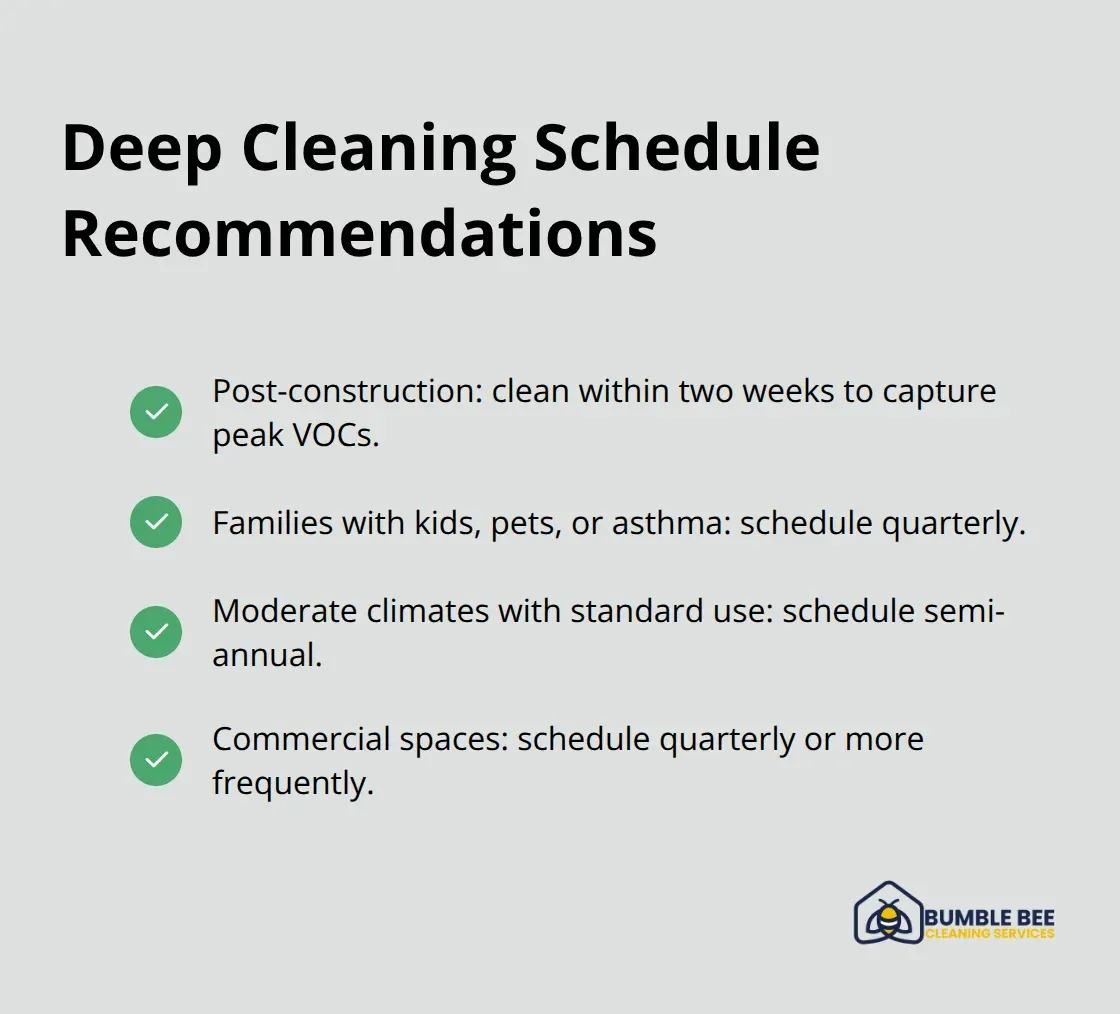
Post-construction homes benefit most from deep cleaning within two weeks of completion because fresh paint, adhesives, and new materials emit peak formaldehyde and benzene levels during this window. Delaying deep cleaning allows these chemicals to embed permanently into carpet and upholstery fibers, making later removal substantially more difficult. Homes with young children, pets, or residents with asthma or respiratory sensitivity require quarterly deep cleaning because the chemical exposure reduction directly improves health outcomes and breathing comfort. Homes in moderate climates with standard usage patterns benefit from semi-annual deep cleaning, while commercial spaces see faster chemical reaccumulation and typically require quarterly or more frequent deep cleaning to maintain safe indoor air quality for employees and visitors.
Final Thoughts
Deep cleaning removes hidden chemical residues that standard vacuuming and surface wiping cannot reach. VOCs from paints, furniture, and cleaning products embed themselves in carpet fibers, upholstery, and baseboards where they continue off-gassing and affecting indoor air quality. Professional hot water extraction with activated carbon filtration pulls these trapped contaminants out systematically, delivering measurable improvements in air quality that household cleaning methods simply cannot match.
Schedule deep cleaning within two weeks after construction or major renovations to capture peak VOC emissions before construction toxins permanently embed into materials. For established homes, quarterly deep cleaning maintains chemical levels near baseline and prevents the respiratory problems and headaches linked to accumulated cleaning product exposure. Homes with young children, pets, or residents with asthma require quarterly service because the chemical reduction directly improves health outcomes.
Maintaining a chemically safer home requires combining regular weekly vacuuming with periodic professional deep cleaning. Weekly maintenance removes surface dust and prevents new chemical layers from building up too rapidly, but it cannot extract the residues already embedded in textiles and hard-to-reach areas. Contact Bumble Bee Cleaning Services to schedule deep cleaning matched to your home’s specific contamination profile and health needs, and let our team eliminate hidden chemicals safely while protecting your family and the environment.
For more information about our cleaning services in Seattle and Atlanta, or to request a cleaning quote, call or text us at 425-786-1360 or email us at info@qbclean.com
