
Your home deserves more than surface-level cleaning. Deep cleaning reaches the places regular maintenance misses-behind furniture, under appliances, and into baseboards where dust and allergens hide.
We at Bumble Bee Cleaning Services know that Seattle homes need thorough cleaning to stay healthy and fresh. Whether you’re preparing for a post-renovation inspection or simply want your space spotless, professional deep cleaning makes a real difference.
What Deep Cleaning Actually Covers
Deep cleaning targets what regular vacuuming and wiping miss. Professional deep cleaning focuses on the spaces that accumulate dust, allergens, and bacteria over months of normal living. Behind your sofa, under the refrigerator, inside cabinet interiors, and along baseboards are where real dirt hides. The EPA notes that mold can begin growing within 24 to 48 hours after moisture exposure, which means areas prone to dampness in Seattle homes need aggressive attention. Deep cleaning removes that accumulated grime before it becomes a health problem.
Behind and Under Appliances
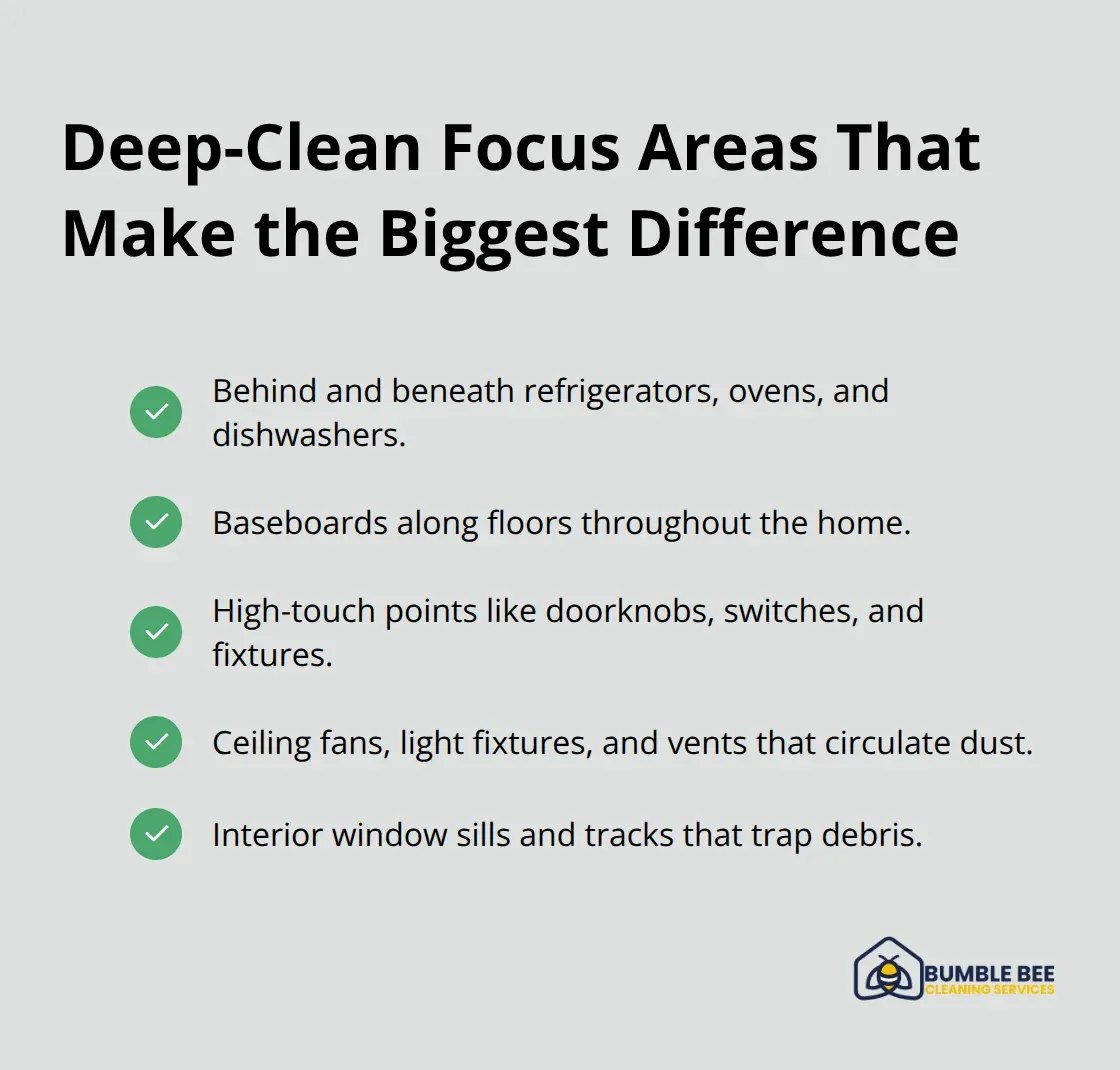
Refrigerators, ovens, and dishwashers accumulate grease, food particles, and moisture underneath and behind them. These areas create ideal conditions for mold and pest activity. Professional deep cleaning moves these appliances to access the floor beneath and behind them, removing buildup that attracts problems. Baseboards throughout your home collect dust at floor level where your regular vacuum cannot reach effectively. Scrubbing baseboards thoroughly noticeably changes how fresh a room feels.
Sanitizing High-Touch Surfaces
Doorknobs, light switches, cabinet handles, and bathroom fixtures harbor pathogens that survive for hours or days. Deep cleaning applies disinfectants that go beyond surface wipes, removing biological materials and pathogens rather than just moving them around. This matters in Seattle homes where moisture-heavy air can harbor mold spores on frequently touched surfaces.
Ceiling Fans, Fixtures, and Windows
Ceiling fans, light fixtures, and vents accumulate dust that circulates through your home every time you turn on a fan or adjust your HVAC system. Deep cleaning removes this buildup, improving air quality measurably. Interior window sills and tracks collect debris that regular cleaning ignores, affecting both appearance and window function in Seattle’s rainy climate.
Now that you understand what professional deep cleaning covers, the next step is preparing your home to make the process as smooth and effective as possible.
How to Prepare Your Home for Deep Cleaning
Preparation determines whether your deep cleaning delivers maximum results or falls short. Start by removing personal items, toys, and clutter from surfaces and floors at least two days before your appointment. This gives your team direct access to every area without stopping to work around obstacles. Clear pathways through hallways, bedrooms, and living spaces so cleaners can move equipment efficiently.
Clear Surfaces and Floors
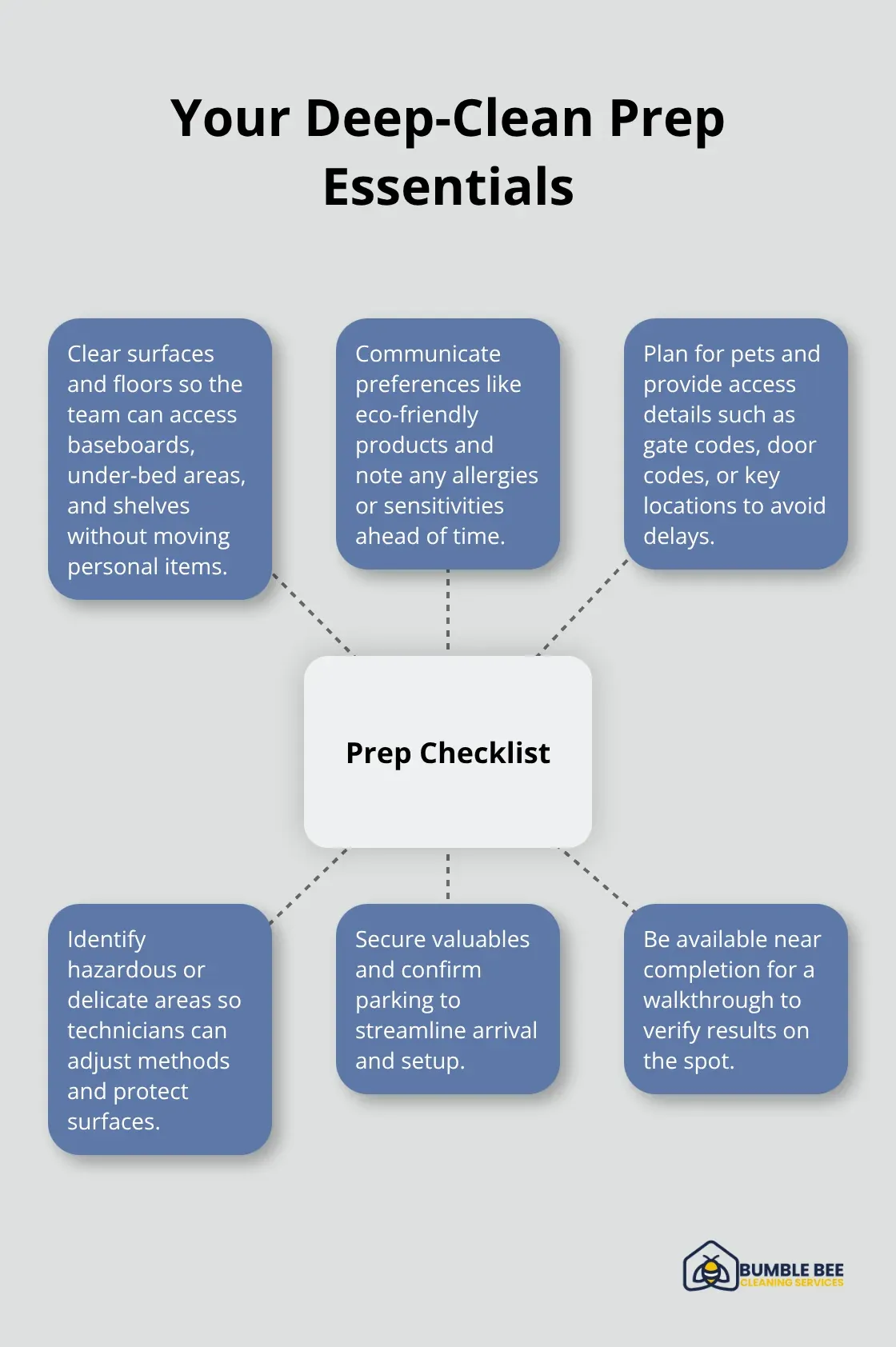
Move items stored under beds or in closets to another room temporarily, or consolidate them into labeled boxes stacked in one corner. This approach prevents cleaners from accidentally moving your belongings and allows them to access baseboards, under-bed areas, and closet shelves thoroughly. Secure valuables in a locked drawer or safe before the team arrives. Removing clutter also protects your possessions and speeds up the cleaning process significantly.
Communicate Special Requirements Early
Contact your cleaning team at least 48 hours before your appointment to discuss any special needs. If you have pets (especially anxious animals), let them know so they can coordinate timing appropriately. Mention if you prefer eco-friendly products for household members with sensitivities or allergies. Provide clear access instructions including gate codes, door codes, or key locations so the team can enter without delays.
Identify Hazardous or Restricted Areas
Alert your team to any electrical hazards, sharp objects, or poorly lit spaces in your home. Cleaners cannot access hazardous zones. For homes with hardwood floors or delicate surfaces, specify these details so the team uses appropriate methods. Most importantly, confirm parking arrangements and arrange for someone to be home approximately 30 minutes before completion for a final walkthrough to verify the results.
With your home prepared and your team briefed, you’re ready to understand what happens when the deep cleaning work concludes and how to maintain those results.
What Happens After Your Deep Clean
Inspect Your Home While the Team Is Present
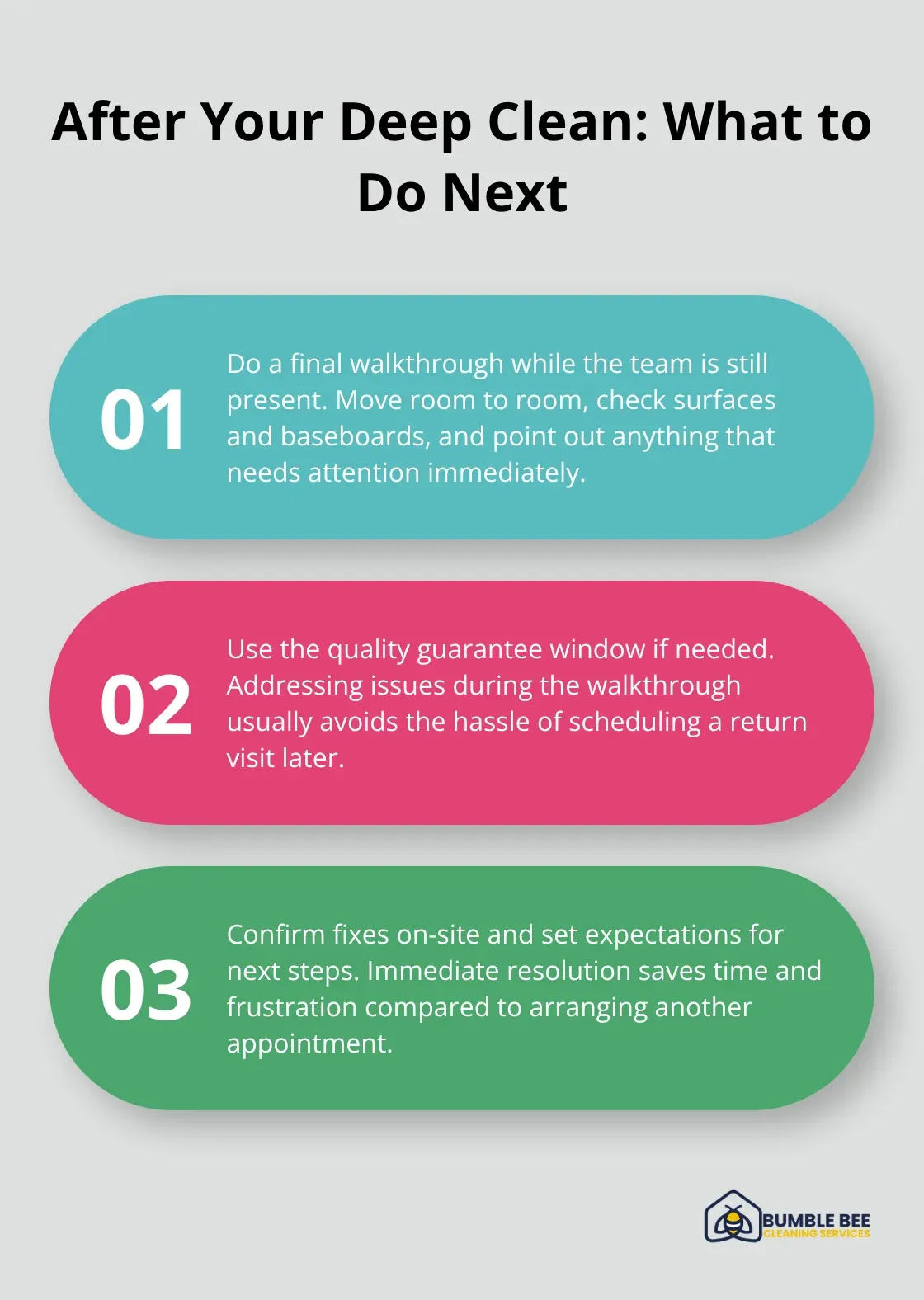
Your deep cleaning appointment concludes with a critical step that separates professional results from mediocre ones: the final walkthrough. Plan to be home approximately 30 minutes before completion so you can inspect the work while the team is still present. Walk through each room systematically, checking baseboards for dust, running your hand along surfaces to feel for grit, and opening cabinet doors to verify interior cleanliness. If you spot an area that needs attention, point it out immediately. This is not about being difficult-it’s about holding the service to the standard you paid for. A quality deep clean should leave your home noticeably fresher, with air that feels cleaner and surfaces that genuinely shine. If something falls short, the team can address it on the spot rather than scheduling a return visit later.
Understand Your Quality Guarantee
A 100% quality service guarantee means you have a 24-hour window to request free touch-ups if any area doesn’t meet your expectations. However, catching issues during the walkthrough prevents that hassle entirely. The team can fix problems immediately while they have their equipment and supplies on-site. This approach saves you time and frustration compared to coordinating a separate return appointment days later.
Establish a Maintenance Routine
Deep cleaning resets your space-it doesn’t prevent future dirt accumulation. Your baseboards will collect dust again; your ceiling fans will gather particles; your bathroom grout will show soap scum. That’s normal. The practical strategy is to establish a light maintenance routine between deep cleans. Vacuum high-traffic areas twice weekly, wipe kitchen and bathroom surfaces daily, and address spills immediately to prevent moisture issues in Seattle’s damp climate.
Schedule Your Next Deep Clean
Schedule your next deep cleaning every 6 to 12 months depending on household size and activity level. Homes with pets or children benefit from annual deep cleaning; quieter households might stretch to 18 months. For those committed to maintaining pristine conditions year-round, recurring cleaning services paired with annual deep cleans deliver the best results. Document your home’s condition after deep cleaning by taking photos-this creates a baseline for tracking how your space changes over time and helps justify the investment when you see how much better it looks compared to months of regular maintenance alone.
Final Thoughts
Deep cleaning transforms your Seattle home from dusty and neglected to genuinely fresh. The spaces behind your furniture, under appliances, and along baseboards stop harboring allergens and mold spores. Your air quality improves noticeably, and surfaces shine after a post-renovation inspection or months of regular living.
The time investment alone makes professional deep cleaning worthwhile. A thorough DIY deep clean of a typical Seattle home takes 20 to 30 hours spread across multiple weekends, requiring you to move heavy furniture and rent specialized equipment. We at Bumble Bee Cleaning Services complete the same work in a single day with trained technicians, professional-grade equipment, and expertise in moisture control and mold prevention specific to Seattle’s climate.
Schedule your deep cleaning service with Bumble Bee Cleaning Services and experience why Seattle homeowners trust us to keep their spaces pristine.
For more information about our cleaning services in Seattle and Atlanta, or to request a cleaning quote, call or text us at 425-786-1360 or email us at info@qbclean.com
