
Your Seattle office is a breeding ground for illness. Doorknobs, keyboards, and conference tables pass viruses between employees every single day, and our wet climate makes things worse.
Sanitizing high-touch surfaces daily cuts pathogen transmission dramatically. We at Bumble Bee Cleaning Services have seen firsthand how this simple practice transforms workplace health and keeps your team productive.
Why Seattle Offices Face Unique Hygiene Challenges
Bacteria and Viruses Spread Rapidly in High-Traffic Spaces
Bacteria and viruses spread faster in Seattle offices than most business owners realize. A University of Arizona study found that office desks harbor more than 400 times the bacteria of a typical toilet seat, and high-traffic areas amplify this problem exponentially. When employees move between meeting rooms, break areas, and shared workstations, they transfer pathogens constantly. Doorknobs alone carry about 25,000 germs per square inch according to research on office hygiene hotspots. Keyboards accumulate oils, crumbs, and pathogens from repeated hand contact throughout the day. Conference tables where teams meet for hours become vectors for transmission simply because multiple people touch the same surfaces repeatedly.
Seattle’s Climate Accelerates Pathogen Survival
Seattle’s wet climate compounds this risk significantly. The moisture in our air allows bacteria and viruses to survive longer on surfaces than in drier climates. Winter months especially amplify the problem, as employees spend more time indoors in enclosed spaces with poor ventilation, and respiratory viruses thrive in these conditions. This seasonal pattern makes consistent sanitizing practices non-negotiable for Seattle businesses.
Illness Costs Your Business More Than You Think
The financial impact of ignoring these risks runs deeper than most Seattle business owners expect. The Journal of Occupational and Environmental Medicine reports that cleaner workplaces correlate directly with fewer illness symptoms among employees. When employees miss work due to preventable illnesses, productivity drops sharply. A single employee taking even two sick days per month costs a business thousands annually when you factor in lost output, missed deadlines, and the burden on remaining staff.
Cleanliness Shapes Client Perception and Loyalty
Beyond absenteeism, illness in the office damages morale and client relationships. Clients visiting your office notice when surfaces look dirty or when your team appears unwell. Research from the BYU Journal of Organizational Behavior shows that cleanliness directly influences external perception and client loyalty. Daily sanitizing of high-touch surfaces prevents these cascading problems before they start, protecting both your team’s health and your bottom line. Understanding these risks makes the case for action clear-and implementing a structured sanitizing program becomes the logical next step.
How Long Viruses Actually Survive on Your Office Surfaces
Viruses don’t vanish the moment they land on a doorknob or keyboard. Research shows that respiratory viruses survive on hard surfaces for anywhere from several hours to multiple days, depending on the pathogen and environmental conditions. A study published in the New England Journal of Medicine found that SARS-CoV-2 remained viable on stainless steel and plastic for up to 72 hours, while other common office viruses like influenza persist for shorter periods but still long enough to infect multiple employees throughout a single workday. This survival window makes daily sanitizing non-negotiable in Seattle offices. If you sanitize surfaces only once a week, viruses deposited on Monday morning can still transmit illness to your team on Friday. The CDC confirms that regular disinfection of high-touch surfaces reduces the spread of colds and flu in office environments, especially during peak seasons when respiratory illnesses circulate most aggressively.
The High-Touch Surface Map Every Seattle Office Needs
Doorknobs carry approximately 25,000 germs per square inch, but they represent just the beginning of your contamination problem. Office phones harbor about 25,000 germs per square inch as well, making them equally problematic. Elevator buttons and lobby controls rank among the germiest daily contact points because constant user turnover throughout the day amplifies pathogen transfer.
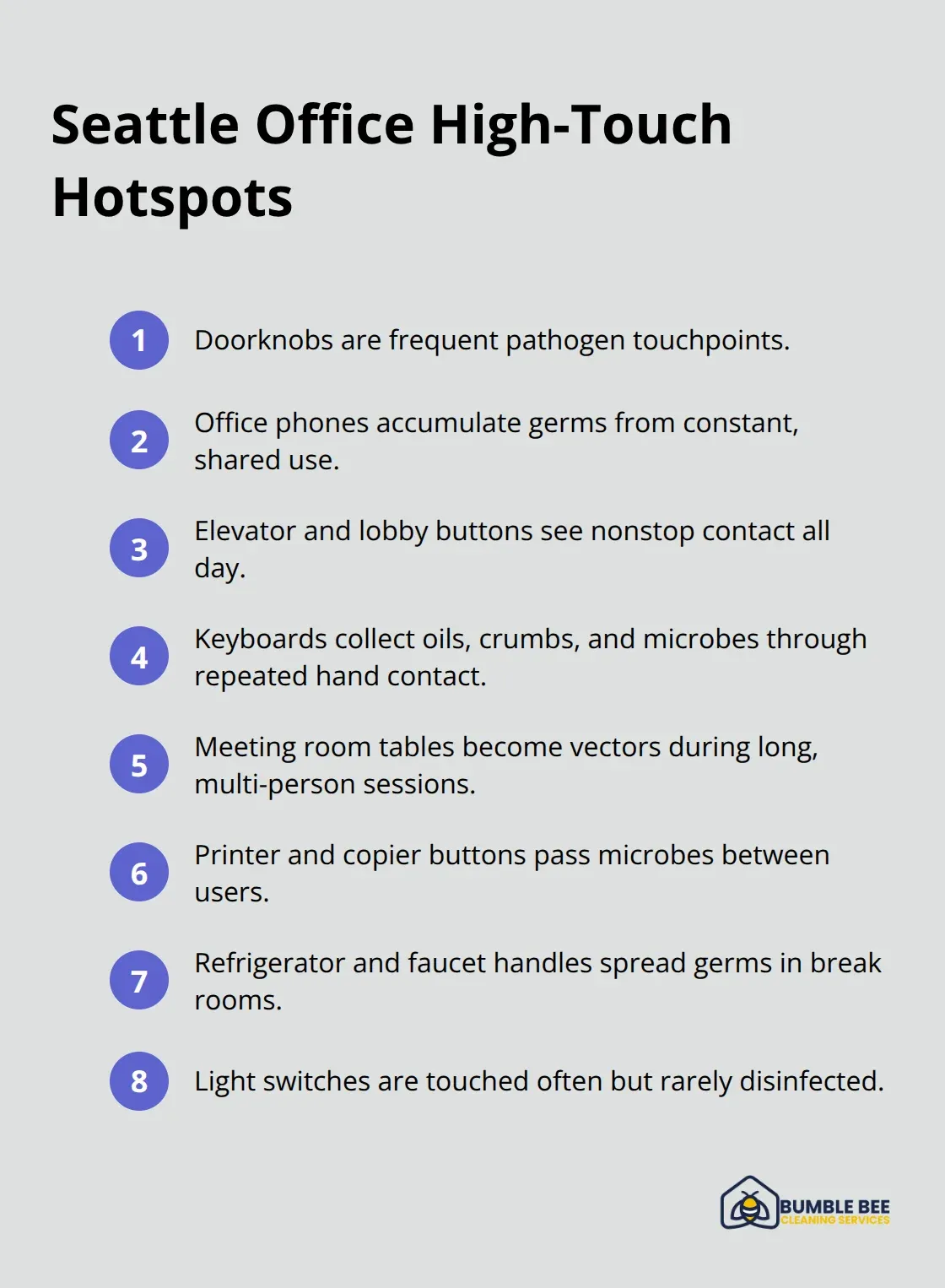
Keyboards accumulate oils, crumbs, and pathogens from repeated hand contact and often see use across different shifts or between multiple employees. Meeting room tables become contamination vectors when multiple people gather for hours and repeatedly touch the same surface. Printer buttons, copy machine controls, refrigerator handles, faucet handles in break rooms, and light switches complete the picture of pathogen distribution throughout your office.
Why 80 Percent Reduction Matters for Your Bottom Line
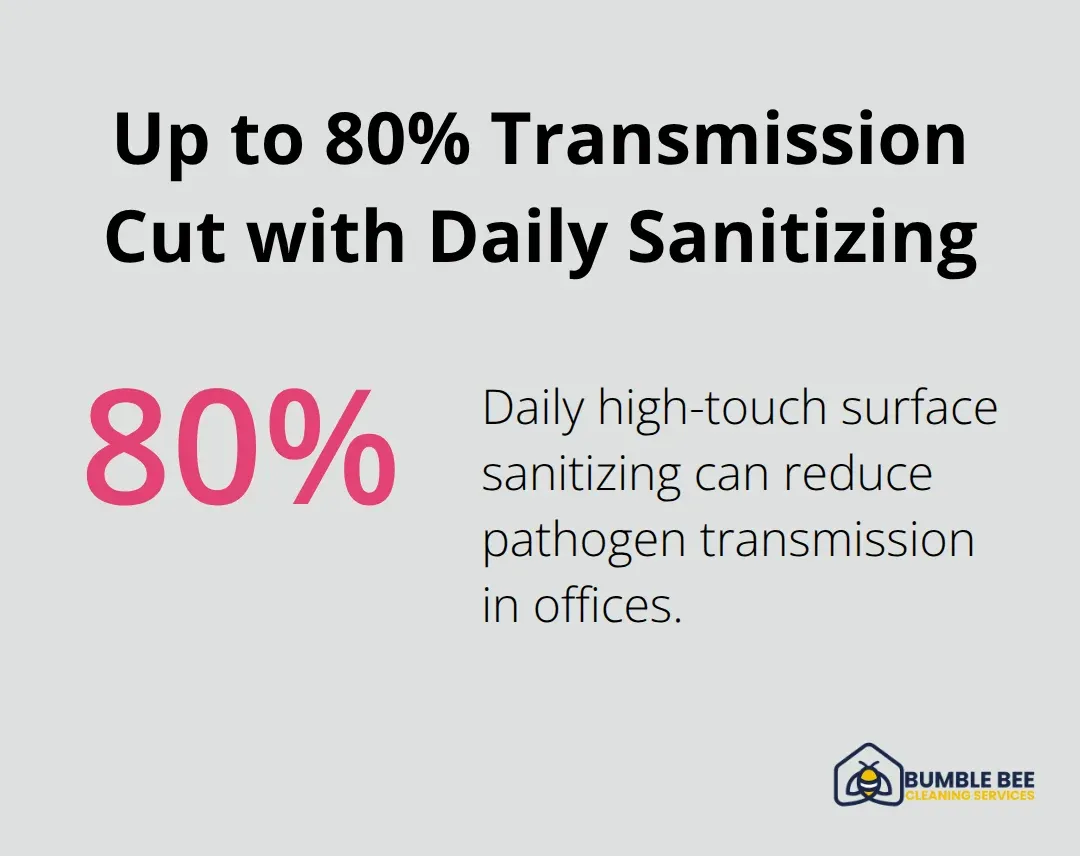
Daily sanitizing of high-touch surfaces reduces pathogen transmission by up to 80 percent according to research on workplace hygiene interventions. That statistic translates directly to fewer sick days, lower absenteeism rates, and measurable productivity gains. When your team stays healthy, deadlines get met, client meetings happen as scheduled, and projects move forward without the constant friction of coverage gaps.
The Journal of Occupational and Environmental Medicine documents that cleaner workplaces correlate with fewer illness symptoms (coughing, headaches, and fatigue) among employees. This isn’t marginal improvement-it’s the difference between a functional team and one constantly disrupted by illness cycles. Implementing daily sanitizing means your office moves from a reactive posture of managing illness outbreaks to a proactive strategy of preventing transmission before it starts.
Building Your Sanitizing Strategy Around Real Transmission Pathways
Effective sanitizing focuses on actual transmission pathways in your workplace rather than theoretical hotspots. Your office layout, traffic patterns, and shared equipment determine which surfaces demand the most attention. High-traffic areas like entryways, break rooms, and conference spaces require more frequent sanitizing than isolated workstations. Understanding this distinction helps you allocate resources efficiently and protect your team where transmission risk runs highest. The next section walks through the specific steps to implement a daily sanitizing program that fits your Seattle office’s unique needs and schedule.
Building Your Sanitizing Program
Select the Right Disinfectant for Your Office Surfaces
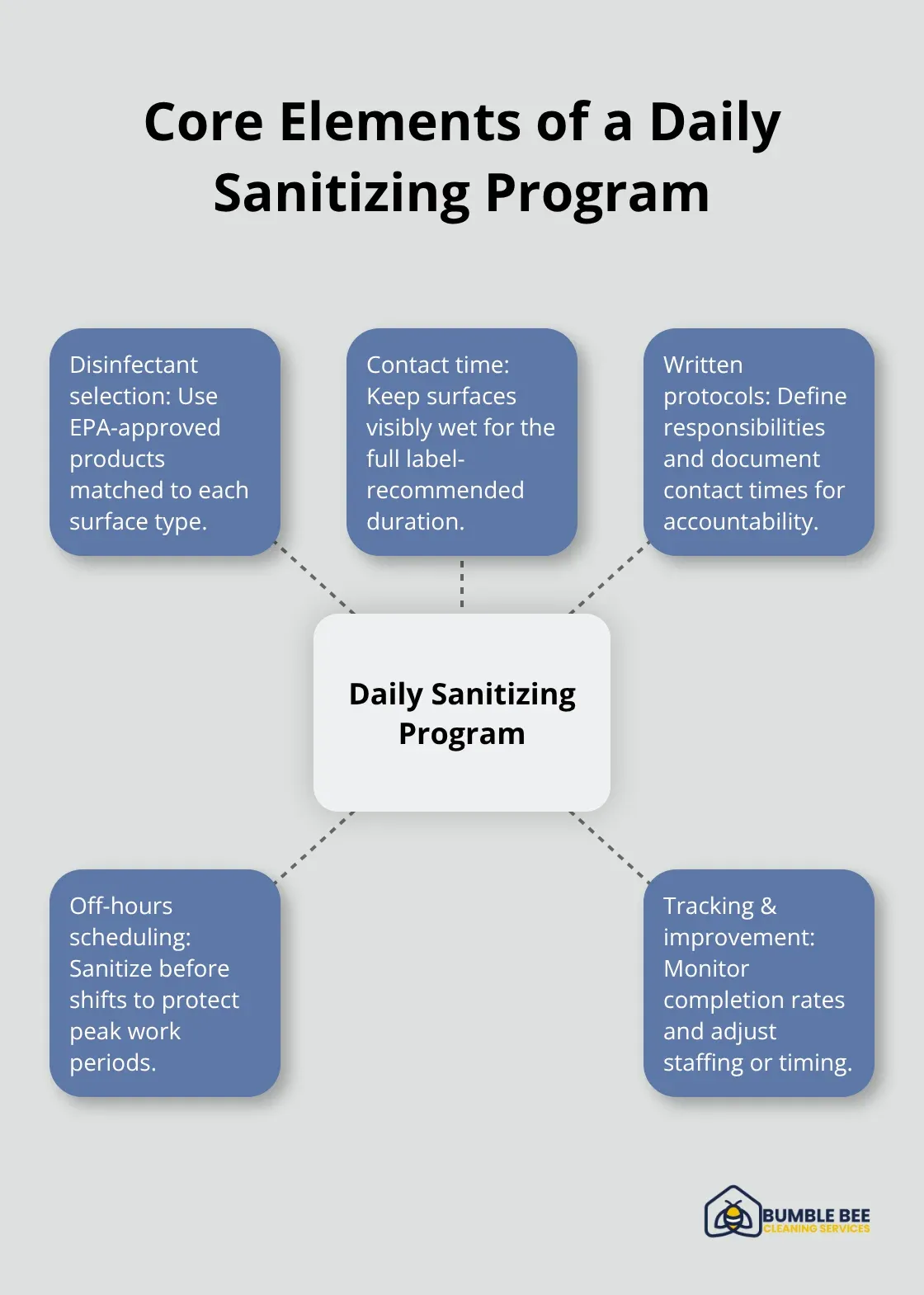
Selecting the right disinfectant matters more than most Seattle office managers realize. The EPA maintains a list of approved disinfectants effective against respiratory viruses, and your choice determines whether daily sanitizing actually reduces transmission or simply creates the appearance of cleanliness. Quaternary ammonium compounds and bleach-based solutions work well for hard surfaces, but bleach corrodes many office materials and produces harsh fumes that compromise indoor air quality during frequent application. Alcohol-based disinfectants with at least 70 percent ethanol kill pathogens quickly and evaporate without residue, making them ideal for keyboards, phones, and touch screens that staff use constantly throughout the day.
The CDC guidance on cleaning and disinfecting emphasizes that contact time matters critically-the surface must remain wet for the full recommended duration on the product label. Most Seattle offices fail at this step, spraying a surface and wiping it dry immediately, which defeats the purpose entirely. Staff training on proper disinfectant application ensures your team understands that faster application means nothing if the chemical doesn’t have adequate time to kill pathogens.
Establish Clear Protocols and Documentation Standards
Establish a written protocol that specifies which disinfectant applies to which surface type and requires staff to document contact times on their cleaning checklists. This written approach prevents confusion and ensures consistency across your entire office. Your team photographs completed surfaces or logs timestamps in a mobile app, creating accountability and proof of completion that protects your business if illness outbreaks occur. Assign specific staff members to specific zones so responsibility stays clear and nobody assumes someone else handled a particular area.
Schedule Sanitizing During Off-Hours for Maximum Protection
Scheduling sanitizing during off-hours prevents disruption but creates logistical challenges that demand careful planning. Early morning sanitizing before employees arrive at 7 or 8 AM works better than evening cleanup because surfaces stay protected throughout the workday when transmission risk peaks. This timing also catches overnight pathogen accumulation from the previous day. If your office operates around the clock or operates with early shifts, split the program into multiple cycles-one before the first shift arrives and another during lunch hours when foot traffic drops.
Track Completion Rates and Adjust Your Program
Track completion rates weekly and adjust timing or staffing if certain high-touch areas show inconsistent coverage. Document everything-contact times, product batches, staff names, and surface conditions-because this record becomes invaluable if you face questions about your hygiene practices from clients, employees, or regulatory authorities. A solid hygiene program prevents costly compliance violations and builds trust with stakeholders. Flat-rate pricing models lock in consistent sanitizing frequency rather than hourly billing, which incentivizes rushing through the work and compromises results.
Final Thoughts
Daily high-touch surface sanitizing transforms how your Seattle office operates. Viruses survive on doorknobs, keyboards, and conference tables long enough to infect multiple employees, and your wet climate extends their survival window. When you commit to daily sanitizing, you stop illness before it disrupts your team, which means fewer sick days, met deadlines, and stronger client relationships.
Consistency matters more than intensity. A professional sanitizing program removes the guesswork and ensures every high-touch surface receives proper attention with the right disinfectant and adequate contact time. Your staff focuses on their actual jobs instead of managing illness cycles or worrying about contamination, and your bottom line improves measurably.
We at Bumble Bee Cleaning Services understand Seattle’s unique hygiene challenges and deliver the consistency your office needs through documented protocols, EPA-approved disinfectants, and flat-rate pricing that locks in reliable protection. Contact Bumble Bee Cleaning Services today for a free on-site walkthrough and no-obligation quote tailored to your office’s specific needs.
For more information about our cleaning services in Seattle and Atlanta, or to request a cleaning quote, call or text us at 425-786-1360 or email us at info@qbclean.com
