
Your facility’s cleanliness directly impacts how clients and employees perceive your business. Commercial cleaning services in Seattle face unique demands, from managing heavy foot traffic to handling the region’s wet climate.
We at Bumble Bee Cleaning Services know that finding the right cleaning partner means looking beyond price alone. This guide walks you through what matters most when selecting a provider that fits your business needs.
What Makes a Commercial Cleaning Partner Worth Trusting
Certifications That Prove Real Training
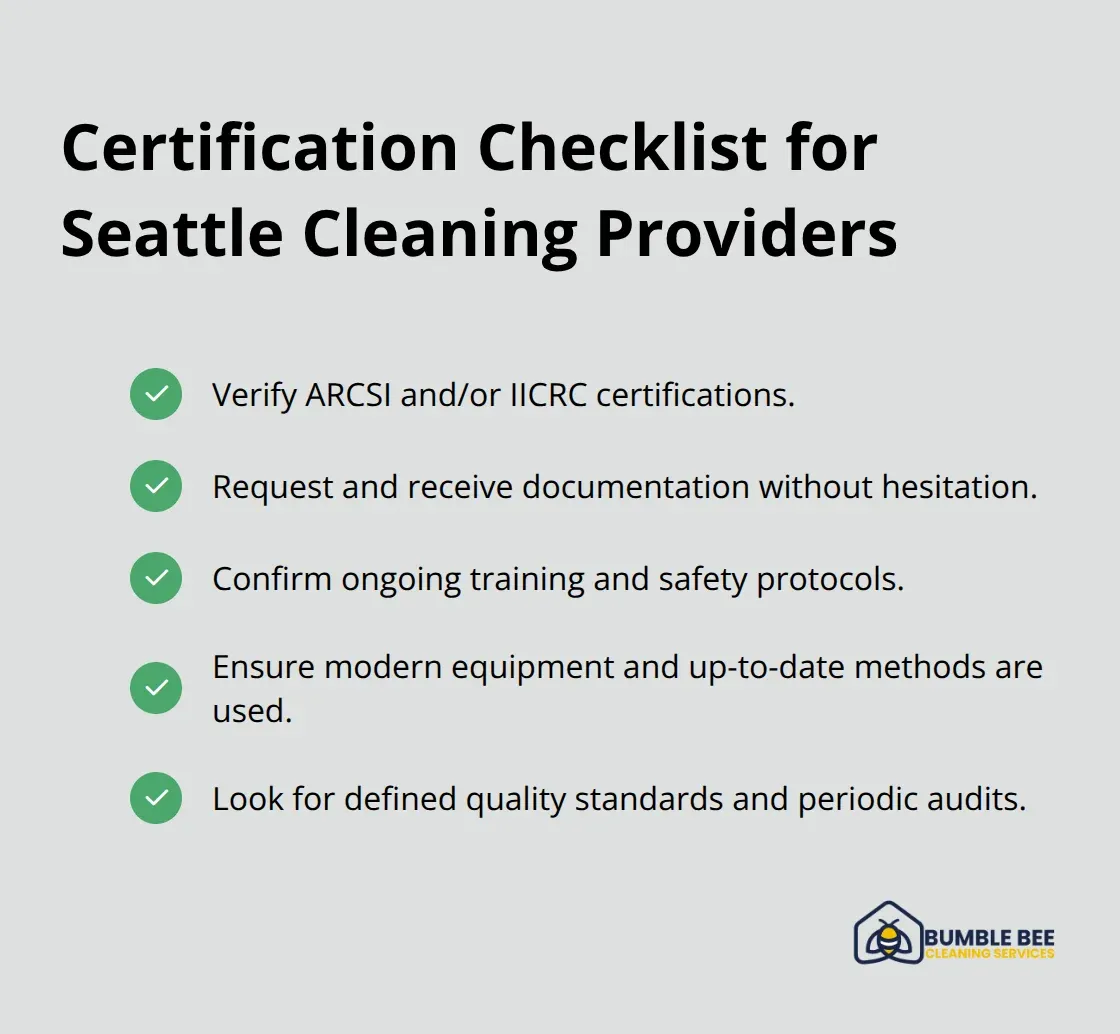
Certifications matter more than most business owners realize. The Association of Residential Cleaning Services International (ARCSI) and the Institute of Inspection Cleaning and Restoration Certification (IICRC) set formal training standards that separate serious operators from casual competitors. When you contact a potential provider, ask directly which certifications their team holds and request documentation-reluctance is a red flag. These credentials show a company invests in proper technique, safety protocols, and staying current with industry standards. In Seattle’s competitive market, providers without these certifications often cut corners on training and equipment, which shows up in inconsistent results and higher turnover rates.
Industry-Specific Experience Matters
A cleaning company with five years in retail operates differently from one with five years in medical offices or tech campuses. Industry-specific experience means they understand your unique challenges-whether managing lobby foot traffic, protecting sensitive equipment, or meeting healthcare-adjacent hygiene standards. Ask potential partners for three references from clients in your exact sector and call them directly. Don’t rely on testimonials alone; ask those references about punctuality, how the company handled unexpected issues, and whether they’ve retained the same team over time. A provider who knows your industry anticipates problems before they happen and already understands your operational constraints.
Scheduling That Works With Your Operations
Your facility doesn’t operate on a standard 9-to-5 cleaning schedule. Some businesses need work done after hours, others during slow periods, and some require on-demand services around special events or unexpected spills. A rigid cleaning company that offers only fixed weekly slots at predetermined times will frustrate your operations. Look for providers offering flexible scheduling-biweekly plans, emergency same-day response, and the ability to adjust frequency based on seasonal demands. Transparency in pricing matters too; obtain written estimates that clearly separate standard cleaning from add-ons like disinfecting or carpet cleaning so you know exactly what you’re paying for.
Staffing Stability and Accountability
Staff turnover directly affects your cleaning quality. A provider with high turnover means new faces every month, inconsistent results, and constant retraining of your facility’s layout and preferences. Ask potential partners how they handle employee absences and whether they maintain cross-trained backup staff to cover shifts seamlessly. Verify they use digital clock-in systems or supervisor oversight to confirm on-site attendance and that the scope of work gets completed as planned. A strong partner creates a stable team environment that reflects your brand promise to clients, employees, and visitors.
Clear Communication and Response Standards
Clarify upfront how the provider communicates with you and what response times you can expect. Will they send updates via email, phone, or a dedicated portal? How quickly do they address concerns or handle emergency requests? A provider who commits to specific response times and follows through builds the reliability your business depends on. This foundation of clear expectations and consistent follow-through sets the stage for evaluating whether a provider can truly deliver on their promises.
Seattle’s Unique Cleaning Demands
Moisture Management in the Pacific Northwest
Seattle’s relentless moisture creates mold and mildew risks that require biweekly or more frequent maintenance to prevent long-term damage. The wet climate accelerates dirt accumulation and moisture retention on carpets and flooring, meaning facilities that skip professional cleaning for even three weeks often face visible degradation.
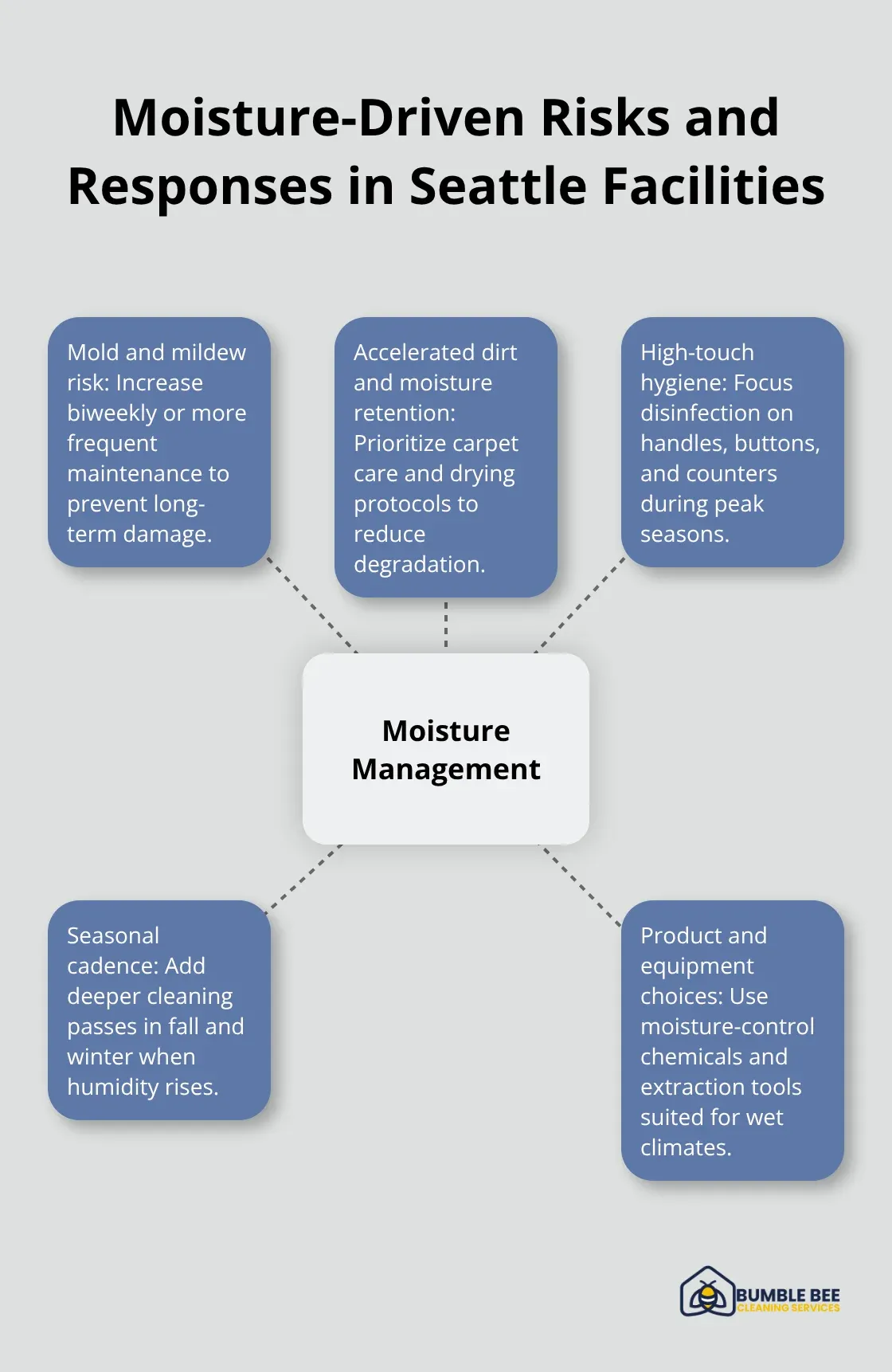
According to the CDC, regular cleaning reduces germ spread in offices and high-traffic spaces, with particular attention needed on high-touch surfaces like door handles, elevator buttons, and counters. A provider who understands this environment schedules more frequent deep cleaning passes during fall and winter months rather than maintaining a rigid year-round schedule.
High-Traffic Wear and Foot Traffic Impact
High-traffic commercial spaces in downtown Seattle, tech parks, and mixed-use buildings experience concentrated foot traffic that wears flooring faster and deposits moisture throughout the facility. This accelerated wear demands more aggressive maintenance than suburban or low-traffic facilities. Providers who account for Seattle’s foot traffic patterns adjust their equipment, product strength, and frequency accordingly rather than applying standard protocols to every client.
The True Cost of Deferred Cleaning
Cost pressure compounds these challenges because many facility managers attempt to reduce cleaning frequency when budgets tighten, only to face costlier emergency deep cleans or mold remediation later. The math works against this approach: maintenance cleaning every one to two weeks prevents buildup that requires specialized equipment and extended labor time. A cleaner who charges $800 monthly for biweekly service costs far less than the $2,500 to $4,000 emergency deep clean that becomes necessary when dirt and moisture accumulate unchecked.
Seasonal Adjustments and Product Selection
Seattle facilities struggle with seasonal transitions. Spring brings pollen and increased outdoor moisture tracked indoors, summer brings construction dust from the region’s active development, and fall intensifies mold risk as humidity rises. Your cleaning partner should adjust service intensity and product choices for each season rather than following a one-size-fits-all protocol. Ask potential providers whether they increase disinfecting frequency during outbreak seasons or shift to moisture-management products during Seattle’s wetter months.
Evaluating Provider Readiness for Seattle’s Climate
The combination of moisture management, high-traffic wear, and seasonal adjustments requires a partner who anticipates problems rather than reacting to crises. When you contact potential providers, ask specific questions about their moisture-control strategies, seasonal service adjustments, and how they handle mold prevention in your facility type. This line of questioning reveals whether a provider truly understands Seattle’s environment or simply applies generic cleaning schedules to every client.
How to Evaluate and Compare Commercial Cleaning Providers
Request Detailed Quotes and Service Agreements
Written estimates from three to five potential providers are non-negotiable, and the estimates must break down exactly what you’re paying for. A provider quoting $1,200 monthly for biweekly service should itemize standard cleaning tasks separately from add-ons like disinfecting, carpet cleaning, or window washing. Vague pricing hides problems.
Request their service agreement in writing before you sign anything, and read it carefully for response time commitments, what happens if they miss a scheduled visit, and whether they guarantee re-cleaning if standards aren’t met. Industry standards show that clear contracts prevent disputes later. Insist on flat-rate pricing rather than hourly billing, which creates unpredictable costs and incentivizes slower work.
When you compare quotes, calculate the annual cost at your preferred frequency. Biweekly cleaning typically costs less per month than weekly service but more than monthly maintenance, and the math should show you the real difference. A provider unwilling to provide a detailed written estimate in advance signals that they operate loosely, and loose operations lead to inconsistent results and surprise charges.
Check References and Online Reviews
Call three recent clients directly and ask specific questions about punctuality, team consistency, and how the provider handled problems. Google reviews reveal patterns, but they can be outdated or written by one-time customers unfamiliar with recurring service expectations.
Contact references and ask whether the same team shows up each visit, how quickly the provider responds to complaints, and whether they adjusted service based on seasonal Seattle demands like increased moisture management in fall and winter. Ask references about pricing changes and whether costs increased beyond normal inflation. A provider whose references consistently praise their responsiveness and team stability demonstrates the accountability your business needs.
Assess Response Time and Communication
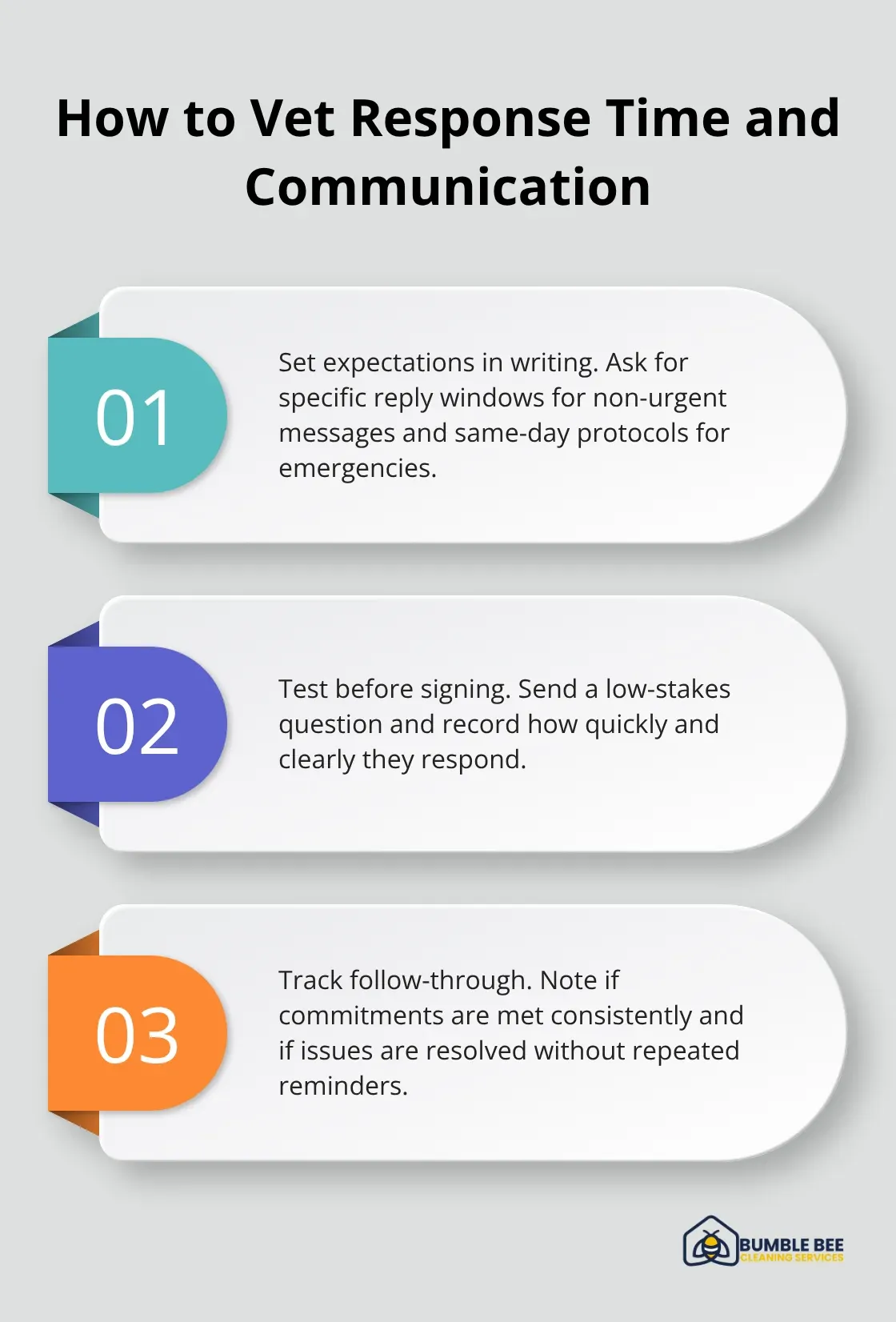
Response time and communication standards should be explicit. A provider who commits to returning calls within four hours and addressing urgent issues same-day sets clear expectations you can hold them to. Test this before you sign by sending an email or calling with a non-urgent question and noting how long they take to respond.
A provider who takes two weeks to answer a simple question will frustrate you when you need emergency disinfecting after a facility outbreak or when you discover that yesterday’s cleaning missed your main conference room. Providers who communicate clearly and respond promptly demonstrate the reliability your business depends on.
Final Thoughts
Selecting the right commercial cleaning services Seattle requires balancing certifications, industry experience, scheduling flexibility, staffing stability, and communication standards. Contact three to five providers, request detailed written estimates that itemize every service, and call their references directly. Ask those references about team consistency, response times, and seasonal adjustments for Seattle’s wet climate.
Professional commercial cleaning delivers measurable long-term benefits beyond surface appearance. Regular maintenance prevents the costly emergency deep cleans that disrupt operations and drain budgets, while biweekly service stops mold and moisture damage before they require expensive remediation. Consistent cleaning protects your flooring, carpets, and fixtures from accelerated wear caused by high-traffic foot traffic and moisture accumulation.
We at Bumble Bee Cleaning Services bring industry certifications and a commitment to quality on every commercial project. Request a quote from us to see how professional cleaning transforms your Seattle facility.
For more information about our cleaning services in Seattle and Atlanta, or to request a cleaning quote, call or text us at 425-786-1360 or email us at info@qbclean.com
