
Construction sites leave behind more than just an empty building. Paint overspray, drywall dust, and debris embed themselves into every surface, creating hazards that standard cleaning can’t handle.
We at Bumble Bee Cleaning Services know that post-construction cleaning demands specialized knowledge, equipment, and techniques that go far beyond what a regular cleaning crew can provide. This blog post walks you through why hiring professionals for this work isn’t optional-it’s essential.
What Construction Leaves Behind
Post-construction environments contain hazards that extend far beyond visible dust and debris. Lead-based paint, asbestos, radon, and volatile organic compounds settle into spaces during building and renovation work. Homes built before 1978 carry lead-based paint risks, and any disturbance during construction releases lead dust or chips into the air, according to EPA guidance. Asbestos in older structures poses friable fiber risks if materials get disturbed. Radon, the second leading cause of lung cancer in the U.S., accumulates in basements and crawlspaces during construction. VOCs from paints, adhesives, sealants, and new materials reach indoor levels 2 to 5 times higher than outdoor air.
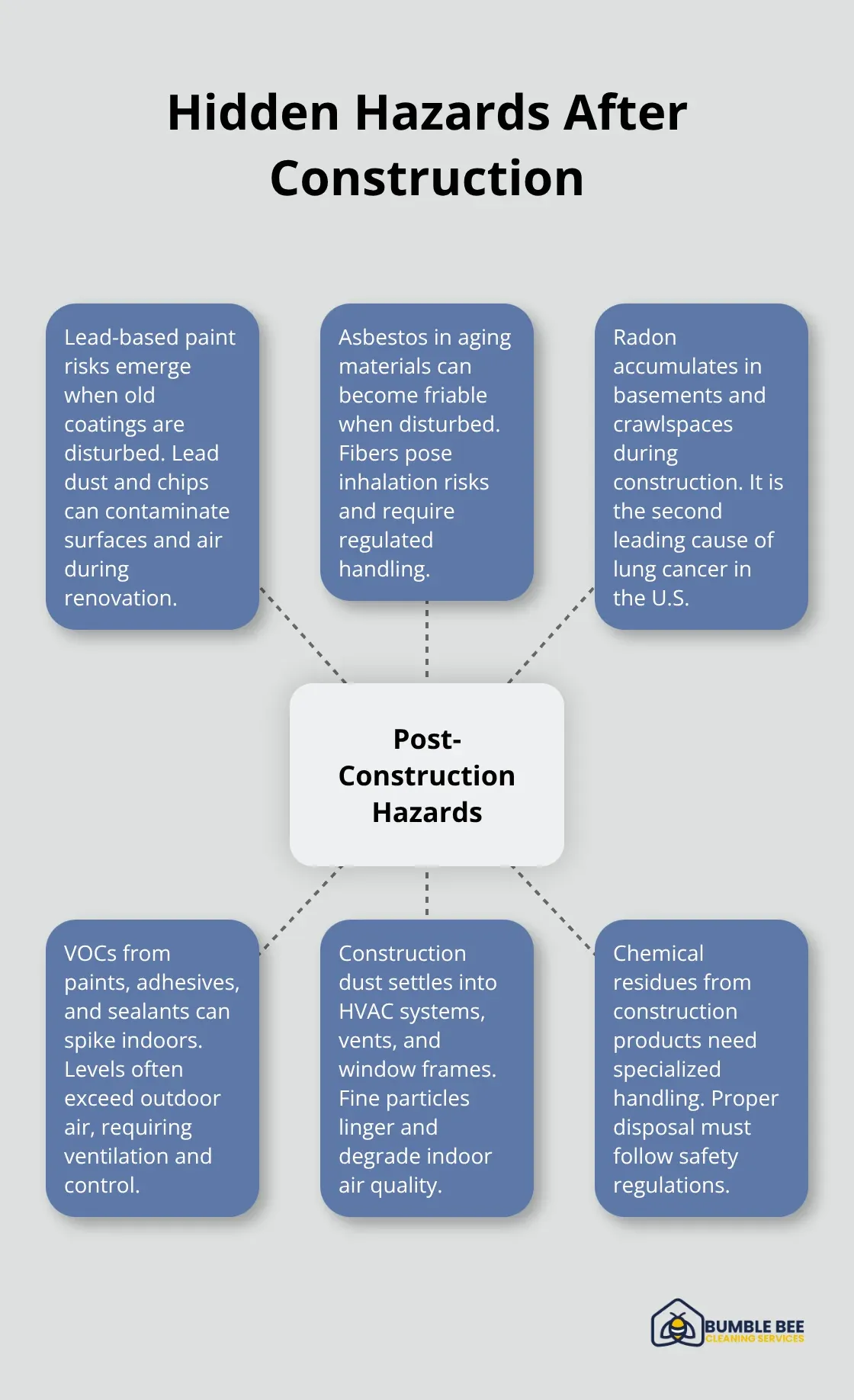
Construction dust contains fine particles that settle into HVAC systems, vents, window sills, and behind appliances-areas that standard cleaning misses entirely. Drywall dust, concrete particles, and debris create respiratory irritants that linger for weeks without proper containment and removal. Chemical residues from construction products require specific knowledge to handle safely and dispose of properly according to regulations.
Industrial-Grade Equipment Removes What Consumer Tools Cannot
Standard household vacuums spread construction dust rather than capture it. HEPA vacuums trap 99.97% of particles 0.3 microns and larger, preventing re-contamination of the space. Industrial-grade equipment includes air scrubbers that actively remove fine particles from the air during work, pressure washers rated for construction debris removal, floor scrubbers designed for hardened adhesives and cement residue, and specialized tools for reaching ducts and vents. ANSI/IICRC standards, developed through consensus with industry professionals, establish best practices for post-construction cleaning that demand this equipment level. Attempting this work with consumer-grade tools guarantees inefficiency, surface damage from incorrect pressure or chemical application, and incomplete results that create liability for property owners.
Safety Regulations Protect Workers and Occupants
OSHA’s Hazard Communication Standard 1910.1200 requires proper handling of chemical hazards encountered during construction cleanup. Workers must follow safety protocols aligned with the Globally Harmonized System for labeling and communicating hazardous material information. Multi-employer worksites demand coordinated hazard communication so all workers access proper safety data sheets and labeling. Insurance requirements and building code compliance often mandate that post-construction cleaning meet specific standards before occupancy. Cutting corners on safety procedures exposes property owners to liability if occupants experience health issues, respiratory problems, or contamination-related claims later. Professional teams follow these regulations as standard practice, protecting your investment and your occupants.
Understanding these hazards and requirements sets the stage for why the post-construction cleaning process itself demands a structured, professional approach that goes well beyond surface-level tidiness.
Why Professional Specialists Deliver Results DIY Cannot
Construction Dust Requires Expert Knowledge to Locate and Remove
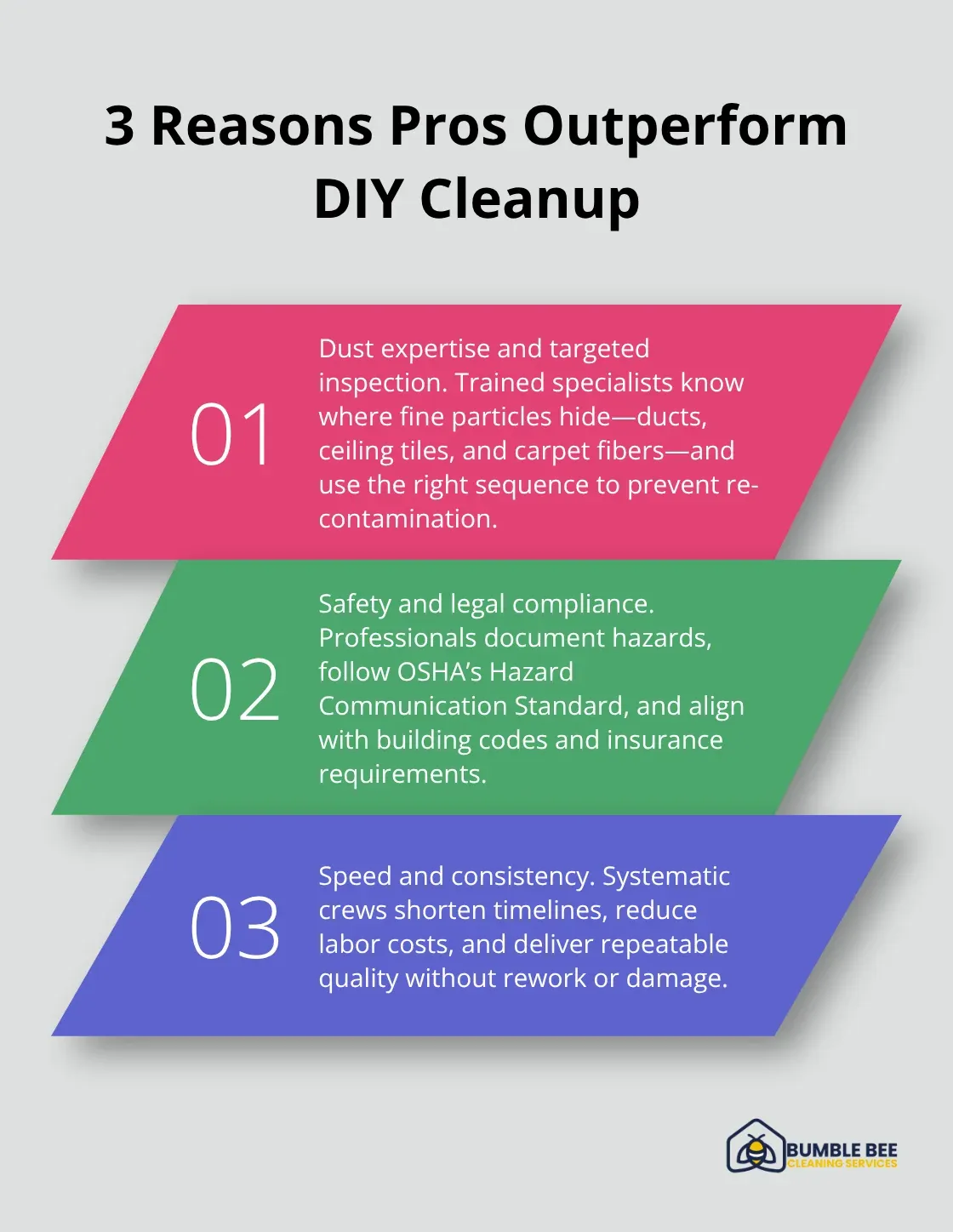
Construction dust and particles demand expertise that goes beyond understanding what needs cleaning. When drywall dust, concrete particles, and adhesive residue settle into HVAC systems and behind baseboards, standard cleaning approaches fail because they lack the knowledge to identify where hazards hide. Professional specialists understand that construction debris does not just sit on surfaces; fine particles penetrate deep into ductwork, settle on ceiling tiles, and embed in carpet fibers where they remain invisible until disturbed. Certified teams know exactly where construction contaminants accumulate and which removal sequence prevents re-contamination. ANSI/IICRC standards specify inspection protocols before cleaning begins, ensuring no hazardous material gets missed or improperly handled. This expertise prevents the costly mistakes that occur when untrained crews apply pressure washers to delicate finishes, use incorrect chemical concentrations that damage surfaces, or fail to contain dust clouds during removal.
Safety Regulations Create Legal Obligations You Cannot Ignore
Safety regulations and building codes create legal obligations that property owners cannot sidestep. OSHA’s Hazard Communication Standard requires documented handling of chemical hazards present on construction sites, meaning your cleaning process must follow specific protocols for material identification, worker protection, and waste disposal. Multi-employer worksites demand that all workers access safety data sheets and understand hazard labels before cleanup begins, which professional teams maintain as standard documentation. Building code compliance often mandates that post-construction cleaning meet inspection standards before occupancy permits issue, and insurance carriers frequently require proof that work followed industry standards.
Speed and Efficiency Reduce Project Delays and Costs
Professional specialists complete projects faster because they work systematically rather than discovering problems mid-project. A trained crew removes debris efficiently, cleans surfaces in the correct sequence, and reaches areas like window sills and light fixtures that DIY efforts overlook, reducing project timelines by days or weeks. Speed matters because extended cleaning timelines delay occupancy, postpone revenue generation for commercial properties, and increase labor costs. Professional teams deliver repeatable results across multiple projects, meaning you receive consistent quality without surprises, rework demands, or post-cleaning complaints about missed areas or surface damage.
These capabilities set the foundation for understanding what the actual post-construction cleaning process looks like when executed by trained professionals who follow industry standards from start to finish.
How Professional Post-Construction Cleaning Actually Works
Assessment identifies hidden hazards and cleaning needs
A professional post-construction cleaning starts with a thorough walkthrough assessment before any equipment arrives. Inspectors examine every area-HVAC vents, behind baseboards, window sills, light fixtures, and crawlspaces-to identify where construction debris settled and what hazards require specific handling. This assessment determines which tools, cleaning agents, and safety protocols apply to your space. Concrete dust requires different removal methods than drywall residue, and adhesive overspray demands chemical treatments that won’t damage finished surfaces. The assessment also identifies whether lead-containing surfaces exist, whether asbestos testing is needed, or whether VOC off-gassing requires extended ventilation-information that shapes the entire cleaning strategy.
Debris Removal Follows Strict Sequence and Regulations
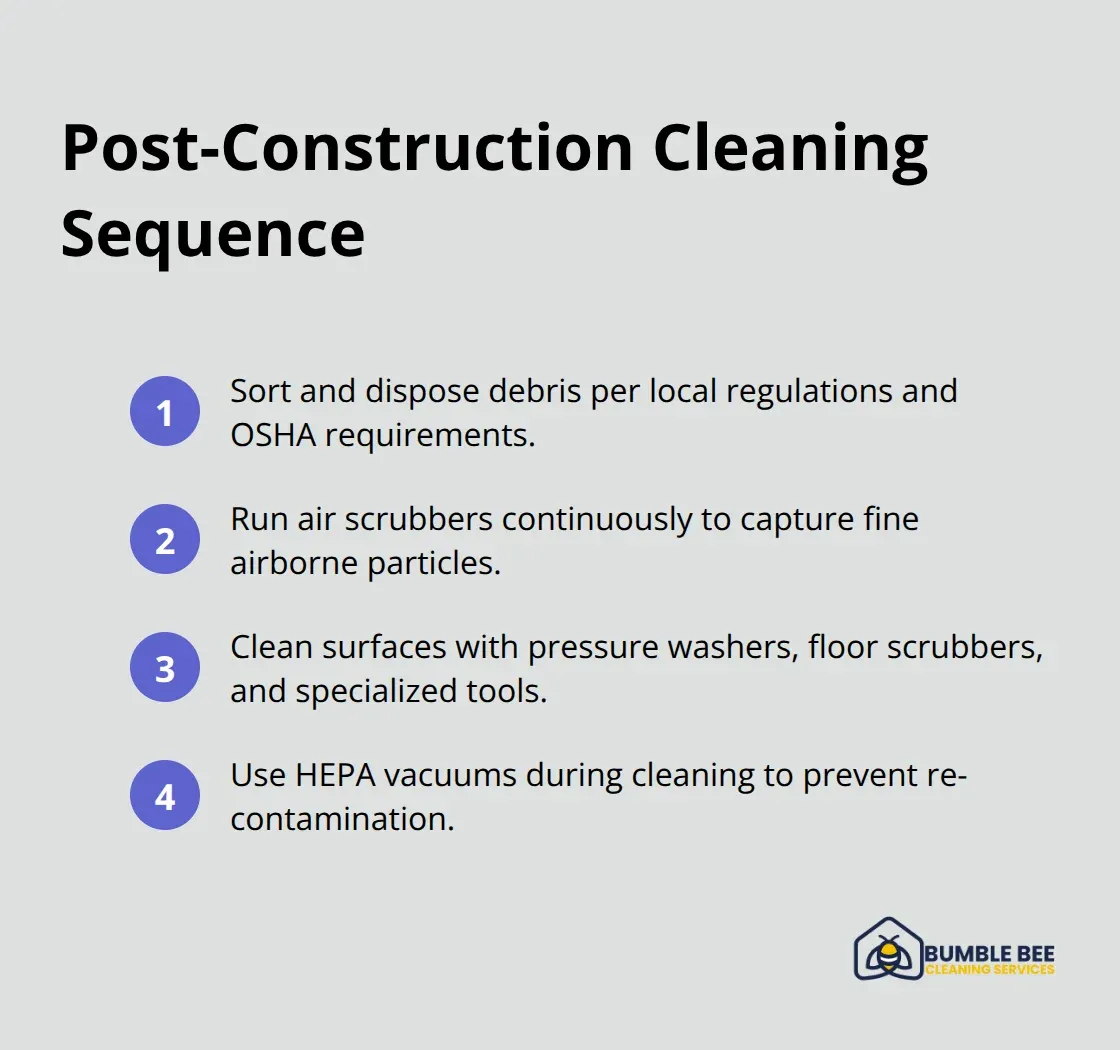
Heavy debris removal happens first and in strict sequence. Construction debris gets sorted and disposed according to local regulations, with hazardous materials handled separately to meet OSHA Hazard Communication Standard 1910.1200 requirements. Once debris clears, air scrubbers run continuously to capture fine particles while crews clean surfaces using pressure washers, floor scrubbers, and specialized equipment rated for construction residue. HEPA vacuums capture particles as surfaces get cleaned, preventing re-contamination of the space.
Deep cleaning reaches areas standard crews miss
Deep cleaning targets areas standard crews miss entirely-inside ductwork, within HVAC systems, behind appliances, and within window frames where construction dust embeds itself. Construction dust can settle in HVAC systems and air ducts, affecting air quality and system efficiency. Floor scrubbers remove hardened adhesive and cement residue without damaging finished surfaces. Final inspections verify that dust levels meet occupancy standards before you receive your space. Professional teams document each phase to prove compliance with building codes and insurance requirements, protecting your liability if occupants develop respiratory issues or other health concerns linked to incomplete cleanup.
Final Thoughts
Skipping professional post-construction cleaning multiplies hidden costs that damage your property and budget. Paint overspray hardens on windows and requires aggressive chemical treatment that risks surface damage, drywall dust clogs HVAC systems and forces expensive repairs, and incomplete debris removal leaves sharp fragments that create liability if occupants get injured or develop respiratory issues. Property owners who attempt DIY cleanup waste weeks on work that professionals complete in days, delaying occupancy and revenue generation while equipment rental costs and rework expenses exceed what professional cleaning would have cost upfront.
Professional specialists protect your investment by delivering thorough results that meet building code compliance and insurance requirements. We at Bumble Bee Cleaning Services understand that post-construction cleaning determines whether your space truly meets occupancy standards, and our team follows industry standards that handle hazardous materials safely, capture fine particles rather than spread them, and verify every surface passes inspection. This expertise prevents costly liability claims and protects the long-term value of your property.
Contact Bumble Bee Cleaning Services to discuss your project timeline and receive a quote that reflects the comprehensive approach your space requires. Our certified professionals handle the work systematically from initial assessment through final inspection, delivering the results your property deserves.
For more information about our cleaning services in Seattle and Atlanta, or to request a cleaning quote, call or text us at 425-786-1360 or email us at info@qbclean.com
