
Construction residue left behind after building projects creates serious health and safety risks. Dust, debris, and hazardous materials can linger in walls, floors, and air systems long after contractors leave.
We at Bumble Bee Cleaning Services know that professional janitorial teams are essential for transforming construction sites into safe, move-in-ready spaces. This post covers exactly what gets removed and why it matters for Seattle properties.
What Gets Left Behind After Construction
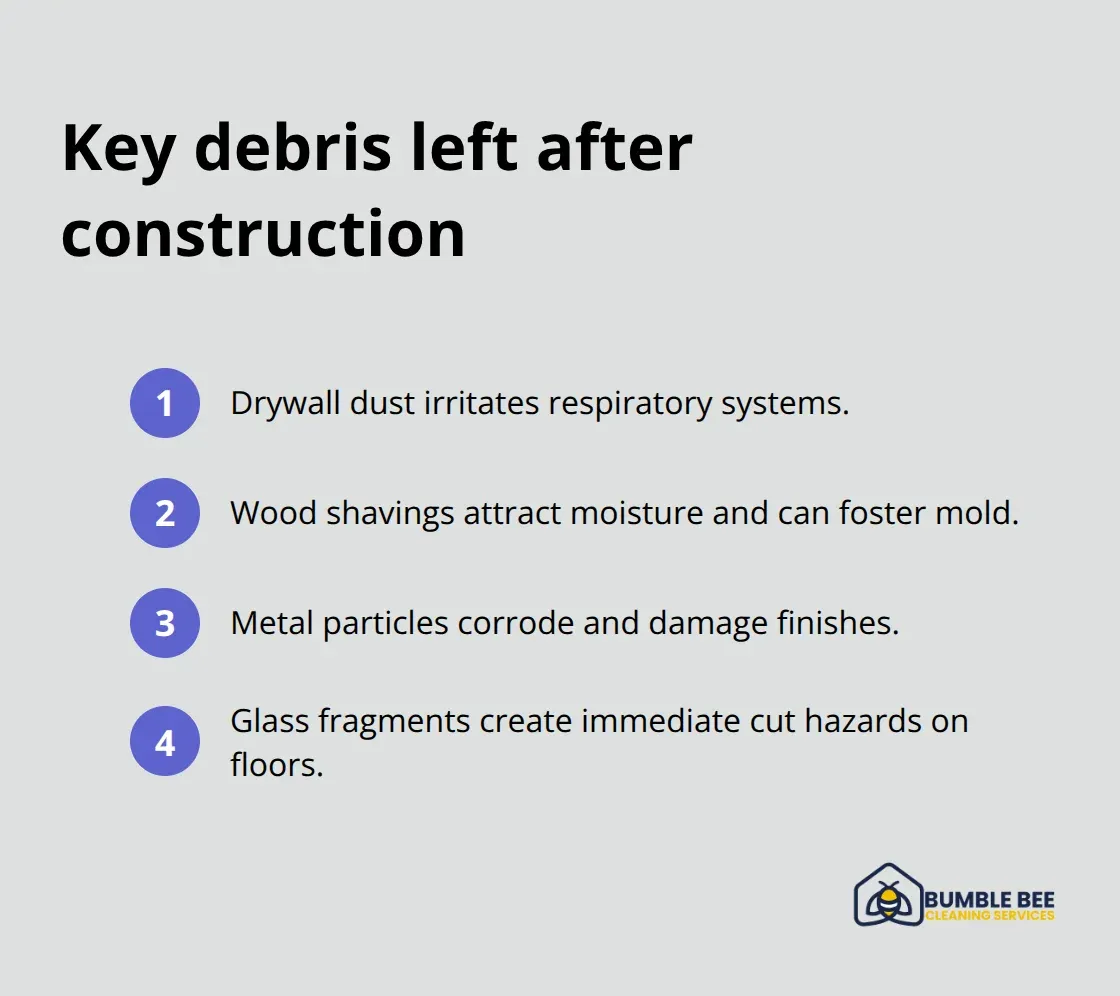
A typical 2,000-square-foot home generates roughly 8,000 pounds of construction waste, according to the National Association of Home Builders. Most of this debris does not vanish once contractors pack up their tools. Drywall dust settles into every corner, wood shavings hide in baseboards and under flooring, metal particles embed themselves in grout lines, and glass fragments scatter across surfaces. These materials create real problems for anyone moving into the space. Drywall dust contains fine particles that irritate respiratory systems when disturbed. Wood shavings attract moisture and can harbor mold if left in damp areas like bathrooms and kitchens. Metal shavings corrode over time and damage flooring finishes. Glass fragments pose immediate safety risks, especially on floors where barefoot traffic occurs.
Professional janitorial teams understand that removing construction debris requires more than a standard vacuum and broom.
The Scale of Construction Waste
Construction and demolition debris in the United States reached approximately 600 million tons in 2018, according to the Environmental Protection Agency-more than twice the volume of municipal solid waste. This scale demonstrates why haphazard cleanup fails. Contractors focus on structural completion, not pristine conditions. They leave behind packaging materials, fasteners, protective coverings, and accumulated dust that settles on horizontal surfaces hours or even days after work stops. Thorough removal requires HEPA-filter vacuums capable of capturing particles as small as 0.3 microns, wet microfiber cloths that trap rather than redistribute dust, and industrial air scrubbers during the cleaning process. Standard household equipment simply cannot handle the volume and particle size involved in post-construction cleanup.
How Debris Settles on Different Surfaces
Floors present the most visible debris challenge. Concrete dust embeds into unsealed concrete, requiring specialized stripping and resealing. Hardwood floors collect sawdust in the grain and under baseboards-compressed air followed by HEPA vacuuming addresses this, though some contractors recommend light sanding before final finishing. Tile and grout lines trap construction dust that hardens when exposed to moisture. Baking soda and water solutions work better than harsh chemicals here, avoiding damage to grout while removing embedded particles. Walls and ceilings accumulate dust that requires dry microfiber cloths first, followed by damp cleaning with mild detergent. Light fixtures and HVAC vents collect surprising amounts of debris that recirculates throughout the space if not cleaned before occupancy. Windows and glass surfaces show paint overspray and dust clearly, requiring commercial-grade cleaners and careful technique to avoid streaking.
Why Standard Cleanup Methods Fall Short
Most property owners underestimate the hazards that remain after construction ends. Dust particles suspended in air systems continue to circulate for weeks without proper HVAC cleaning. Paint residues and chemical sealants off-gas in enclosed spaces, affecting indoor air quality. Debris trapped in corners and under fixtures becomes a breeding ground for bacteria and mold. The Indoor Air Quality Association emphasizes that cleaning HVAC systems after construction prevents circulating dust throughout the home and protects occupant health. Standard vacuums lack the filtration power to capture fine construction particles, and ordinary cleaning cloths simply push dust around rather than removing it. Professional janitorial teams possess the equipment and training to address these issues comprehensively, transforming spaces that contractors left behind into environments truly ready for occupancy.
What Hazardous Materials Require Professional Removal
Silica Dust and Respiratory Threats
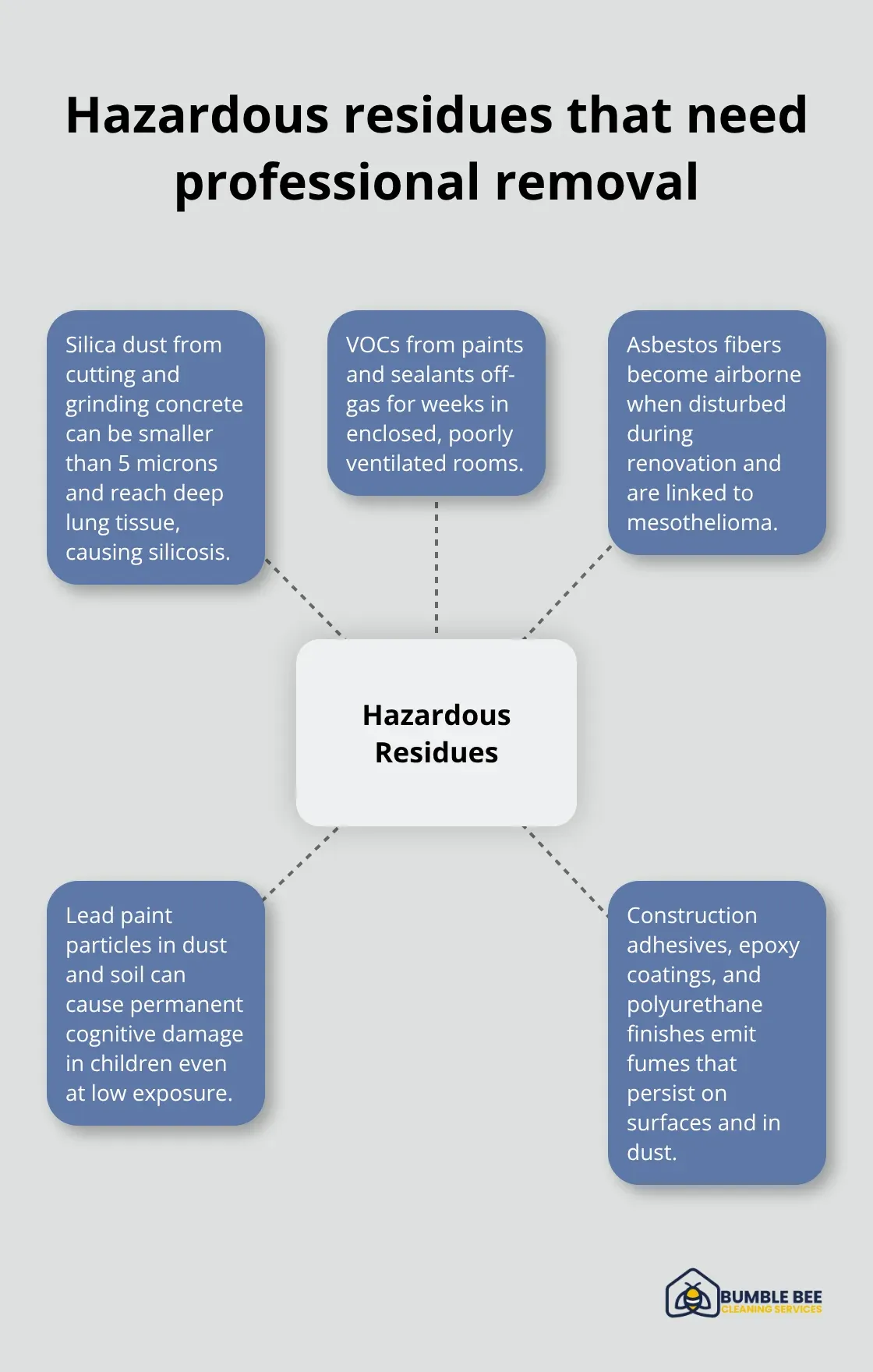
Construction sites expose workers and future occupants to serious health threats that go far beyond visible dust and debris. Silica dust ranks among the most dangerous substances left behind after building projects. When concrete is cut, ground, or sanded during construction, it releases respirable crystalline silica particles smaller than 5 microns that penetrate deep into lung tissue. OSHA classifies silica exposure as a serious occupational hazard, and prolonged inhalation causes silicosis, a permanent and progressive lung disease. A single construction project can leave silica particles embedded in walls, floors, and HVAC systems where they remain suspended in air long after work ends. Professional janitorial teams equipped with HEPA filtration systems and trained in OSHA safety protocols capture these particles before they become a health problem. Standard household vacuums actually spread silica deeper into the air because they lack proper filtration, making professional intervention non-negotiable for any Seattle property that involved concrete work.
Paint, Sealants, and Chemical Off-Gassing
Paint and chemical sealants present equally serious contamination risks that homeowners rarely recognize until occupants experience respiratory irritation or chemical sensitivity. Modern paints release volatile organic compounds (VOCs) that off-gas for weeks in enclosed spaces, particularly in poorly ventilated rooms like bathrooms and kitchens where sealants concentrate. Construction adhesives, epoxy coatings, and polyurethane finishes emit harmful fumes that persist on surfaces and in dust after application. Professional post-construction cleaning removes these chemical residues through specialized disinfection and ventilation strategies that protect occupant health.
Asbestos and Lead Paint in Older Buildings
Older Seattle buildings present an additional threat through asbestos and lead-based paints used before the 1980s. Asbestos fibers remain dormant in insulation, floor tiles, and roofing materials until renovation work disturbs them, at which point they become airborne and present serious mesothelioma risks. Lead paint particles accumulate in dust and soil, posing particular danger to children whose developing brains suffer permanent cognitive damage from even low-level exposure.
Professional teams trained in IICRC standards remove these hazardous residues through containment and safe disposal methods that protect both the property and future occupants from lasting health consequences.
These hazardous materials demand specialized removal techniques that standard cleaning cannot address-which is why the deep cleaning tasks that follow require equally professional attention.
Restoring Floors, Windows, and Systems to Move-In Condition
Post-construction cleaning transforms raw surfaces into spaces ready for occupancy, and this work requires precision that goes far beyond surface-level attention. Floors demand the most intensive restoration effort because construction traffic embeds dust, adhesive residue, and fine particles deep into every type of flooring material.
Floor Restoration Across Different Materials
Unsealed concrete requires professionals to grind and reseal it to remove embedded silica and restore a protective finish that prevents future dust migration. Hardwood floors need thorough HEPA vacuuming in the grain, followed by inspection for protruding nails or staples that must be set flush before any sanding or refinishing work begins. Tile and grout lines trap construction dust that hardens when moisture exposure occurs, and a baking soda and water solution removes this embedded material without damaging grout like harsh chemical cleaners do.
Carpet presents unique challenges because construction dust works deep into fibers where standard vacuuming fails to reach. Professional steam cleaning extracts particles and kills bacteria that colonize during construction. Windows and glass surfaces show paint overspray and dust clearly, and commercial-grade glass cleaners combined with microfiber cloths achieve streak-free results that household products cannot match. Fresh paint overspray on non-porous surfaces responds to warm water and dish soap, while dried paint requires careful scraping with plastic tools to avoid surface damage.
HVAC System Cleaning and Air Quality
HVAC system cleaning stands as the most critical task that property owners overlook, yet it determines whether construction dust continues circulating through occupied spaces for weeks after move-in. Vents, ductwork, and filter systems accumulate construction debris that spreads throughout the building every time the system cycles, and standard filter changes do nothing to address dust already embedded in ducts.
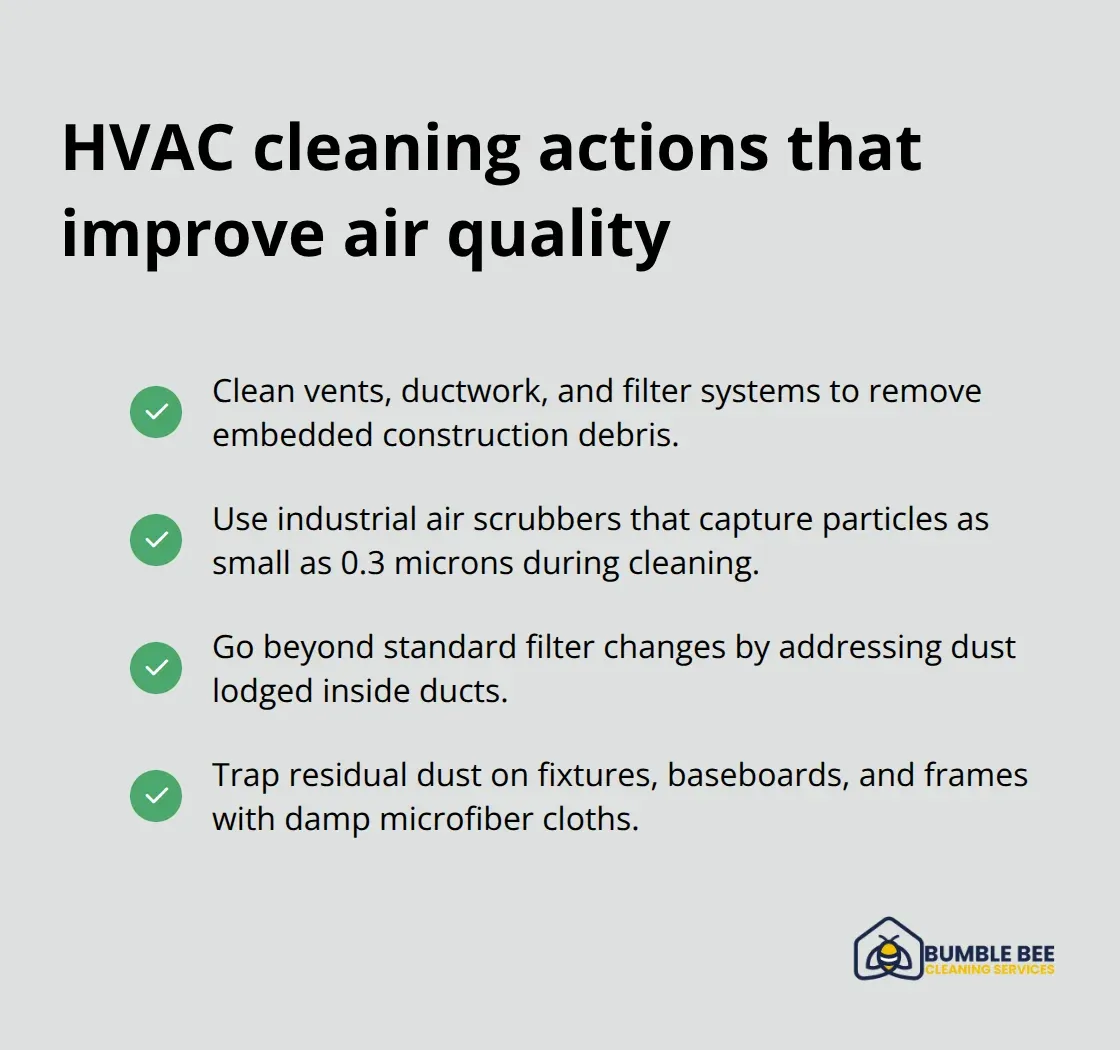
Professional janitorial teams use industrial air scrubbers capable of filtering particles as small as 0.3 microns while cleaning proceeds, improving air quality during the entire process. Light fixtures, baseboards, and door frames accumulate surprising amounts of dust that most people miss during visual inspections, and these areas require damp microfiber cloths to trap particles rather than redistribute them into the air.
Sanitization of Fixtures and Hardware
Fixture and hardware sanitization addresses bacteria and mold spores that colonize surfaces during construction when humidity fluctuates and moisture intrusion occurs. All surfaces including appliance interiors and exteriors, cabinet hardware, door handles, and switch plates require disinfection with appropriate cleaners that kill pathogens without damaging finishes. This comprehensive approach to post-construction cleaning creates environments that protect occupant health by reducing allergens including mold spores, pollen, and other irritants, while preserving the longevity of newly installed materials and systems.
Final Thoughts
Post-construction cleanup removes far more than visible debris. Construction residue includes hazardous silica dust, chemical off-gassing from paints and sealants, asbestos fibers in older buildings, and lead particles that pose serious health risks long after contractors leave. Professional janitorial teams address all of these threats through specialized equipment, IICRC-certified methods, and comprehensive cleaning protocols that standard household approaches cannot match.
Properly cleaned spaces preserve newly installed flooring, fixtures, and systems by removing particles that cause premature wear and damage. HVAC systems cleaned by professionals prevent dust circulation that would otherwise affect indoor air quality for weeks. Sanitized surfaces reduce bacterial and mold colonization that thrives in construction environments.
We at Bumble Bee Cleaning Services bring experience and IICRC certification to every project, using eco-friendly products and industrial-grade equipment to transform construction sites into pristine spaces. Our comprehensive approach addresses construction residue at every level, from visible debris to microscopic hazards that affect long-term occupant health. Contact us for a free quote and let our certified team handle the detailed work that makes your Seattle building truly ready for occupancy.
For more information about our cleaning services in Seattle and Atlanta, or to request a cleaning quote, call or text us at 425-786-1360 or email us at info@qbclean.com
