
Post-construction cleanup in Seattle isn’t just about making a site look clean. It’s about protecting your building occupants, meeting strict local regulations, and reducing the environmental impact that construction creates.
At Bumble Bee Cleaning Services, we know that choosing eco building materials and sustainable cleanup methods directly affects your project’s success. Green post-construction cleanup removes hazardous dust, prevents contamination, and keeps your Seattle property compliant with Washington State waste management standards.
How Much Construction Waste Really Ends Up in Seattle Landfills
Construction and demolition waste accounts for roughly 600 million tons annually across the United States, according to the EPA. In Washington State, a significant portion of this waste flows into landfills when projects skip proper disposal protocols. Inadequate post-construction cleanup leaves behind materials that should never reach a landfill-concrete fragments, drywall dust, metal scraps, and contaminated soil. Seattle Public Utilities operates two transfer stations that accept construction waste, but these facilities charge by weight and volume, making proper sorting during cleanup essential to controlling disposal costs. When contractors fail to separate recyclable materials from general waste during the cleanup phase, projects pay premium rates while contributing unnecessarily to landfill overflow.
The real cost of improper waste separation
Most Seattle construction sites generate between 4 to 6 tons of waste per 1,000 square feet of new construction. Without a structured cleanup plan, recyclable materials like wood, metals, and clean concrete get mixed with contaminated debris, making recovery impossible. SPU’s Where Does It Go? tool helps identify what belongs in recycling versus disposal streams, but this sorting must happen during cleanup, not after the fact.
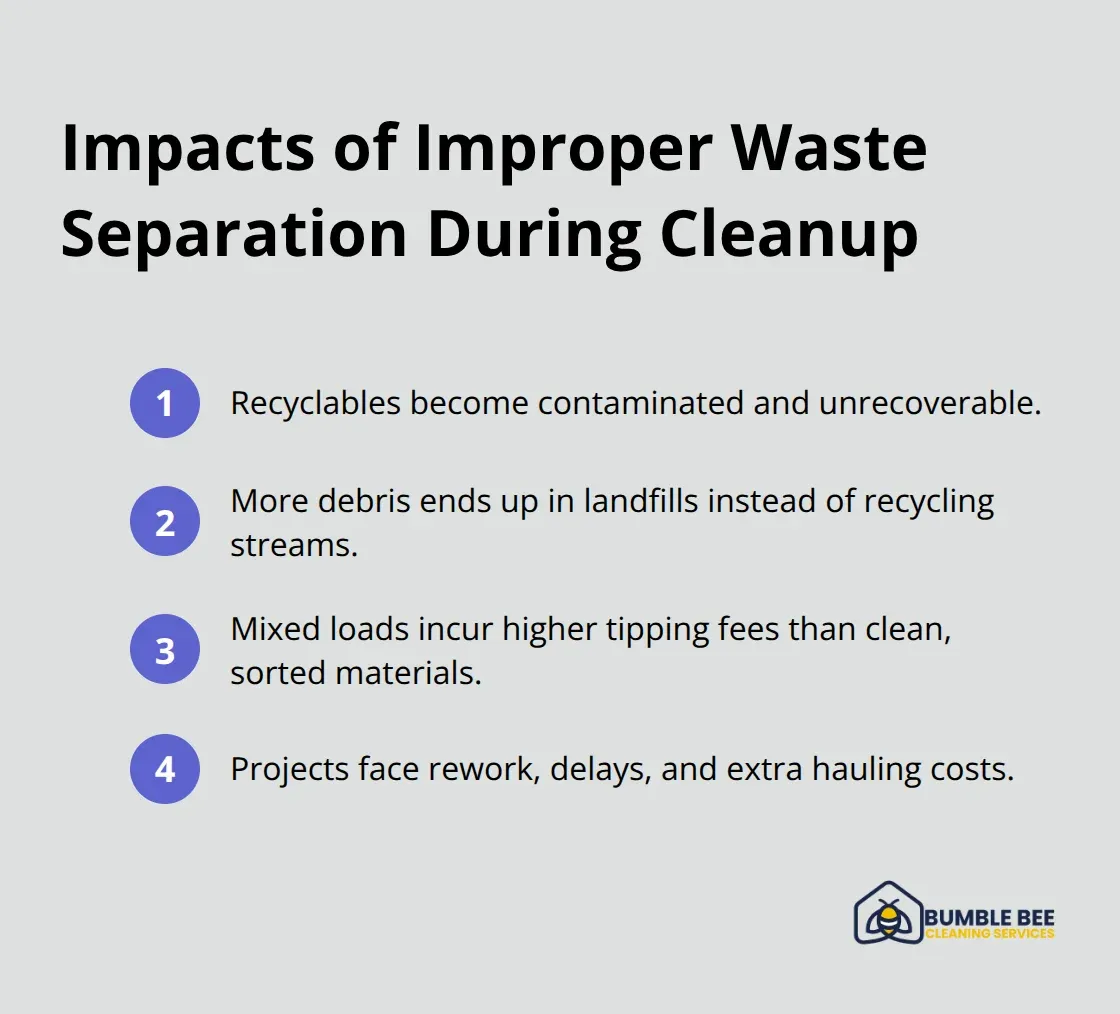
Green cleanup methods reduce what reaches landfills through proper material separation and source reduction. Projects that prioritize eco-friendly disposal see measurable cost savings because recycled materials command lower tipping fees than mixed waste at transfer stations.
Why carbon footprint matters in post-construction cleanup
Transportation of construction debris to distant landfills generates significant greenhouse gas emissions. When cleanup contractors haul waste to the nearest available facility rather than coordinating with local recyclers and salvage operations, projects increase their carbon footprint unnecessarily. Seattle’s commitment to reducing construction-related emissions means selecting cleanup partners who understand local waste streams and prioritize nearby disposal and recycling options. Professional cleanup teams certified by the IICRC follow established standards that minimize waste generation from the start, preventing the need for secondary cleanup hauling. This approach directly supports Seattle’s climate goals while reducing your project timeline and disposal expenses.
How health risks connect to waste management decisions
Improper waste separation during post-construction cleanup creates secondary contamination risks. Mixed debris piles expose workers and future occupants to hazardous materials that should have been isolated during the initial cleanup phase. Dust from contaminated waste (including lead, asbestos, or VOC-laden materials) spreads across job sites when waste sits unsorted, requiring more intensive remediation later. Proper waste management during cleanup prevents these health hazards from developing in the first place, protecting both your team and building occupants. The next section examines how non-toxic cleaning products and certified professionals work together to eliminate these risks entirely.
What Makes Green Cleanup Products Safer for Your Seattle Project
Post-construction dust poses real health risks that extend far beyond appearance. EPA’s TEAM Study found that indoor VOC concentrations typically run 2 to 5 times higher than outdoor levels. Construction sites generate thousands of VOC sources: paints, solvents, wood preservatives, cleaners, aerosol sprays, glues, and markers all off-gas into the air occupants will breathe after move-in. Green-certified products eliminate exposure to eye and throat irritation, headaches, dizziness, and memory impairment that EPA research links to VOC exposure. Standard commercial cleaners often contain methylene chloride, a chemical that can form carbon monoxide in the body and increase cancer risk according to EPA findings. Switching to eco-friendly alternatives removes this exposure entirely during the cleanup phase when concentrations are highest.
HEPA filtration captures what standard vacuums miss
Professional post-construction cleaners use HEPA vacuums that capture 99.97 percent of particles down to 0.3 microns-a standard that matters because fine dust from drywall, insulation, and joint compound carries lead, asbestos, and other hazardous materials on construction sites. Opening windows and running air scrubbers during cleanup prevents dust from settling into HVAC systems, which then recirculate contamination for months after occupancy. Seattle’s frequent rain increases mud and moisture tracking onto job sites, making moisture control during cleanup essential (improper drying creates conditions for mold growth that becomes expensive to remediate later). The IICRC S520 Standard for Professional Mold Remediation establishes that certified professionals follow protocols to prevent mold from developing in the first place rather than treating it after the fact.
Dust protection prevents costly surface damage
Dust left on surfaces scratches hardwood floors, etches countertops, and clogs HVAC filters, so proper cleanup protects your investment immediately. Professional cleaners understand that construction residue damages newly installed materials and bring industrial-grade equipment and expertise that protect both health and property value.
What Seattle’s Construction Cleanup Code Actually Requires
Washington State’s solid waste regulations and Seattle’s Land Use Code make post-construction cleanup compliance non-negotiable. Seattle’s Land Use Code SMC 23.54.040, amended in October 2025, now requires solid waste storage and access plans for all new and remodeled buildings, directly tying post-construction cleanup to code compliance. This means your cleanup plan isn’t optional-it’s a legal requirement before occupancy. Seattle Public Utilities provides construction resources and guidelines to help projects plan, document, and obtain permits for waste disposal and recycling during demolition and construction phases.
How SPU Waste Capacity Standards Shape Your Cleanup Plan
Most project managers underestimate how detailed SPU waste plans must be. SPU requires site plans that show exactly where waste containers will sit, how collection trucks will access them, and confirmation that storage won’t block building exits or create safety hazards. For multifamily projects, SPU mandates garbage capacity of 1 cubic yard per 10 units per week and recycling capacity of 1.5 cubic yards per 10 units per week. Food and yard waste service is required for multifamily buildings, calculated as one cart per 50 units. These aren’t suggestions-failing to meet these specifications delays occupancy permits and triggers costly violations.
Three-Stream Chute Systems Enforce Waste Separation
Seattle’s sustainability standards go beyond waste math. Three-stream chute systems for garbage, recycling, and food waste reduce contamination, lower staff maintenance time, and increase diversion rates at sorting facilities. Multi-family buildings must be designed to ensure compliance with Seattle’s required separation of recycling and food waste, so chutes enforce separation at the source rather than relying on occupant behavior alone. Regular washing, scheduled pressure washing, and adequate ventilation prevent clogs and maintain airflow throughout the system.
Signage and Resident Education Support Long-Term Compliance
Color-coded signage (black or gray for garbage, blue for recycling, green for food waste) plus multilingual materials support post-construction compliance long-term. Residents who understand waste separation from move-in day maintain these practices throughout occupancy, reducing contamination and improving material recovery at sorting facilities.
Stormwater and Green Infrastructure Liability
Seattle’s commitment to green infrastructure and stormwater management means improper cleanup practices create downstream liability. Waste that reaches storm drains or contaminates soil affects the Cedar River and Tolt River watersheds that supply Seattle’s drinking water. Professional cleanup teams understand these connections and handle post-construction debris with the care that protects both your project and the city’s water systems.
Final Thoughts
Green post-construction cleanup protects occupants from VOC exposure, prevents mold growth, and meets Seattle’s strict waste management standards that now require compliance before occupancy. When you pair eco building materials with professional cleanup practices, environmental responsibility, health protection, and regulatory compliance work together from the moment cleanup begins. The stakes matter because improper waste separation costs money through premium tipping fees, inadequate dust removal damages newly installed surfaces, and failure to meet SPU’s waste capacity requirements delays occupancy permits.
Professional cleanup teams certified by the IICRC execute protocols that protect your project at every stage by handling waste separation correctly and removing hazardous dust completely. These teams understand how post-construction practices affect the Cedar River and Tolt River watersheds that supply Seattle’s drinking water, so they treat debris with the care that protects both your investment and the city’s water systems. Industrial-grade HEPA equipment and eco-friendly products transform construction sites into move-in ready spaces while meeting all local codes.
Contact Bumble Bee Cleaning Services to schedule post-construction cleanup that meets Seattle’s standards and protects your investment. Our team brings experience and IICRC certification to every project across Seattle, with flat-rate pricing and easy online booking that makes professional cleanup straightforward rather than stressful. Your Seattle project deserves cleanup that handles the details correctly from start to finish.
For more information about our cleaning services in Seattle and Atlanta, or to request a cleaning quote, call or text us at 425-786-1360 or email us at info@qbclean.com
