
Restaurant kitchens in Seattle face serious health and safety risks when grease accumulates in hoods, vents, and equipment. Industrial degreasing isn’t optional-it’s a requirement for passing health inspections and preventing fires.
We at Bumble Bee Cleaning Services know that many restaurant owners underestimate how quickly grease buildup happens. This guide covers why professional degreasing matters, how the process works, and how often your kitchen needs it.
Why Industrial Degreasing Protects Your Seattle Restaurant’s Future
Seattle’s health department conducts unannounced inspections at commercial kitchens, and grease buildup ranks among the fastest ways to fail. NFPA 96 standards that govern commercial kitchen ventilation mandate hood and duct cleaning-it’s not optional. King County health inspectors specifically target grease accumulation in exhaust systems, and visible buildup triggers immediate violations or temporary closure orders. Restaurants that delay professional degreasing risk losing operating licenses. The financial damage extends beyond fines; a closure during peak season costs thousands in lost revenue. Regular industrial degreasing keeps your kitchen compliant with local codes and prevents the costly disruption of emergency shutdowns.
Fire Risk From Accumulated Grease
Grease fires in commercial kitchens rank among the leading causes of restaurant fires. Failure to clean ventilation systems stands as a critical factor in kitchen fires. Grease accumulates at high temperatures and becomes highly flammable-it doesn’t sit harmlessly in your hood. Fry stations generate grease at temperatures that accelerate buildup faster than other cooking areas, which is why high-volume kitchens need degreasing every three to six months (depending on menu and equipment use). A single uncontrolled fire destroys your business permanently. Professional degreasing eliminates this fire hazard entirely, keeping your staff and customers safe while protecting your investment.
Equipment Performance and Long-Term Savings
Grease buildup forces exhaust fans to work harder, increasing energy consumption and accelerating equipment wear. When ventilation becomes clogged, cooking equipment operates at higher temperatures, which shortens its lifespan significantly. Replacing a commercial hood system costs between five thousand and fifteen thousand dollars-money that professional degreasing helps you avoid. Regular degreasing also prevents corrosion of stainless steel surfaces and extends filter life, reducing the frequency of expensive replacements. The cost of quarterly professional degreasing remains minimal compared to emergency equipment repairs or full system replacement.
What Happens Without Regular Degreasing
Neglected ventilation systems accumulate grease in ducts and exterior hoods (areas many restaurant owners overlook). This buildup restricts airflow, forcing your kitchen to operate less efficiently and creating conditions where fires spread rapidly. Grease traps overflow when maintenance falls behind, leading to drainage problems and sanitary violations that inspectors catch immediately. Equipment corrosion accelerates when grease residue sits on stainless steel surfaces, and filters clog faster, requiring more frequent (and costly) replacements. The longer you wait between professional degreasing cycles, the harder the next cleaning becomes and the more damage accumulates behind the scenes.
Understanding these risks sets the stage for learning how professional degreasing actually works and what frequency your specific kitchen requires.
How Professional Degreasing Works
Professional degreasing in Seattle restaurant kitchens follows a structured workflow that separates surface-level cleaning from the deep extraction needed to prevent fires and equipment failure. A five-stage process addresses the problem systematically: pre-cleaning removes loose debris, commercial-grade degreasers break down hardened grease, mechanical scrubbing and pressure rinsing extract buildup from hoods and ducts, sanitizing eliminates bacteria and pathogens, and thorough drying prevents moisture-related corrosion. This sequence matters because skipping any stage leaves residue behind, which defeats the entire purpose.
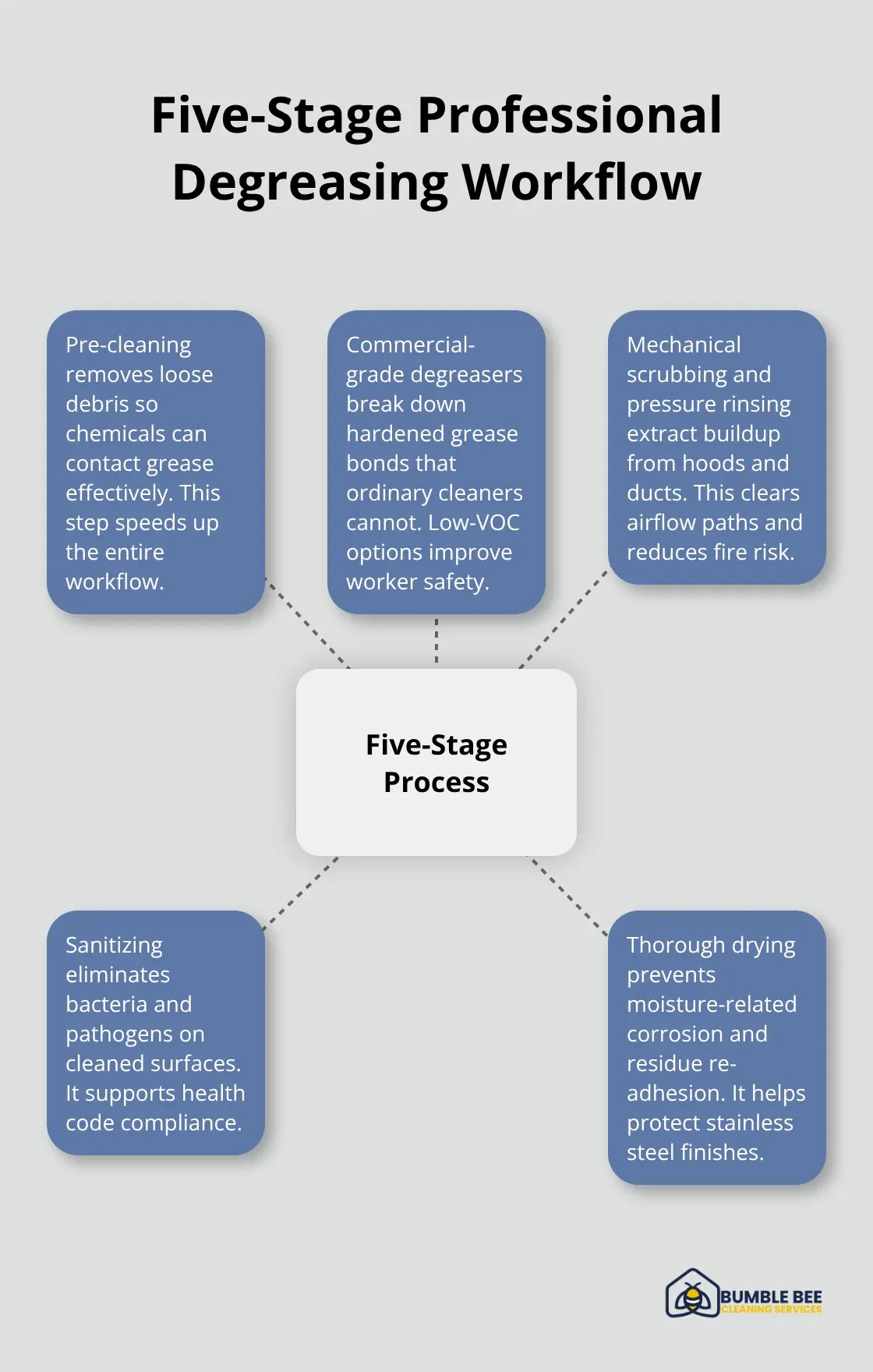
High-volume kitchens with fryer stations accumulate grease at temperatures exceeding 350 degrees Fahrenheit, which bonds to metal surfaces far more aggressively than cooler cooking areas. Water-based, low-VOC degreasers now serve as the standard in professional kitchens because they protect worker health and reduce environmental impact compared to older solvent-based formulas that release harmful fumes during application.
Hood and Duct Cleaning Requires Specialized Access
Hood cleaning targets visible surfaces, but duct systems behind walls accumulate the most dangerous grease deposits. NFPA 96 standards require inspecting ducts based on cooking type: monthly for solid fuel, quarterly for high-volume operations like charbroiling and wok cooking, and semi-annually for moderate-volume kitchens. Many Seattle restaurants contain significant buildup in areas that remain invisible without professional equipment. Professional contractors use camera inspection to identify problem areas before degreasing begins, then deploy specialized tools to reach deep into ductwork and remove compacted grease that restricts airflow. Exterior hoods often show visible grease residue that signals system neglect, and Seattle’s moisture-heavy climate accelerates corrosion when grease sits on stainless steel surfaces. The degreasing contractor should document all work with photos and maintenance logs that you keep for health inspectors, which demonstrates compliance during unannounced inspections.
Grease Traps Demand Separate Attention
Grease traps collect liquid fats that drain from cooking equipment, and they overflow rapidly when maintenance falls behind. Professional cleaning extracts accumulated grease, rinses the trap interior, and disposes of waste according to local hazardous waste regulations. Never discharge greasy liquids down standard drains because they harden in municipal pipes and create blockages that affect your entire building. Seattle’s drainage systems experience backup problems from improper grease disposal, and restaurants responsible for these issues face liability claims. Professional contractors maintain records of trap cleaning dates and volumes removed, which protects you if municipal authorities investigate drainage failures in your building.
Chemical Selection and Worker Safety
Commercial-grade degreasers break down grease bonds that standard cleaners cannot touch, but the chemicals used matter significantly for staff protection. Low-VOC formulas reduce harmful fumes that workers inhale during application, and proper ventilation during degreasing prevents respiratory irritation and long-term health effects. Contractors should follow Safety Data Sheets (SDS) for every chemical used and provide staff with appropriate personal protective equipment (gloves, goggles, aprons) during cleaning operations. Stainless steel surfaces require non-corrosive cleaners to prevent damage and maintain the finish over time, which extends equipment life and preserves your kitchen’s appearance.
Documentation Supports Compliance and Insurance Claims
Maintenance logs (digital or paper) create a record that protects your restaurant during health inspections and insurance claims. Each entry should include cleaning dates, areas serviced, cleaners used, and inspector notes that demonstrate your commitment to compliance. This documentation proves to health inspectors that you maintain your systems regularly, which strengthens your position if violations occur elsewhere in the kitchen. Insurance companies also reference these logs when processing claims related to fire damage or equipment failure, and the records show that you took reasonable steps to prevent loss.
Understanding how professional degreasing works sets the foundation for determining how often your specific kitchen needs this service based on volume, menu type, and seasonal demands.
How Often Your Seattle Restaurant Needs Degreasing
NFPA 96 standards establish clear degreasing frequencies based on your cooking equipment and volume. High-volume kitchens with fryers, charbroilers, and wok stations require hood and duct cleaning every three to six months because grease accumulates fastest at temperatures exceeding 350 degrees. Moderate-volume operations cooking primarily with ovens and griddles can extend intervals to six to twelve months. Low-volume kitchens preparing mostly cold foods or using minimal hot equipment may operate on semi-annual schedules.
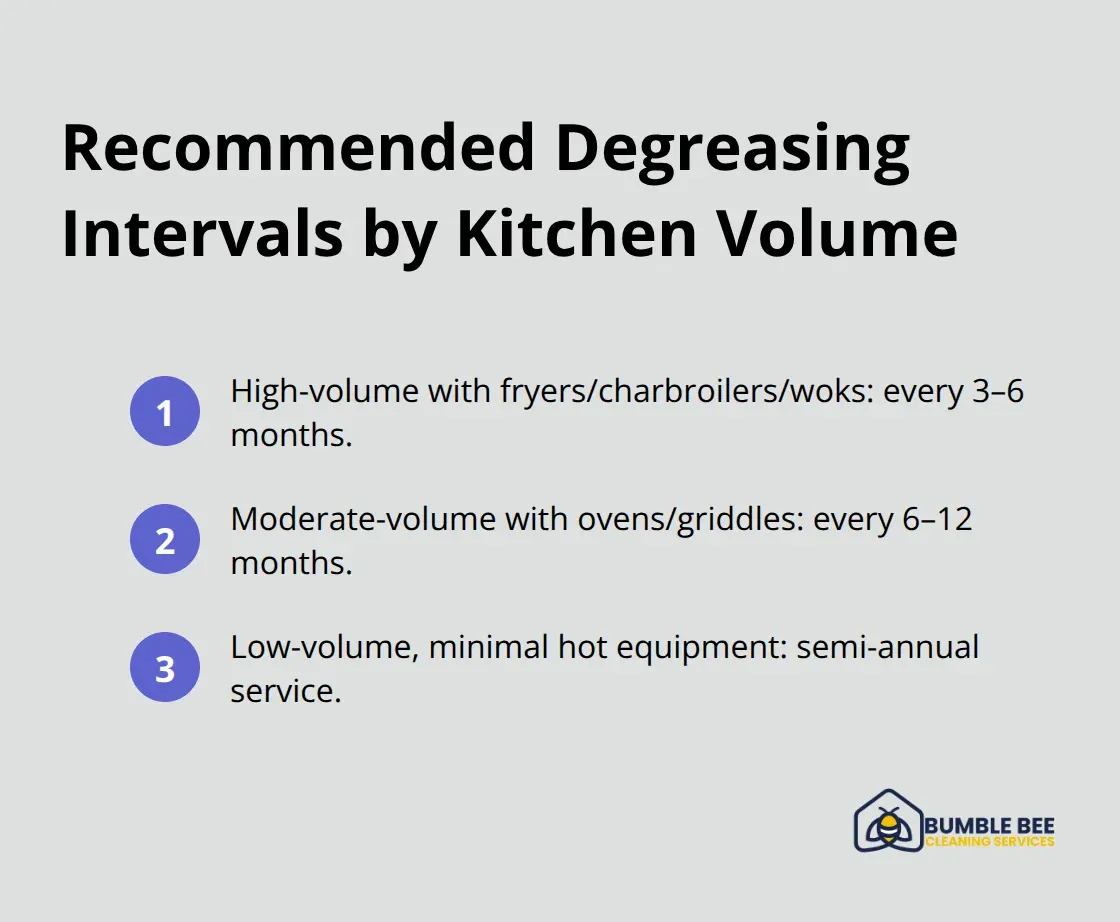
These are baselines, not guarantees. A busy ramen restaurant in Seattle’s Capitol Hill neighborhood generates grease deposits far faster than a catering kitchen preparing salads and sandwiches. The type of oil you use also affects buildup rates: high-heat vegetable oils create different residue patterns than animal fats, which impacts how quickly your systems clog. Many Seattle restaurant owners discover they need more frequent cleaning than they initially planned once professional contractors inspect their ductwork and grease traps.
The cost difference between quarterly and semi-annual service remains minimal when compared to emergency repairs or health department violations, which makes erring on the side of more frequent degreasing a sound financial decision.
Seasonal Demand Shifts Accelerate Grease Production
Winter and summer demand shifts in Seattle’s restaurant scene create seasonal acceleration in grease production. Peak seasons from November through December and June through August drive higher cooking volumes, which means your kitchen generates twice the grease deposits during these periods compared to slower months. Scheduling degreasing before your busiest season prevents the situation where grease restricts airflow during the exact period when your ventilation system works hardest.
Spring also presents an opportunity for deep inspection and maintenance before summer demand arrives. Many restaurants pair their degreasing schedule with staff vacation periods or planned maintenance windows when kitchen operations pause briefly. Ignoring seasonal patterns leads to mid-peak emergency cleaning calls that cost substantially more than planned service and disrupt your operation when you can least afford downtime.
Warning Signs That Demand Immediate Action
Certain conditions demand immediate degreasing regardless of your regular schedule. Visible grease residue on your exterior hood signals that interior systems contain dangerous buildup invisible to the naked eye. Smoke lingering in your dining area after service indicates restricted ventilation caused by duct blockage. Foul odors coming from your hood or vents mean grease is decomposing inside your systems and attracting bacteria.
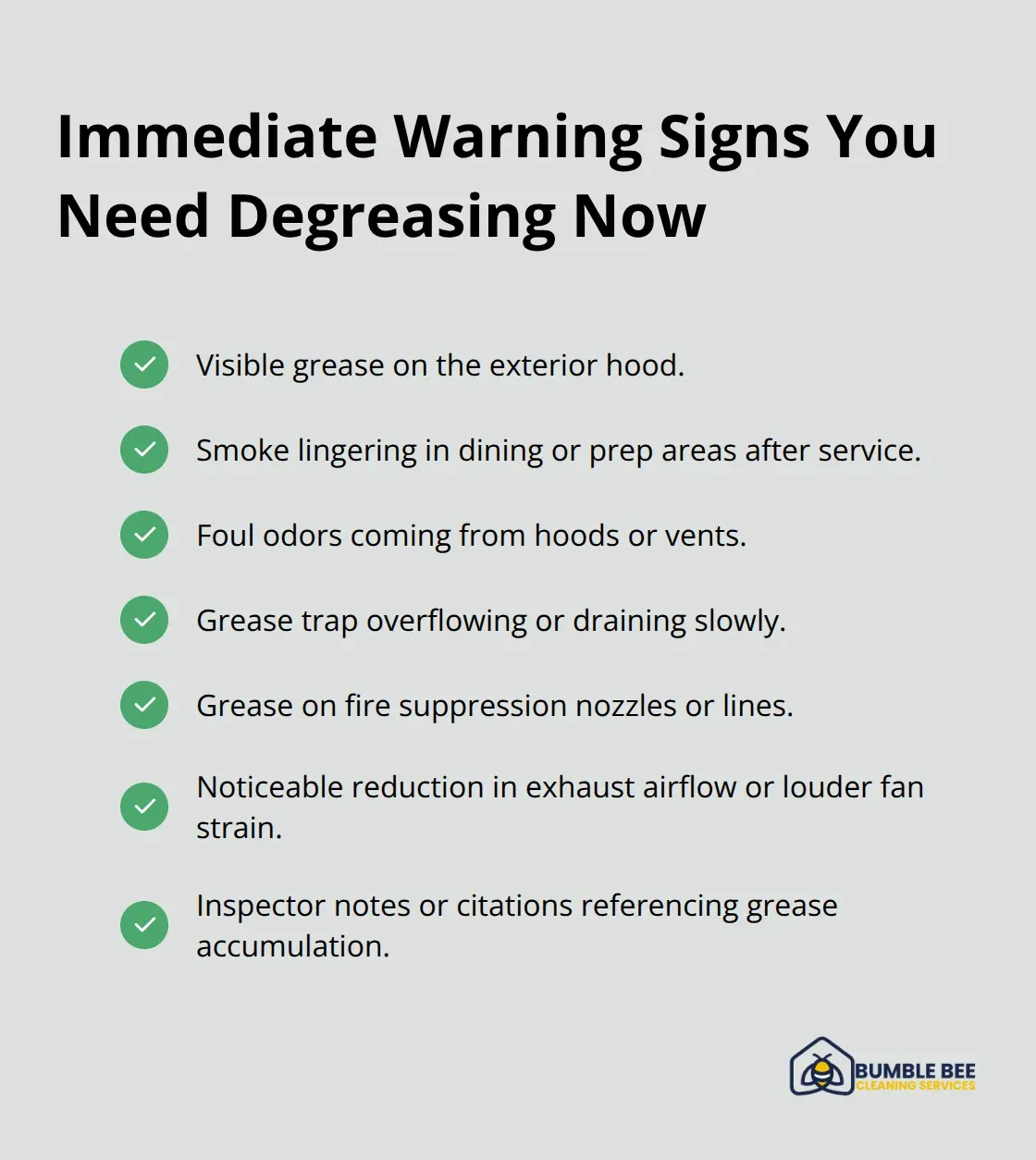
Your grease trap overflowing or draining slowly into the municipal system points to trap saturation and imminent drainage failure. Fire suppression system nozzles or lines showing grease accumulation mean your fire safety equipment cannot function properly if you experience a kitchen fire. Health inspectors specifically note these conditions during visits, and each one triggers immediate violation citations.
If your kitchen exhibits any of these signs, contact a professional degreaser immediately rather than waiting for your next scheduled service. Document these observations with photos and dates so you have a record if your health inspector questions your maintenance practices. Waiting until visual warning signs appear means your systems already contain dangerous levels of buildup that restrict airflow and increase fire risk significantly.
Final Thoughts
Industrial degreasing protects your Seattle restaurant from three interconnected threats: health code violations that force closures, fires that destroy your business, and equipment failures that drain your operating budget. A single health department violation costs thousands in fines and lost revenue during forced downtime, while a kitchen fire eliminates your business permanently and equipment replacement runs five to fifteen thousand dollars. Quarterly professional degreasing costs a fraction of any of these outcomes, making it the most cost-effective investment you can make in your restaurant’s survival.
Your staff cannot maintain the depth of cleaning that NFPA 96 standards require while simultaneously running your kitchen during service hours, which is why professional contractors matter. We at Bumble Bee Cleaning Services bring specialized equipment, chemical expertise, and documentation practices that protect your restaurant legally and operationally. The restaurants that thrive in Seattle’s competitive market maintain consistent compliance records and avoid the disruptions that plague competitors.
Starting a professional degreasing program today prevents the emergency situations that force expensive repairs and operational shutdowns tomorrow. Contact Bumble Bee Cleaning Services to schedule an inspection and establish a degreasing plan tailored to your kitchen’s specific volume and cooking type.
For more information about our cleaning services in Seattle and Atlanta, or to request a cleaning quote, call or text us at 425-786-1360 or email us at info@qbclean.com
