
Construction projects leave behind more than just beautiful renovations. Fine dust particles settle deep into your furniture’s fibers, creating stubborn stains and potential long-term damage.
We at Bumble Bee Cleaning Services see this challenge daily across Seattle homes. Professional upholstery restoration techniques can save your valuable pieces from permanent harm.
What Construction Dust Does to Your Furniture
Construction dust contains hazardous particles that attack your furniture in distinct ways. Drywall dust creates a fine alkaline powder that embeds into fabric weaves and wood grain, while concrete dust produces abrasive particles that scratch delicate surfaces. Silica dust from tile cutting poses the greatest threat as it penetrates deep into upholstery fibers and creates permanent discoloration on leather surfaces.
How Dust Attacks Different Materials
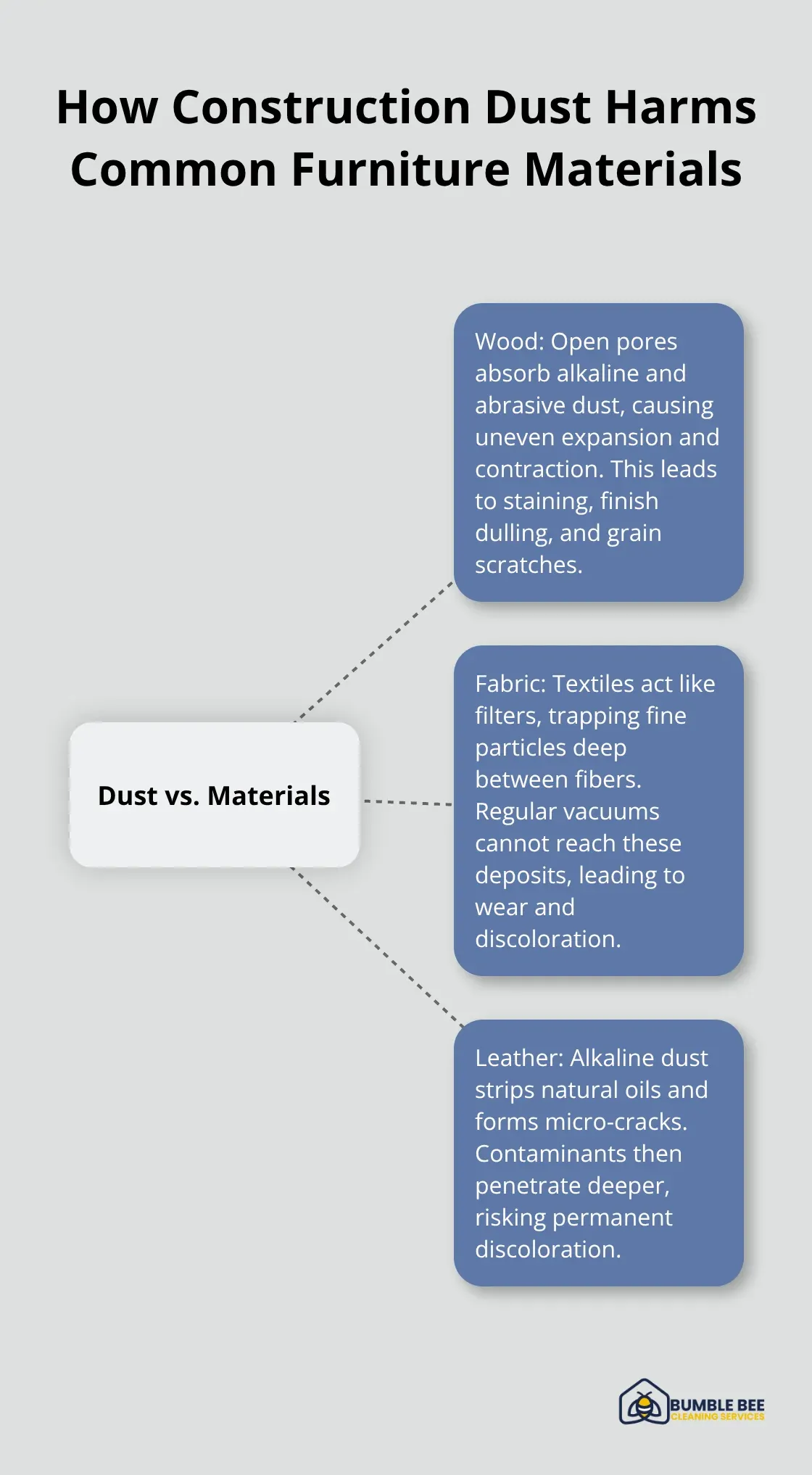
Wood furniture absorbs construction particles through its natural pores, which causes the grain to expand and contract irregularly. The EPA estimates that 600 million tons of construction and demolition debris were generated in the United States in 2018, with fine particles that travel up to 30 feet from work areas. Fabric upholstery acts like a filter and traps particles between fibers where regular vacuums cannot reach them. Leather develops micro-cracks when alkaline dust strips away its natural oils and creates entry points for deeper contamination.
The Damage Window
Construction dust begins to cause irreversible damage within hours of exposure. Wood stains become permanent as particles bond with moisture in the air and create dark spots that standard cleaners cannot remove. Upholstery fibers weaken and break down when abrasive particles create friction during normal use. The EPA warns that delayed action allows dust to chemically react with furniture finishes, requiring expensive restoration or complete replacement. Seattle’s high humidity accelerates this process and makes immediate response essential for furniture preservation.
Professional Assessment Requirements
Different furniture materials require specialized evaluation techniques to determine the extent of dust damage. Certified cleaning professionals can identify which pieces need immediate attention versus those that can wait for standard maintenance schedules. If you don’t remove the construction dust from your home, it will eventually settle into your furniture and cause long-term damage that requires expensive restoration.
How Do Professionals Restore Furniture After Construction
Professional furniture restoration after construction demands specialized equipment and techniques that surpass standard cleaning methods. Industrial-grade HEPA vacuums with 0.3-micron filtration capture 99.97% of dust and allergens that household vacuums leave behind, while steam cleaning at 212°F eliminates bacteria and extracts embedded dust from fabric fibers. Wood furniture requires pH-neutral cleaners that professionals apply with microfiber cloths in circular motions to prevent grain scratches, followed by specialized wood conditioners that replace moisture lost during construction exposure.
Deep Cleaning for Upholstered Pieces
Upholstery demands hot water extraction at 180°F combined with enzyme-based cleaners that dissolve construction adhesives and paint residues. Professional teams operate truck-mounted equipment that delivers 500 PSI water pressure and provides immediate extraction to prevent over-saturation. Steam cleaning specialists apply fabric protectors within 24 hours of cleaning to create barriers against future dust accumulation. The Indoor Air Quality Association reports that professional upholstery cleaning removes 98% of allergens and construction particles (compared to 45% with standard vacuum cleaning).

Leather and Metal Restoration Techniques
Leather furniture needs immediate treatment with pH-balanced cleaners followed by conditioning treatments that restore natural oils stripped away by alkaline construction dust. Professional restoration involves the application of leather conditioners with lanolin and neatsfoot oil that technicians work into micro-cracks caused by dust exposure. Metal furniture requires specialized rust inhibitors and protective coatings after thorough degreasing with commercial-grade solvents. Chrome and stainless steel pieces need buffing compounds applied with rotary tools to remove scratches and restore original luster.
Cost-Effective Professional Solutions
Professional restoration typically costs an average of $629, with prices ranging from $150 to $1,500 depending on location and piece size, while extending furniture lifespan significantly. These savings become particularly significant for high-value pieces that would cost thousands to replace. However, many Seattle homeowners wonder whether they can tackle some of this restoration work themselves with the right tools and techniques.
Can You Clean Construction Dust From Furniture Yourself
Equipment That Makes the Difference
Your success depends entirely on professional-grade tools that outperform standard household supplies. A HEPA vacuum with 0.3-micron filtration removes 99.97% of particles versus 60% with regular vacuums, while microfiber cloths trap dust instead of spread it around surfaces. You need pH-neutral wood cleaners, enzyme-based upholstery solutions, and leather conditioners with lanolin content above 15%. Steam cleaners that operate at 180°F dissolve embedded construction adhesives that cold water cannot touch. Safety equipment (N95 masks) protects against silica dust exposure, which OSHA identifies as a serious health hazard in post-construction environments.
Wood Furniture Restoration Steps
Wood furniture requires immediate attention with damp microfiber cloths applied in circular motions that follow the grain direction to prevent scratches. Start with gentle vacuuming to remove loose particles, then apply pH-neutral cleaners with soft cloths. Work in small sections and dry each area completely before moving to the next. Apply wood conditioner within 24 hours to replace moisture lost during construction exposure. Seattle’s high humidity makes thorough drying essential to prevent warping or mold growth.
Upholstery and Fabric Treatment
Upholstered pieces need hot water extraction with rented steam cleaners, working from outside edges toward center to prevent water rings and over-saturation. Pre-treat stained areas with enzyme-based solutions that break down construction adhesives and paint residues. Use the steam cleaner’s upholstery attachment and maintain consistent pressure across all surfaces. Allow 12-24 hours for complete drying with fans and dehumidifiers running continuously.

Leather and Metal Surface Care
Leather demands gentle treatment with pH-balanced solutions followed by conditioning treatments applied with soft cloths in thin, even coats. Test cleaners on hidden areas first to prevent discoloration or cracking. Metal surfaces respond best to degreasing solvents followed by protective coatings to prevent future dust adhesion. Chrome and stainless steel pieces need buffing compounds applied in circular motions to remove scratches and restore original luster.
When Professional Help Becomes Necessary
Call professionals immediately when you deal with antique pieces worth over $1,000, extensive water damage from construction, or visible mold growth on any surface. Complex restoration projects that require specialized equipment like truck-mounted steam cleaners or commercial-grade HEPA systems exceed DIY capabilities. Multiple furniture pieces that need simultaneous treatment or construction dust that contains hazardous materials (asbestos or lead paint residues) demand professional intervention for safety and effectiveness.
Final Thoughts
Construction dust attacks your furniture within 48 hours and creates permanent damage that standard methods cannot reverse. Seattle’s moisture accelerates this process and makes immediate action essential to save valuable pieces. Professional upholstery restoration removes 99.97% of particles compared to 60% with household equipment.
Industrial steam cleaners operate at 212°F and extract embedded dust from deep fabric fibers where home vacuums fail completely. Professional restoration costs average $629 while furniture replacement runs thousands of dollars for quality pieces. The time window closes rapidly once alkaline particles bond with finishes and create irreversible stains.
We at Bumble Bee Cleaning Services restore furniture to pre-construction condition with specialized equipment and proven techniques. Our team tackles post-construction challenges across Seattle homes and delivers results that protect your investment. Contact Bumble Bee Cleaning Services for professional restoration that saves both time and money.
