
Construction dust, debris, and hazardous materials don’t disappear on their own. Your Seattle property needs thorough post construction cleaning before it’s truly ready for occupancy or sale.
We at Bumble Bee Cleaning Services know that most property owners underestimate the scope of cleanup required after construction wraps up. This checklist walks you through exactly what needs to happen, room by room and surface by surface.
What Counts as Post-Construction Cleaning
Post-construction cleaning is not a single sweep with a broom. It’s a multi-phase operation that removes construction debris, dust, hazardous materials, and surface contaminants left behind after building or renovation work ends. The process typically happens in three distinct stages: rough cleaning removes large debris and construction waste immediately after work stops, allowing subcontractors like electricians or painters to finish their tasks without obstruction. Light cleaning follows once all major construction work is complete, targeting fine dust from walls, fixtures, and floors. Final cleaning polishes everything to move-in or sale-ready condition, including floor buffing, glass polishing, and detailed inspections of every surface.
The Three-Phase Approach
This staged approach prevents duplicate work and keeps the project timeline efficient. Rough cleaning clears the path for remaining trades. Light cleaning prepares surfaces for final touches. Final cleaning delivers a space ready for occupancy or sale.
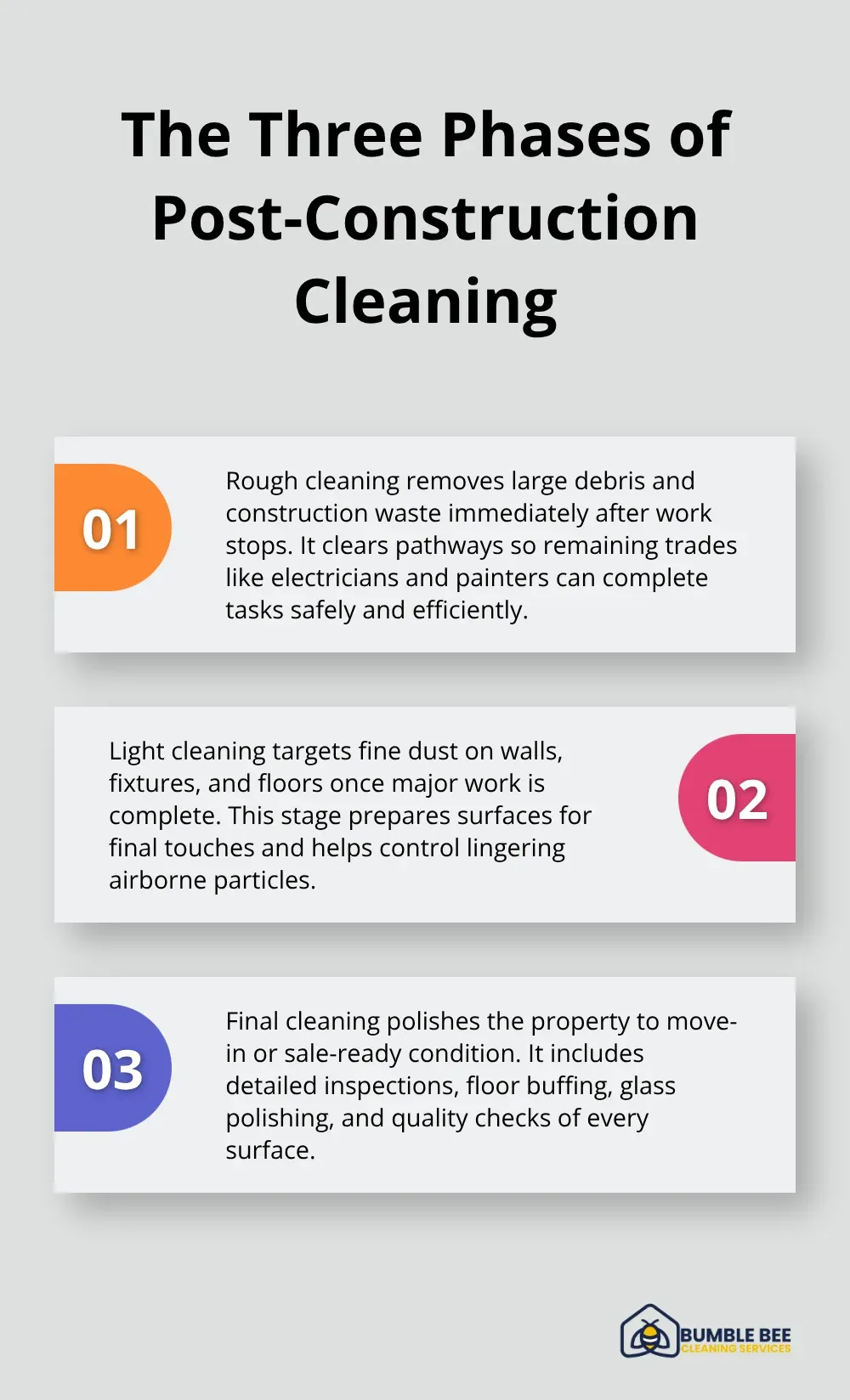
Each phase serves a specific purpose and requires different tools and techniques.
Construction dust and hidden hazards
Construction sites generate far more than visible mess. Fine dust particles from concrete cutting, drywall finishing, and material demolition settle on every surface and linger in the air long after work stops.
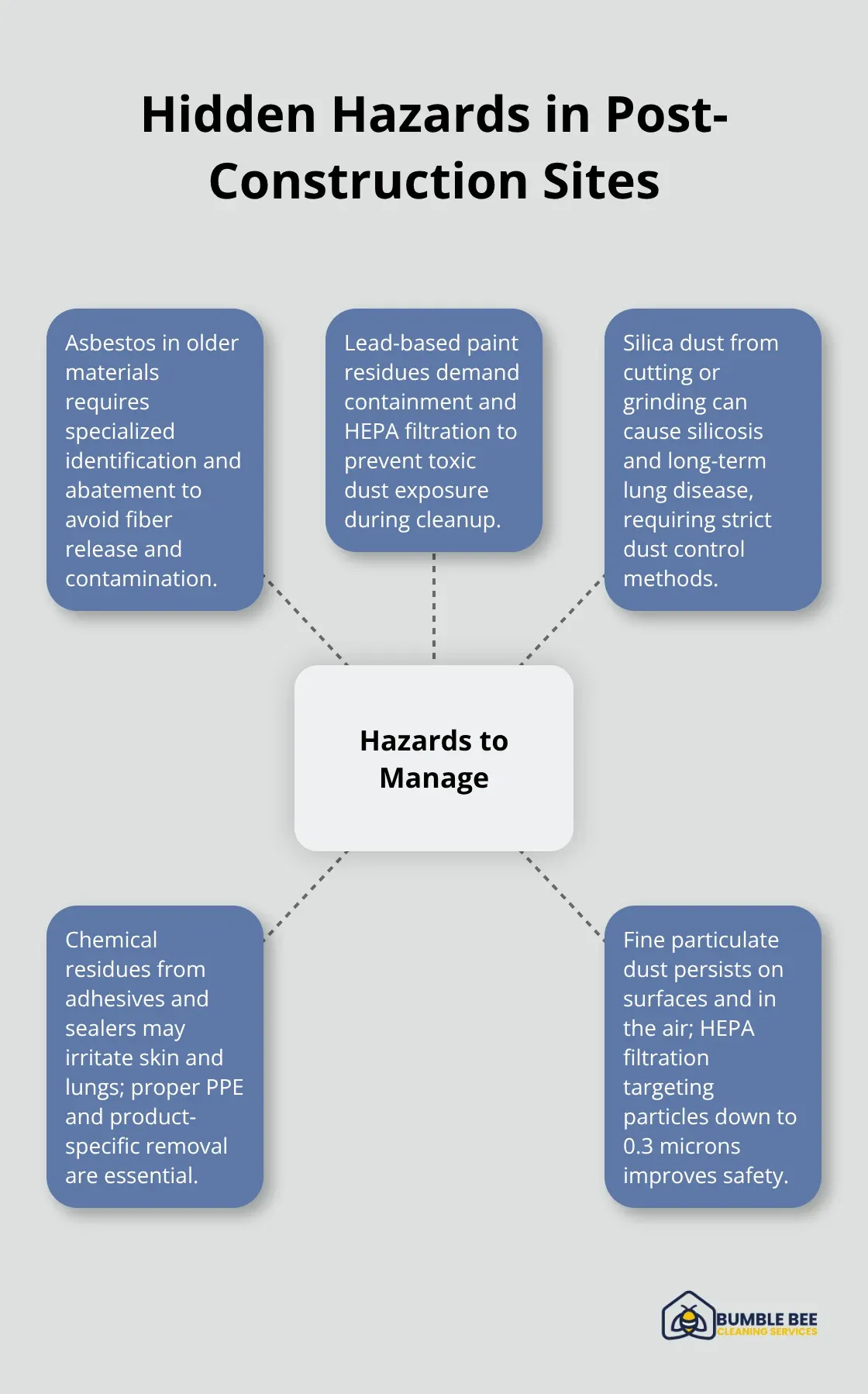
HEPA-filter vacuums capture particulates of 0.3 microns with 99.97% efficiency, which standard household vacuums cannot achieve. Beyond dust, Seattle construction sites often contain asbestos in older buildings, lead-based paint residues, silica dust that causes silicosis and long-term lung disease, and chemical residues from sealers or adhesives. Professional crews follow strict protocols for identifying and safely removing these hazards, protecting both workers and future occupants.
Property Value and Safety Standards
A property that looks clean to the naked eye may still harbor construction residues that compromise indoor air quality and surface durability. Incomplete cleanup reduces property value, delays occupancy permits, and creates liability for property owners. EPA guidance recommends maintaining ventilation for at least 48 hours after construction cleaning to remove airborne particles. Seattle’s waste disposal regulations add another layer of complexity. Under SPU Director’s Rule SW-620, all construction debris must go to Qualified Facilities, and property owners face penalties for improper disposal. Professional post-construction cleaning companies handle waste segregation, recycling compliance, and hazard documentation, eliminating these regulatory headaches.
What Makes Professional Cleaning Essential
The scope of post-construction cleanup extends far beyond what most property owners anticipate. Hazardous materials require specialized handling, waste disposal demands compliance with local regulations, and surface preparation determines whether your property truly meets safety standards. Understanding these requirements helps you recognize why hiring experienced professionals matters for your Seattle property.
Essential Post-Construction Cleaning Checklist for Seattle Properties
Bathrooms: Addressing Construction Residue
Bathrooms trap construction debris more aggressively than other rooms. Caulk overspill, paint flecks, adhesive residue, and grout dust settle into tile lines and accumulate on chrome fixtures. Sanitize toilets, sinks, tubs, and showers thoroughly, then polish mirrors and chrome with microfiber cloths to remove water spots and fingerprints. Scrub grout lines with a stiff brush and mild detergent-dried grout dust requires aggressive cleaning that standard mopping cannot handle. This attention to detail prevents future mold growth and maintains the bathroom’s functionality.
Kitchens and Living Areas: Dust Control and Surface Prep
Kitchens demand systematic attention because paint overspray commonly lands on countertops and backsplashes. Disinfect these surfaces, wipe appliances inside and out, sanitize sinks, and polish fixtures. Construction dust accumulates in cabinet interiors and on shelving, so clean both exterior and interior surfaces with special focus on corners where fine particles settle. For living areas and bedrooms, vacuum first, then use a HEPA-filter vacuum that captures particles down to 0.3 microns-standard household vacuums leave construction dust airborne. Dust all surfaces including door frames and light switches, which harbor fine particles from sanding and cutting. Mop hard floors with appropriate cleaners for your surface type: sealed hardwood responds to pH-neutral cleaners, while tile floors need warm water with mild detergent plus targeted scrubbing of grout lines. Textured walls trap dust in their crevices; use a soft brush attachment on your HEPA vacuum rather than wiping, which redistributes particles into the air.
Windows, Glass, and Paint Overspray
Windows and glass surfaces demand detailed attention because construction creates stubborn residues. Wash glass inside and outside when safely accessible, remove stickers or film residue with a plastic scraper, and dust sills and frames where fine construction particles accumulate. Fresh paint overspray on non-porous surfaces cleans with warm water and dish soap, but dried paint requires a plastic scraper and possibly commercial paint remover applied carefully to avoid damaging new finishes.
Exterior Surfaces and Air Quality Management
Pressure wash hard surfaces like patios, driveways, and entryways to remove concrete dust, mortar residue, and construction debris that settles during work. Inspect landscaping for debris, trim branches that may have been damaged during construction access, and rake areas where soil has been disturbed or compacted. Interior air quality matters more than most property owners realize: the EPA recommends ventilation and air filtration to reduce airborne particles. Industrial-grade air scrubbers capable of filtering particles as small as 0.3 microns improve indoor air quality beyond what natural ventilation achieves. Different construction types require specialized attention-new construction leaves raw dust throughout, while renovation work may introduce hazardous materials like asbestos or lead-based paint residue that demand professional handling. Selecting a cleaning company with IICRC certification ensures your team follows internationally recognized standards for construction cleaning and hazard assessment, protecting both your property and its future occupants.
Hiring the Right Post-Construction Cleaning Company in Seattle
Certifications That Prove Professional Standards
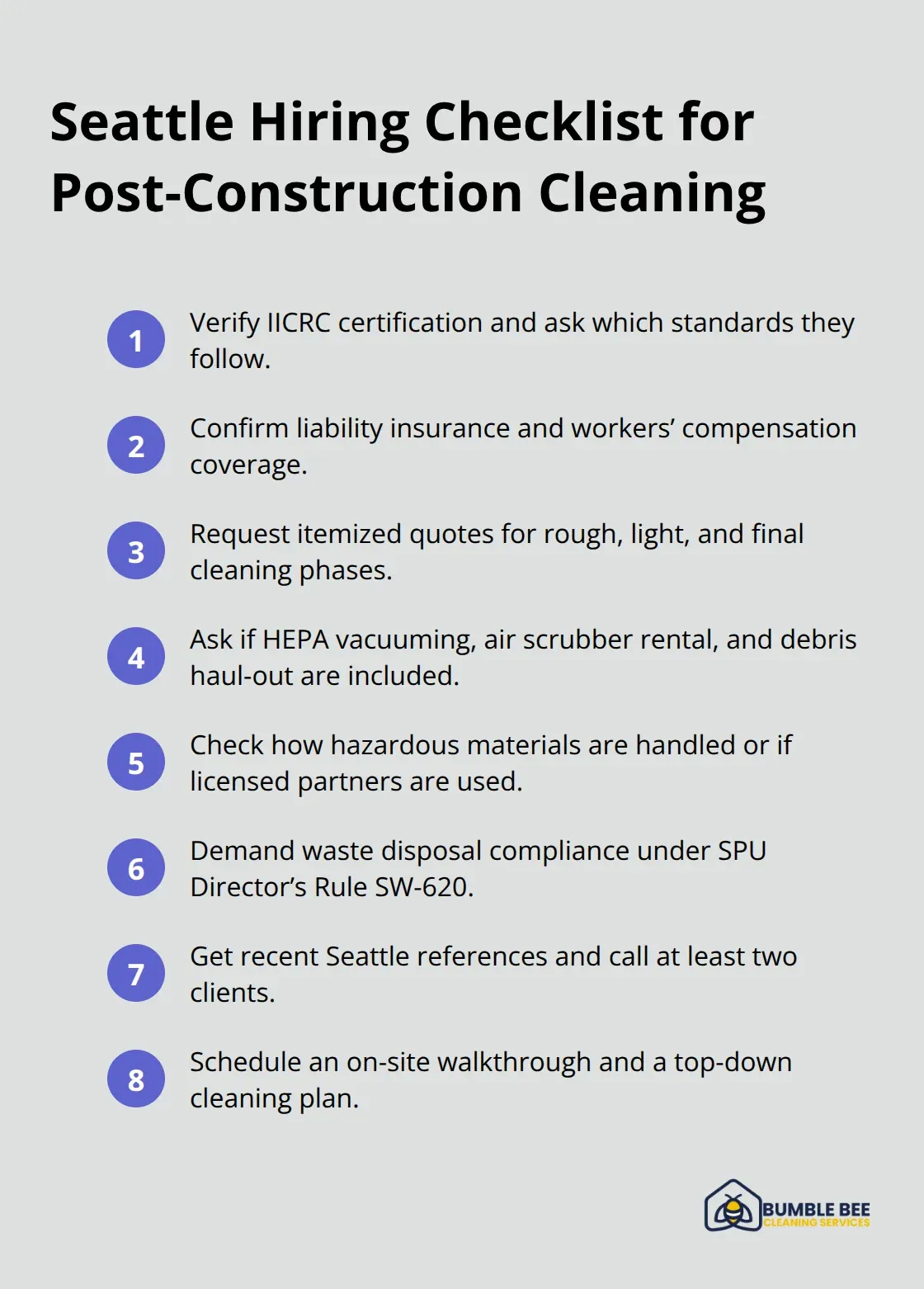
IICRC certification signals adherence to internationally recognized standards developed through industry consensus. The IICRC S400 standard specifically covers professional cleaning and restoration of the commercial built environment, which includes post-construction work. When you contact a cleaning company, ask directly whether they hold IICRC certification and which standards they follow. Many Seattle-area companies claim experience without formal credentials, but certification means they completed rigorous training and commit to documented protocols for hazard assessment, dust control, and waste management. Bumble Bee Cleaning Services holds IICRC certification alongside ARCSI and OMWBE credentials, ensuring our team follows current safety and quality benchmarks. Beyond certifications, verify that the company carries liability insurance and workers compensation coverage-this protects you if an accident occurs during cleaning.
References and Track Records
Request references from recent post-construction projects in Seattle and contact at least two of them to ask about debris removal timelines, communication during the job, and whether final inspections revealed any missed areas. Companies that hesitate to provide references or rush through reference calls are red flags. A legitimate firm stands behind its work and welcomes direct conversations with past clients about project outcomes and satisfaction levels.
Comparing Quotes and Service Scope
Never select a company based on price alone. A low bid often reflects corner-cutting on safety protocols or equipment quality. Request itemized quotes that break down rough cleaning, light cleaning, and final cleaning phases separately, plus specify whether debris haul-out, HEPA vacuuming, air scrubber rental, and waste disposal fees are included. Ask how the company handles hazardous materials like asbestos or lead-based paint-legitimate firms either employ certified abatement specialists or partner with licensed contractors rather than attempting removal themselves. Understanding what solutions are available helps you evaluate whether a company’s offerings match your project needs.
Waste Disposal Compliance
Confirm that the company complies with Seattle Public Utilities waste disposal requirements under SPU Director’s Rule SW-620, which mandates that all construction debris goes to Qualified Facilities. Request documentation showing they track waste segregation and maintain receipts for disposal verification. This compliance protects you from regulatory penalties and demonstrates the company’s commitment to local environmental standards.
Site Assessment and Planning
During your initial walkthrough with the cleaning company, observe whether they conduct a detailed site assessment, identify dust-prone areas like HVAC vents and light fixtures, and discuss a top-down cleaning sequence that prevents recontamination. Companies that invest time in planning deliver better results than those that quote over the phone without inspecting your property.
Final Thoughts
Post-construction cleaning in Seattle requires expertise, specialized equipment, and strict adherence to safety and waste disposal standards that most property owners cannot manage alone. Hiring professionals saves weeks of labor, eliminates the risk of missing hazardous materials, and protects your property from regulatory penalties under Seattle’s waste management rules. A professional team completes the job faster, reduces liability exposure, and delivers a space genuinely ready for occupancy or sale rather than simply appearing clean on the surface.
DIY cleanup costs your time, requires equipment rental, and risks incomplete hazard removal that creates future problems. Professional post-construction cleaning costs less than the delays, permit rejections, and potential health liabilities that incomplete cleanup causes. Property owners who hire experienced firms report faster project closeouts and higher resale or rental values because the property truly meets safety standards.
We at Bumble Bee Cleaning Services conduct detailed site assessments, manage all three cleaning phases, handle waste disposal compliance, and use HEPA-filtered equipment throughout your Seattle property. Contact us today for a detailed quote on your post-construction cleaning needs, and our team will walk through your space to identify specific requirements and deliver a move-in-ready property that meets every safety and quality standard.
For more information about our cleaning services in Seattle and Atlanta, or to request a cleaning quote, call or text us at 425-786-1360 or email us at info@qbclean.com
