
Seattle offices lose millions annually to preventable illness. Employees miss work, productivity drops, and team morale suffers-all because germs spread unchecked across desks, doorknobs, and conference tables.
We at Bumble Bee Cleaning Services know that workplace wellness starts with a clean environment. Professional cleaning breaks the chain of disease transmission before it impacts your bottom line.
What Illness Really Costs Seattle Offices
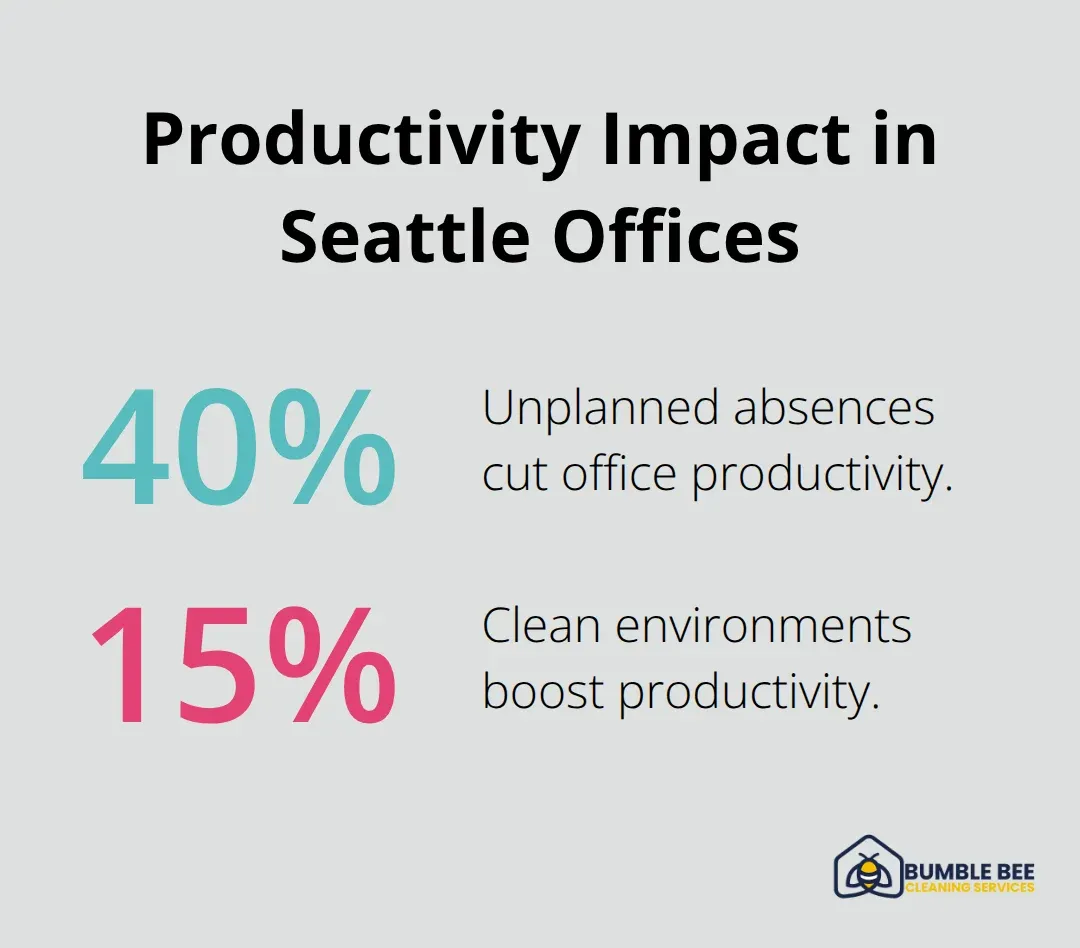
Washington state offices lose staggering amounts to preventable sick days. The British Safety Council reports that workplace illness costs around £138 billion annually across the UK, with employees averaging 7.8 days of formal sick leave per year. While Seattle-specific data isn’t always published, the pattern holds: unplanned absences reduce office productivity by approximately 40 percent. A ten-person team losing just one person to illness for a week experiences a measurable productivity hit.
When you multiply that across dozens of employees over a year, the financial damage becomes impossible to ignore.
Direct costs mount quickly. Wages paid for unworked hours, temporary staffing expenses, and delayed projects all drain budgets. Indirect costs run deeper still. When employees return from illness, they often work at reduced capacity for days, spreading the productivity loss well beyond their actual sick time.
The Hidden Toll on Team Performance
Illness doesn’t just impact spreadsheets. Morale tanks when teams operate understaffed. Remaining employees shoulder extra work, burning out faster and increasing turnover risk. A 2018 study in the Journal of Environmental Psychology found that clean environments boost productivity by approximately 15 percent compared to neglected spaces. This matters because cleanliness directly influences whether people get sick in the first place.
Where Germs Hide in Your Office
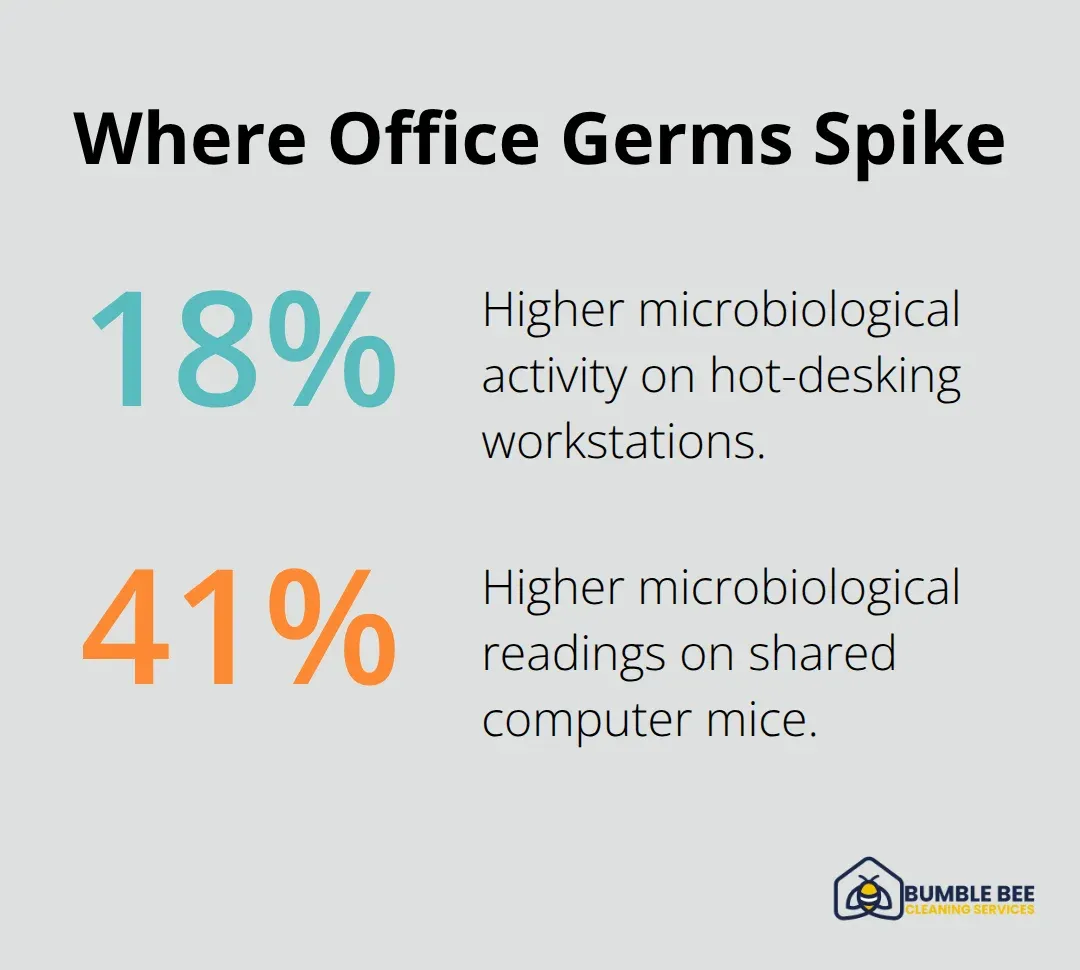
High-touch surfaces like doorknobs, light switches, and shared keyboards become transmission routes when cleaning frequency drops. Microbiological activity is 18 percent higher on hot-desking workstations versus fixed desks, according to Cleaning Matters research. Shared computer mice show 41 percent higher microbiological readings than mice used by a single person. These aren’t abstract numbers-they represent actual germs waiting to infect your workforce.
Why Seattle’s Climate Amplifies the Problem
Seattle’s respiratory illness season compounds the problem, making regular professional cleaning a legitimate business expense, not a luxury. The connection between visible cleanliness and employee confidence is real. People feel safer, stay healthier, and show up more consistently when their workspace demonstrates that management prioritizes their wellbeing. This foundation of trust and health sets the stage for what comes next: understanding how professional cleaning programs actually interrupt disease transmission.
How Germs Spread Across Your Office
High-Touch Surfaces as Transmission Routes
Doorknobs, elevator buttons, shared keyboards, and conference room tables function as transmission highways for respiratory viruses and bacteria. The CDC confirms that high-touch surfaces reduce transmission of respiratory viruses in office environments. Shared computer mice show 41 percent higher microbiological readings than mice used by a single person, according to Cleaning Matters research. Your employees touch these surfaces dozens of times daily, then touch their faces, eyes, and mouths. One infected person contaminates a doorknob in the morning; another ten people contact that same doorknob by afternoon, exposing themselves to illness.
Why Standard Wiping Fails
The EPA registers specific disinfectants proven to kill viruses on surfaces, but only if contact time requirements are met-typically 30 seconds to 10 minutes depending on the product and pathogen. Most offices skip this critical step, wiping surfaces quickly with inadequate dwell time and wondering why illness spreads anyway. The process matters more than the product. Clean surfaces first with soap and water to remove dirt and grime, which reduces disinfectant effectiveness. Then apply an EPA-registered disinfectant and keep the surface wet for the labeled contact time-this is non-negotiable.
Hot-Desking Amplifies Cross-Contamination
Microbiological activity runs 18 percent higher on hot-desking workstations than fixed desks, which means rotating employees between shared spaces amplifies cross-contamination risk unless cleaning frequency increases proportionally. The CDC reports that proper cleaning and disinfection can reduce respiratory infections. High-traffic zones like break rooms and restrooms require daily cleaning to curb germs and prevent transmission. During respiratory illness season in Seattle, increasing cleaning frequency becomes essential rather than optional.
Matching Cleaning to Your Office’s Actual Needs
Your office’s cleaning program must match actual usage patterns. Identify peak attendance days and prioritize high-touch surfaces when employees are present. This targeted approach stops illness before it takes root in your workforce. Professional recurring commercial cleaning schedules address these realities systematically, ensuring that disinfection happens with proper contact times and frequency. The next step involves understanding which specific areas demand the most attention and how to structure a cleaning program that actually works.
Building a Cleaning Program That Actually Works
Structure Cleaning Around Your Office’s Real Usage Patterns
Professional recurring cleaning schedules eliminate the guesswork from disease prevention. Rather than hoping your staff will remember to disinfect high-touch surfaces, a structured program ensures doorknobs, keyboards, and conference tables receive proper attention on predictable intervals. The frequency matters enormously. During respiratory illness season, offices should increase cleaning to daily for high-touch zones, while lower-contact surfaces can shift to twice weekly. This reflects actual transmission patterns and seasonal risk. An office operating with fixed desks can maintain different standards than one running hot-desking, where shared workstations demand more aggressive sanitization protocols. Your specific layout and usage patterns should drive the cleaning schedule rather than applying a one-size-fits-all approach.
Prioritize High-Risk Zones for Daily Attention
Bathrooms and break rooms demand daily attention because they concentrate high-touch surfaces in tight spaces where respiratory droplets linger longer. Kitchens rank equally critical-employees handle shared refrigerator handles, coffee makers, and countertops multiple times daily, making these zones efficient transmission vectors. Meeting rooms require daily disinfection when booked heavily, especially if multiple teams rotate through the same space.
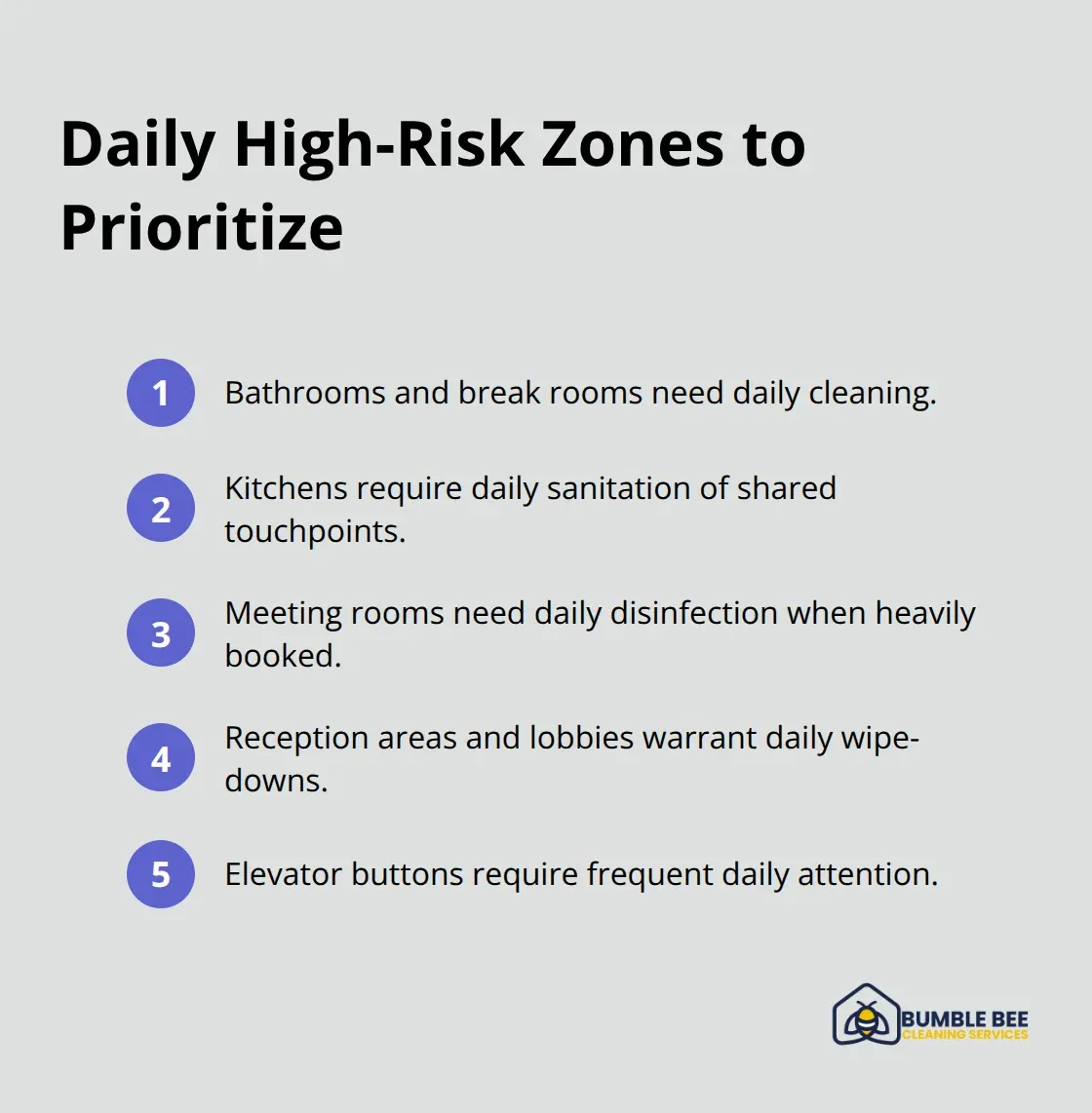
Reception areas and elevator buttons receive constant contact from visitors and staff alike, justifying daily cleaning. The key actionable involves mapping your office’s actual usage patterns and matching cleaning frequency to risk zones rather than cleaning everything uniformly.
Follow Proper Disinfection Protocols for Real Results
The EPA registers specific disinfectants proven to kill viruses on surfaces, but only if contact time requirements are met. Most offices skip this critical step, wiping surfaces quickly with inadequate dwell time and wondering why illness spreads anyway. The process matters more than the product. Clean surfaces first with soap and water to remove dirt and grime, which reduces disinfectant effectiveness. Then apply an EPA-registered disinfectant and keep the surface wet for the labeled contact time. This is non-negotiable. Professional cleaning services with trained staff understand these protocols and follow them consistently, achieving actual disinfection rather than surface-level results.
Choose Eco-Friendly Products Without Sacrificing Effectiveness
EPA-registered disinfectants now come in plant-based formulations that kill viruses and bacteria with proper contact time while eliminating chemical residue that irritates respiratory systems. This matters because employees exposed to strong chemical odors report more respiratory symptoms, paradoxically increasing sick days even as cleaning improves. Sustainable products also extend the lifespan of office furnishings and carpets by avoiding harsh chemicals that degrade materials over time, delivering long-term cost savings beyond health benefits. The economic reality favors aggressive cleaning investment: reducing sick days directly offsets the cost of professional recurring cleaning services while boosting productivity measurably.
Final Thoughts
Clean offices directly reduce sick days, and the financial case proves undeniable. Seattle businesses that implement professional recurring cleaning programs see measurable drops in absenteeism, higher productivity, and stronger employee morale. Investing in systematic disinfection of high-touch surfaces costs far less than paying wages for unworked hours, temporary staffing, and the productivity losses that follow illness outbreaks.
Workplace wellness depends on consistent execution, not good intentions. When your office’s doorknobs, keyboards, and conference tables receive proper disinfection with EPA-registered products and adequate contact time, you interrupt disease transmission before it spreads through your workforce. Employees who work in visibly clean environments report higher confidence in their safety and show up more consistently, creating a positive feedback loop where cleanliness reinforces attendance.
We at Bumble Bee Cleaning Services deliver recurring commercial cleaning services designed around your office’s actual usage patterns and seasonal risk. Our team uses eco-friendly products that kill viruses and bacteria without irritating respiratory systems, and we follow proper disinfection protocols with the contact times that actually work. Your Seattle office deserves a cleaning program built for results, not just appearances.
For more information about our cleaning services in Seattle and Atlanta, or to request a cleaning quote, call or text us at 425-786-1360 or email us at info@qbclean.com
