
Construction sanitation directly impacts worker health, project timelines, and your bottom line. Poor hygiene practices on Seattle build sites lead to costly delays and regulatory violations.
We at Bumble Bee Cleaning Services see firsthand how proper site cleanliness prevents accidents and keeps projects on track. This guide covers proven strategies to maintain hygienic construction environments from start to finish.
Health and Safety Risks of Poor Construction Site Hygiene
Poor construction site hygiene creates a domino effect that devastates projects in multiple ways. Disease transmission spreads rapidly among workers in confined spaces, with respiratory health conditions including cough, dyspnoea, and asthma emerging as top concerns among construction workers. Norovirus outbreaks can sideline entire crews for weeks, while skin infections from contaminated surfaces force workers to seek medical attention instead of complete tasks.
Financial Penalties Hit Hard
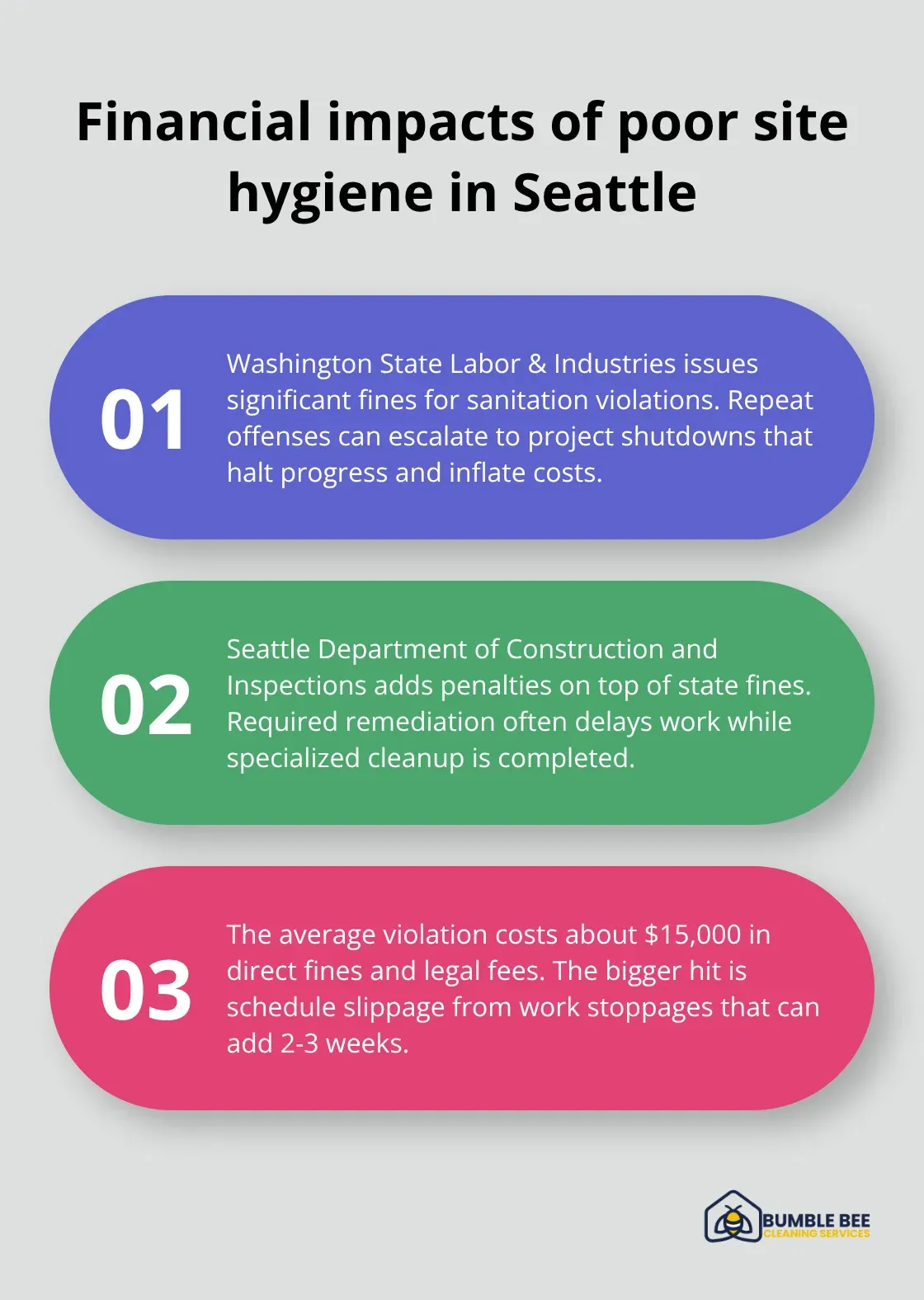
Washington State Labor & Industries issues significant fines for sanitation violations, with repeat offenders who face project shutdowns. Seattle Department of Construction and Inspections adds another layer of penalties, often requires costly remediation before work can resume. The average violation costs contractors $15,000 in direct fines plus legal fees, but the real damage comes from work stoppages that can extend project timelines by 2-3 weeks.
Project Delays Cost More Than Cleanup
Worker absenteeism from preventable illnesses creates immediate staff shortages that slow progress. Contaminated work areas require emergency sanitization before crews can return, which adds unexpected expenses to already tight budgets. Insurance claims for worker injuries related to unsanitary conditions average $25,000 per incident (not including potential lawsuits that can reach six figures). Smart contractors invest in daily waste removal and proper sanitation facilities upfront rather than pay these avoidable costs later.
Reputation Damage Spreads Fast
Word travels quickly in Seattle’s construction community when projects fail health inspections. Subcontractors avoid work with companies known for poor site conditions, which creates recruitment challenges for future projects. Property owners increasingly require proof of hygiene protocols before they award contracts (making cleanliness standards a competitive advantage rather than just regulatory compliance).
These hygiene failures highlight why proactive site management matters more than reactive cleanup efforts. Construction activities often release harmful particles into the air that can linger long after completion, while prolonged exposure to these substances can cause respiratory issues, allergic reactions, and long-term health problems. The next step involves specific practices that prevent these costly problems before they start.
Best Practices for Construction Site Cleanliness
Construction sites generate massive amounts of waste that require systematic removal every single day. The Occupational Safety and Health Administration requires debris removal to prevent accumulation that creates slip hazards and attracts pests. Seattle contractors who skip daily waste collection face immediate citations plus costly emergency cleanups when inspectors arrive unannounced.
Daily Waste Management Systems
Smart project managers establish designated disposal areas at least 50 feet from active work zones to prevent contamination spread. Workers must dispose of materials immediately rather than pile debris in corners or walkways. Construction sites that maintain this discipline report fewer accidents. Dumpsters need emptying regularly, while hazardous materials require separate containers with proper labeling to meet EPA standards.
Sanitation Facility Requirements
Portable toilets need pumping every three days minimum, with hand sanitizer stations refilled daily to meet Washington State health requirements. OSHA mandates one toilet facility for every 20 workers on site, positioned within 200 feet of work areas. Clean facilities prevent disease transmission and keep workers productive rather than searching for alternatives off-site.
Personal Protection Standards
Hard hats, safety glasses, and steel-toed boots prevent most construction injuries, but respiratory protection matters just as much for long-term health. N95 masks provide efficient filtration of airborne particles, while P100 respirators block contaminants including silica dust that causes lung disease. Workers must wash hands for 20 seconds minimum before eating or leaving the site, following Centers for Disease Control protocols that reduce illness transmission.
Hand Washing Station Setup
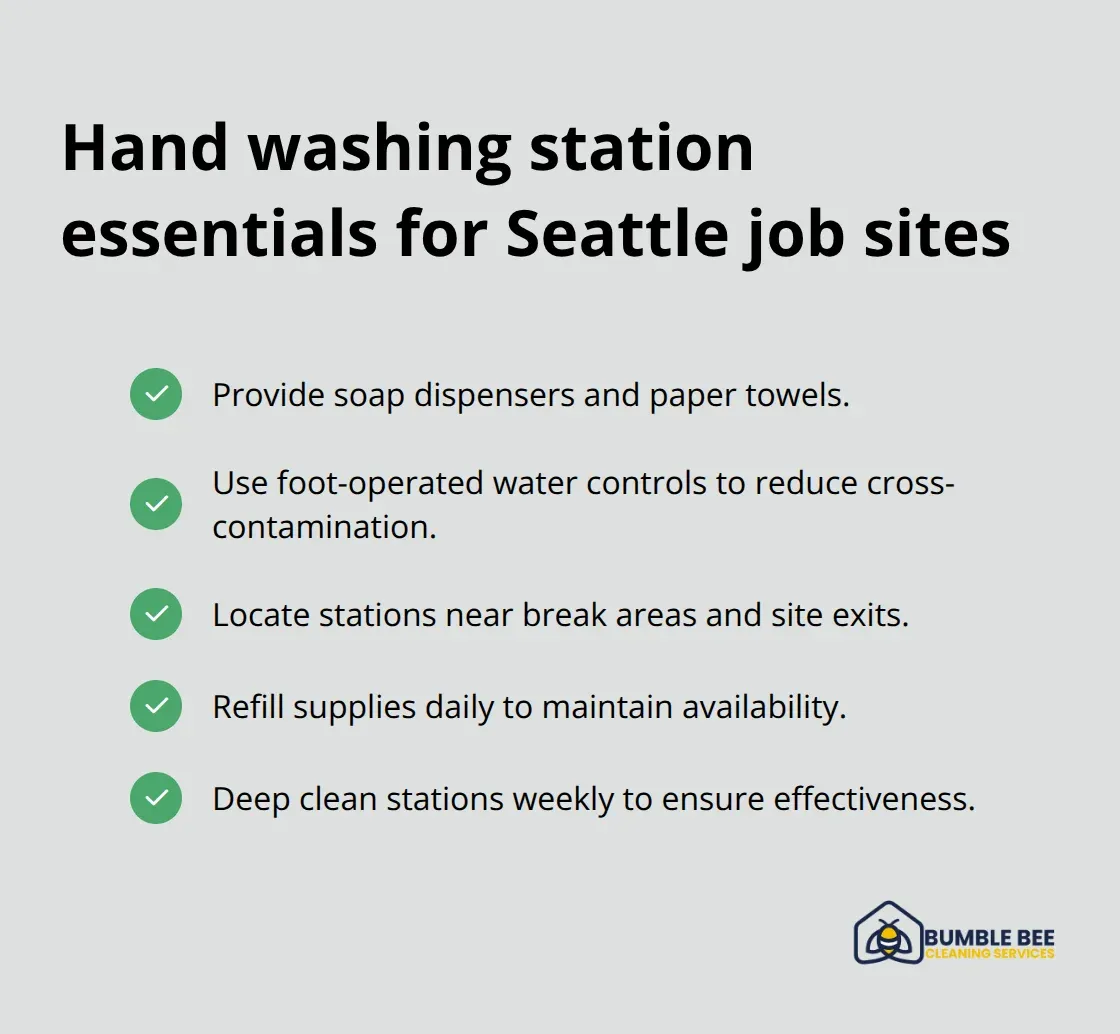
Hand washing stations require soap dispensers, paper towels, and foot-operated water controls to prevent cross-contamination between crews. Position these stations near break areas and site exits where workers naturally gather. Stations need daily refills and weekly deep cleaning to maintain effectiveness.
While daily maintenance keeps sites functional, the real challenge begins after construction ends when specialized deep cleaning becomes necessary to prepare spaces for occupancy.
Professional Post-Construction Cleaning Services
Construction completion marks the start of intensive cleanup requirements that exceed standard maintenance by massive margins. Post-construction sites contain fine dust particles that settle into HVAC systems and create air quality problems for years without proper removal. Fine particles from drywall, cement, and wood can remain airborne for days, posing potential respiratory dangers. Professional cleaners use industrial-grade equipment (including negative air machines and specialized vacuums) that homeowners cannot access through retail channels.
Advanced Equipment Makes All the Difference
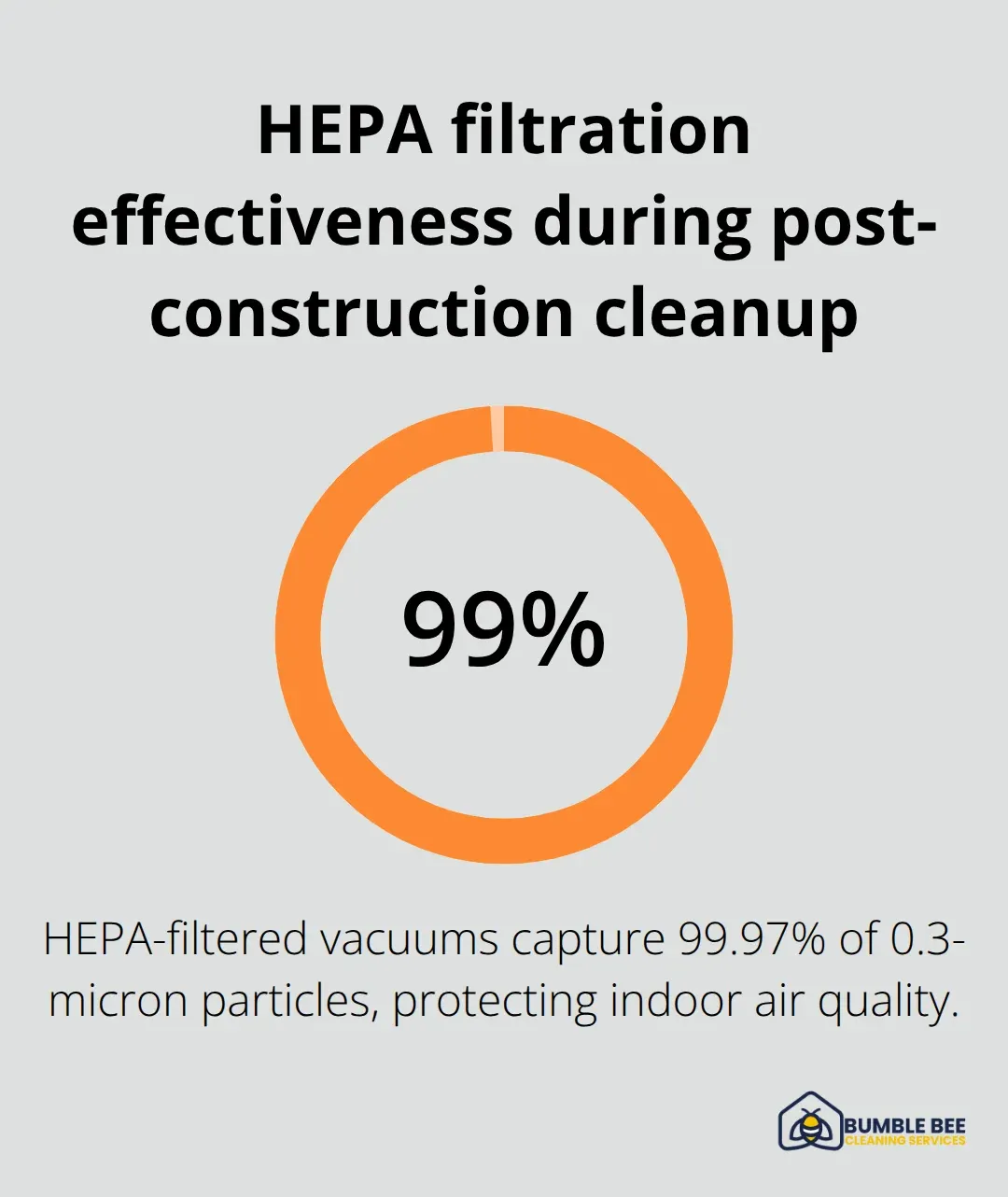
HEPA-filtered vacuums capture 99.97% of particles as small as 0.3 microns, while standard home vacuums miss these microscopic contaminants that cause respiratory irritation. Professional teams deploy air scrubbers that process 2,000 cubic feet of air per minute to remove airborne particles during cleanup operations. The National Air Duct Cleaners Association recommends professional HVAC cleanup after construction to prevent contaminated air circulation throughout new spaces.
Proper Disposal Prevents Costly Penalties
Construction debris requires proper disposal methods that meet OSHA standards, with penalties that reach $5,000 for improper practices. Professional teams know exactly which materials need special treatment and which disposal sites accept different waste types. They handle everything from paint cans to insulation materials according to strict environmental regulations.
Time and Cost Benefits Add Up Fast
Homeowners typically invest 20-30 hours for thorough post-construction cleanup, while professional teams complete the same work in 6-8 hours with coordinated crew systems. Professional services often provide satisfaction guarantees that address issues at no extra cost (which eliminates the risk of inadequate DIY results). Industrial-strength products outperform household alternatives significantly and remove construction residue that standard cleaners leave behind. Professional teams wear proper protective equipment and handle hazardous materials safely, which protects homeowners from exposure risks that can cause long-term health problems.
Final Thoughts
Construction sanitation practices directly determine project success and worker safety on Seattle build sites. Daily waste removal, proper sanitation facilities, and personal protective equipment prevent costly delays and regulatory violations that can reach $15,000 per incident. These proactive measures protect workers from respiratory issues and disease transmission while they keep projects on schedule.
Clean construction sites deliver long-term benefits that extend far beyond regulatory compliance. Property owners increasingly require proof of hygiene protocols before they award contracts (which makes cleanliness standards a competitive advantage). Professional teams complete post-construction cleanup in 6-8 hours compared to 20-30 hours for DIY efforts, and they use HEPA-filtered equipment that captures 99.97% of harmful particles.
Smart contractors establish designated disposal areas and daily waste collection schedules from day one. Hand washing stations with foot-operated controls prevent cross-contamination, while regular sanitation facility maintenance keeps crews healthy and productive. We at Bumble Bee Cleaning Services provide comprehensive post-construction cleanup that protects your investment and workers’ health throughout every project phase.
