
Your cleaning equipment is only as good as the care you give it. When tools break down mid-job, you lose time and money-and your clients notice the difference.
We at Bumble Bee Cleaning Services know that equipment care isn’t just maintenance. It’s the foundation of a profitable cleaning business that delivers consistent results.
Daily Equipment Maintenance Routines
Clean and Inspect Tools After Each Cleaning Job
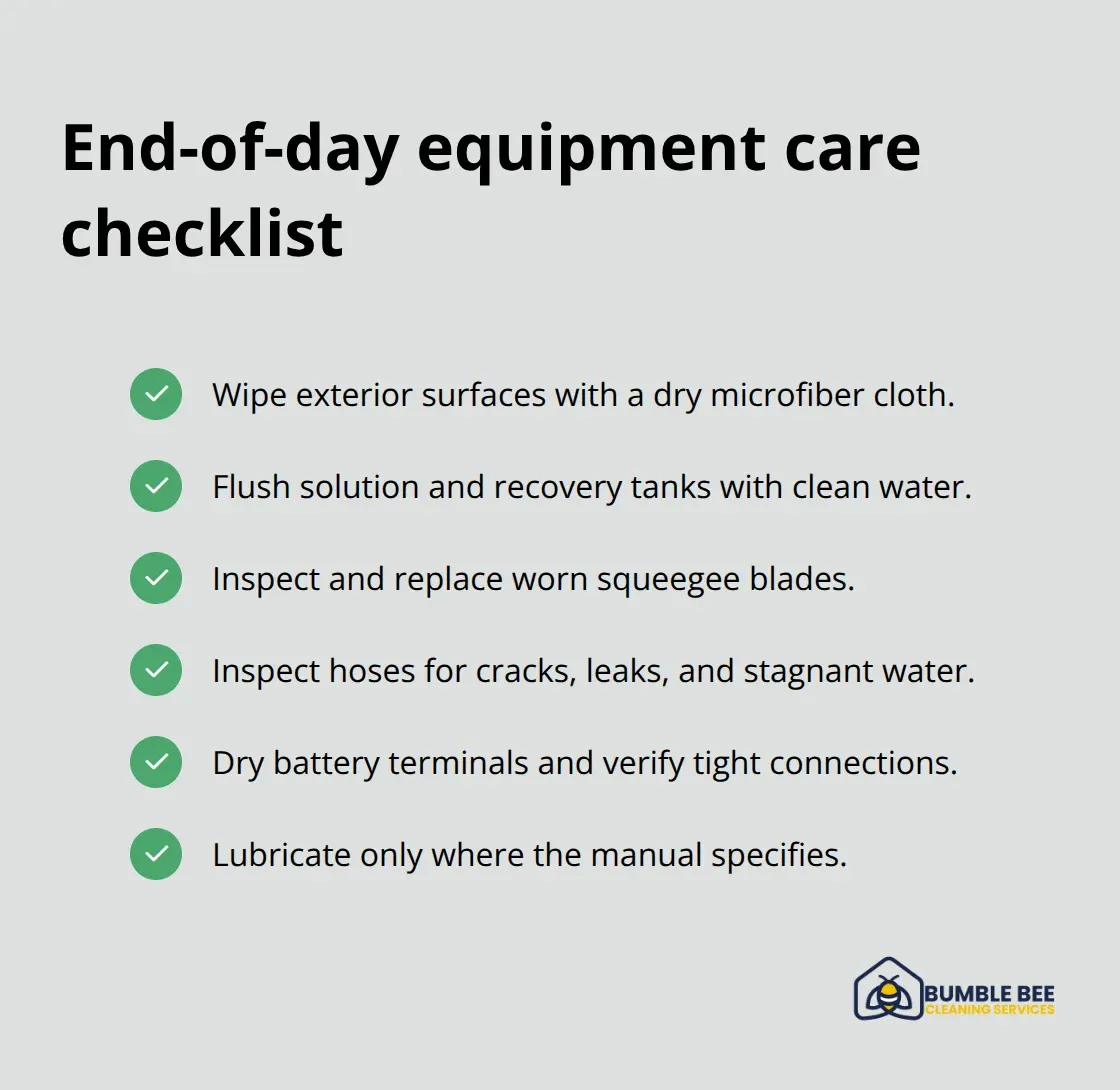
Your cleaning equipment degrades the moment you finish a job if you don’t act. Dirt, moisture, and chemical residue sit inside hoses, tanks, and motors, causing corrosion and blockages that compound over days. An end-of-day cleaning routine takes 10 to 15 minutes but stops grime from entering gears and components that cost hundreds to replace.
Start by wiping down all exterior surfaces with a dry microfiber cloth to remove dust and spills before they dry on. Then flush solution tanks and recovery tanks with clean water immediately after use to prevent odor buildup and bacterial growth that damages seals. Check your squeegee blade and replace it if you see cracks or uneven wear, since a worn blade leaves streaks and forces you to re-clean areas, wasting time on your next job.
Check Hoses and Connections for Damage
Inspect hoses for visible cracks, splits, or leaks by running your hand along the entire length while the equipment sits powered down. A small leak now becomes a major failure mid-job that leaves you stranded without backup equipment. Drain hose connections where water sits, since stagnant water breeds mold that damages seals and creates foul odors your clients will smell.
Battery terminals on cordless equipment corrode from moisture exposure, so wipe them dry and check connections for security before each shift to avoid mid-job power loss. Lubricate moving parts only where your user manual specifies, since over-lubrication attracts dust and causes sticky operation.
Empty and Rinse Tanks and Containers
Filters need attention every 1-3 months depending on usage and indoor air quality needs. Regular upkeep of your equipment prevents costly breakdowns and extends tool lifespan significantly. Check or replace filters according to your equipment manufacturer’s guidelines, not on a guessed schedule.
Vacuum brushes accumulate hair, dust, and debris that reduce suction efficiency within days of heavy use, so clean them after every third or fourth job depending on the space. These small tasks prevent expensive repairs and keep your equipment performing at peak efficiency, which directly impacts your ability to handle more jobs and satisfy your clients.
Seasonal Equipment Prep in Seattle’s Wet Climate
Protect Your Equipment from Seattle’s Moisture
Seattle’s rainy winters demand a different approach to equipment storage than most regions. Moisture is your equipment’s worst enemy, and leaving tools wet or damp in unheated spaces invites rust, mold, and seal damage that costs far more to repair than prevention. Start your winter prep in October, not November, so you have time to address problems before the heavy rain arrives.
Drain and Store Equipment Properly
Drain every tank, hose, and recovery system completely, then run fresh water through all lines to flush out chemical residue that corrodes metal components over months of storage. Leave hoses coiled loosely in a dry, ventilated space rather than tightly wound, which traps moisture inside and creates permanent kinks that reduce water flow when you restart equipment in spring.
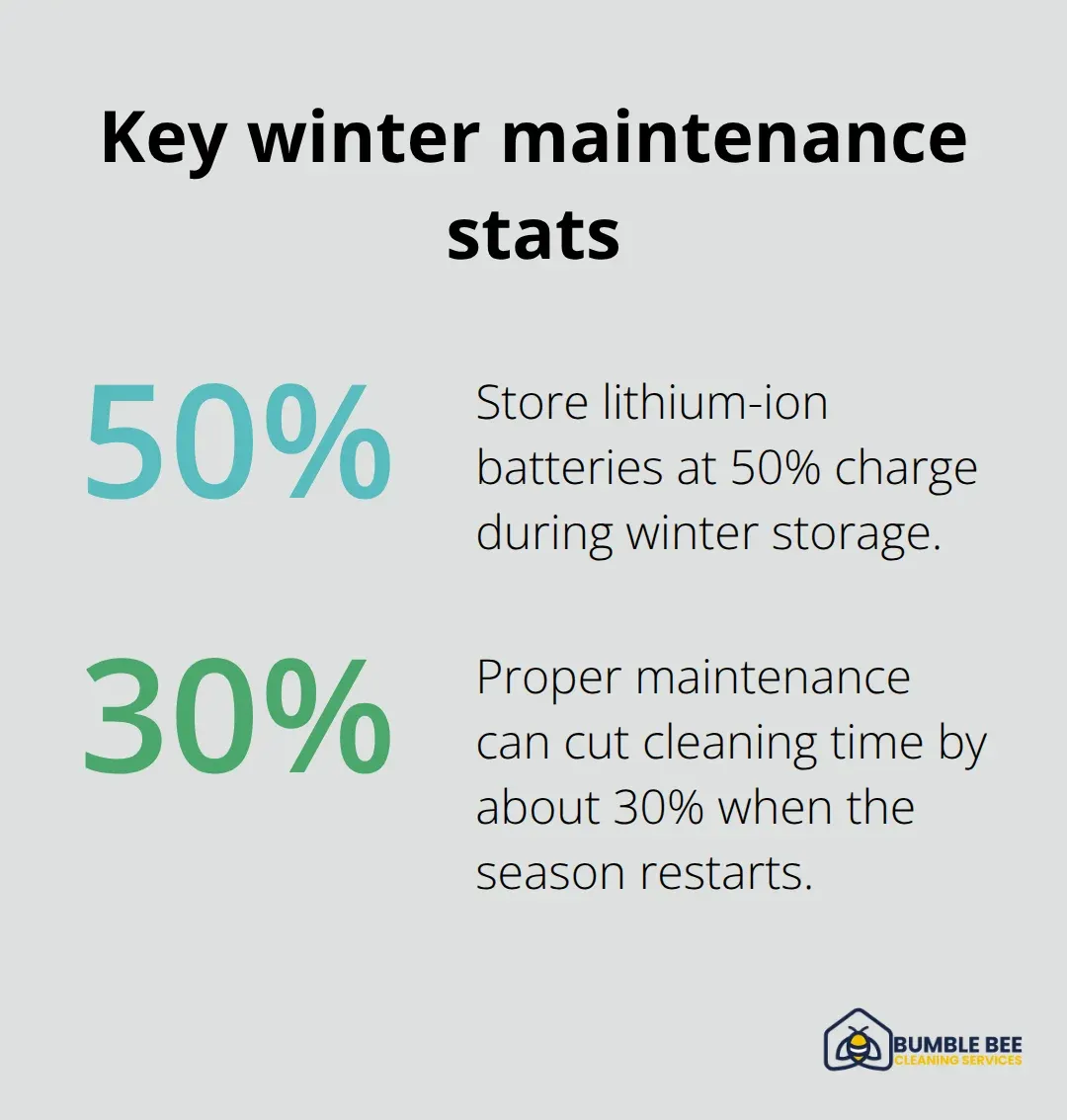
Battery-powered equipment needs special attention in Seattle winters: store batteries indoors at a temperature between -10°C and 50°C, charge them to 50 percent capacity before storage, and check connections monthly to prevent corrosion that kills batteries during off-season months. A 2022 HomeAdvisor survey found that premium cleaning tools maintained properly can cut cleaning time by about 30 percent when the season restarts, so the effort you invest now directly impacts your productivity when work picks up again.
Schedule Professional Servicing Before Peak Season
Schedule professional servicing in August or early September, before peak fall and winter demand when technicians book up fast. Most equipment manufacturers recommend annual professional maintenance, and skipping this step to save money almost always costs more when motors fail mid-job or seals give out during your busiest season. Replace squeegee blades, vacuum filters, and worn hoses during this service visit rather than waiting for failure, since these parts are inexpensive compared to emergency repairs that sideline your equipment.
Check with your equipment supplier about extended warranties or service packages that cover multiple units at a discount if you run multiple machines, which spreads costs across the year rather than absorbing large bills all at once. After professional service is complete, test every piece of equipment in your shop before storing it for winter to confirm everything works before months pass without use. This preparation sets you up to handle the next chapter: recognizing and fixing common equipment problems that arise even with the best preventive care.
Common Equipment Problems and Quick Fixes
Address Clogs and Blockages in Hoses
Hose clogs and blockages are your most common equipment emergency, and they happen fast when you least expect them. Chemical residue and mineral deposits build up inside hoses over weeks of use, restricting water flow until suction drops to nothing or pressure lines back up completely. Stop and inspect your hoses immediately the moment you notice weak water flow or reduced suction rather than pushing through the job and damaging internal seals.
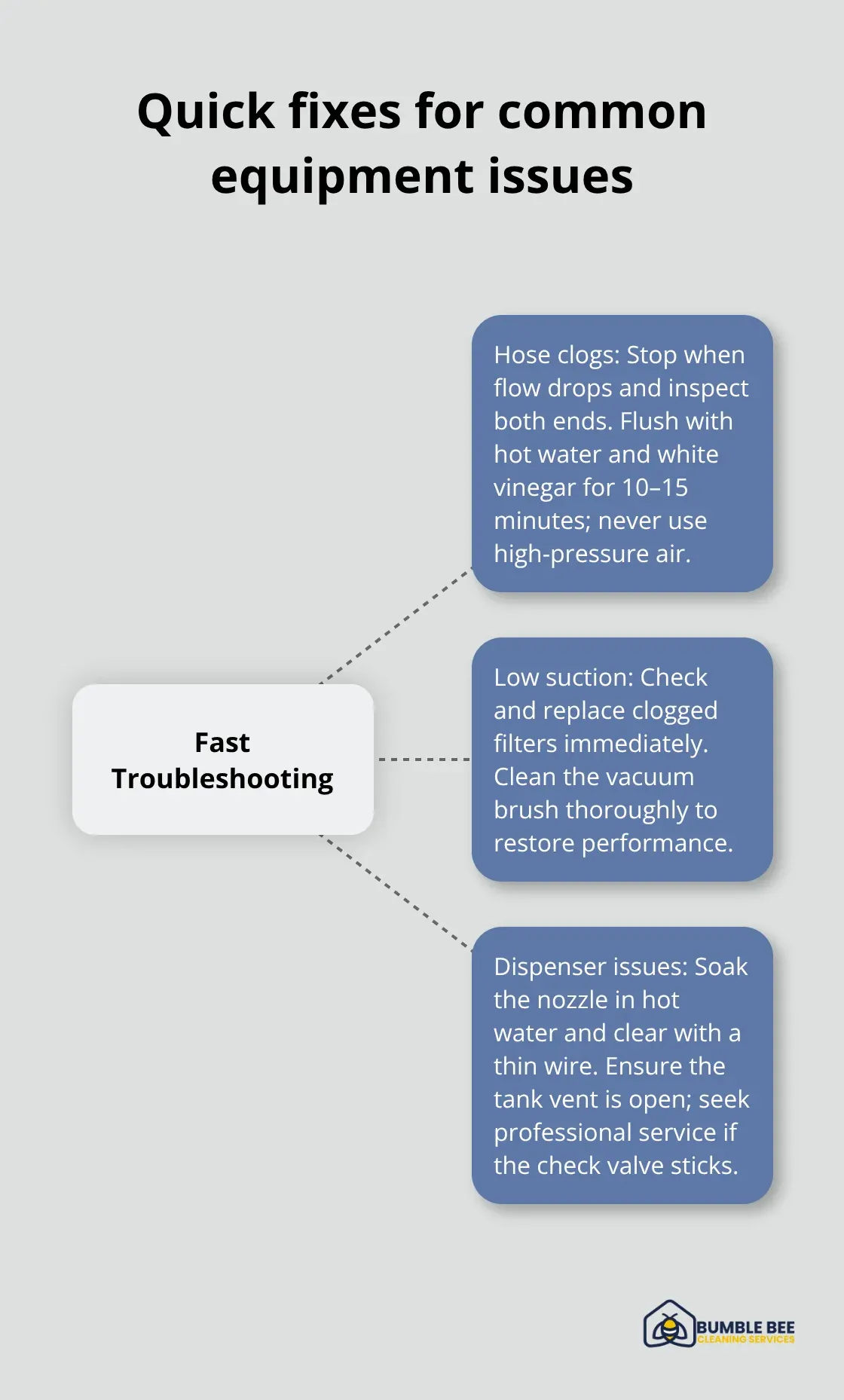
Disconnect the hose from both ends and hold it up to a light source to spot blockages visually. For minor clogs near the connection points, use a straightened wire coat hanger to fish out debris carefully without puncturing the hose interior. For stubborn buildup deeper inside, run hot water mixed with white vinegar through the line for 10 to 15 minutes to dissolve mineral deposits, then flush with clean water until the flow returns to normal. If the clog won’t budge, soak the entire hose in a bucket of vinegar overnight and repeat the flushing process the next morning.
Never use a high-pressure air compressor to blow out clogs because the force can rupture weakened hose walls or force debris deeper into equipment motors where repairs cost hundreds of dollars.
Fix Low Suction and Power Issues
Low suction and power issues often stem from dirty filters or worn vacuum brushes rather than mechanical failure, which means you can fix them in minutes without calling a technician. Check your filter every single job and replace it immediately if you see dust caked on the surface, since a clogged filter chokes suction within days of heavy use.
Your vacuum brush loses effectiveness when hair and debris wrap around the bristles, so clean it thoroughly after every third job. Remove wrapped material with your fingers and rinse the brush under warm water. These simple fixes restore performance and prevent you from wasting time on jobs that should take half the effort.
Troubleshoot Chemical Dispenser Malfunctions
Chemical dispenser malfunctions usually mean the nozzle is clogged with dried solution or the tank vent is blocked, preventing pressure from building inside the tank. Unscrew the nozzle and soak it in hot water for five minutes to dissolve dried chemical, then use a thin wire to clear the opening carefully.
Check that your tank vent hole isn’t blocked by debris, since a sealed tank won’t dispense solution no matter how much you press the trigger. If solution still won’t flow after cleaning the nozzle and vent, the internal check valve may be stuck, and that requires professional service rather than DIY fixes that risk damaging the valve further.
Final Thoughts
Equipment care transforms your cleaning business from reactive to proactive, preventing failures that would otherwise cost hundreds in emergency repairs and lost income. When you spend 15 minutes each day cleaning tanks and inspecting hoses, you stop problems before they start, and your tools perform better as a result. Well-maintained equipment completes jobs faster, which means you handle more work per week and attract clients who notice the superior quality of your results.
Staying competitive in Seattle’s market means your equipment runs reliably while competitors who neglect maintenance watch their machines fail at the worst possible moments. Seasonal prep work in October protects your investment through wet winters, and professional servicing before peak season keeps you operating when demand peaks. A worn squeegee blade leaves streaks that force re-cleaning, a clogged filter reduces suction dramatically, and these small problems compound quickly-but they’re all preventable with the routines covered in this guide.
We at Bumble Bee Cleaning Services recommend you start with the daily routines outlined here, commit to seasonal prep, and address problems immediately when they appear. Whether you manage your own fleet or need support, equipment maintenance forms the foundation of your success. Your future self and your clients will thank you for the effort you invest today.
