
Staff scheduling is the backbone of any janitorial operation that runs smoothly. When your team knows exactly when and where they need to be, everything else falls into place.
We at Bumble Bee Cleaning Services have seen firsthand how the right schedule cuts costs, improves quality, and keeps customers happy. This post walks you through the strategies and tools that make it happen.
Why Staff Scheduling Directly Controls Your Costs and Quality
Overtime Expenses Drain Your Profit Margin
Unscheduled overtime stands as one of the biggest profit killers in janitorial operations. When your team lacks clear assignments, people sit idle or scramble to cover gaps, pushing hours beyond what you budgeted. Real scheduling systems prevent this by matching staff levels to actual workload. A facility that needs three cleaners on Monday might only need two on Wednesday, but without structured scheduling, you pay for three anyway. Precise scheduling reduces overtime expenses significantly because your team works the hours you assign them, not the hours they guess they need.
Consistency Builds the Loyalty That Keeps Clients
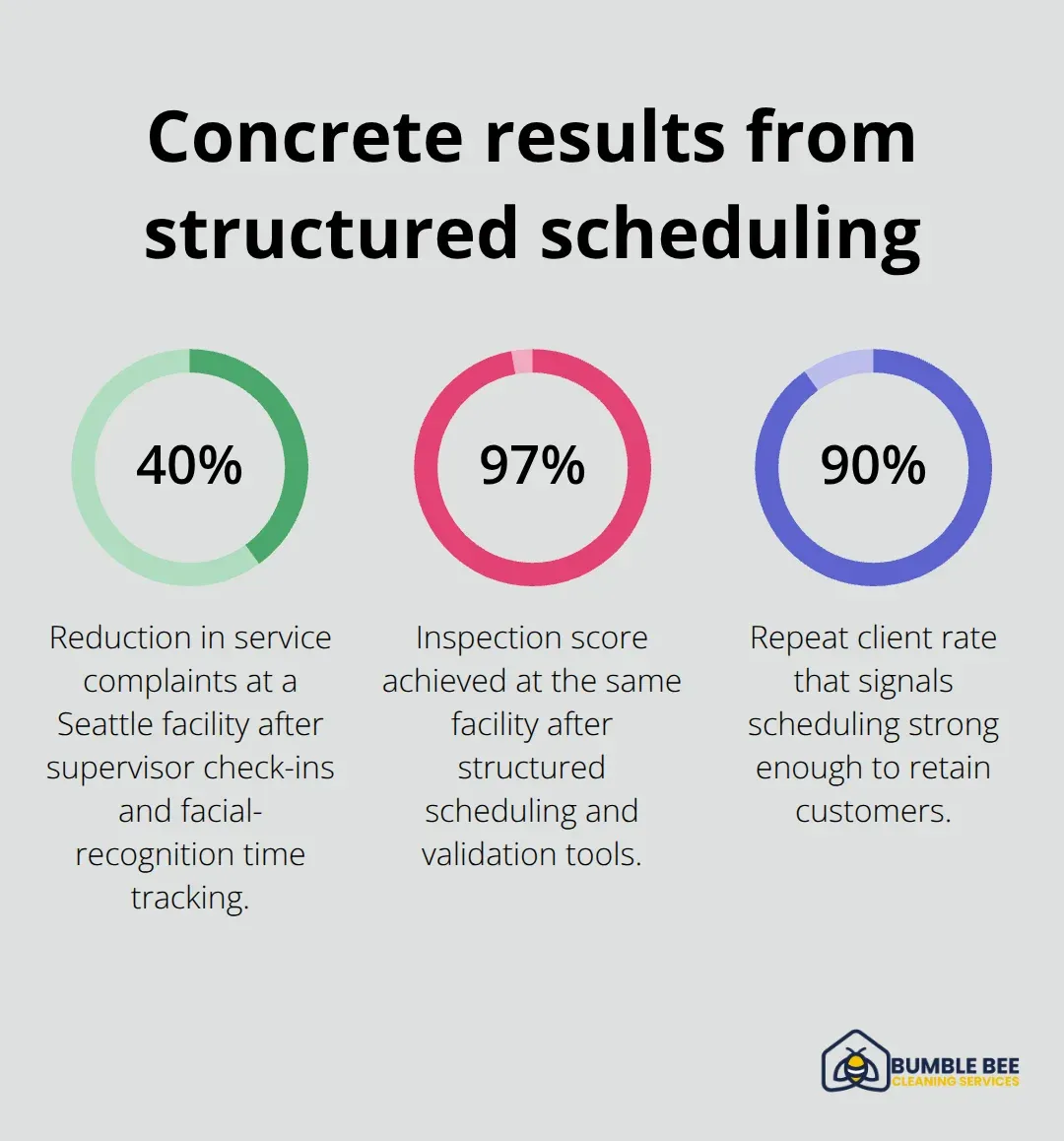
Consistent scheduling builds service quality that keeps customers loyal. When the same trained professionals arrive on predictable days and times, they learn each space deeply-they know where the high-touch surfaces are, what surfaces need extra attention, and how to work efficiently. This familiarity cuts completion time and raises inspection scores. A Seattle facility that implemented daily supervisor check-ins and facial-recognition time tracking alongside structured scheduling reduced service complaints by 40% and achieved a 97% plus inspection score. Customers notice this reliability.
Repeat Business Costs Far Less Than Chasing New Clients
When clients trust that you’ll show up on time with the right team, they stay with you for years, not months. A 90% repeat client rate signals that your scheduling is solid enough to keep people coming back, which is far cheaper than chasing new business constantly. Reliable scheduling transforms one-time customers into long-term partners who refer you to others and accept your pricing without constant negotiation.
The Right Tools Make Scheduling Decisions Easier
Structured scheduling only works when you have visibility into your team’s availability, workload patterns, and performance data. This is where scheduling software enters the picture-it automates the matching process and reveals which time slots consistently need more hands on deck. The next section explores how technology transforms scheduling from guesswork into a data-driven operation that adapts to your Seattle facilities in real time.
How to Schedule Around Your Building’s Real Workload
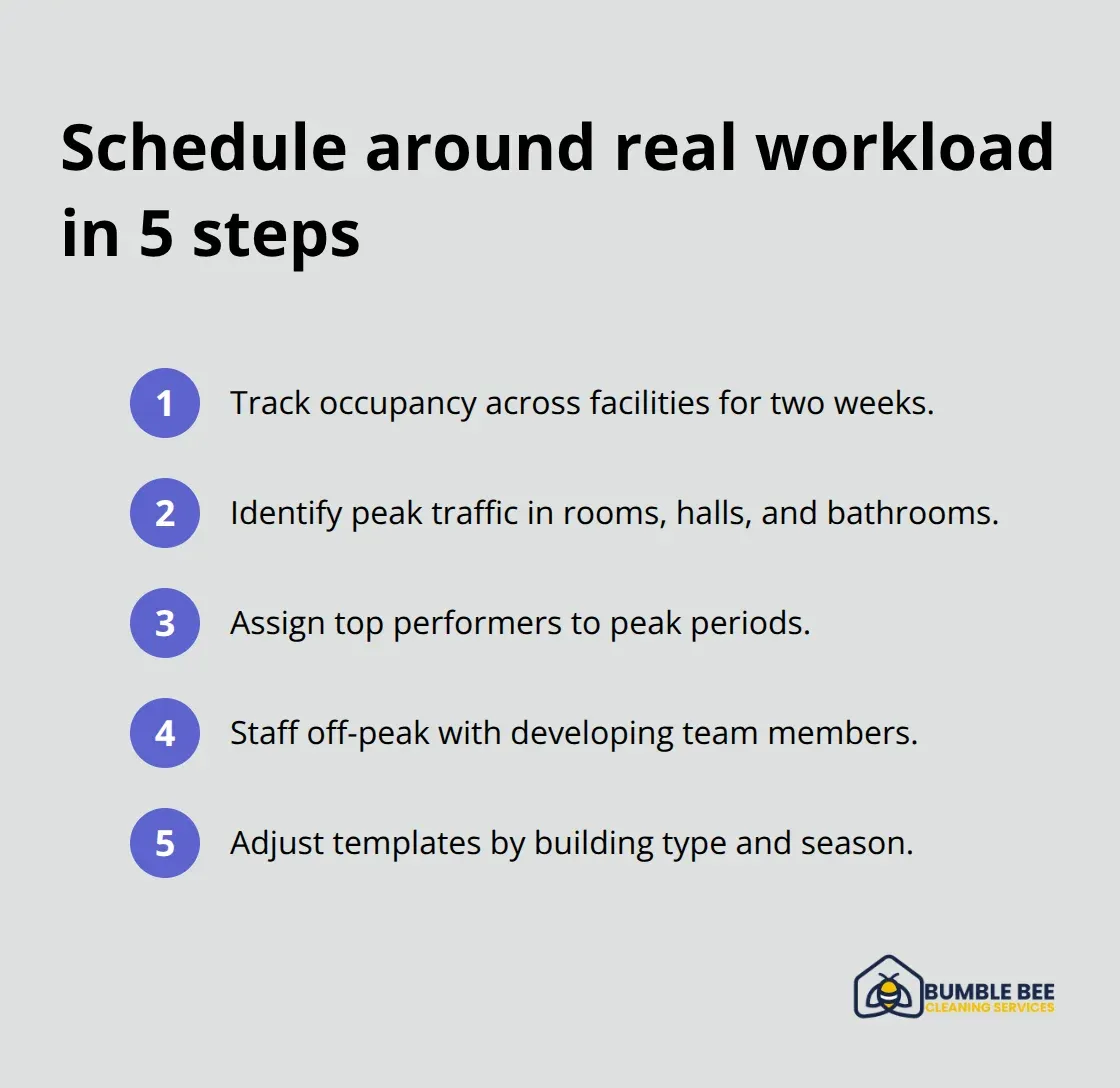
Scheduling janitorial teams without understanding your buildings’ actual traffic patterns wastes money and frustrates clients. You need to know when spaces fill up, when foot traffic peaks, and when deep cleaning matters most. A 500-person office generates vastly different cleaning demands on Monday morning than on Friday afternoon, yet many operations use the same schedule every single day. Start by tracking occupancy data across your Seattle facilities for two weeks. Note when conference rooms fill, when hallways see the most foot traffic, and when bathrooms need attention. This data reveals your genuine peak times instead of guesswork. Healthcare facilities run 24/7, so your cleaning windows must fit around patient care schedules. Warehouses generate heavy dust during shift changes but sit quieter at night. Retail spaces need morning prep before customers arrive and evening attention after closing. Once you map these patterns, assign your strongest and most experienced cleaners to peak periods when mistakes hurt most. Off-peak hours can handle newer team members or those still building speed. This approach cuts wasted labor on overstaffed quiet periods and prevents understaffing during crunch times.
Different Buildings Demand Different Scheduling Templates
A government office, a medical clinic, and a manufacturing warehouse cannot share the same schedule template. Government facilities often require work outside business hours to avoid disrupting operations, while healthcare demands cleaning that follows infection-control protocols with specific timing around patient movements. Warehouses might need morning cleanup before the day shift starts but less frequent attention at night. Create separate scheduling templates for each building type you serve, then adjust within those templates based on seasonal changes and special events. A school needs heavier scheduling before the academic year starts and lighter attention during summer break. A gym requires different coverage on weekday evenings when membership traffic peaks versus quiet weekend mornings. Your software should support these customizable templates so you spend less time rebuilding schedules from scratch each season.
Software Eliminates Double-Bookings and Scheduling Conflicts
Spreadsheets and manual scheduling create blind spots where conflicts hide and inefficiencies compound. Real scheduling software to prevent double-bookings shows you exactly who works where, what equipment is in use, and whether conflicts exist before they create service failures. The system flags when the same tool gets assigned to two jobs at once or when a staff member faces overlapping shifts. Automated alerts notify your team instantly when cancellations or absences occur, triggering real-time reallocation instead of scrambling at the last minute. Time-tracking integration embedded in your scheduling platform reveals which jobs consistently run long or short, letting you adjust future assignments based on actual performance data rather than assumptions.
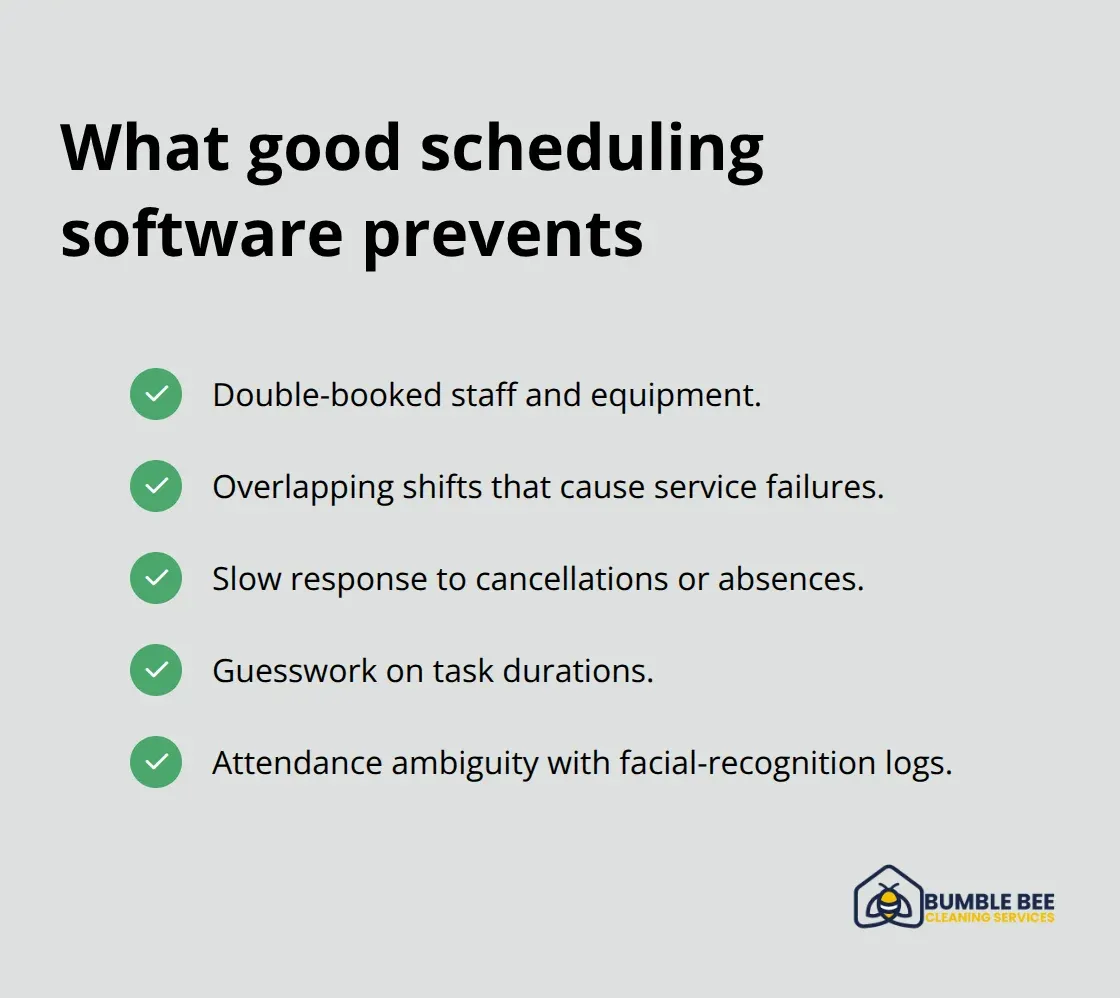
Facial-recognition entry logs provide precise time and attendance validation, eliminating guesswork about whether people actually showed up.
Data Analytics Reveal Your True Scheduling Patterns
Analytics dashboards show scheduling patterns across all your sites, revealing which time slots generate complaints, which teams finish fastest, and where bottlenecks consistently emerge. This data drives smarter decisions about staffing levels, team composition, and start times for future quarters. Real-time traffic data helps predict peak workload times, enabling you to adjust start and end times to minimize overlap and idle labor. Supply tracking integrated with your schedule reduces material waste and ensures cleaners have what they need, speeding up job completion. When you shift from outdated checklists to real-time data-driven service plans, you reduce overtime costs by aligning labor with actual workload instead of historical assumptions. The next section explores how this technology-driven approach transforms your entire operation and positions you to respond instantly when clients need changes or emergencies arise.
Technology Transforms Your Scheduling Into a Competitive Advantage
Scheduling software stops being optional the moment your operation grows beyond a single location. Manual spreadsheets collapse under the weight of tracking multiple teams, buildings, and time zones across the Seattle metro. Real-time visibility into where your team works and what they accomplish eliminates the guesswork that drains hours and frustrates clients. When your system shows you that a team arrived at 7:47 AM instead of 7:30 AM, or that bathroom cleaning takes 22 minutes instead of the 18 you budgeted, you gain the data to make staffing decisions that stick. Facial-recognition entry logs provide precise time and attendance validation without relying on what people tell you happened. Mobile access lets your cleaners update task completion from the job site in real time, not hours later when memory fades. This transparency matters because it reveals which assignments run over budget, which teams finish fastest, and where bottlenecks consistently emerge.
Real-Time Data Converts Into Measurable Results
Automated alerts eliminate the chaos that erupts when someone calls in sick or a client requests same-day service. Instead of managers frantically texting team members, your system instantly identifies who has availability and notifies them of the reassignment. Equipment tracking prevents assigning the same pressure washer or floor buffer to two jobs simultaneously, a mistake that costs you money and damages client trust. Supply tracking integrated into your schedule ensures cleaners have the materials they need before arriving on site, cutting job completion time and reducing wasted trips. Daily supervisor check-ins embedded in your schedule raise accountability and quality control for each site.
Analytics Reveal Patterns That Human Intuition Misses
Analytics dashboards reveal patterns across your portfolio-which time slots generate the most complaints, which building types need staffing adjustments in winter versus summer, and how occupancy changes affect your labor needs. Real-time data helps you predict peak workload times by analyzing booking patterns, weather forecasts, and local traffic data to adjust staffing levels accordingly. When you shift from static schedules to data-driven service plans that adjust based on actual workload, you align staffing with business demands while cutting costs and improving work-life balance.
Customized Templates Scale Across Diverse Facilities
This approach scales across diverse Seattle facilities, from government offices to healthcare campuses to warehouse operations. Each location uses customized templates that fit their specific operational windows and traffic patterns. Healthcare facilities run 24/7, so your cleaning windows must fit around patient care schedules. Warehouses generate heavy dust during shift changes but sit quieter at night. Retail spaces need morning prep before customers arrive and evening attention after closing. Smart scheduling tools support these customizable templates so you spend less time rebuilding schedules from scratch each season and more time responding to what your facilities actually need.
Final Thoughts
Staff scheduling transforms how you operate, but only when you commit to the systems and practices that make it work. Facilities that match staffing to actual workload cut overtime costs, reduce service complaints, and keep clients coming back year after year. A Seattle operation that implemented daily supervisor check-ins and facial-recognition time tracking alongside structured scheduling reduced complaints by 40% and achieved a 97% plus inspection score-that result came from knowing exactly who works where and holding everyone accountable.
Start by evaluating your current system and identifying where scheduling breaks down. Are you paying excessive overtime? Do clients complain about inconsistent service? Are your managers spending hours manually assigning shifts? These pain points reveal where scheduling software will deliver the fastest return, and choosing a platform that integrates with your time-tracking and payroll systems ensures data flows seamlessly instead of living in separate spreadsheets. Involve your team in the selection process and provide hands-on training so adoption happens quickly instead of stalling.
We at Bumble Bee Cleaning Services understand that staff scheduling is only the foundation-execution matters more. Our trained professionals show up on time with the right skills for each job, and we handle the scheduling complexity so you don’t have to, delivering consistent service with a 100% quality guarantee.
