
A messy office loses clients. A dirty warehouse slows down operations. We at Bumble Bee Cleaning Services know that commercial cleaning schedules in Seattle aren’t one-size-fits-all.
The right cleaning routine keeps your space professional, protects your team’s health, and runs like clockwork. This guide shows you exactly how to build a schedule that works for your business.
How Often Should Commercial Spaces Be Cleaned
Daily cleaning of high-traffic areas is non-negotiable in Seattle commercial spaces. Door handles, elevator buttons, light switches, and shared desks need disinfection every single day to cut germ transmission and reduce sick days among staff. The CDC emphasizes that regular, scheduled cleaning prevents germ buildup, and high-touch surfaces demand frequent attention to stay effective. Restrooms require cleaning at least twice daily in most commercial settings, with thorough disinfection of toilets, sinks, and dispensers each time. Your reception area sets the first impression and needs daily spot checks to prevent visible grime from accumulating. Entryways accumulate dirt and moisture from Seattle’s wet climate, so sweeping and mopping these zones daily stops dirt from spreading deeper into your building. Break rooms demand daily attention too, especially counters, sinks, and refrigerator handles where food contamination risks run highest.
Weekly Deep Cleaning Targets the Overlooked Spaces
Weekly deep cleaning goes beyond daily maintenance and targets areas that daily routines miss. Kitchen equipment in break rooms, including refrigerators, microwaves, and coffee makers, needs thorough sanitizing once weekly to prevent bacterial growth and odors. Office equipment like keyboards, mice, and phones harbor germs between daily wipes and require dedicated weekly disinfection to reduce illness transmission. Garbage and recycling bins accumulate bacteria over the week and must be sanitized weekly to limit cross-contamination. Glass surfaces, window blinds, and sills collect dust that affects air quality and workspace aesthetics, making weekly attention standard practice.
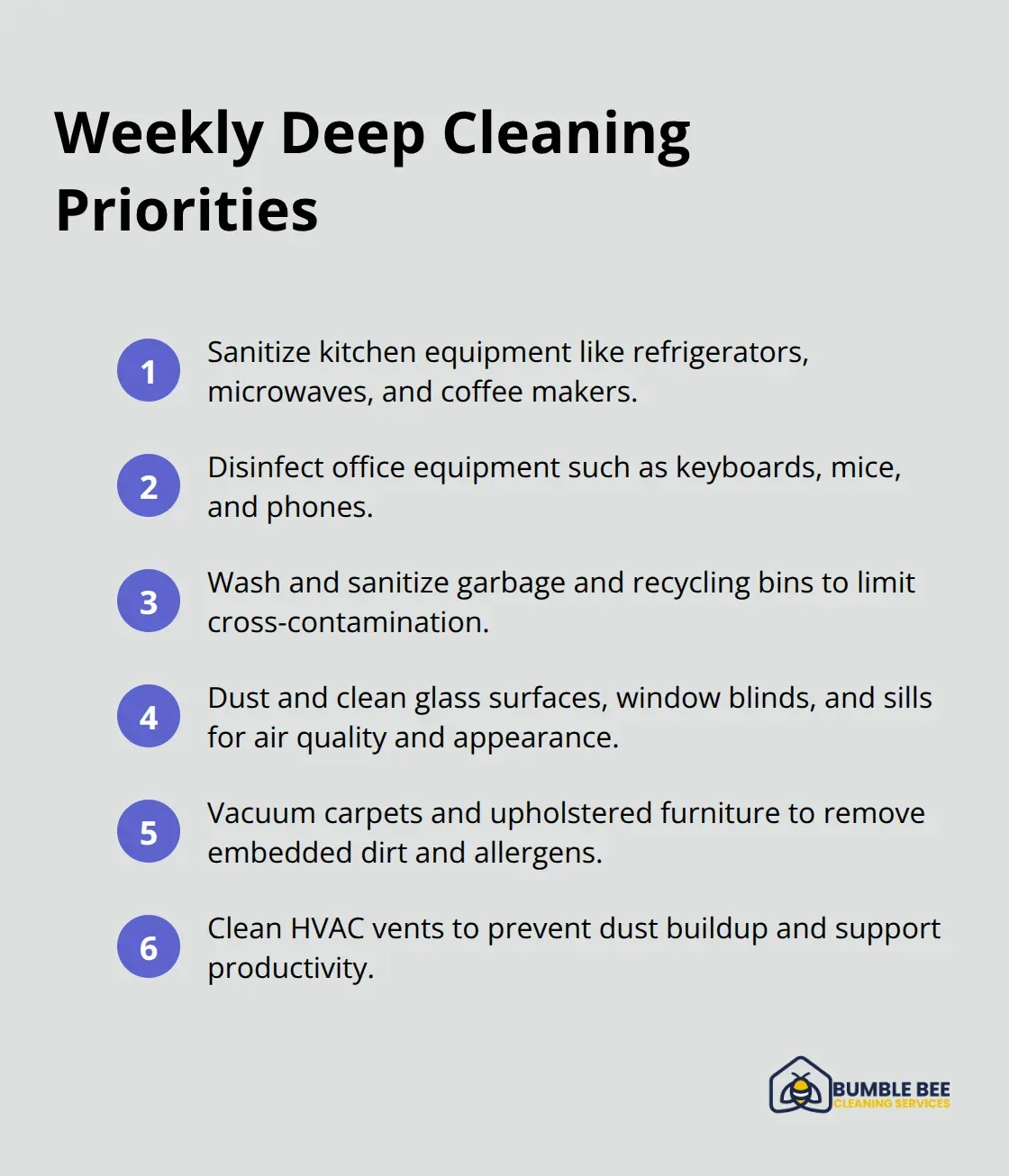
Carpets and upholstered furniture benefit from weekly vacuuming to remove embedded dirt and allergens that daily sweeping misses. Your HVAC vents accumulate dust throughout the week, and weekly attention prevents poor air quality that impacts employee productivity.
Monthly Tasks Address Long-Term Asset Protection
Monthly cleaning prevents costly damage and extends the lifespan of your commercial space. Carpet and upholstery cleaning at least once or twice yearly, depending on foot traffic, prevents permanent staining and fiber degradation that makes replacement necessary. Seattle’s damp climate makes mold and mildew inspections non-negotiable; check bathrooms, basements, and areas near HVAC equipment where moisture collects. Hard surface floors benefit from monthly waxing or polishing to maintain a uniform, professional appearance and protect against wear. HVAC filter replacement on a monthly schedule keeps air quality high and prevents system strain that leads to equipment failure. Interior window washing, weather permitting, maximizes natural light and improves curb appeal while preventing film buildup that dims spaces.
Tailoring Frequency to Your Facility Type
The cleaning frequency that works for a retail showroom differs from what a medical office or warehouse requires. Retail spaces with constant foot traffic need more aggressive daily and weekly schedules than back-office environments. Food service areas demand stricter protocols than general office spaces, with more frequent equipment sanitization and surface disinfection. Manufacturing facilities require specialized attention to prevent contamination and comply with FDA standards. Your specific industry, occupancy levels, and operational demands shape how often each area needs attention. The next step involves assessing your unique facility needs and building a custom schedule that matches your business reality.
Building Your Custom Cleaning Schedule
Assess Your Facility’s Actual Conditions
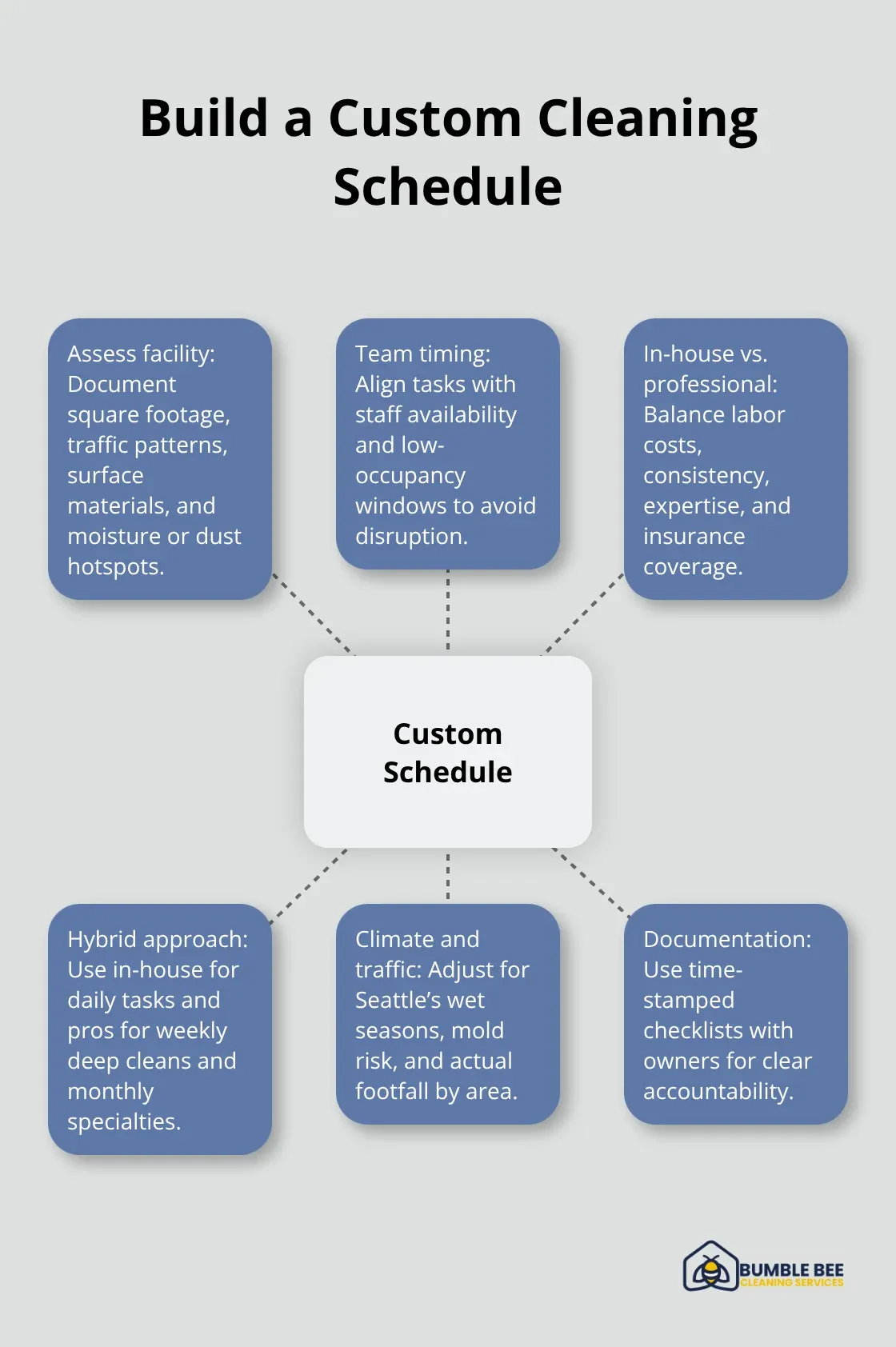
Walk through your facility and document what actually exists. Count the square footage of each space type, identify high-traffic zones, note the materials used on floors and surfaces, and spot areas prone to moisture or dust accumulation. A 5,000-square-foot office with 50 employees and open-concept layouts demands a different approach than a 5,000-square-foot warehouse with minimal foot traffic. Document your current pain points: Are restrooms running out of supplies by midday? Do certain hallways show visible dirt by afternoon? Does your break room smell like old coffee by Thursday? These observations reveal where your schedule is failing.
Seattle’s wet climate complicates matters because moisture collects differently in different spaces. Bathrooms near exterior walls absorb more moisture than interior restrooms, requiring more frequent mold checks. Ground-level entryways track far more dirt than upper-floor common areas. Once you understand your specific layout and problem areas, you can build a schedule that addresses reality rather than a generic template. This assessment typically takes 2-3 hours for a medium-sized commercial space and immediately shows which areas need daily attention versus weekly focus.
Coordinate Tasks with Your Team’s Real Schedule
Your team’s actual availability matters more than what an ideal schedule looks like on paper. If you have janitorial staff working 6 AM to 2 PM, they cannot handle evening deep cleans that require undisturbed access to offices. If your cleaning crew works around 50 employees who occupy the space all day, they cannot thoroughly clean desks and equipment during business hours. Coordinate specific tasks with when your team can realistically complete them without disrupting operations.
A practical approach involves assigning daily tasks during early morning hours before staff arrives, scheduling high-touch surface disinfection during lunch breaks when fewer people occupy common areas, and reserving evening hours for deeper work in kitchens and restrooms. Document this schedule clearly with specific times, assigned staff members, and area-specific checklists so accountability becomes automatic rather than assumed. This coordination prevents bottlenecks and ensures your team actually completes work rather than abandoning tasks that conflict with operational demands.
Choose In-House Cleaning or Professional Services
The choice between handling cleaning in-house versus hiring professional services hinges on labor costs, consistency, and expertise. In-house cleaning works when you have dedicated staff with low turnover and sufficient time to complete tasks properly. Professional cleaning services bring specialized expertise, certified staff trained in commercial standards, and the ability to scale services up or down based on seasonal demands. Professional services also carry liability insurance protecting your business during cleaning operations.
For most Seattle commercial spaces, the hybrid approach works best: in-house staff handles daily maintenance and quick cleanups while professional services manage weekly deep cleans and monthly specialized tasks that require equipment or expertise your team lacks. This combination keeps costs reasonable while maintaining the high standards your facility needs. The next section addresses common mistakes that derail even well-intentioned cleaning schedules, and how to sidestep them before they damage your operations.
Common Scheduling Mistakes and How to Avoid Them
Most Seattle commercial spaces fail because they build schedules on assumptions rather than facts. The biggest mistake we see is underestimating how filthy high-traffic zones actually become. A reception area that looks acceptably clean at 5 PM might have visible grime on door handles and the front desk by 2 PM if you only schedule one daily cleaning. High-touch surfaces in areas with 50+ daily interactions need disinfection twice daily, not once, according to CDC guidance on preventing germ transmission.
Underestimating High-Traffic Area Demands
Retail spaces, medical offices, and food service areas cannot operate on generic schedules-they need aggressive daily protocols that match actual traffic patterns. Your reception area sets the first impression, and visible grime on door handles or the front desk destroys that impression within hours. Entryways accumulate dirt and moisture from Seattle’s wet climate, so sweeping and mopping these zones twice daily stops dirt from spreading deeper into your building. Break rooms demand constant attention because counters, sinks, and refrigerator handles present food contamination risks that multiply throughout the day.
Count actual daily visitors and note which areas people use most intensively rather than guessing. If your break room trash fills by Thursday consistently, you need twice-weekly emptying, not weekly. If certain hallways show visible dirt by 3 PM despite morning cleaning, add midday spot cleaning rather than pretending a single morning pass covers it.
Ignoring Seattle’s Seasonal Reality
Winter months bring constant moisture from rain, increasing mold risk in bathrooms and entryways compared to summer. Your mold inspections cannot stay monthly during November through March; they need to shift to twice monthly in damp-prone areas like bathrooms near exterior walls and basements. Spring brings pollen and dust accumulation that forces more frequent HVAC filter changes and window cleaning.
Summer’s dry conditions temporarily reduce moisture concerns but increase foot traffic at retail and hospitality locations, demanding more aggressive floor maintenance. Facilities that lock into rigid year-round schedules waste money during low-demand seasons and fail to prevent damage during high-risk months. Adjust your schedule quarterly to match what Seattle’s weather actually demands from your space.
Overlooking Actual Foot Traffic Patterns
This mistake ruins operations faster than anything else: ignoring actual foot traffic in favor of theoretical schedules. A warehouse with 10 employees generates completely different cleaning demands than an office with 100 employees in the same square footage. Document these patterns for two weeks, then adjust your schedule to match reality. Watch where dirt accumulates fastest rather than guessing based on industry standards that may not fit your specific operation.
Professional cleaning services help because they conduct facility assessments before building custom schedules-they do not apply one-size-fits-all approaches. Your facility’s unique combination of foot traffic, climate exposure, surface materials, and operational hours demands a schedule built on what actually happens in your space, not what generic guidance suggests should happen.
Final Thoughts
An effective commercial cleaning schedule in Seattle rests on three foundations: daily attention to high-touch surfaces and high-traffic zones, weekly deep cleaning of overlooked areas, and monthly specialized tasks that protect your assets long-term. Your schedule must match your facility’s actual conditions, not generic industry templates. Document your space, count your foot traffic, and adjust for Seattle’s wet climate-consistency matters more than perfection.
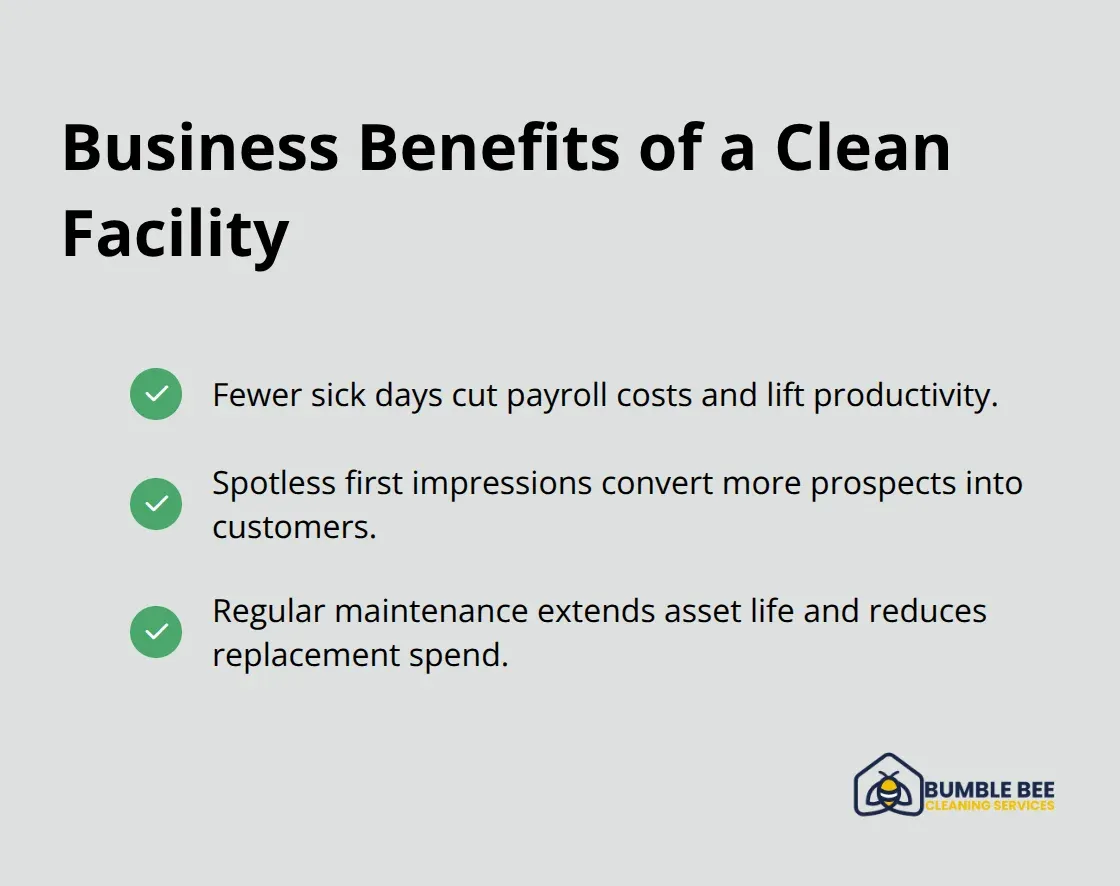
Clean spaces reduce sick days among staff, which directly impacts productivity and payroll costs. Professional first impressions from spotless reception areas and entryways convert more clients into customers. Regular maintenance extends the lifespan of carpets, furniture, and equipment, cutting replacement costs significantly over time.
We at Bumble Bee Cleaning Services have spent a decade building reliable commercial cleaning schedules for Seattle businesses. Our team understands Seattle’s climate challenges and commercial standards, and we customize schedules to match your facility’s specific needs rather than applying one-size-fits-all approaches. Contact Bumble Bee Cleaning Services today to start with a facility assessment that identifies your actual cleaning needs.
For more information about our cleaning services in Seattle and Atlanta, or to request a cleaning quote, call or text us at 425-786-1360 or email us at info@qbclean.com
