
Seattle’s damp climate creates the perfect breeding ground for stubborn odors that regular cleaners can’t touch. Pet accidents, mold, and food spills leave organic residue deep in carpets and walls that surface-level cleaning simply masks rather than removes.
Enzymatic odor treatments work differently. These cleaners break down the source of the smell at a molecular level, eliminating the problem permanently instead of covering it up with fragrance.
How Enzymes Eliminate Odors at the Molecular Level
Enzymes are biological catalysts that break chemical bonds in organic matter-the actual source of bad smells. When proteases and ureases break down urea into ammonia and carbon dioxide, they split odor molecules into smaller, odorless compounds that wash away completely. Proteases target protein-based stains from pet urine, blood, and food residue, while ureases specifically convert urea in urine into ammonia and other compounds that no longer smell. This is fundamentally different from what traditional cleaners do. Soap, detergents, and bleach dissolve or mask odors without breaking the molecular structure, which means the smell-causing compounds remain trapped in carpet fibers and upholstery. Enzyme-based treatments reduce odor-causing bacteria when proper contact time is allowed, compared to surface cleaning alone. The IICRC Standards for Professional Cleaning of Textile Floor Coverings specifically recommend enzyme-based treatments for embedded organic odors because they address root causes rather than symptoms.
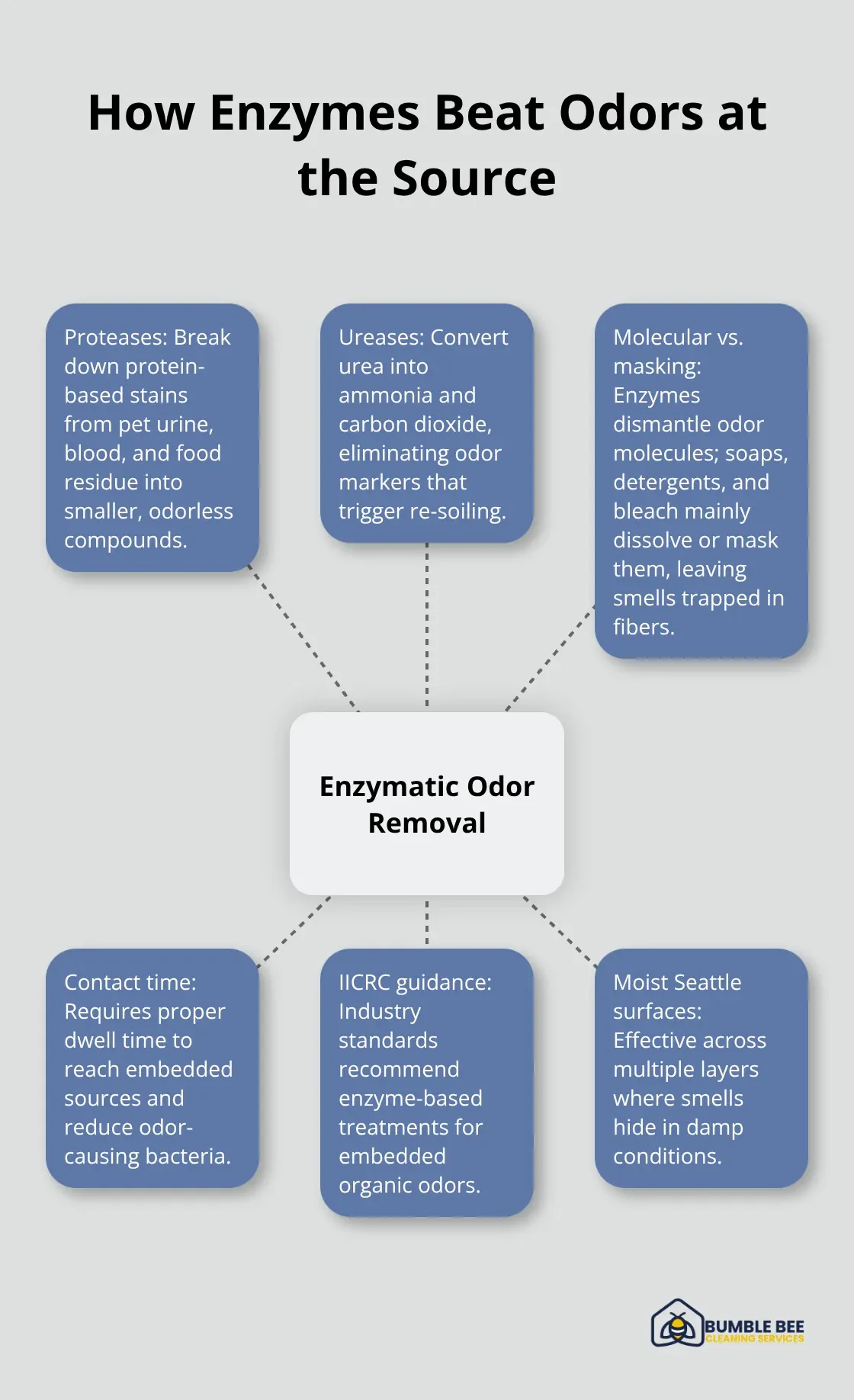
Proteases and Ureases Target Different Odor Sources
Proteases cleave protein molecules at multiple sites, making them ideal for breaking down pet accidents, meat-based food spills, and bodily fluids in carpets. Ureases are more specialized-they only target urea from urine, which is why they work so effectively at stopping pets from re-marking treated areas. The combination of both enzymes in professional-grade products tackles the full spectrum of organic odors that plague Seattle homes. Without urea breakdown, pets detect residual odor markers and repeatedly soil the same spot, perpetuating the problem. This is why enzyme cleaners outperform traditional products: they eliminate the chemical signal that attracts pets back to the same location.
Contact Time Determines Enzyme Effectiveness
Enzyme cleaners require dwell time to work effectively-typically 12 to 24 hours for severe odors. During this period, enzymes actively break down molecules rather than sitting passively like a traditional cleaner. Rushing the process or allowing the treated area to dry too quickly prevents the enzymes from reaching embedded odor sources deep in carpet backing and subflooring. Professional odor removal services in Seattle often apply enzyme treatments, then allow proper drying time before follow-up extraction, which maximizes effectiveness on Seattle’s moisture-prone surfaces where odors hide in multiple layers. The next section covers how professionals assess your specific odor problem and select the right treatment approach for your home’s unique conditions.
Odors Seattle Homes Struggle With Most
Pet Accidents Leave Chemical Markers That Attract Re-Soiling
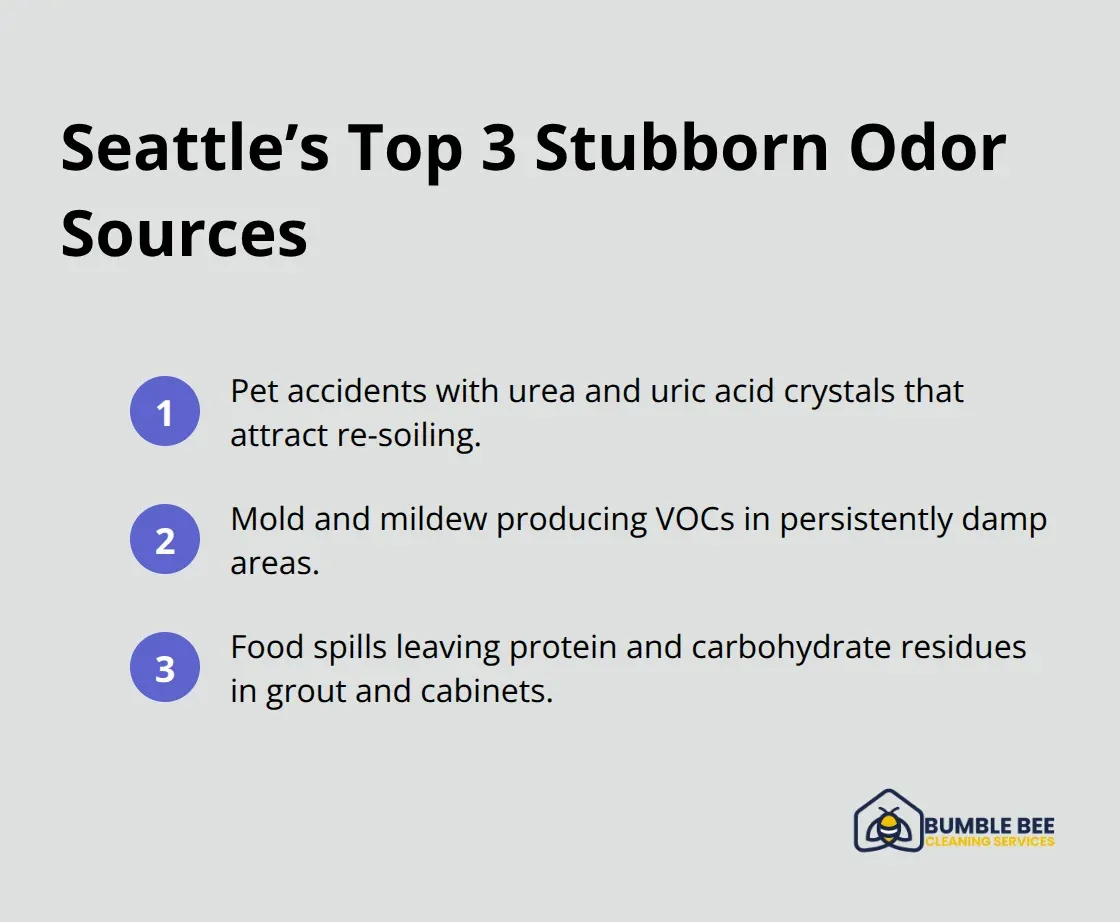
Pet accidents rank as the most persistent odor problem in Seattle homes, and enzyme treatments are the only solution that actually works. Cat urine is particularly stubborn because it contains uric acid crystals that embed themselves deep into carpet fibers, subflooring, and even drywall. A single accident leaves odor markers that attract pets back to the same spot repeatedly, creating a cycle that traditional cleaners cannot break. Enzymatic cleaners break down the actual urea and proteins responsible for the smell, preventing odors from returning when humidity reactivates dried residue.
When enzyme cleaners soak for 12 to 24 hours, they penetrate carpet backing and reach odor sources that spot cleaning misses entirely. Proper contact time allows enzymes to work through multiple carpet layers where urine has migrated. Anything less than full enzymatic treatment leaves residual smell that resurfaces when humidity increases-a common problem in Seattle’s damp climate.
Mold and Mildew Odors Signal Active Moisture Problems
Seattle’s wet climate makes mold and mildew odors second only to pet accidents in frequency and difficulty. Mold produces volatile organic compounds creating musty, earthy smells, particularly in basements, crawl spaces, and around window frames where moisture accumulates. These odors signal active mold growth and indicate that moisture problems exist, not just surface contamination.
Enzyme-based deodorizers work on the organic compounds mold produces, but they address only the smell, not the underlying moisture issue that allows mold to thrive. Addressing mold odors without fixing water intrusion means the problem returns within weeks. Professional remediation must tackle both the moisture source and the odor simultaneously to prevent recurrence.
Food Spills Require Protein-Targeting Enzyme Action
Food spills in kitchens create a third category of stubborn odors that enzymes handle effectively, especially on grout, under baseboards, and in cabinet interiors where bacteria ferment organic matter. Meat-based spills, dairy products, and fruit residue leave protein and carbohydrate compounds that proteases break down completely, whereas vinegar-based or bleach cleaners simply mask the smell temporarily.
Enzyme treatments eliminate what causes the odor rather than covering it, making them the only practical solution for homes dealing with these three common Seattle problems. The next section covers how professionals assess your specific odor problem and select the right treatment approach for your home’s unique conditions.
How Professional Odor Treatment Works in Practice
Assessment Identifies Hidden Contamination
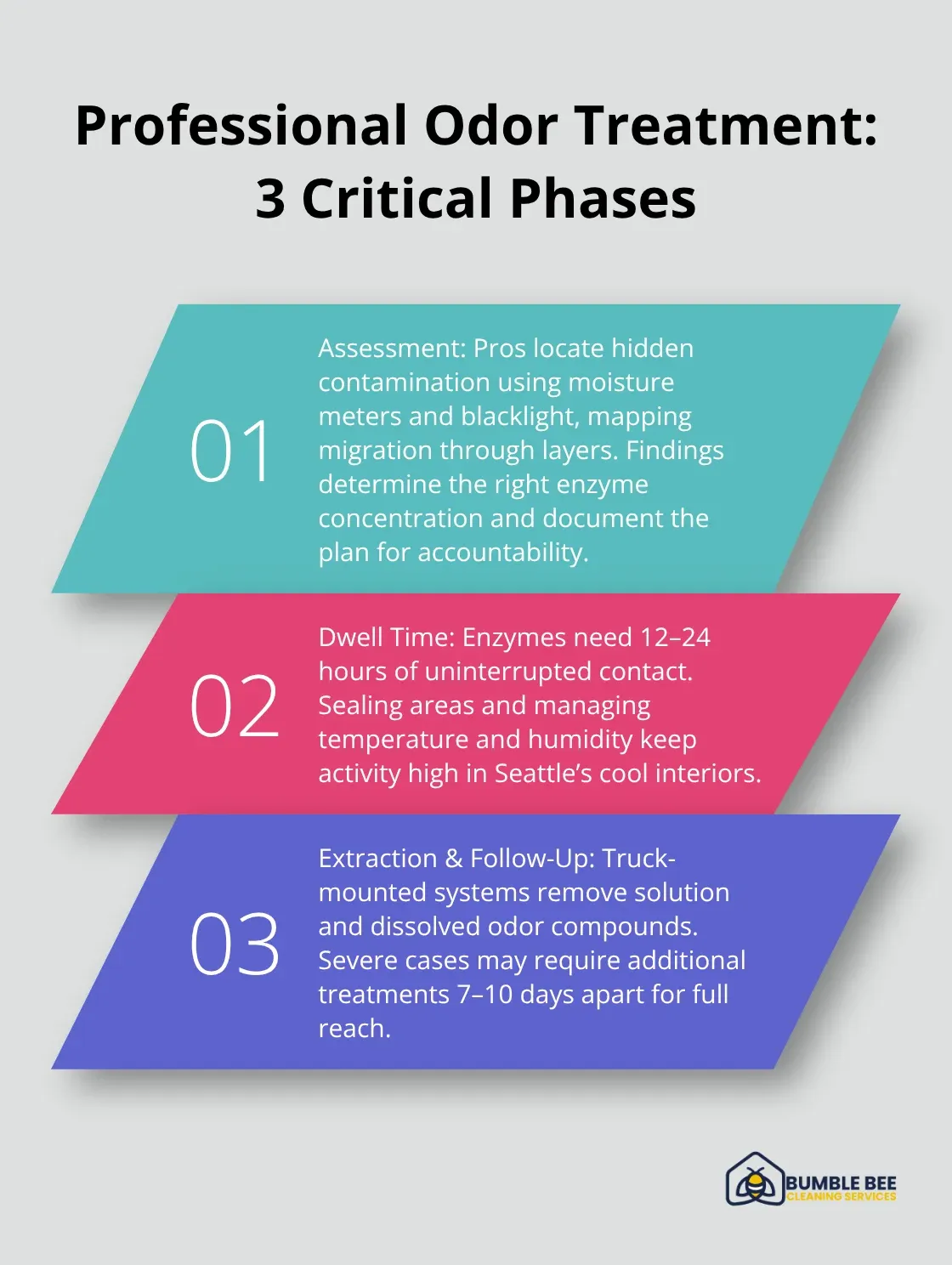
Professional odor treatment starts with precise identification of where odors originate and how deep they penetrate surfaces. Professionals use moisture meters and blacklight detection to locate urine crystals invisible to the naked eye, revealing the full extent of contamination across carpet backing, subflooring, and sometimes wall cavities. Seattle’s humidity means odors often spread further than homeowners realize-a single accident can migrate through multiple carpet layers and into concrete subfloors where enzymes must reach to work effectively. Surface-level inspection misses these hidden sources entirely, which is why rushed treatments fail. Once the assessment identifies contamination depth, professionals select enzyme concentrations appropriate to severity. Mild odors might respond to standard enzyme application, while severe cases involving multiple accidents over months or years require industrial-strength formulations and extended contact time. The IICRC Standards for Professional Cleaning of Textile Floor Coverings mandate thorough pre-treatment documentation to justify the specific approach used, ensuring accountability and effectiveness tracking.
Dwell Time Determines Success or Failure
Contact time separates successful odor elimination from temporary masking, yet this is where most DIY attempts fail catastrophically. Enzyme treatments require 12 to 24 hours of uninterrupted dwell time to penetrate and break down odor molecules-drying the area prematurely stops the chemical process mid-action, leaving residual odors that resurface within days. Professional teams apply enzyme treatments, then seal off treated areas to prevent foot traffic and air circulation that accelerates drying. Temperature matters significantly; enzyme activity increases in warmer conditions, making Seattle’s cool interior temperatures a challenge that professionals address through controlled humidity and sometimes gentle heating.
Extraction Removes Residue Completely
After proper dwell time, professionals extract moisture using truck-mounted extraction systems that remove both the enzyme solution and the broken-down odor compounds it dissolved. This extraction step is critical-leaving enzyme residue in carpet fibers can attract dirt and create new odors. Severe odor problems, particularly cat urine in subfloors or mold-related smells in crawl spaces, often require follow-up treatments spaced 7 to 10 days apart because initial applications cannot reach all contamination in a single pass.
Multiple Treatments Address Persistent Problems
Long-standing odor issues affecting Seattle homes rarely resolve with one treatment alone. Professional protocols include assessment-driven follow-up schedules tailored to your specific contamination patterns and surface types, ensuring that odors do not return as humidity reactivates residual compounds in carpet backing or subflooring.
Final Thoughts
Enzyme-based treatments deliver permanent results that traditional cleaners cannot match because they break down odor-causing molecules at the molecular level rather than masking them with fragrance. Once enzymes eliminate the chemical structure of the smell, humidity spikes and temperature fluctuations in Seattle homes no longer reactivate dried residue. Pets stop re-marking treated areas because the chemical signals that attracted them have been eliminated entirely, and enzymatic odors stay gone for months longer than surface-level treatments.
Professional cleaning services handle odor problems that persist despite your own efforts, contamination spreading across multiple rooms, or suspected hidden sources like subfloor damage or mold growth. We at Bumble Bee Cleaning Services bring expertise and industrial-strength enzyme formulations that DIY products cannot match, ensuring treatments follow industry standards and deliver measurable results. Our team applies the proper dwell time, extraction methods, and follow-up protocols that make the difference between temporary fixes and lasting odor elimination.
After professional treatment, address spills immediately, improve ventilation during Seattle’s rainy season, and schedule regular deep cleaning to prevent odor buildup from returning. These preventive steps keep enzymatic treatments working longer and reduce the likelihood that stubborn smells resurface in your home.
For more information about our cleaning services in Seattle and Atlanta, or to request a cleaning quote, call or text us at 425-786-1360 or email us at info@qbclean.com
