
Your break room is where employees recharge between tasks. A dirty break room spreads germs, kills morale, and tanks office productivity.
We at Bumble Bee Cleaning Services have seen firsthand how clean break rooms transform Seattle workplaces. The difference between a neglected space and a well-maintained one directly impacts your bottom line.
How Dirty Break Rooms Damage Productivity and Drain Your Bottom Line
Germs Spread Faster Than You Think
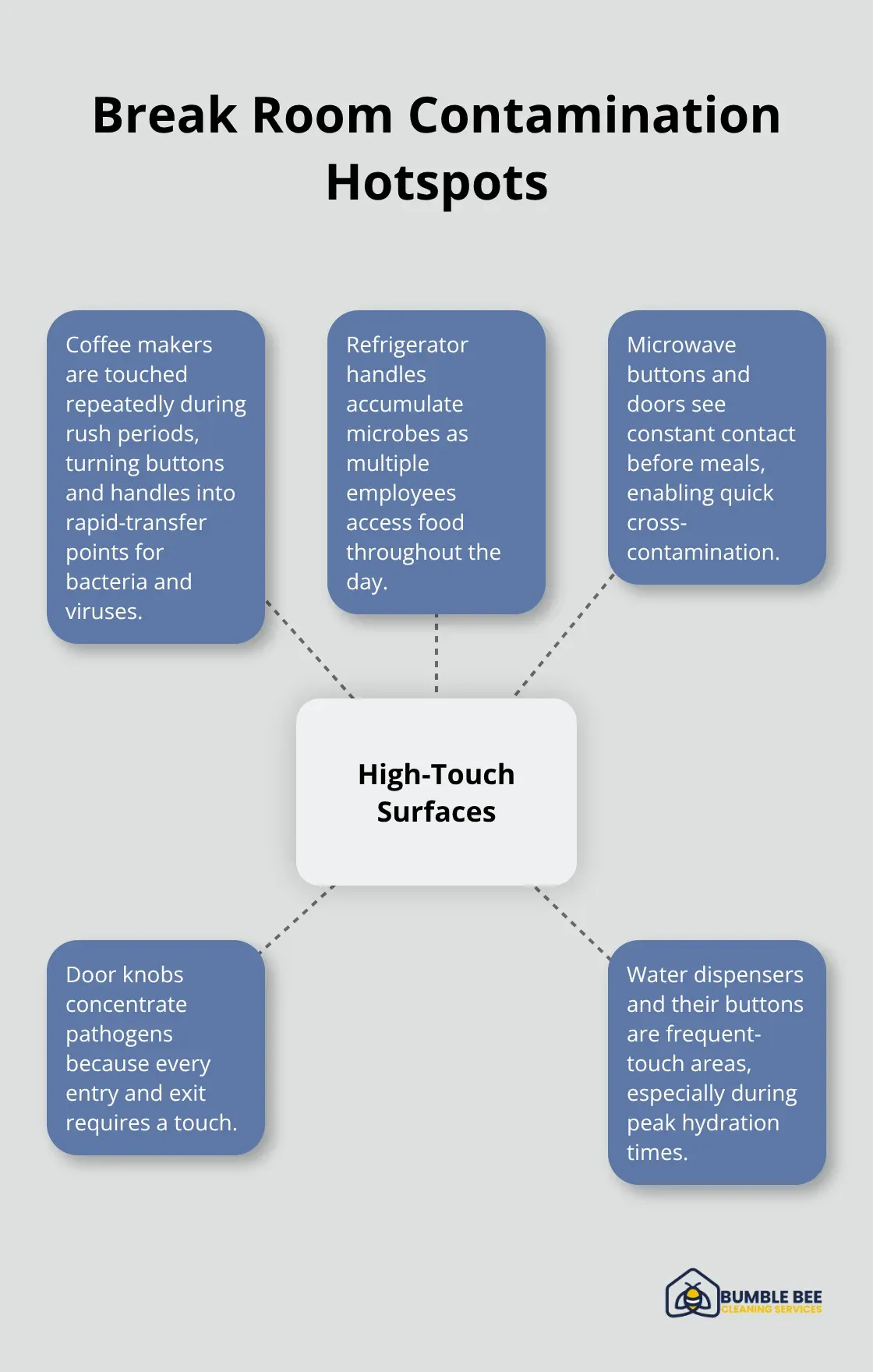
Germs in break rooms spread fast. Workplace illnesses cost U.S. employers more than half a trillion dollars in lost productivity each year. High-touch surfaces in break rooms-coffee makers, refrigerator handles, microwave buttons, door knobs, and water dispensers-become contamination hotspots where bacteria and viruses transfer directly to employee hands and then to faces and desks. A single contaminated surface can sicken multiple team members within days, forcing absences that disrupt projects and overload coworkers. When employees get sick, productivity doesn’t just dip for one person; it cascades across teams.
Filthy Spaces Kill Morale and Mental Performance
Beyond illness, a filthy break room crushes morale instantly. Employees notice crumbs, spills, sticky counters, and odors immediately. Research shows that working in a clean office space is beneficial for work enjoyment and productivity. Employees in visibly dirty spaces report lower motivation and mental clarity because clutter and grime compete for cognitive processing, according to Princeton University research. A cluttered, grimy break room signals that management doesn’t care about employee well-being, which tanks retention. Poorly maintained offices rank among the top three reasons employees consider leaving a job, according to research from Future Workplace.
Professional Cleaning Restores Focus and Attendance
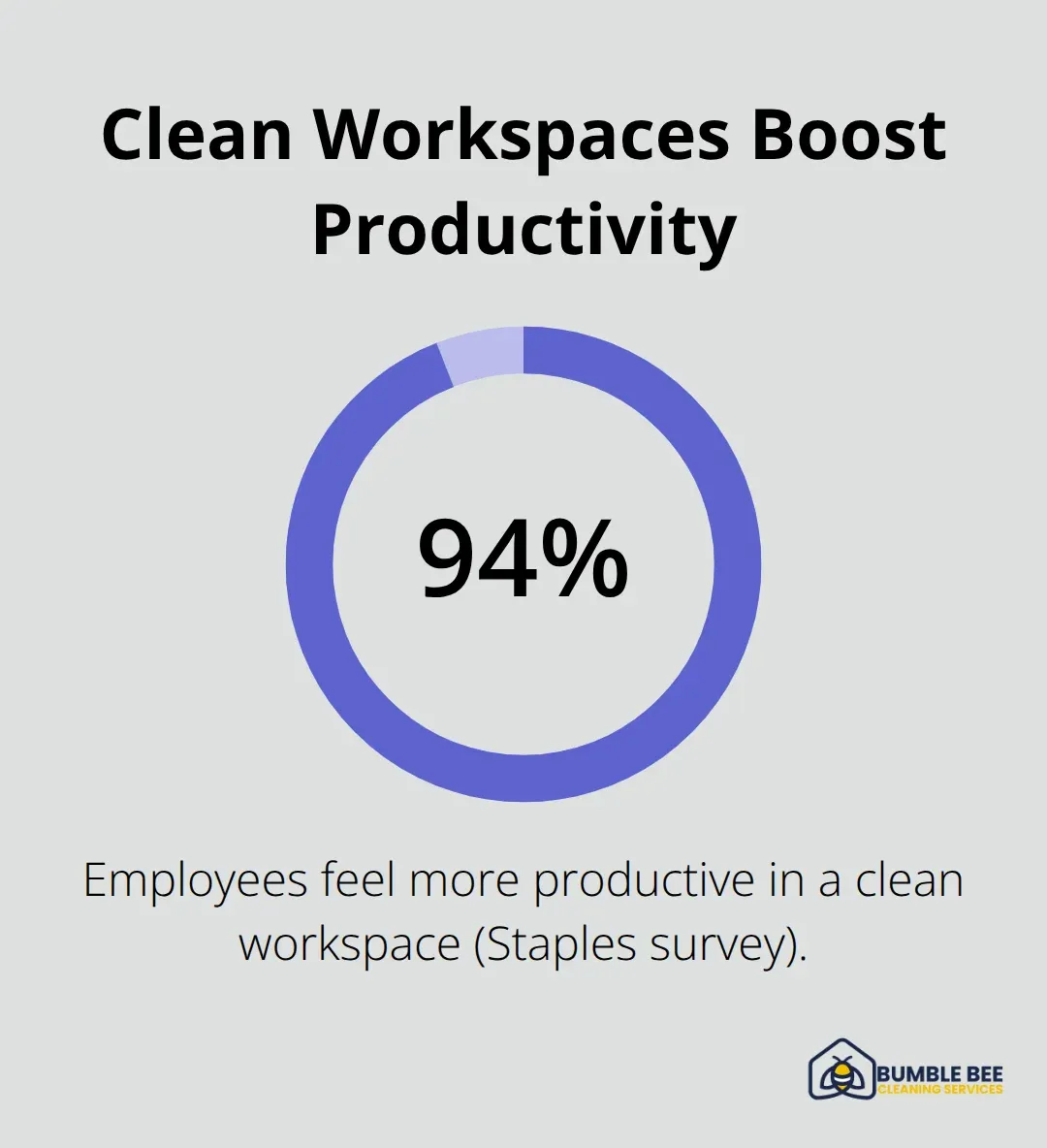
Professional break room cleaning eliminates this drain on performance. The Staples survey found that 94% of employees feel more productive in a clean workspace. When break rooms receive cleaning daily or multiple times weekly, high-touch surfaces get disinfected with EPA-approved products that eliminate pathogens before they spread illness. This prevents the cascade of sick days that derails entire departments.
A clean break room also restores mental clarity-employees can focus on work instead of being distracted by visible dirt or worrying about contamination. Employees in cleaner offices report significantly higher job satisfaction, and satisfied employees perform better. The practical impact is measurable: less absenteeism means consistent staffing, fewer disruptions, and faster project completion.
Timing Matters for Maximum Impact
Employees also take actual breaks in clean spaces instead of eating at desks to avoid the break room, which means they return refreshed and more focused. Implementing a customized cleaning schedule that targets break rooms before peak usage times-such as morning restocking and afternoon disinfection of high-touch surfaces-maximizes the productivity return on your investment. The right cleaning frequency and timing transform your break room from a liability into a genuine productivity asset.
What Science Reveals About Cleanliness and Worker Output
Objective Measurements Prove the Productivity Link
Research confirms what you already suspect: dirty break rooms directly harm productivity through measurable biological and cognitive pathways. A 2018 study published in the Journal of Occupational and Environmental Hygiene examined cleanliness in nonprofit office spaces across five organizations in the Netherlands. The researchers measured both objective cleanliness (ambient air particle counts and surface dirt) and subjective perceptions of productivity. Employees in offices with objectively higher cleanliness ratings reported significantly higher productivity and job satisfaction. The researchers used hard measurement tools like ATP testing to quantify cleanliness levels, then compared those numbers to productivity reports. This wasn’t opinion or perception bias-the data spoke clearly. For Seattle office managers, the message is straightforward: investing in regular break room cleaning with measurable cleanliness standards produces measurable productivity gains.
How Pathogens and Allergens Tank Performance
Allergens and pathogens in neglected spaces create a dual problem. Productivity losses linked to absenteeism and presenteeism from chronic illnesses and injuries cost U.S. employers $2,945 per employee per year. Break rooms function as primary transmission zones because employees touch coffee makers, refrigerator handles, microwave buttons, and door knobs multiple times daily. When these surfaces harbor bacteria and viruses, illness spreads faster than any email. Beyond infection risk, research from Princeton University shows that clutter and visible grime compete for cognitive processing power in your brain. Employees in visibly dirty spaces experience measurable mental fatigue just from processing the visual chaos around them, which reduces focus and decision-making accuracy. Clean spaces eliminate this cognitive drain, allowing employees to direct mental energy toward actual work instead of unconsciously processing environmental disorder.
ATP Testing and the ISSA Clean Standard
Professional cleaning services that use objective measurement systems-like ATP testing or the ISSA Clean Standard-give you proof that your break room meets actual cleanliness standards. ATP testing quantifies bacterial contamination on surfaces, providing data instead of assumptions. The ISSA Clean Standard combines ATP measurements with traditional audits to establish whether your break room achieves defined cleanliness goals. This matters because you cannot improve what you do not measure. A cleaning schedule that includes daily or twice-weekly disinfection of high-touch surfaces with EPA-approved products prevents pathogen buildup before illness starts. Timing matters as much as frequency: targeting high-touch surfaces before peak break times stops contamination at the source. Pairing professional cleaning with staff hygiene practices-hand sanitizer stations and signage encouraging handwashing in break rooms-reduces transmission risk further without adding cost.
Understanding the science behind break room cleanliness sets the stage for choosing the right cleaning approach for your Seattle office. The next section explores how professional cleaning services tailor their methods to your specific workplace needs and high-traffic areas.
Professional Cleaning Approaches That Match Your Office’s Real Needs
Frequency and Timing Transform Break Room Effectiveness
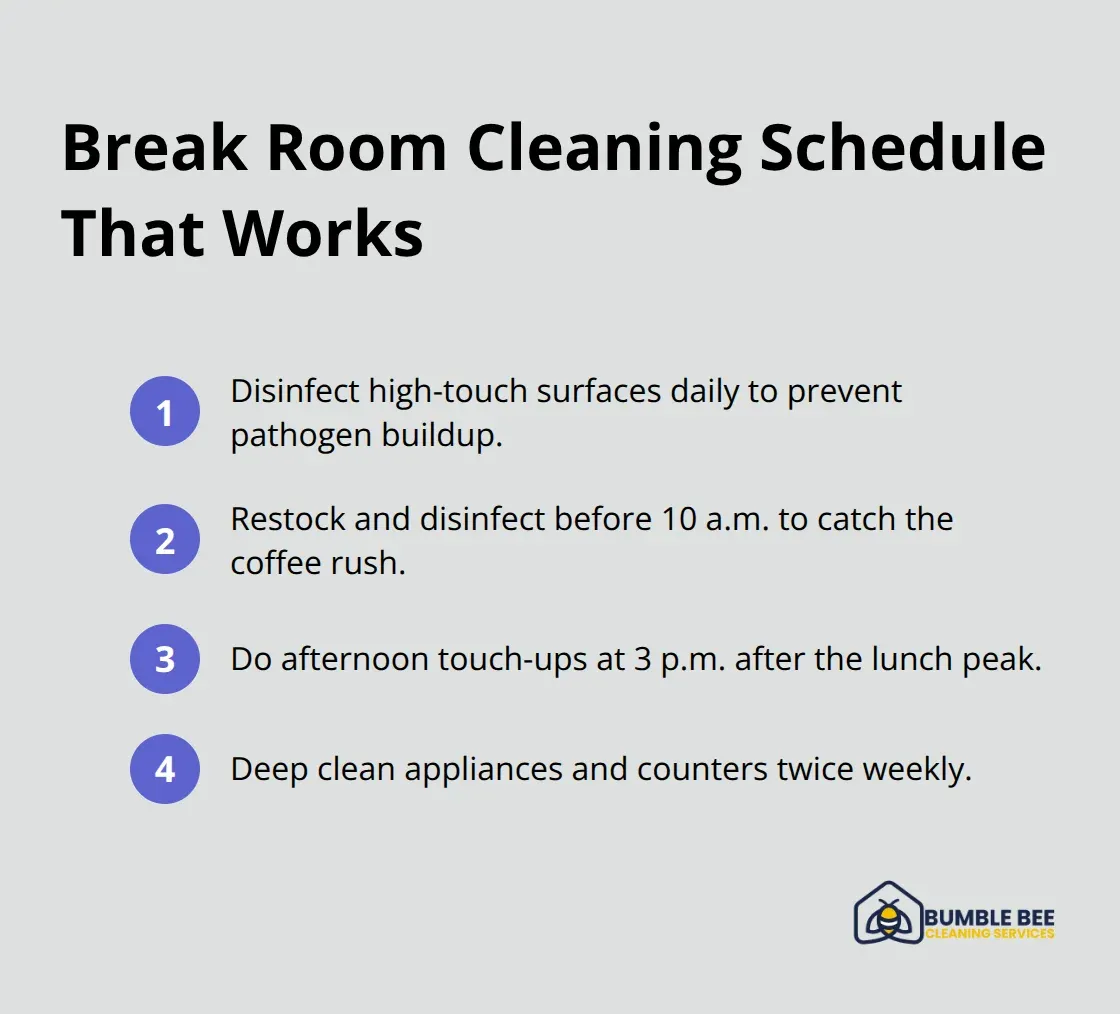
One-size-fits-all cleaning schedules fail Seattle offices because every workplace has different traffic patterns, contamination hotspots, and operational rhythms. The break room in a 20-person design firm requires different timing and intensity than the break room in a 200-person tech company. Daily cleaning of high-touch surfaces in break rooms prevents pathogen accumulation before illness starts, but only if the timing aligns with actual usage peaks. Morning restocking and disinfection before 10 a.m. catches the coffee-rush contamination window, while afternoon touch-ups at 3 p.m. address the post-lunch spike. Twice-weekly deep cleaning of refrigerators, microwave interiors, and counter undersides eliminates the bacterial reservoirs that survive surface wipes.
EPA-Approved Disinfectants for Food-Contact Surfaces
We recommend EPA-approved disinfectants specifically formulated for food-contact surfaces because standard cleaners leave residues that contaminate meals and trigger health complaints. The ISSA Clean Standard provides an objective measurement framework using ATP testing to verify that your break room actually meets cleanliness targets, not just looks clean. This matters because visual cleanliness and actual pathogen reduction diverge sharply-a surface can appear spotless while harboring dangerous bacterial loads. Monthly ATP testing on high-touch surfaces gives you hard data showing whether your current cleaning frequency works or needs adjustment. Most Seattle offices discover they need higher frequency than they initially budgeted because initial schedules underestimate actual contamination rates.
Eco-Friendly Products Reduce Illness Beyond Standard Chemicals
Eco-friendly cleaning products matter in break rooms where food gets prepared and consumed, yet many commercial cleaners default to harsh chemicals that linger on counters and in the air. Plant-based disinfectants and microfiber cloth systems eliminate pathogens without leaving toxic residues. These products cost slightly more upfront but reduce respiratory complaints and allergic reactions among staff, which paradoxically lowers overall illness rates and absenteeism beyond what standard chemical cleaners achieve.
Customized Plans Target Your Specific Contamination Hotspots
Customized cleaning plans that account for your office’s specific break room layout, employee count, and usage intensity produce measurably better results than generic maintenance contracts. A 50-person office with one small break room needs different service than a 50-person office with three distributed break rooms and a full kitchen. Targeting high-touch zones (refrigerator handles, microwave buttons, coffee machine panels, water dispenser buttons, door knobs, and light switches) before addressing general surfaces maximizes the productivity return on your cleaning investment because these spots drive illness transmission.
Site Assessment Maps Your Actual Contamination Patterns
A site assessment maps actual contamination patterns, then builds a cleaning protocol around those specific hazard zones rather than assuming standard break room layouts apply to your space. This approach identifies which surfaces in your particular break room harbor the highest bacterial loads and which times of day create peak contamination risk. Professional cleaners who conduct this assessment tailor their schedules to your office’s unique operational rhythm instead of applying generic protocols that miss your actual problem areas.
Final Thoughts
Clean break rooms directly drive office productivity by eliminating the dual drain of illness transmission and mental fatigue that dirty spaces create. Employees in objectively cleaner workspaces report higher productivity and job satisfaction, while contaminated high-touch surfaces spread pathogens that cascade into absenteeism and lost output across entire teams. Visible grime and clutter consume cognitive processing power, forcing employees to mentally process environmental disorder instead of focusing on actual work.
The path forward requires moving beyond generic cleaning schedules to customized approaches that match your specific office’s contamination patterns and usage intensity. ATP testing and the ISSA Clean Standard provide objective measurement frameworks that prove whether your current cleaning frequency actually works or needs adjustment. Targeting high-touch surfaces before peak break times, using EPA-approved disinfectants safe for food-contact areas, and pairing professional cleaning with staff hygiene practices creates a comprehensive system that prevents illness before it starts.
We at Bumble Bee Cleaning Services understand that Seattle offices need cleaning solutions tailored to their unique operational rhythms and contamination hotspots. Our team designs customized commercial cleaning programs that prioritize break room maintenance with measurable cleanliness standards, using eco-friendly products that eliminate pathogens without leaving toxic residues. Contact Bumble Bee Cleaning Services today to schedule a site assessment and transform your Seattle workplace.
For more information about our cleaning services in Seattle and Atlanta, or to request a cleaning quote, call or text us at 425-786-1360 or email us at info@qbclean.com
