
Deep cleaning in Seattle demands materials that work harder than standard cotton cloths. Microfiber innovation has transformed how we tackle dirt, bacteria, and moisture in homes and offices across the region.
We at Bumble Bee Cleaning Services rely on microfiber technology because it delivers results that traditional methods simply cannot match. This guide shows you exactly why.
Why Microfiber Beats Cotton and Traditional Materials
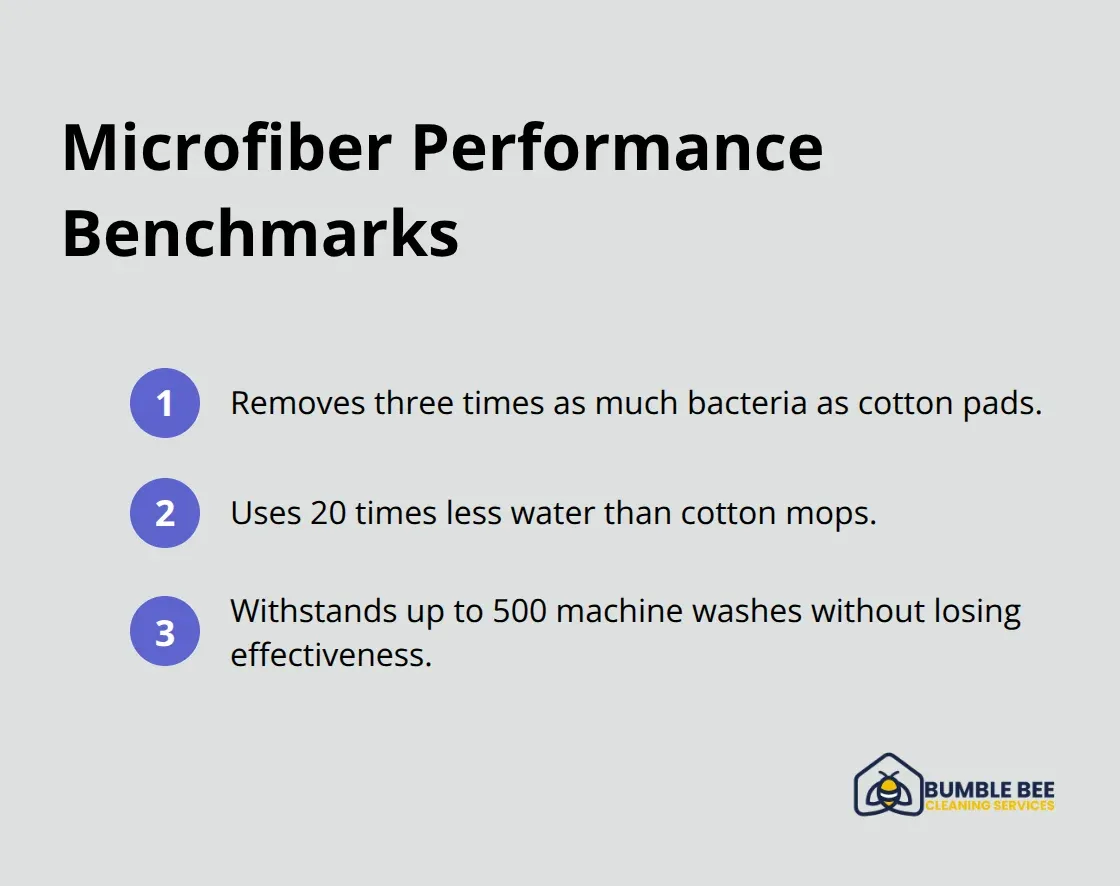
Microfiber removes three times as much bacteria as cotton pads, a performance gap that matters enormously for deep cleaning work in Seattle homes and offices. The fibers split into sizes smaller than a human hair, creating over 100,000 fibers per square inch on a single cloth. This dense structure acts like a net, trapping dust, dirt, and bacteria at the microscopic level rather than simply pushing them around like traditional cotton does.
Water Efficiency Changes Everything
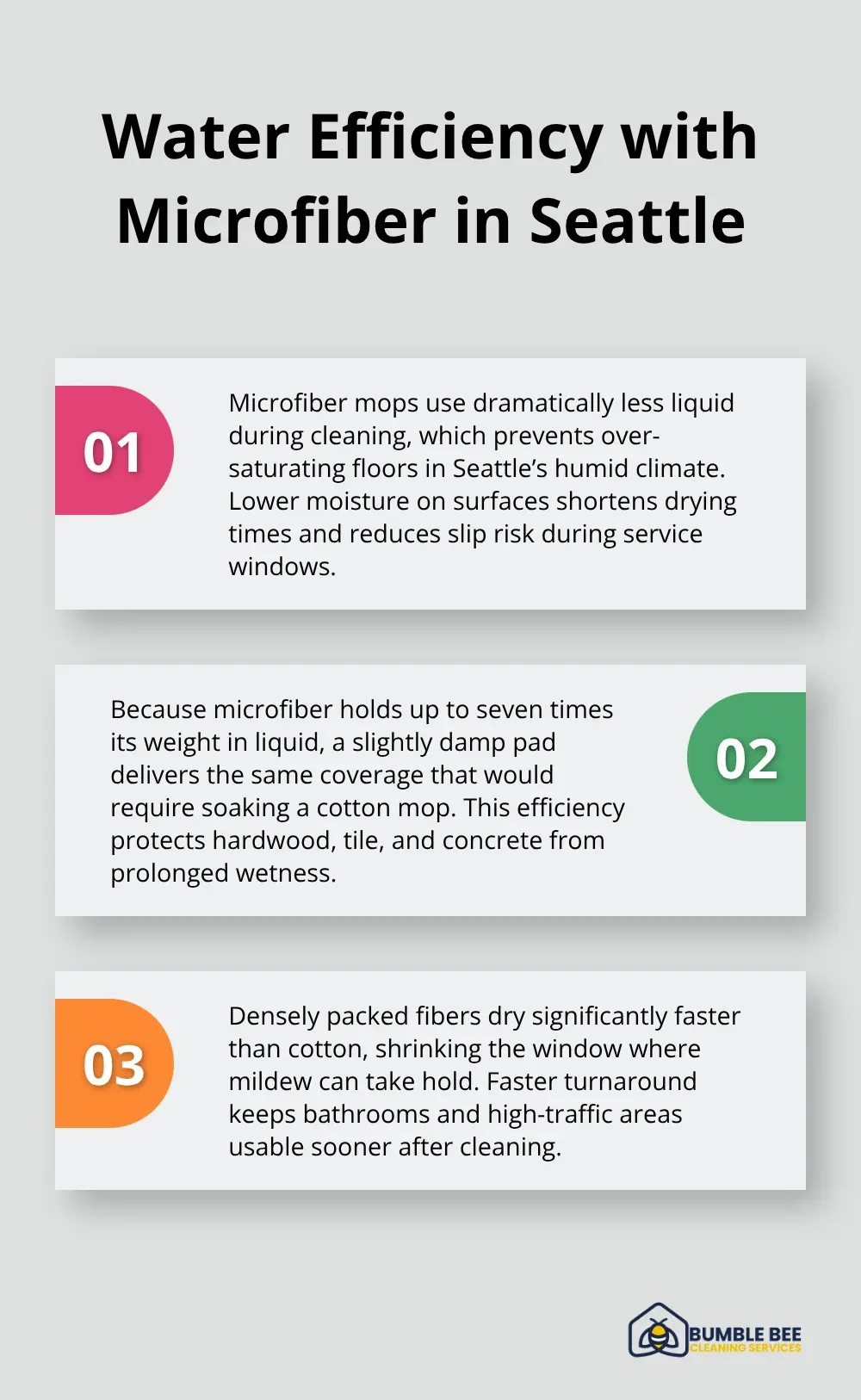
Microfiber mops use around 20 times less liquid than cotton mops, which directly addresses Seattle’s moisture challenges. Because microfiber holds up to seven times its own weight in liquid, a slightly damp pad accomplishes what would require soaking a cotton mop. This matters for hardwood floors, tile, and concrete surfaces that are common in Seattle residences and commercial spaces. The densely packed fibers also dry significantly faster than cotton, reducing the mildew risk that humidity creates in our climate.
Durability That Actually Saves Money
Microfiber pads withstand up to 500 machine washes without losing effectiveness, while cotton pads degrade after far fewer cycles. This extended lifespan makes microfiber more cost-effective despite the higher initial purchase price. For recurring cleaning services and post-construction cleanup, where equipment gets heavy use, the durability advantage compounds quickly. Replacement costs drop substantially when your cleaning tools last years instead of months.
The Microscopic Advantage
The split fiber structure creates a net-like surface that traps moisture, dirt, and debris far more effectively than traditional materials. Each fiber acts like a tiny squeegee, scraping up dust and dirt from floors and surfaces without scratching them. Microfiber’s electrostatic properties attract negatively charged dirt particles, which means you accomplish more with water alone and reduce your reliance on chemical cleaners.
Performance Across Seattle Surfaces
Microfiber works effectively on hardwood, tile, linoleum, concrete, and upholstery-the surfaces that dominate Seattle homes and commercial spaces. The material reaches into small crevices and grooves where traditional cotton fibers cannot penetrate. This versatility makes microfiber the practical choice for deep cleaning projects that span multiple surface types in a single property.
How Microfiber Technology Works in Deep Cleaning
The Split Fiber Structure Creates Mechanical Advantage
The split fiber structure of microfiber creates a mechanical advantage that cotton simply cannot replicate. Each microfiber strand measures smaller than a human hair and splits into multiple filaments during manufacturing, producing over 100,000 fibers per square inch on a single cloth. When applied to deep cleaning work in Seattle homes and commercial spaces, the density matters tremendously. These fibers physically trap particles at the microscopic level through a net-like mechanism rather than absorbing them into the material. The edges of each fiber function as tiny squeegees, scraping dust and dirt from surfaces without scratching hardwood, tile, concrete, or upholstery.
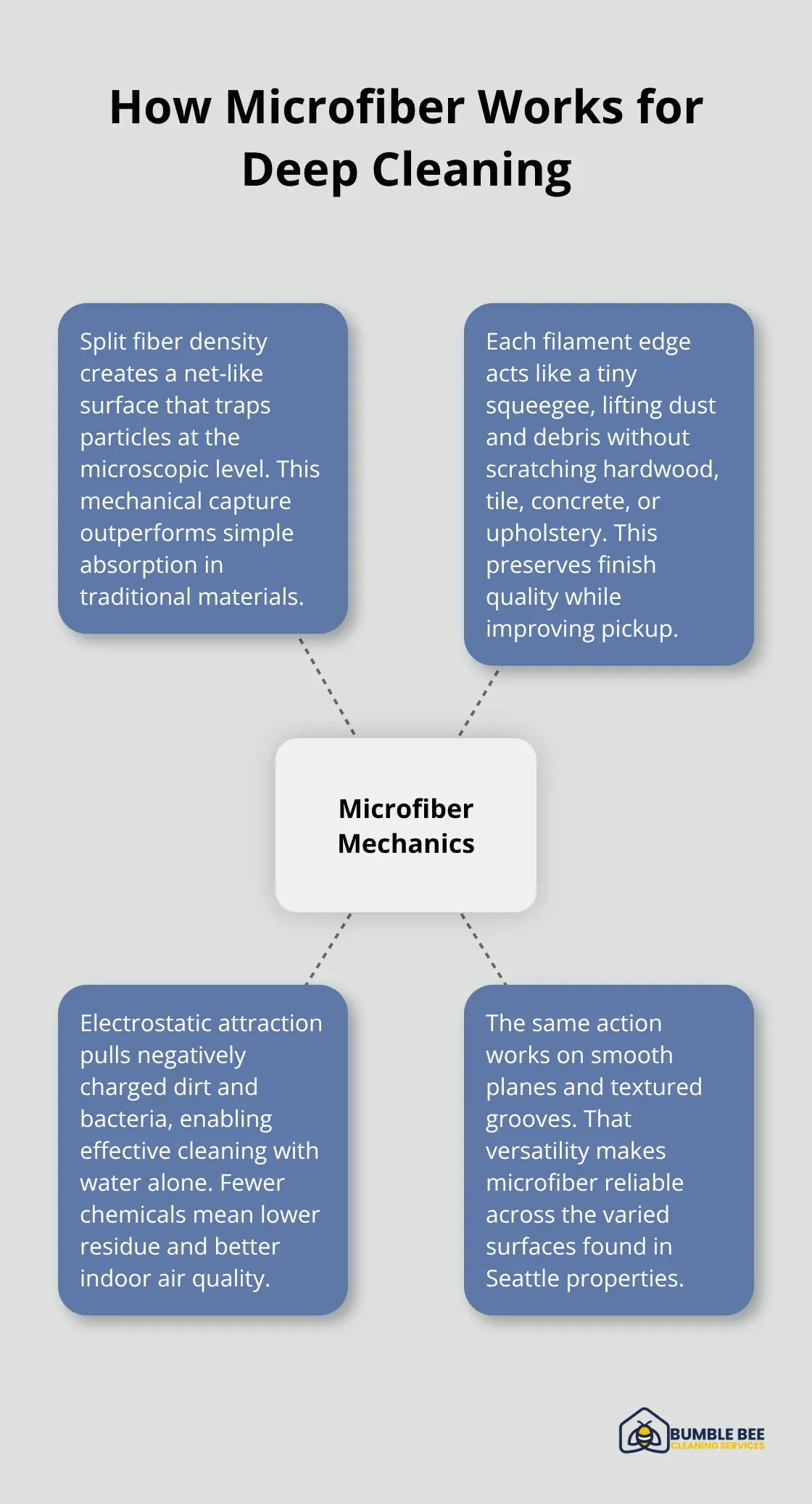
This mechanical action works equally well on smooth surfaces and textured grooves, making microfiber effective across the variety of materials found in Seattle residences and offices.
Electrostatic Properties Eliminate Chemical Dependence
The electrostatic properties of microfiber fibers attract negatively charged dirt and bacteria particles, which means deep cleaning happens with water alone in most situations. This electrostatic advantage eliminates the need for heavy chemical reliance during routine deep cleaning applications, a significant benefit for post-construction cleanup where construction dust dominates or for recurring cleaning services where chemical buildup becomes a concern. Microfiber achieves bacteria reduction with water alone, addressing the practical reality of deep cleaning work across Seattle properties.
Real-World Disinfection Performance
Recent research from 2024 demonstrated that a damp microfiber cloth combined with UV-C treatment achieved complete disinfection against pathogenic bacteria even when surfaces carried challenging contaminants (like blood or artificial saliva). The microfiber pre-cleaning step removed visible soil, allowing the subsequent disinfection to work at full effectiveness. This two-step approach proves valuable for commercial spaces and move-out cleaning scenarios where pathogenic contamination presents a genuine concern.
The practical takeaway is straightforward: microfiber performs the heavy lifting through its structure and electrostatic properties, reducing your dependence on chemical solutions while delivering superior results. These same principles that work in laboratory conditions translate directly to the specific cleaning challenges Seattle properties face, from humidity-prone bathrooms to post-construction dust accumulation. Understanding how microfiber accomplishes this performance sets the stage for examining how Seattle’s unique climate amplifies these advantages even further.
Why Seattle’s Climate Makes Microfiber Essential
Seattle’s climate presents a specific problem that standard cleaning materials simply cannot solve efficiently. The region averages over 150 rainy days per year, and indoor humidity levels frequently exceed 60 percent, creating persistent moisture that promotes mildew growth on fabrics, grout, and wood surfaces. Cotton-based cleaning materials absorb and retain this moisture, staying damp for hours and becoming breeding grounds for mold spores. Microfiber dries three to five times faster than cotton because its densely packed fiber structure releases moisture more readily. This speed matters enormously for deep cleaning work in Seattle bathrooms, basements, and commercial spaces where humidity lingers. When you finish cleaning a tile floor or wiping down bathroom fixtures with microfiber, the material reaches dryness within minutes rather than hours, eliminating the window where mildew establishes itself. For recurring cleaning services, this difference compounds across multiple appointments each month.
Water Management Protects Seattle Surfaces
Water management represents the second critical advantage microfiber delivers for Seattle properties. The constant moisture from rain and high humidity means that minimizing water use during cleaning prevents additional saturation that prolongs drying times and damages surfaces. Microfiber accomplishes deep cleaning results with approximately 20 times less water than cotton mops require, a dramatic efficiency that directly addresses Seattle’s moisture challenges. This reduced water usage protects hardwood floors that are susceptible to cupping and warping when over-saturated, prevents water stains on concrete, and keeps grout lines from becoming permanently damp. For move-out cleaning scenarios where properties need rapid turnaround and final inspections, the ability to clean thoroughly while keeping surfaces nearly dry becomes a practical necessity rather than a convenience.
Chemical Reduction Improves Indoor Air Quality
Microfiber’s electrostatic properties mean you accomplish more with water alone, reducing reliance on chemical disinfectants that can leave residues and contribute to indoor air quality problems in Seattle homes and offices. The combination of faster drying, lower water volume, and reduced chemical dependence makes microfiber the practical choice for Seattle’s specific environmental conditions rather than a theoretical improvement over traditional materials. This approach proves especially valuable in commercial spaces and residential settings where occupants spend significant time indoors and breathe the air that cleaning products affect.
Final Thoughts
Microfiber innovation delivers measurable results that transform how deep cleaning works in Seattle homes and commercial spaces. Microfiber removes three times as much bacteria, uses 20 times less water, and withstands 500 machine washes compared to cotton alternatives. These concrete advantages compound across every deep cleaning project, from post-construction dust removal to recurring maintenance services.
The environmental and cost benefits make microfiber the practical choice for Seattle properties. Reduced water consumption directly addresses our region’s moisture challenges while protecting hardwood floors and concrete surfaces from over-saturation damage. Lower chemical dependence improves indoor air quality and eliminates residue buildup that accumulates with traditional cleaning methods (the extended lifespan of microfiber tools means replacement costs drop substantially over time, offsetting the higher initial investment within the first year of regular use).
We at Bumble Bee Cleaning Services integrate microfiber technology throughout our deep cleaning, recurring cleaning, move-out cleaning, post-construction cleaning, and commercial janitorial services. Our team understands that microfiber performs better on the specific surfaces and climate conditions Seattle properties face. Contact Bumble Bee Cleaning Services to experience the measurable results that superior cleanliness, faster drying times, and genuine cost savings deliver.
For more information about our cleaning services in Seattle and Atlanta, or to request a cleaning quote, call or text us at 425-786-1360 or email us at info@qbclean.com
