
Construction residue left behind after building projects poses real health risks that most property owners overlook. Standard cleaning crews simply don’t have the training or equipment to identify and remove hazardous materials embedded in walls, ventilation systems, and flooring.
We at Bumble Bee Cleaning Services have seen firsthand how Seattle buildings retain dangerous dust and particles long after contractors leave. This guide walks you through what toxins hide in your property and how professional post-construction cleaning actually protects your health and investment.
What Toxins Actually Linger in Seattle Homes After Construction
Hazardous Materials That Persist After Work Ends
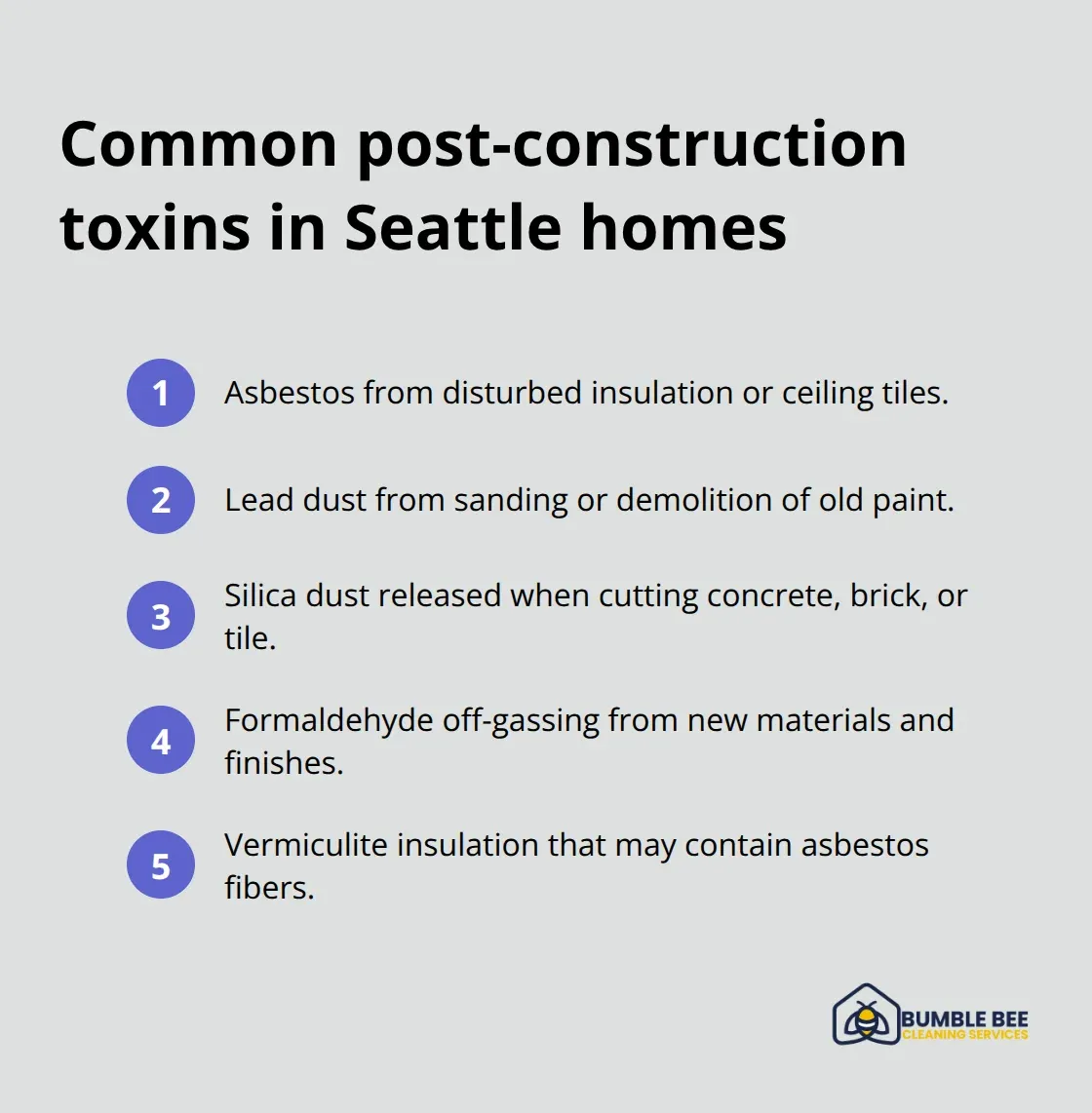
Asbestos, lead, silica dust, and formaldehyde remain in your property long after contractors leave. The EPA warns that post-renovation dust contains particles under 10 micrometers that penetrate deep into lungs and can enter the bloodstream. In Seattle, where many homes were built before 1980, renovation work releases asbestos fibers linked to mesothelioma and lung disease from disturbed walls or insulation. Lead-based paint poses a major hazard, particularly for children under six whose neurological development suffers from even small exposures. Silica dust from cutting concrete, brick, or tile causes silicosis-a progressive lung disease that produces scarring and breathing difficulty. Vermiculite insulation, commonly found in older Seattle properties, can contain asbestos fibers that become airborne during demolition.
Why Particles Hide for Weeks
The American Lung Association confirms that no safe threshold exists for fine particle exposure; inhalation causes inflammation and irritation that worsen asthma and bronchitis. Beyond respiratory threats, construction dust triggers dermatitis, skin irritation, and eye redness according to NIOSH. These hazards don’t vanish after cleanup crews leave. Dust accumulates in HVAC ducts, behind furniture, and on top of cabinets for weeks after work finishes, creating hidden reservoirs that recontaminate living spaces long after visible surfaces appear clean.
Why Standard Cleaners Fall Short
Most residential cleaning services use basic vacuums and microfiber cloths designed for regular dirt, not hazardous construction residue. Industrial-grade HEPA vacuums capture particles down to 0.3 micrometers with 99.97% effectiveness, but typical household equipment stops at larger particles. A top-down cleaning approach matters-starting at ceilings and working downward prevents re-contamination of clean areas, yet standard crews often miss ceiling fans, light fixtures, and ductwork entirely. Damp microfiber cloths trap tiny particles far better than dry wiping, but untrained cleaners don’t know this technique. Air scrubbers that filter large air volumes and remove airborne contaminants require specialized knowledge to position and operate correctly.
What Untrained Inspectors Miss
Without proper training, inspectors miss asbestos in ceiling tiles, vermiculite in wall cavities, and lead dust embedded in subflooring. IICRC certification establishes rigorous standards for identifying and eliminating toxins that standard crews overlook. Professional post-construction cleaning demands knowledge of where hazards hide and the equipment to extract them safely. The gap between visible cleanliness and actual toxin removal explains why many Seattle properties still harbor dangerous residue months after construction completion.
Washington State Building Codes Don’t Require Toxin Removal
The Gap Between Code Compliance and Contamination Standards
Washington State building codes focus on construction safety during the project itself, not on post-construction contamination removal. The state requires builders to follow general safety standards and waste disposal procedures, but these codes contain no mandate for professional toxin remediation after work concludes. Building inspectors verify that construction meets structural and electrical standards, yet they perform no air quality testing or hazardous material screening once contractors leave. This regulatory gap means a building can pass final inspection while harboring asbestos, lead dust, silica particles, and formaldehyde trapped in ventilation systems.
Seattle’s Emissions Standards Miss Post-Construction Toxins
The Seattle Building Emissions Performance Standards address fossil fuel heating and carbon targets through 2050, requiring verified emissions data and phased compliance deadlines starting in 2027 for the largest buildings. However, BEPS focuses on operational emissions, not post-construction contamination. Property owners discover too late that code compliance does not equal a safe, toxin-free space.
Industry Standards Exceed Building Code Requirements
Professional post-construction cleaning demands standards far exceeding what building codes require. The IICRC S500 standard guides identification and mitigation of hidden moisture that can harbor toxins and mold growth, while IICRC S520 provides step-by-step procedures for safe remediation in Seattle properties. IICRC S400 supports consistent cleaning and restoration in commercial environments to minimize toxin residues, and IICRC S590 covers HVAC system evaluation and cleaning after water damage or contamination events to prevent distributing spores and contaminants throughout the building. These industry standards exist precisely because building codes leave contamination unaddressed.
Why IICRC Certification Matters for Your Property
Post-construction toxins demand expertise that standard contractors simply do not possess. IICRC certification establishes rigorous protocols for identifying and eliminating hazards that untrained crews overlook. The difference matters: a property that passes inspection remains unsafe without professional post-construction cleaning using equipment and protocols designed specifically for hazardous dust removal and verification of air quality improvement. Understanding what toxins hide in your Seattle property after construction completion requires knowing where inspectors and standard cleaners fail to look.
How Professional Cleaning Actually Removes Post-Construction Toxins
Industrial-Grade Equipment Captures What Standard Vacuums Miss
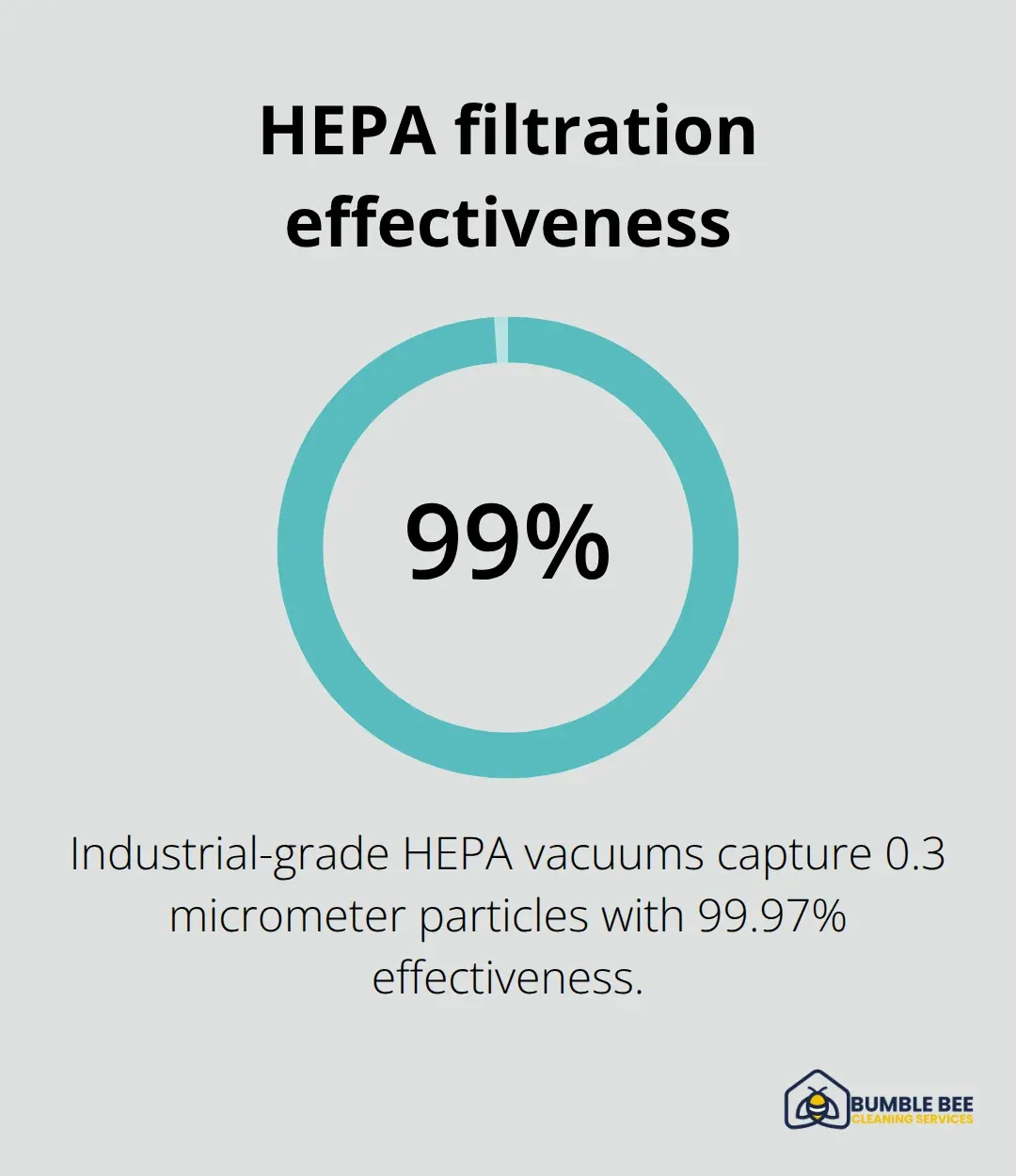
Industrial-grade HEPA vacuums capture particles down to 0.3 micrometers with 99.97% effectiveness-a performance level that household equipment cannot match.
Standard vacuums stop at larger debris and leave behind the fine silica, lead, and asbestos particles that pose the greatest health threat. The EPA confirms these ultra-fine particles penetrate deep into lungs and can enter the bloodstream. Professional post-construction cleaning requires equipment specifically designed to extract hazardous dust that ordinary cleaning tools overlook entirely.
Top-Down Cleaning Prevents Recontamination
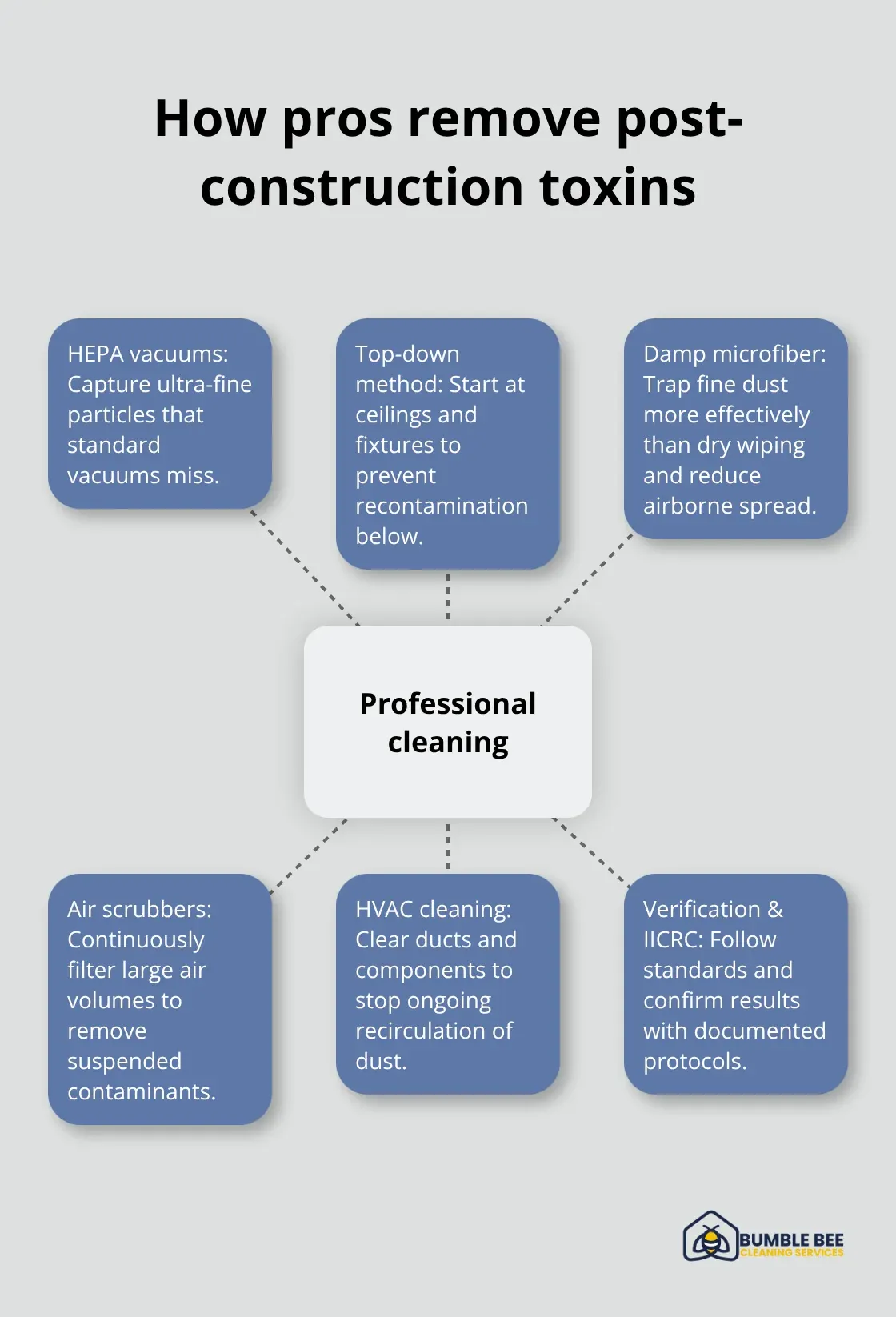
Professional crews start at ceilings and light fixtures, then work downward to prevent re-contamination of clean surfaces-a protocol that untrained cleaners ignore. Damp microfiber cloths trap particles far more effectively than dry wiping, reducing airborne dust that standard cleaners don’t understand. Air scrubbers positioned strategically throughout the property filter large air volumes and remove suspended contaminants during and after cleanup. This systematic approach matters because renovation dust accumulates in ducts and continues circulating through your home for weeks after visible surfaces appear clean.
HVAC System Cleaning Stops Ongoing Contamination
HVAC system cleaning prevents toxins from recirculating long after construction ends. The IICRC S590 standard specifically addresses HVAC evaluation and cleaning to prevent distributing spores and contaminants, yet most cleaning companies skip this step entirely. Dust trapped in ventilation systems acts as a reservoir that recontaminates living spaces repeatedly. Professional post-construction cleaning treats HVAC systems as a critical component, not an afterthought.
IICRC Certification Establishes Rigorous Standards
IICRC certification separates professionals from amateurs doing post-construction work. The IICRC S500 standard guides identification and mitigation of hidden moisture and toxins in walls and subflooring that visual inspection alone cannot detect. IICRC S400 establishes consistent protocols for removing residual contamination in commercial environments where standard cleaning leaves dangerous particles behind. Certification requires rigorous training in hazard identification, proper equipment operation, and verification procedures that confirm toxins actually get removed-not just hidden. Without IICRC standards backing the work, you have no assurance that asbestos in ceiling tiles, lead dust in subflooring, or silica particles in ventilation actually disappeared.
Why Verification Matters More Than Appearance
A building that passes inspection may still harbor dangerous contamination. Professional post-construction cleaning demands verification that confirms toxins actually disappeared, not merely that surfaces look clean. IICRC-certified professionals follow established protocols that untrained contractors cannot replicate.
The difference between a property that meets code requirements and one that’s actually safe hinges entirely on whether the cleaning company follows these industry standards.
Final Thoughts
Construction residue demands immediate professional attention after work completion. Act within days of project completion to prevent toxins from settling deeper into walls, ducts, and subflooring where removal becomes exponentially harder. Contact a professional post-construction cleaning company and request HVAC system evaluation and cleaning per IICRC S590 standards, inspection of hidden areas like ceiling cavities and subflooring for asbestos or lead, and industrial-grade HEPA equipment throughout the property.
Long-term air quality protection requires ongoing vigilance beyond initial cleanup. Have your HVAC system professionally inspected annually to catch dust accumulation before it recirculates contamination through your home. Monitor for signs of respiratory irritation or unexplained health changes in household members, particularly children under six who face heightened vulnerability to lead exposure, and request air quality testing if you notice persistent dust or odors months after construction completion.
Professional inspection and cleaning directly impact property value and buyer confidence. Buyers increasingly demand documentation of post-construction remediation and air quality verification before purchase, and properties with verified toxin removal command higher resale prices. We at Bumble Bee Cleaning Services provide post-construction cleaning that addresses the health and investment protection your Seattle property requires.
For more information about our cleaning services in Seattle and Atlanta, or to request a cleaning quote, call or text us at 425-786-1360 or email us at info@qbclean.com
