
Seattle companies are waking up to the fact that sustainable janitorial practices cut costs while protecting their teams and the environment. We at Bumble Bee Cleaning Services see this shift happening across the city every single day.
The businesses making this switch aren’t sacrificing cleanliness or professionalism. They’re simply choosing smarter methods that work better for everyone involved.
Why Green Janitorial Makes Financial and Health Sense for Seattle Workplaces
Seattle’s commercial cleaning standards rank among the strictest in the U.S., and companies operating here face real pressure to meet public health, workplace safety, and environmental responsibility benchmarks set by the Washington State Department of Labor & Industries and King County Board of Health. Green janitorial practices align directly with these local expectations, but the real driver for adoption isn’t compliance-it’s economics and employee wellness.
The Immediate Financial Impact of Switching Green
Switching to eco-friendly cleaning cuts tangible costs fast. A real-world example from Seattle shows monthly product usage dropped from 45 gallons to 28 gallons after the transition to concentrated green formulas, translating to roughly $3,600 in annual product savings. Chemical waste disposal costs plummet too; Seattle companies that moved to biodegradable products eliminated hazardous waste handling fees that typically run $1,200 annually, dropping to near zero within the first quarter.
Green cleaning products carry higher per-unit prices, but concentrated formulas reduce consumption by 30 to 40 percent compared to traditional cleaners, which improves total cost of ownership. When you factor in eliminated chemical disposal fees, reduced sick leave costs, and lower water usage, the financial case becomes overwhelming.
How VOC Reduction Cuts Sick Days and Boosts Productivity
The EPA reports that indoor VOC concentrations can reach 10 times higher than outdoor levels, and green cleaning using plant-based, low-VOC formulations directly addresses this problem. Lower VOC exposure reduces sick days-research from the CDC and American Cleaning Institute indicates that workplaces implementing proper sanitization protocols see 2 to 3 fewer unscheduled absences per employee annually. For a 50-person office, that recovery translates to 100 to 150 workdays and approximately $8,750 in additional productivity.
Tracking the Numbers That Matter
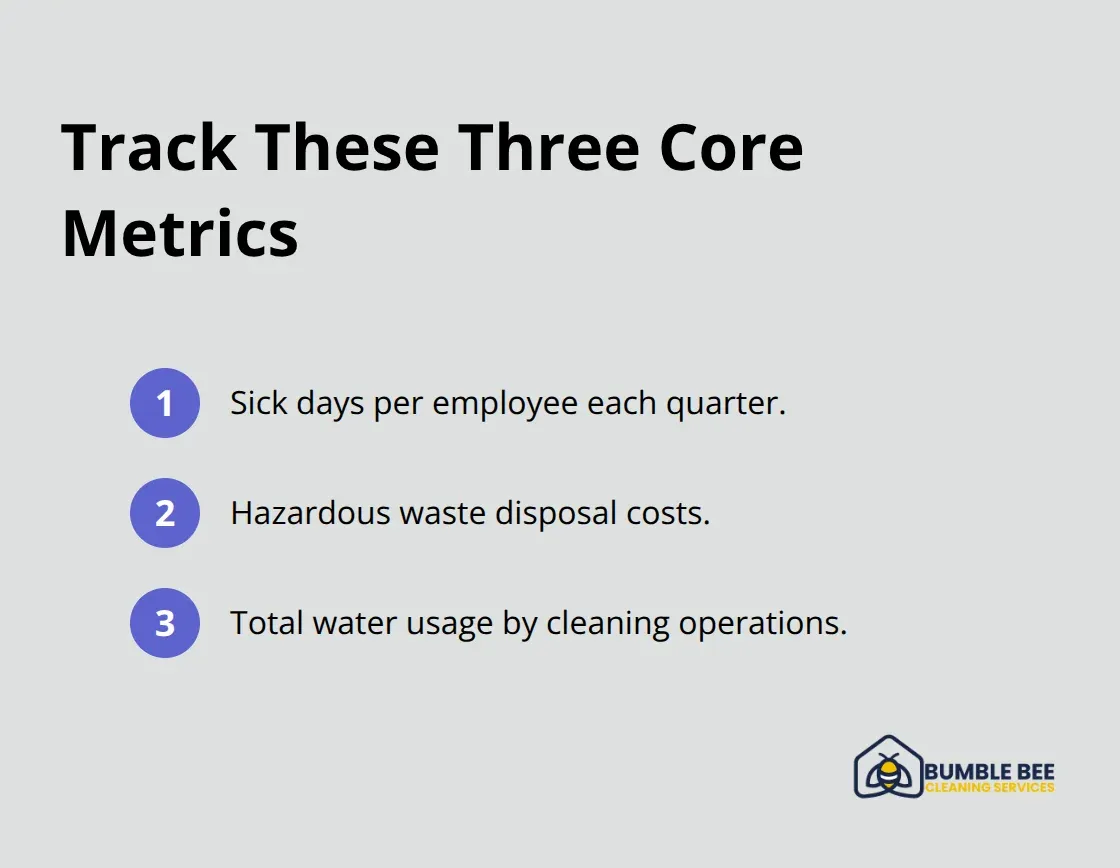
Prospective clients should track three metrics from day one: sick days, waste disposal costs, and water usage. A quarterly spreadsheet monitoring these numbers reveals the actual financial impact within weeks, not months, and provides documentation that supports premium pricing or client retention conversations. Water consumption also drops significantly when companies adopt microfiber cloths, steam cleaning, and minimal-water techniques, which matters in a region where water stewardship influences brand reputation and regulatory standing.
Indoor Air Quality in Seattle’s Damp Climate
Seattle’s damp climate increases mold risk, and the EPA’s research on airborne particulates strengthens the case for HEPA-filtration vacuums and steam cleaning methods. Employees notice the difference immediately-better air quality reduces respiratory complaints and allergy-related absences, especially in open-plan offices where air circulation challenges compound VOC problems. These measurable health outcomes drive the next critical decision: selecting the right eco-friendly products and methods that actually deliver results.
Eco-Friendly Cleaning Products and Methods That Work
Plant-Based Cleaners That Deliver Real Results
Plant-based and biodegradable cleaners deliver genuine cleaning power when formulated correctly, not as a compromise. Third-party certifications like Green Seal or EPA Safer Choice verify that environmental and health claims are legitimate rather than marketing spin. Ammonia-free glass cleaners with low VOC formulations produce streak-free results without the respiratory irritation of traditional products. All-purpose cleaners with plant-derived surfactants cut through grease and grime effectively, and ready-to-use spray formulas eliminate the dilution errors that weaken cleaning performance.
Seattle companies should reject the false choice between green and effective. Concentrated green formulas reduce product consumption by 30 to 40 percent compared to traditional cleaners, which proves this point mathematically. The EPA’s research on indoor air quality confirms that low-VOC products improve indoor air quality while maintaining sanitizing power, so your team breathes easier without sacrificing cleanliness standards.
Water-Efficient Techniques That Extend Equipment Life
Water efficiency matters more in Seattle than most regions, and microfiber cloths combined with minimal-water techniques directly address this concern. Microfiber captures dirt and bacteria without requiring chemical-heavy solutions, while steam cleaning methods eliminate the need for excessive water or harsh solvents on hard surfaces. Water efficiency in commercial cleaning techniques like waterless carpet cleaning drastically reduce water usage while maintaining cleaning standards.
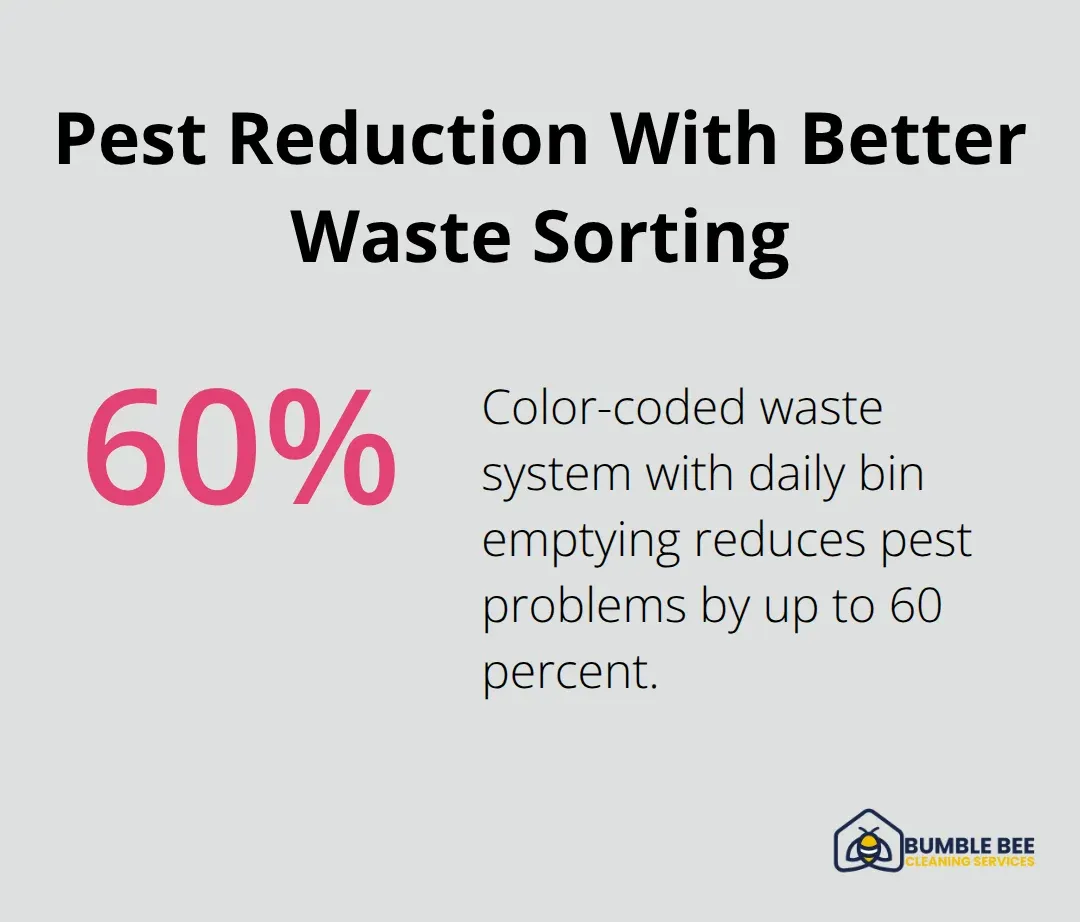
Reusable equipment systems-microfiber cloths, refillable bottles, and mop systems designed for durability-eliminate the waste accumulation that single-use products create. A color-coded waste system for compostables, recyclables, and general waste with daily bin emptying reduces pest problems by up to 60 percent according to the National Pest Management Association, which protects your facility’s reputation and health standards.
Training Staff for Consistent Green Cleaning Performance
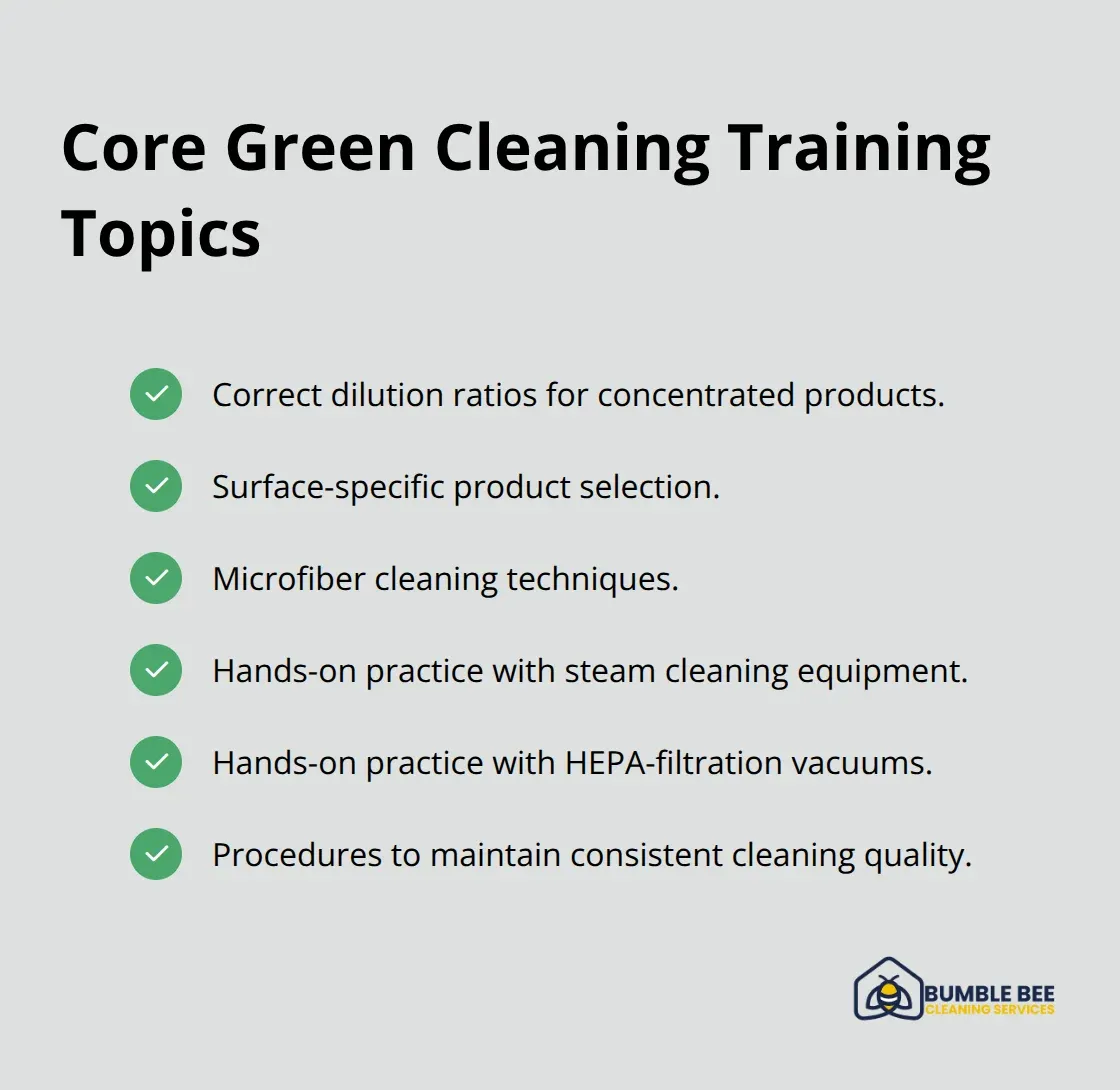
Companies implementing these methods track measurable improvements immediately: reduced water bills, lower product costs, and cleaner indoor air that employees notice within weeks. The transition requires staff training on correct dilution ratios, surface-specific product selection, and microfiber techniques. Thorough training drives adoption and ensures cleaning quality remains consistent across your workplace, setting the stage for selecting the right cleaning partner to maintain these standards long-term.
Making the Switch to Green Janitorial in Your Seattle Workplace
Start with a complete audit of what you currently use and spend. Document every product name, check the safety data sheets against eco-friendly alternatives, and calculate your actual monthly spend on chemicals, water, and disposal fees. This baseline matters because you’ll measure progress against it, and most Seattle companies discover they’re spending 15 to 25 percent more than necessary on products that create indoor air problems. Look for third-party certifications like EPA Safer Choice on your current inventory-if they’re missing, those products are candidates for replacement.
Track Your Progress With Real Numbers
Set up a simple quarterly metrics spreadsheet that tracks sick days, waste disposal costs, and water usage. Share results across your team so everyone sees the financial impact within weeks, not months. This transparency builds buy-in for the transition and gives you documentation to justify premium pricing or demonstrate value to clients who increasingly demand eco-friendly proof points. The numbers tell the story better than any marketing claim.
Select a Provider With Local Expertise
Selecting the right cleaning provider matters more than the decision to go green. Look for at least five years of local Seattle experience and certifications from ARCSI or ISSA, which indicate adherence to industry standards rather than marketing claims. Request at least three client references and verify through BBB, Yelp, and Google that the company delivers consistent results-green cleaning must still produce genuinely clean bathrooms, kitchens, and high-touch areas without relying on heavy scents to mask poor work.
Ensure any provider carries proper insurance complying with Washington L&I requirements and uses advanced equipment like HEPA-filtration vacuums and steam cleaning systems that deliver professional results without harsh chemicals. Confirm their fragrance policies upfront-Seattle customers expect fragrance-free cleaning, and lingering scents after service are dealbreakers that damage reputation and employee satisfaction.
Train Your Team on Proper Techniques
Staff training determines whether your green transition succeeds or stalls. Teach correct dilution ratios for concentrated products, surface-specific product selection to avoid damage (like acidic cleaners on stone), and microfiber techniques that require minimal water. Provide hands-on practice with steam cleaning and HEPA equipment so your team understands why these tools deliver better results than traditional methods.
Emphasize that green cleaning isn’t weaker-bathrooms and grease still need thorough scrubbing, and your team’s technique directly affects whether concentrated formulas perform effectively. Many Seattle companies see immediate staff engagement when employees understand that lower VOCs mean fewer respiratory complaints and better indoor air quality for themselves, which transforms green cleaning from a mandate into a workplace health initiative that people support.
Final Thoughts
Green janitorial practices deliver measurable results that go beyond environmental responsibility. Seattle companies switching to eco-friendly methods save $3,600 annually on products alone, eliminate chemical disposal costs entirely, and recover thousands in productivity gains from reduced sick days. These outcomes happen across Seattle workplaces right now, not in theory.
The health impact matters equally. Lower VOC exposure means employees breathe cleaner air, respiratory complaints drop, and your team notices the difference within weeks. When you combine reduced sick leave with improved indoor air quality, sustainable janitorial practices become impossible to ignore because your workplace becomes healthier, your budget tightens, and your environmental footprint shrinks simultaneously.
Starting the transition requires three concrete steps: audit your current products and spending to establish a baseline, select a cleaning partner with local expertise and proper certifications (look for ARCSI or ISSA credentials that prove adherence to industry standards), and train your team on proper techniques so concentrated formulas and advanced equipment deliver the results your facility demands. Contact Bumble Bee Cleaning Services for a free consultation and on-site assessment to build a customized plan that works for your facility and your budget.
For more information about our cleaning services in Seattle and Atlanta, or to request a cleaning quote, call or text us at 425-786-1360 or email us at info@qbclean.com
