
Dust floating through your commercial space isn’t just a cleanliness issue-it’s a health hazard that affects your team every single day. When particles become airborne during deep cleaning, they can trigger respiratory problems, allergies, and missed workdays that cost your business real money.
Dust suppression during professional deep cleaning stops these particles before they spread. We at Bumble Bee Cleaning Services use proven techniques and equipment that capture dust at the source, protecting your employees while delivering a genuinely clean workspace.
What Dust Particles Actually Do to Your Workforce
Respirable Dust Travels Deep Into Lungs
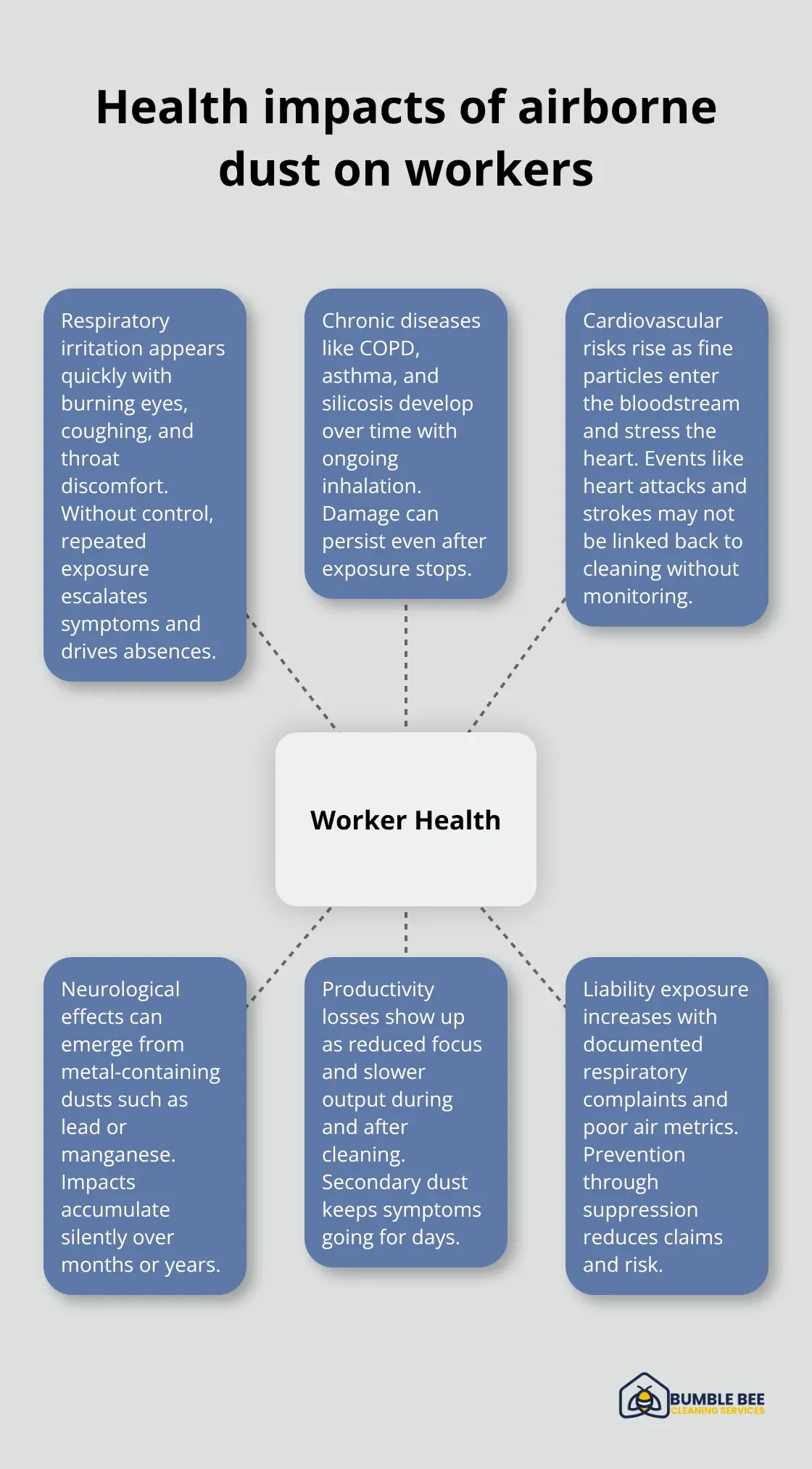
Airborne dust during commercial deep cleaning contains far more than surface debris. Fine particles measuring under 4 micrometers-classified as respirable dust-travel directly into your employees’ lungs and reach the gas-exchange regions where oxygen enters the bloodstream. This matters because those particles don’t leave your workers’ bodies easily. Short-term exposure causes immediate irritation to eyes, nose, and throat, but the real damage compounds over time. Long-term inhalation of dust increases the risk of chronic obstructive pulmonary disease, asthma, and specific conditions like silicosis when silica-containing materials are present.
Crystalline Silica Poses Documented Cancer Risk
If your Seattle commercial space involves any grinding, cutting, or sanding during deep cleaning, crystalline silica poses documented cancer risk. OSHA establishes strict permissible exposure limits specifically because dust exposure isn’t theoretical-it’s a measurable occupational hazard that regulators actively monitor. Metal-containing dust such as lead and manganese compounds cause neurological damage with effects that accumulate silently over months and years of exposure.
Dust Triggers Real Absences and Productivity Loss
Your employees don’t need to develop long-term illness for dust to cost your business money. Respiratory irritation from airborne particles causes immediate symptoms that lead to sick days, reduced focus, and slower work output. Poor indoor air quality correlates with increased absenteeism and lower cognitive performance. When deep cleaning happens without proper dust suppression, particles settle on work surfaces, equipment, and HVAC systems, creating secondary dust problems that persist long after cleaning ends. Your team experiences ongoing respiratory stress even days after the cleaning crew leaves.
Cardiovascular and Neurological Threats Accumulate Quietly
Fine particles can enter the bloodstream and contribute to cardiovascular problems including heart attacks and strokes-conditions that don’t announce themselves as cleaning-related but carry serious health consequences. These silent threats develop without warning signs, making prevention through dust suppression the only reliable defense. The stakes extend beyond immediate discomfort to long-term worker health and your company’s liability exposure.
These health impacts explain why dust suppression techniques matter so much during professional deep cleaning operations.
How to Stop Dust Before It Spreads During Deep Cleaning
Water-Based Suppression Captures Particles at the Source
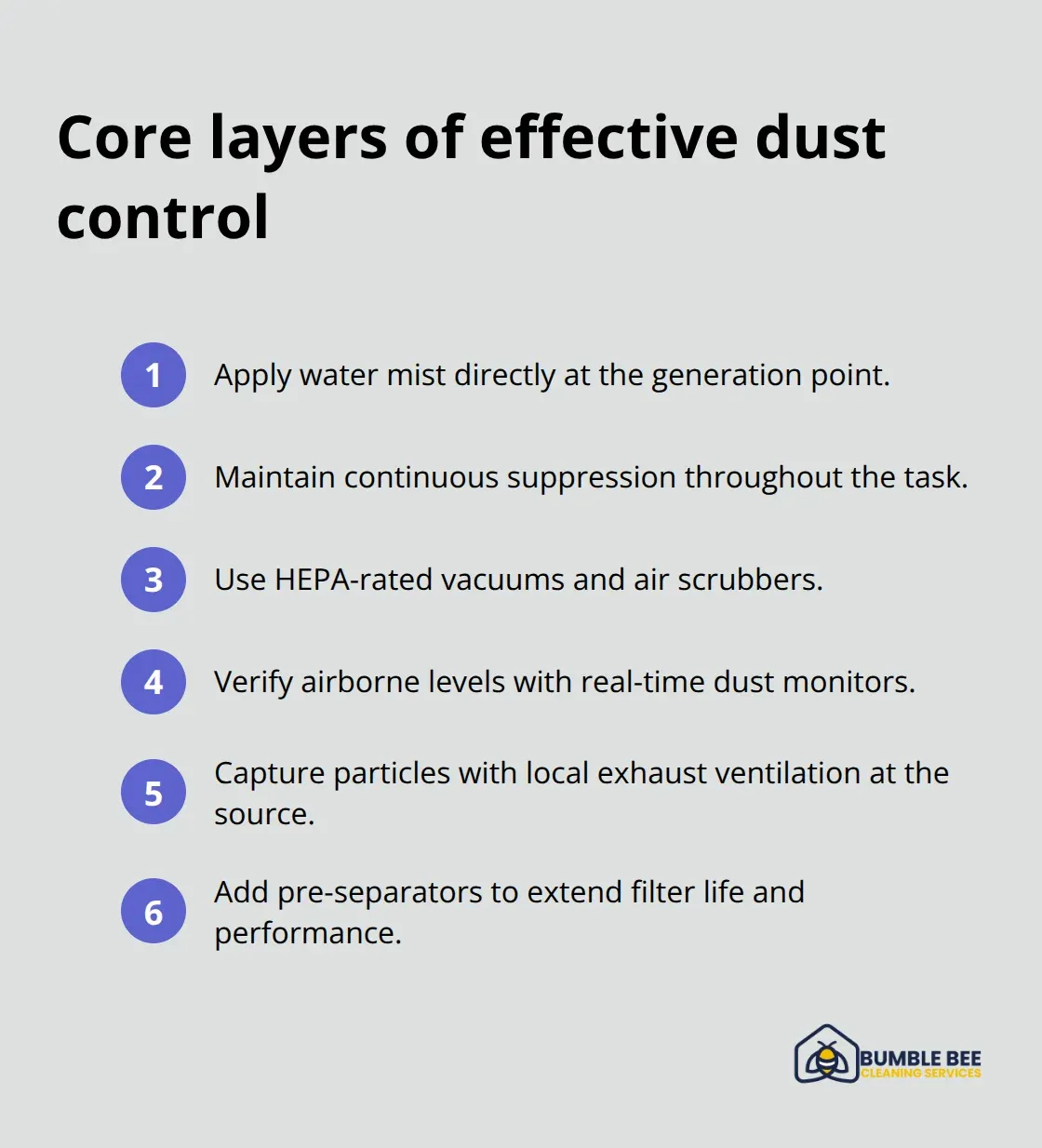
Stopping dust at the source beats chasing particles through your building after they’ve already become airborne. Water-based suppression works because moisture weighs particles down and prevents them from traveling into breathing zones. When deep cleaning involves grinding, sanding, or cutting materials, applying water mist directly at the work area captures dust immediately rather than allowing it to float upward. This method proves especially effective for concrete grinding or wall preparation where fine silica particles pose the greatest health risk. OSHA standards recognize wet suppression as a primary engineering control, meaning it’s not optional for compliant cleaning operations-it’s foundational. The challenge many facilities face is timing: suppression must happen continuously during the activity, not as an afterthought once dust already fills the air.
Portable water spray systems and misting equipment designed for construction cleaning deliver consistent moisture without creating excessive runoff or damage to surrounding surfaces.
HEPA Filtration Removes Particles Standard Equipment Misses
HEPA filtration captures what water suppression doesn’t catch, and here’s where professional equipment separates adequate cleaning from genuinely protective cleaning. HEPA vacuums and air scrubbers rated to remove at least 99.97% of particles 0.3 micrometers and larger remove respirable dust that standard equipment misses entirely. Real-time dust monitoring devices like DustTrak meters allow cleaning teams to verify that airborne particle levels stay below OSHA’s permissible exposure limits during and after cleaning work. This matters because without measurement, you operate blind-you cannot know whether your suppression strategy actually works.
Professional-Grade Equipment Maintains Performance Throughout the Job
Professional-grade equipment from manufacturers like Dustcontrol includes pre-separators that remove larger particles before they clog main filters, extending equipment life while maintaining filtration performance throughout the job. Local exhaust ventilation systems capture dust at the point where it’s generated, preventing secondary spread through HVAC systems or onto cleaned surfaces. IICRC standards establish specific protocols for dust control during deep cleaning operations across commercial environments. These standards exist because they work: facilities that implement source capture, filtration, and continuous monitoring see measurable reductions in worker respiratory complaints and equipment contamination compared to operations using basic cleaning methods.
The techniques that stop dust during cleaning also determine whether your facility stays clean long after the crew leaves-a distinction that separates temporary results from lasting protection.
Why Professional Standards Stop Dust Problems Before They Start
Certified Protocols Deliver Measurable Results
Certified deep cleaning follows measurable protocols that ordinary cleaning skips entirely. IICRC standards S400 and S410 establish specific requirements for dust control during commercial cleaning, including source capture, equipment specifications, and real-time monitoring procedures. These standards exist because facilities that follow them report significantly fewer worker respiratory complaints and lower equipment contamination rates compared to operations using basic methods. The difference shows up in your facility’s air quality measurements and your employees’ health records within weeks of professional deep cleaning completion.
Advanced Equipment Removes Particles Standard Vacuums Miss
Professional-grade HEPA filtration systems remove 99.97% of particles 0.3 micrometers and larger, capturing respirable dust that standard shop vacuums completely miss. Real-time dust monitoring using devices like DustTrak meters verifies that airborne particle levels stay below OSHA’s permissible exposure limits throughout the job and afterward.
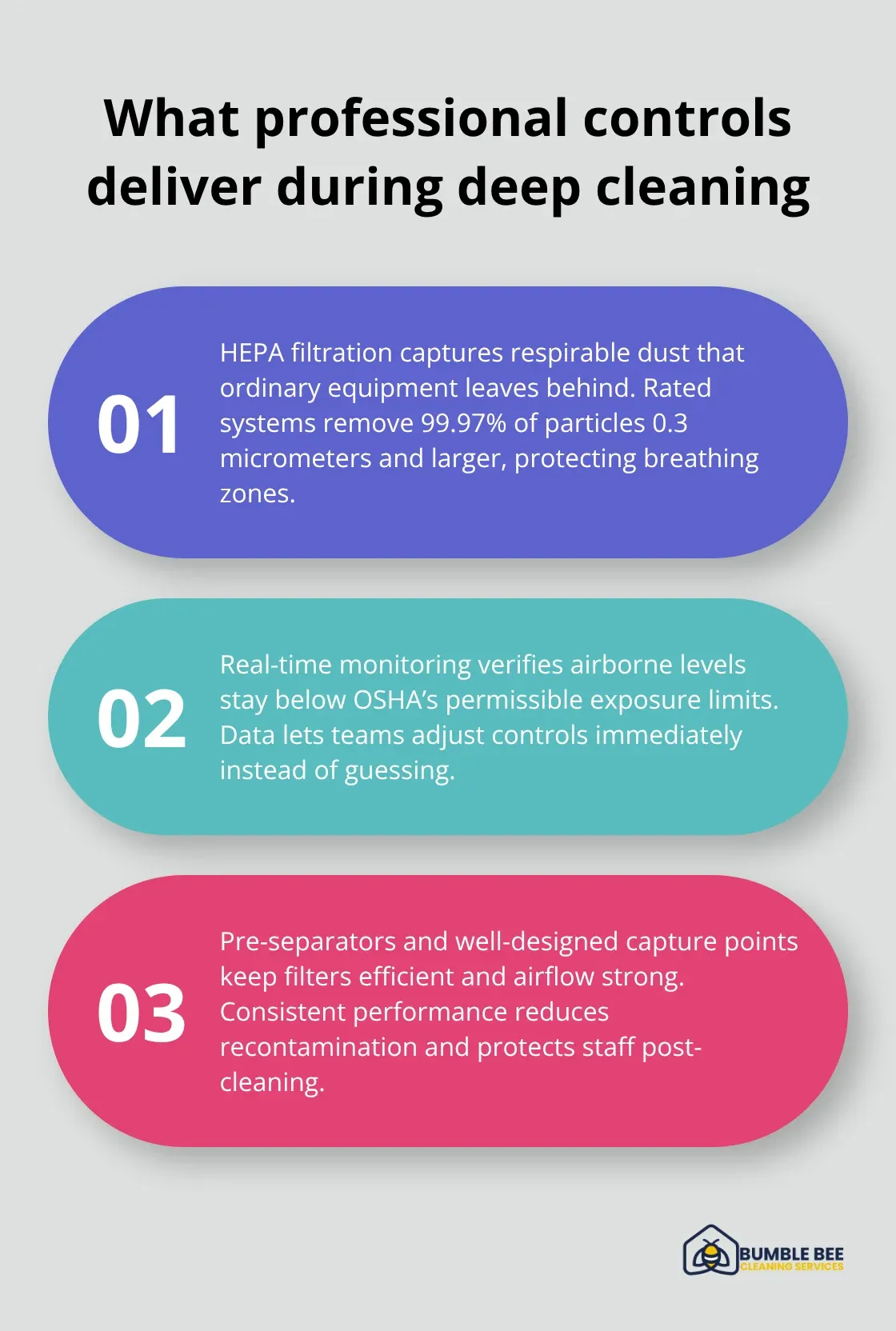
Dust control equipment with pre-separators extends filter life while maintaining consistent performance, meaning your facility stays protected long after cleaning ends.
Source Capture Prevents Secondary Dust Spread
Local exhaust ventilation systems designed for commercial spaces capture dust at the generation point rather than allowing it to spread through HVAC systems or settle on cleaned surfaces. This layered approach (source capture, filtration, and real-time verification) costs more upfront than basic cleaning, but the payoff appears in reduced absenteeism, lower equipment maintenance costs, and eliminated secondary dust problems that plague facilities using inadequate suppression methods. Your investment in certified professional deep cleaning directly reduces your company’s long-term liability exposure and worker compensation claims related to respiratory exposure.
Final Thoughts
Dust suppression during commercial deep cleaning protects your employees from immediate respiratory irritation and long-term health damage that compounds silently over years. The particles that become airborne during standard cleaning don’t disappear once the crew leaves-they settle into HVAC systems, accumulate on work surfaces, and continue triggering respiratory stress days after cleaning ends. Your team’s health and productivity depend on stopping dust at the source, not chasing it through your building after it’s already spread.
Professional deep cleaning methods deliver measurable results that basic cleaning cannot match. Real-time dust monitoring verifies that airborne particle levels stay below OSHA limits throughout the job, while HEPA filtration systems remove respirable dust that standard equipment misses entirely. Local exhaust ventilation captures particles at the generation point rather than allowing secondary spread, and these layered controls cost more upfront than ordinary cleaning but reduce absenteeism, lower equipment maintenance, and eliminate liability exposure from worker respiratory claims.
We at Bumble Bee Cleaning Services implement dust suppression protocols that meet industry standards and protect your workforce across Seattle. Our team uses professional-grade equipment with HEPA filtration and real-time monitoring to deliver results that genuinely clean your space while safeguarding employee health. Contact us today to schedule your commercial deep cleaning and experience the difference that certified dust control makes for your business.
For more information about our cleaning services in Seattle and Atlanta, or to request a cleaning quote, call or text us at 425-786-1360 or email us at info@qbclean.com
