
Moving out of a rental in Seattle means one thing: your security deposit is on the line. Carpet stains are the number one reason landlords deduct from deposits, and most tenants don’t realize that standard cleaning won’t cut it.
Professional stain extraction is different from what you can do at home. We at Bumble Bee Cleaning Services know exactly what landlords inspect for, and we know how to remove stains that would otherwise cost you hundreds in deductions.
What Stains Actually Matter in Seattle Move-Out Inspections
Landlords in Seattle focus on specific stains because they signal negligence or damage beyond normal wear. Cleaning issues account for roughly 27% of security deposit deductions, and stains dominate that category. Not all stains are equal-some fade with basic cleaning, while others require professional extraction or indicate permanent damage that costs landlords money to repair.
The Stains That Cost You Money
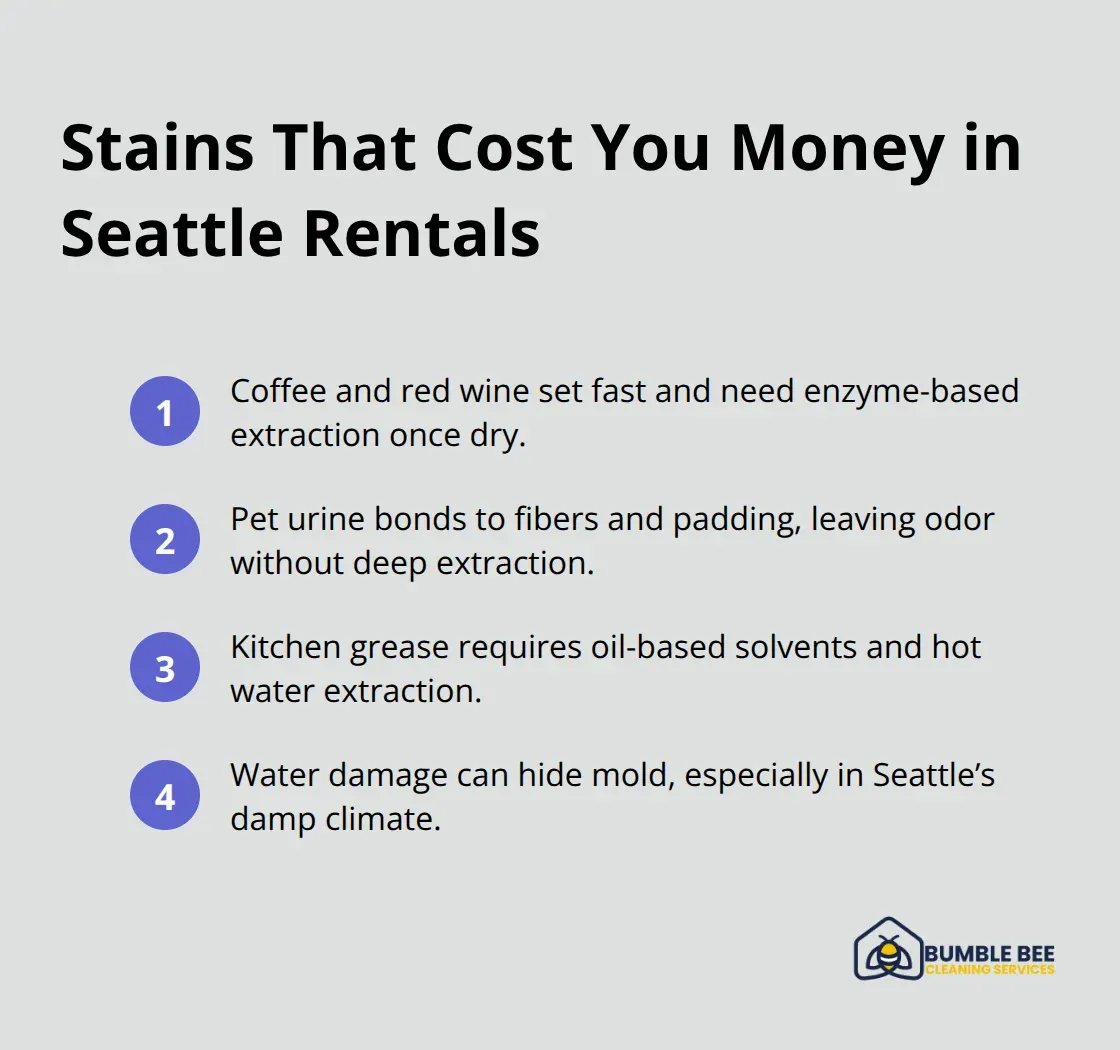
The most common culprits in rental properties are coffee and red wine stains, pet accidents, grease from cooking, and water damage from spills. Coffee and wine respond well to acidic treatments like white vinegar applied immediately, but once they dry and set, they demand enzyme-based extraction. Pet stains are worse because urine bonds to carpet fibers and padding, creating odor that persists even after surface cleaning. Grease stains from kitchen spills require oil-based solvents and hot water extraction to fully lift the residue. Water stains from leaks or spills that weren’t dried properly often hide mold underneath, which Seattle’s damp climate makes dangerously common.
How Landlords Inspect for Stains
Professional cleaners use a systematic inspection process outlined in the ANSI/IICRC S300 Standard, which includes pre-cleaning and post-cleaning documentation to track stain removal progress. This means landlords expect visible improvement or complete removal, not just fresher-looking carpet. The inspection starts in high-traffic areas-hallways, living rooms, and bedrooms-where stains are most visible. Kitchens and bathrooms get intense scrutiny because water damage risk is highest there.
Spotting What You’ll Miss
A trained eye spots stains you might miss: fading discoloration on light carpets, sticky residue that feels tacky underfoot, or yellowing around baseboards indicating old spills. The difference between a removable stain and a permanent one comes down to fiber damage. If the stain has set for months or years, heat exposure may have permanently altered the dye in the carpet fiber itself, making full removal impossible.
Why Stain Type Determines the Right Method
Professional cleaners distinguish between stain categories-oil-based versus protein-based-because each requires different chemical solutions and extraction methods. Oil-based stains like cooking grease need alkaline or surfactant-based cleaners, while protein stains from food, sweat, or bodily fluids respond to enzyme-based detergents. A stain that looks dark and feels crusty is usually set permanently, while one that feels damp or sticky has a better chance of extraction. The wrong method can actually worsen damage or spread the stain deeper into the padding, which is why professional assessment matters before any cleaning begins.
How Professional Equipment Removes Stains Rental Vacuums Cannot
Hot Water Extraction Outperforms Rental Equipment
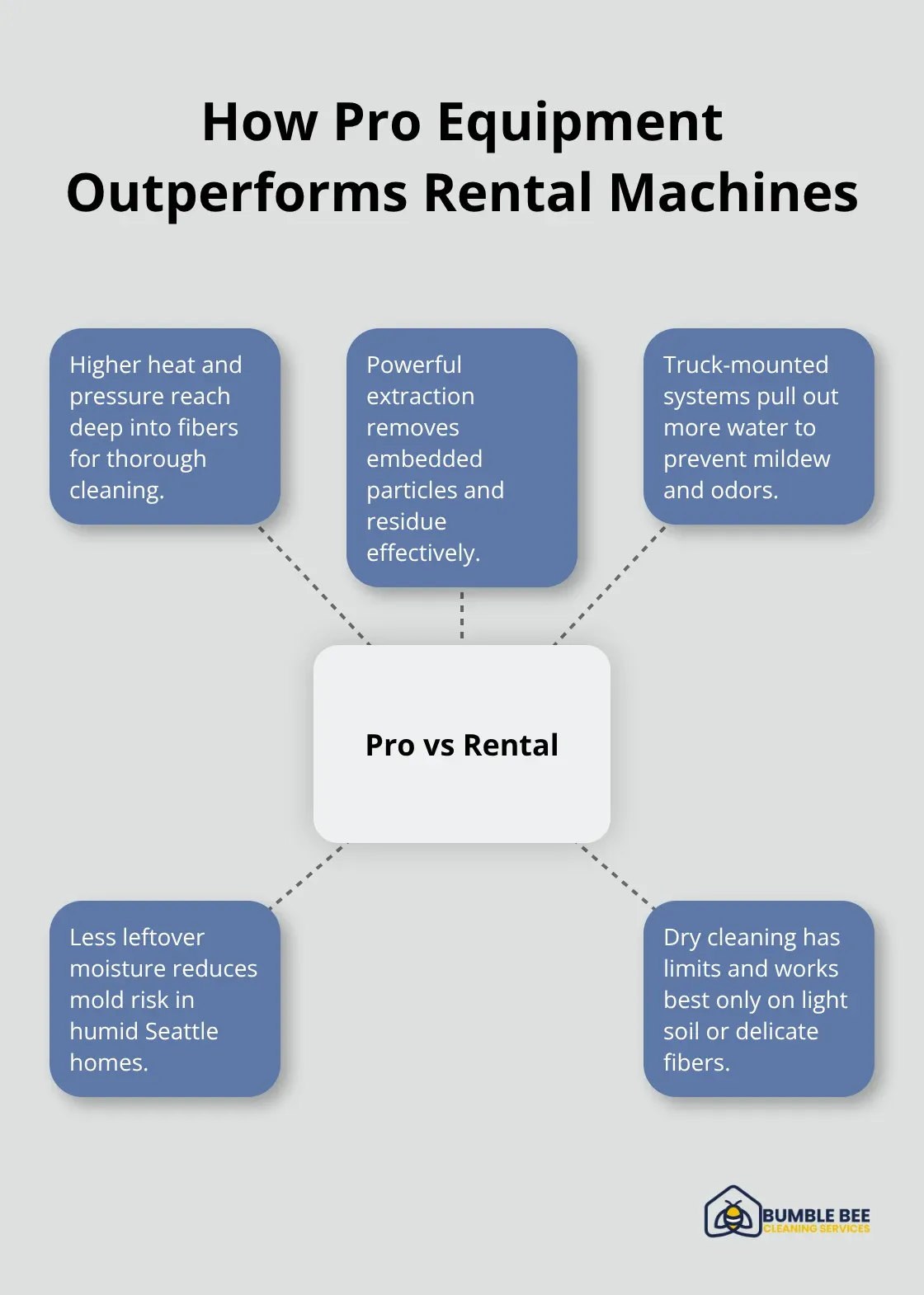
Hot water extraction dominates professional move-out cleaning because it works. This method injects heated water mixed with cleaning solution into carpet fibers at high pressure, then immediately extracts the liquid along with dissolved stains and debris. Professional machines operate at high pressure and heat hot water extraction to 120–220°F, far exceeding rental equipment that typically maxes out at lower temperatures. The result is dramatic: commercial extractors remove embedded particles and stain residue from carpet, while rental machines leave moisture trapped in padding that promotes mold growth in Seattle’s humid climate. Truck-mounted extraction systems pull water out of carpet more thoroughly than portable units, preventing the damp smell and mildew that landlords detect during inspections. Dry cleaning methods exist but work best on light soiling or delicate fibers; they use absorbent compounds or low-moisture solutions applied to carpet surface, then vacuumed away.
For move-out stains that have set over months, dry cleaning alone fails because it cannot dissolve and lift the chemical bonds that hold discoloration in place.
Chemical Selection Determines Success or Damage
Chemical selection matters as much as equipment because the wrong solution damages fibers or sets stains permanently. Enzyme-based cleaners break down protein stains like pet urine and food residue by targeting organic molecules, making them ideal for stubborn rental property damage. Alkaline or surfactant-based solutions lift oil-based grease stains common in kitchens. Acidic treatments work on mineral deposits and some wine stains but risk damaging wool or natural fibers if left too long.
Professional cleaners test solutions on hidden carpet areas first because certain dyes fade or bleed under chemical exposure, and heat accelerates this damage. The ANSI/IICRC S300 Standard emphasizes safety and fiber integrity during stain extraction, requiring technicians to match chemical strength to carpet construction and material. For move-out inspections, landlords expect not just stain removal but also deodorization and protective treatment that reduces future staining.
Post-Extraction Protection Extends Carpet Life
Hospital-grade disinfectants applied after extraction eliminate odors from pet accidents and spills that surface cleaning misses. Post-extraction fabric protectors create a barrier that delays new stains from setting, giving the next tenant a cleaner start. This final step separates professional results from DIY attempts and directly influences whether landlords approve your deposit return or flag additional cleaning needs.
How to Protect Your Deposit Before Final Walkthrough
Documentation acts as your strongest defense against unfair deposit deductions, and it starts before any cleaning happens. Photograph every room in natural light before professional cleaning begins, capturing stains, wear, and any pre-existing damage with date stamps. These photos establish a baseline that proves the property’s condition and protects you if your landlord disputes stain removal results. In Washington, landlords have 30 days after you move out to return your security deposit with a written explanation for any deductions, and photographic evidence forces them to justify each claimed damage against what actually exists.
What Professional Documentation Proves
Professional cleaners document their work with before-and-after photos that align with the ANSI/IICRC S300 Standard pre-cleaning and post-cleaning inspection process. This transparency matters because landlords cannot claim stains remain if your photos show they are gone. Schedule your professional cleaning at least one week before move-out to allow time for follow-up spot treatments if the initial extraction doesn’t fully remove certain stains. This timeline prevents last-minute panic and gives you proof of completion before the final walkthrough.
Where Landlords Look First
Landlords inspect kitchens and bathrooms first because water damage and grime buildup directly impact property value, and stains in these areas suggest negligence. Grease splatters on kitchen walls, soap scum in shower corners, and mineral deposits around sink faucets are noticed immediately. Professional extraction removes carpet stains in high-traffic areas like hallways and bedrooms, but wall stains and appliance interiors require separate attention during your move-out cleaning package.
Legal Requirements for Carpet Cleaning
Many Seattle leases legally require professional carpet cleaning at move-out, which means rental equipment results will not satisfy your landlord’s expectations. Request a pre-inspection two weeks before move-out if your lease allows it, giving you time to address flagged issues and increase your chances of recovering your full deposit.
The Financial Case for Professional Cleaning
The National Apartment Association reports that cleaning issues account for 27% of security deposit deductions, but thorough professional cleaning backed by documentation reduces this risk dramatically. Professional cleaners complete standard apartments in three to four hours, compared to ten to fifteen hours of DIY work that still risks missing problem areas. The investment in professional stain extraction typically costs between $170 and $340 for apartment-sized spaces, far less than losing hundreds in deposit deductions or spending weeks arguing with your landlord over disputed stains.

Final Thoughts
Professional stain extraction after move-out protects your security deposit in ways DIY methods cannot match. Cleaning issues account for 27% of deposit deductions, and stains dominate that category-rental equipment lacks the pressure, heat, and chemical precision that professionals apply to remove them. You will invest ten to fifteen hours attempting work that a professional completes in three to four hours, and you will still miss problem areas that landlords spot immediately.
The financial case is straightforward: professional move-out cleaning costs between $170 and $340 for apartment-sized spaces, while losing your deposit costs hundreds more. Professional cleaners follow the ANSI/IICRC S300 Standard and document their work with before-and-after photos that protect you legally against unfair deductions. We at Bumble Bee Cleaning Services have completed thousands of residential cleanings since 2014 with a 98% customer satisfaction rate, and our team holds ARCSI and IICRC certifications.
Schedule your move-out cleaning at least one week before your final walkthrough to secure proof of completion and allow time for spot treatments if needed. Contact us today to protect your deposit.
For more information about our cleaning services in Seattle and Atlanta, or to request a cleaning quote, call or text us at 425-786-1360 or email us at info@qbclean.com
