
Seattle’s research facilities face unique contamination challenges that standard cleaning methods simply cannot address. Laboratory cleaning requires specialized protocols to handle hazardous materials and maintain sterile environments.
We at Bumble Bee Cleaning Services understand that improper cleaning can compromise research integrity and pose serious safety risks. The stakes are too high for anything less than professional-grade decontamination procedures.
What Makes Seattle Lab Contamination So Dangerous
Seattle’s laboratories handle substances that pose immediate health threats and long-term safety risks. Blood and bodily fluids in research settings carry pathogens like HIV and hepatitis, which demand specialized biological decontamination protocols that standard methods cannot address. Healthcare-associated infections remain a significant concern for laboratory facilities, which makes proper protocols essential for facility safety.
Chemical Exposure Hazards
Research facilities frequently work with PFAS compounds and volatile organic chemicals that contaminate surfaces at microscopic levels. These substances require EPA-approved solutions and industrial-grade air filtration systems to prevent worker exposure. Fentanyl and methamphetamine residues from forensic labs demand additional safety protocols due to their extreme toxicity.
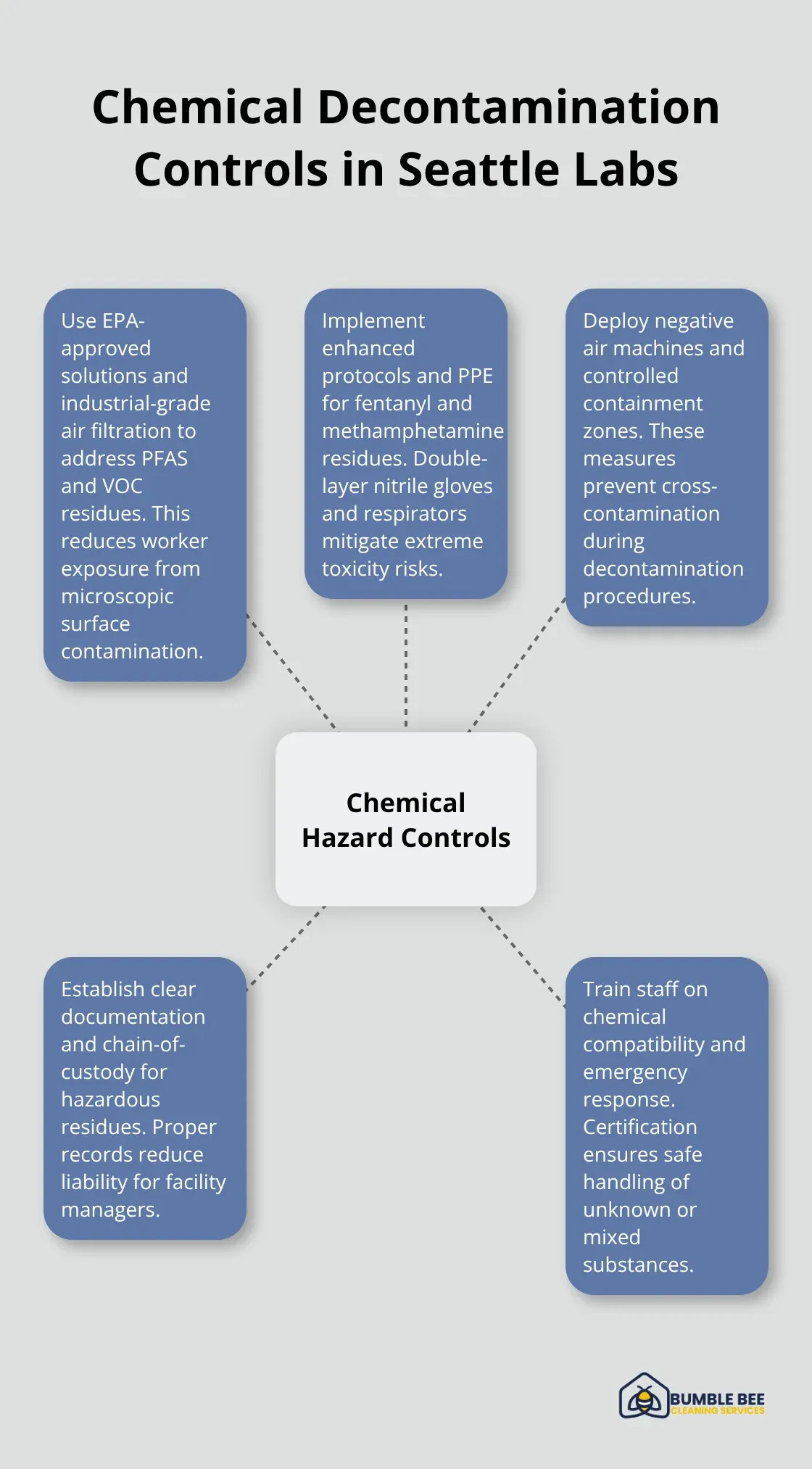
Standard commercial cleaners lack the training and equipment to handle these materials safely, which creates liability issues for facility managers.
Cross-Contamination Risks
Shared equipment and workspaces create pathways for contaminants to spread between research areas. Microscopic particles from one experiment can compromise results in adjacent laboratories if proper isolation protocols fail. High-touch surfaces like doorknobs and equipment control panels serve as transmission points for both biological and chemical hazards. The risk multiplies when multiple research teams use the same facilities without adequate decontamination between sessions.
Regulatory Compliance Demands
Washington State health protocols mandate specific certification requirements for laboratory staff who handle hazardous materials. OSHA regulations require comprehensive documentation of procedures and waste disposal methods for biohazardous materials. Facilities must use ATP testing to verify adequate sanitization levels, with failure to meet standards that results in regulatory penalties and potential shutdown orders. The Washington State Department of Health conducts regular audits (making compliance documentation essential for continued operation), and these inspections focus heavily on proper protocols that protect both workers and research integrity.
How Do Labs Maintain Contamination-Free Environments
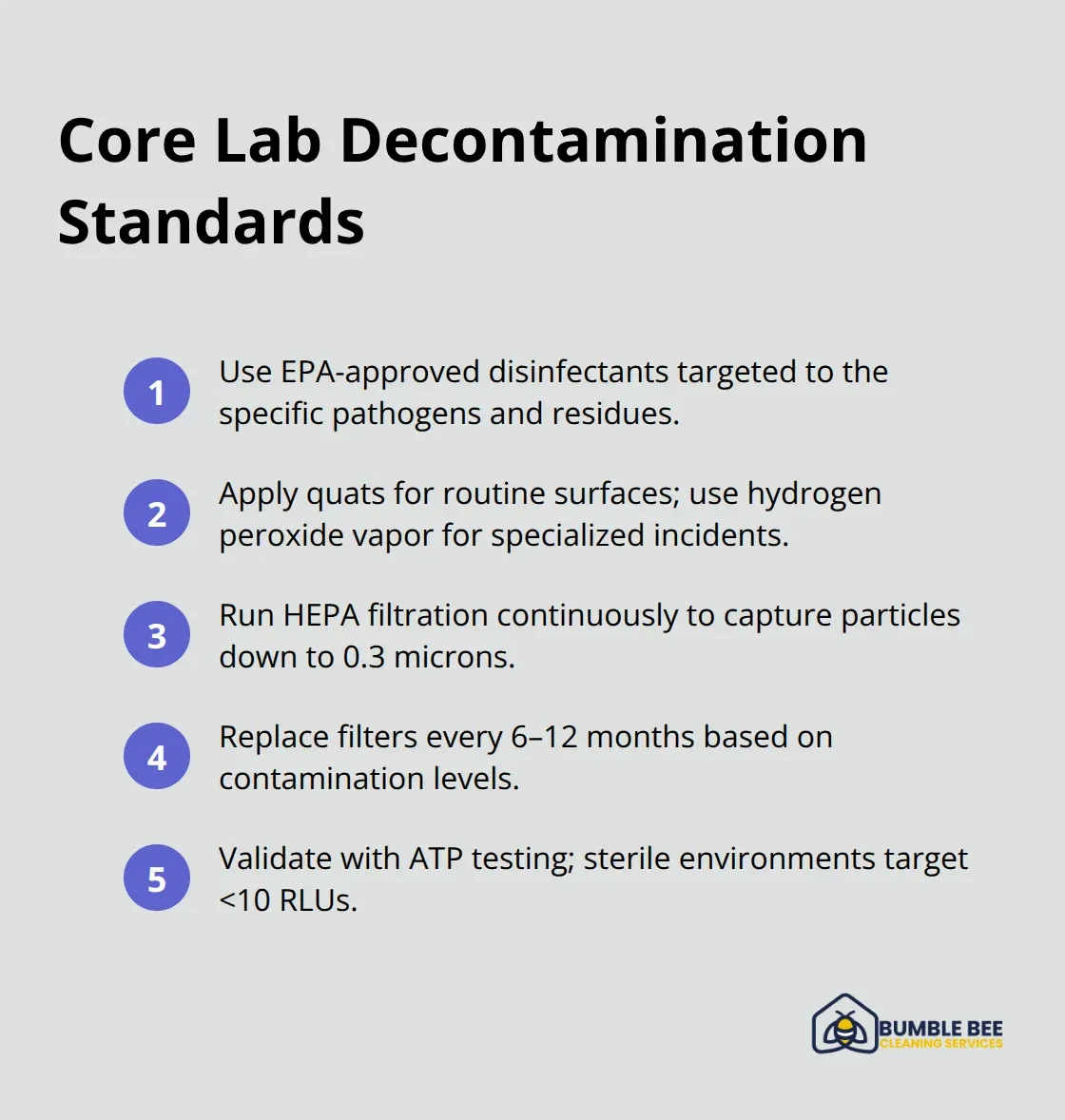
Professional laboratory decontamination requires EPA-approved disinfectants that target specific pathogens and chemical residues. The CDC recommends quaternary ammonium compounds for routine surface disinfection, while specialized incidents demand hydrogen peroxide vapor systems that penetrate microscopic contamination. Industrial HEPA filtration systems operate continuously to capture airborne particles down to 0.3 microns, with filter replacements scheduled every 6-12 months based on contamination levels. ATP tests validate sanitization effectiveness by measuring biological residue in real-time (with acceptable readings below 10 relative light units for sterile environments).
Advanced Equipment Standards
Laboratory decontamination demands equipment that standard commercial services cannot provide. Electrostatic sprayers distribute disinfectants evenly across complex surfaces and equipment, while negative air machines prevent cross-contamination during procedures. Personal protective equipment includes full-face respirators, chemical-resistant suits, and double-layer nitrile gloves that meet OSHA bloodborne pathogen standards. Professional teams use UV-C sterilization units for equipment decontamination and ozone generators for odor elimination in forensic laboratories.
Certification Requirements
Staff who handle laboratory decontamination must obtain specialized certifications beyond basic credentials. OSHA requires completion of hazmat operations training for workers exposed to unknown substances, while biological decontamination demands additional bloodborne pathogen certification. The International Institute of Cleaning and Restoration Certification provides specialized training for biohazard remediation that covers legal compliance and proper documentation procedures. Workers must demonstrate proficiency in waste segregation, chain of custody protocols, and emergency response procedures before they handle laboratory environments independently.
Training Standards
The Washington State Department of Health mandates that staff complete 40 hours of initial hazardous materials training, followed by annual recertification programs that cover emerging threats and updated protocols. Training programs focus on proper chemical handling, biological waste disposal, and emergency response procedures specific to laboratory environments. Staff must pass written examinations and practical demonstrations before they receive certification to work in high-risk facilities (ensuring both safety and regulatory compliance).
These specialized protocols create a clear distinction between laboratory decontamination and standard commercial services, which leads us to examine why professional expertise matters so much in research environments.
Why Professional Lab Cleaning Beats Standard Services
Standard commercial cleaning companies lack the technical expertise to handle laboratory environments safely and effectively. Professional lab cleaning requires understanding of chemical compatibility, pathogen transmission routes, and contamination control principles that general cleaning staff never encounter. Professional cleaning procedures can prevent many laboratory contamination incidents, yet most commercial services use basic disinfectants that fail against laboratory-grade contaminants.
Technical Knowledge Requirements
Professional teams understand that certain chemicals cannot mix with standard disinfectants, which prevents dangerous reactions that could compromise both safety and research integrity. They know which surfaces require specific contact times for effective decontamination and how to sequence procedures to prevent cross-contamination between areas. Standard services lack this specialized knowledge and often apply generic methods that create additional hazards in laboratory environments.
Equipment That Makes the Difference
Professional laboratory decontamination demands specialized equipment that costs significantly more than standard tools. Electrostatic sprayers cost $3,000-$5,000 each but provide uniform coverage that manual application cannot achieve, while negative air machines priced at $2,000-$4,000 prevent airborne contamination during procedures. Standard services use basic mops and spray bottles that cannot address microscopic contamination or maintain the sterile environments that research demands.
Professional teams invest in UV-C sterilization units, ozone generators, and ATP testing equipment that validates sanitization effectiveness in real-time. The Washington State Department of Health requires specific documentation for waste disposal and decontamination procedures (which demands tracking systems and chain of custody protocols that general cleaning companies cannot provide).
Regulatory Knowledge That Protects Your Facility
Professional lab teams understand OSHA bloodborne pathogen standards, EPA waste disposal regulations, and state-specific health protocols that standard services ignore. Improper handling of biohazardous materials can result in fines ranging from $7,000 to $70,000 per violation, which makes compliance knowledge financially essential for facility managers.
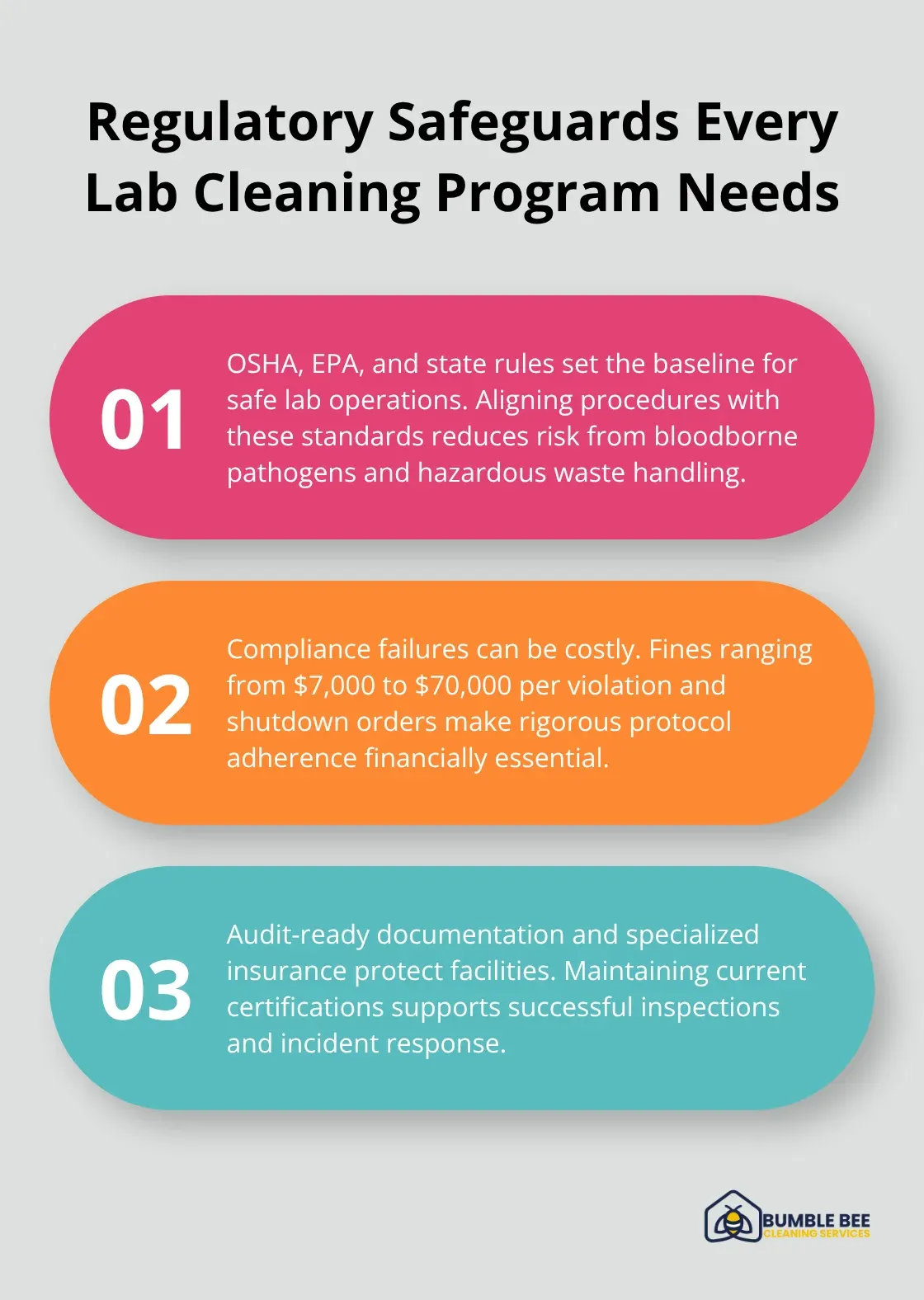
Professional services maintain current certifications, carry specialized insurance coverage, and provide documentation that satisfies regulatory audits. General companies lack the training to identify hazardous materials, properly segregate waste streams, or respond to contamination incidents according to established protocols.
Final Thoughts
Laboratory cleaning demands expertise that standard commercial services cannot provide. Research facilities require specialized protocols, advanced equipment, and regulatory compliance knowledge that protects both workers and research integrity. The financial risks of improper decontamination far exceed the investment in professional services.
Professional teams prevent contamination incidents that could shut down operations and compromise years of research. They maintain documentation standards that satisfy regulatory audits and protect facilities from costly violations. The specialized training and certification requirements create a clear distinction between professional laboratory decontamination and basic commercial cleaning (which lacks the technical depth needed for research environments).
We at Bumble Bee Cleaning Services understand the importance of proper protocols in safe research environments. Our team brings the expertise needed for specialized challenges that laboratories face daily. Professional cleaning services provide the technical knowledge, equipment, and compliance standards that laboratory facilities require for safe operations.
