
Construction projects leave your outdoor spaces looking like a disaster zone. Dust covers every surface, debris clutters your yard, and your once-beautiful landscape needs serious attention.
We at Bumble Bee Cleaning Services know that patio restoration and yard cleanup feel overwhelming after contractors finish their work. The good news is that with the right approach, you can bring your outdoor areas back to life faster than you think.
What Damage Should You Look For First?
Start your assessment by walking your entire property with a systematic approach. Heavy construction equipment creates soil compaction issues that affect drainage and plant health for years to come.
Identifying Soil Compaction Issues
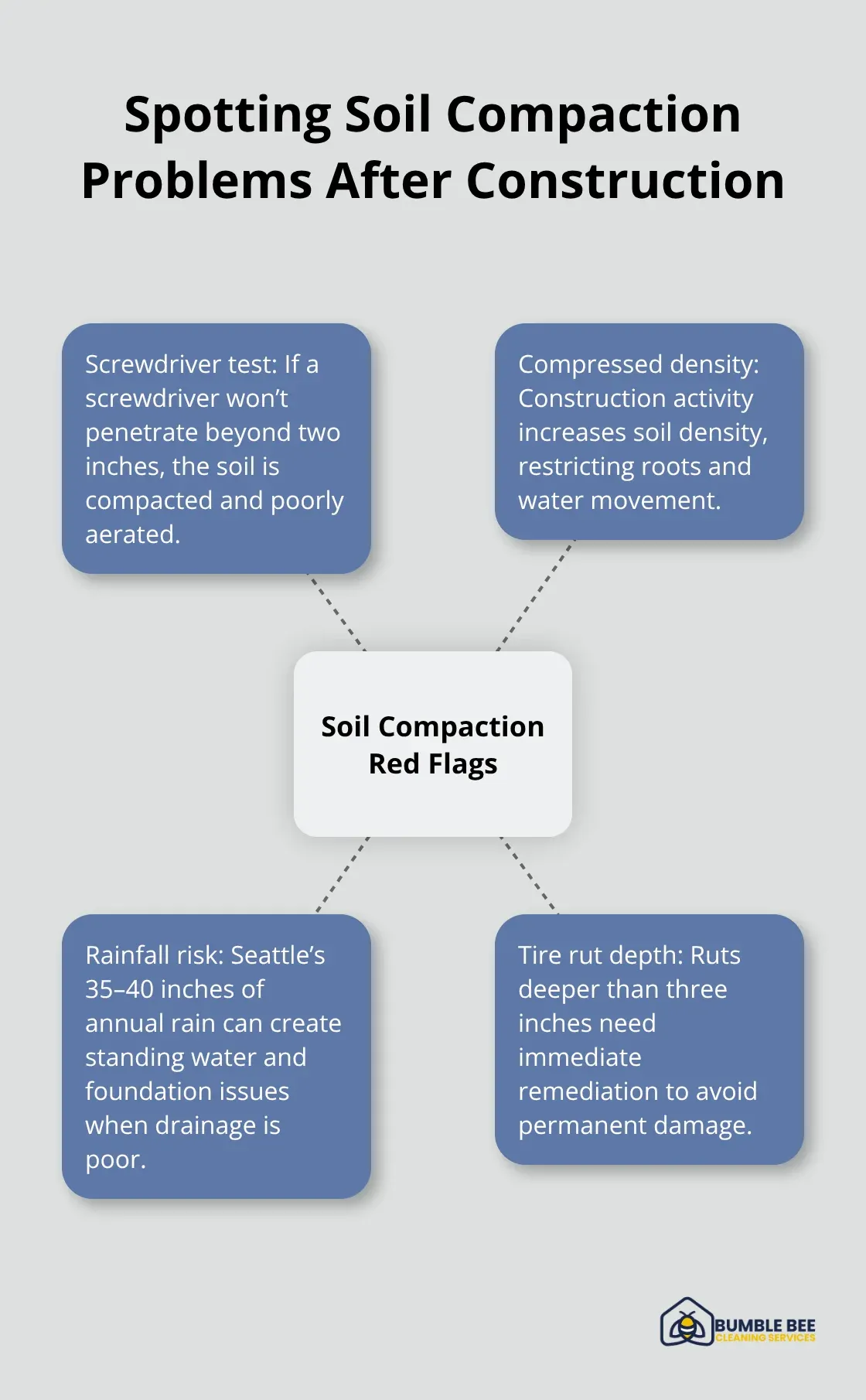
Check areas where machinery operated by pressing a screwdriver into the ground – compacted soil resists penetration beyond two inches. Construction activities can significantly compress soil density, creating long-term drainage and plant health problems. Seattle’s 35-40 inches of annual rainfall makes poor drainage a serious problem that leads to standing water and foundation issues. Look for tire ruts deeper than three inches, as these require immediate attention to prevent permanent damage.
Testing Drainage Problems
Walk around your property after the next rainfall to identify pooling water or areas where water runs toward your home instead of away from it. Proper grading and drainage systems should be implemented according to site requirements to prevent water damage. Test drainage by digging small holes 12 inches deep – water should drain within 24 hours in healthy soil. Areas that stay soggy indicate compaction or grade problems that need fixing before replanting.
Assessing Plant and Landscape Damage
Construction damages lawns and plants through material storage, debris accumulation, and equipment weight. Dead grass appears brown and pulls up easily, while damaged areas feel spongy underfoot. Check existing plants for broken branches, stripped bark, or root damage from nearby excavation. Plants that show yellowing leaves or wilting despite adequate water likely suffered root damage.
Documenting the Damage
Take photos of everything for insurance claims and repair planning. Focus on valuable mature trees and established shrubs first, as these take longest to replace and provide the most landscape value. Create a priority list that addresses the most severe issues first.
Once you complete your damage assessment, you’ll need to tackle the cleanup process that prepares your outdoor spaces for restoration.
How Do You Clean Construction Mess From Your Outdoor Spaces
Construction debris removal requires a strategic approach that starts with the largest items and works down to fine dust particles. Collect concrete chunks, wood scraps, and metal pieces first with a wheelbarrow and heavy-duty contractor bags. Rent a small dumpster for projects that generate significant waste – most Seattle contractors recommend a 10-yard container for average residential construction cleanup. Wear work gloves and closed-toe shoes for safety, as construction sites often contain nails, glass shards, and sharp metal fragments that cause serious injuries.
Power Wash Away Construction Residue
Seattle’s frequent rainfall turns construction dust into stubborn mud that standard garden hoses cannot remove effectively. Rent a pressure washer rated at 1,500-2,000 PSI for delicate surfaces and equipment to prevent damage. Start power wash from the highest surfaces and work downward, as gravity helps remove loose debris. Professional deck restoration services report that proper pressure wash removes 95% of construction residue when done correctly.
Clean your gutters and downspouts after power wash, as construction dust often clogs drainage systems and creates expensive water damage problems during Seattle’s rainy season.
Fix Damaged Soil Before You Replant
Soil compaction from heavy equipment requires mechanical intervention that goes beyond simple rake work. Rent a gas-powered tiller or aerator to break up compacted soil to depths of 8-12 inches where equipment operated. Mix high-quality compost into damaged areas at a ratio of one part compost to three parts existing soil to restore fertility and drainage. King Conservation District offers soil testing services that identify pH levels and nutrient deficiencies specific to your property (most Seattle soils test between 5.5-6.5 pH). This pH range suits acid-loving plants but may need amendments for vegetables or grass. Apply organic matter amendments in fall to allow winter rains to integrate nutrients before spring planting season arrives.
Your soil preparation work sets the foundation for successful landscape restoration and replant efforts. Consider scheduling a deep clean of your home’s interior after completing outdoor construction cleanup to address dust that inevitably migrates indoors during renovation projects.
What Plants Thrive Best After Seattle Construction
Seattle’s maritime climate demands specific plant selections that handle moisture, acidic soil, and construction stress. Native conifers like Douglas fir and Western red cedar adapt best to disturbed soil conditions because their root systems evolved in glacial till soils that dominate the area. Choose rhododendrons, azaleas, and blueberries for acid-loving plants that thrive in Seattle’s natural pH range of 5.5-6.5 without costly soil amendments. Plant these selections in spring after soil temperatures reach 50 degrees Fahrenheit (typically mid-March through May in the Pacific Northwest).
Seed Your Lawn Right the First Time
Tall fescue is well-suited to the Pacific Northwest because it tolerates wet winters and moderate summers with drought-resistant and disease-resistant qualities. Spread seed at 4-6 pounds per 1,000 square feet for new lawns, but increase to 8 pounds for heavily compacted areas where construction equipment operated. Apply starter fertilizer immediately after you seed – one fall application is recommended for optimal germination.
Water lightly twice daily for the first three weeks, then reduce frequency as grass establishes. Avoid heavy foot traffic until new grass reaches 3 inches in height, which typically takes 6-8 weeks in Seattle’s conditions.
Install Hardscape Elements That Last
Schedule hardscape installation before you replant to avoid damage to new vegetation with heavy equipment and materials. Concrete and stone work requires 7-14 days of dry weather for proper curing, which makes late spring through early fall the optimal installation window in Seattle. Install proper drainage behind retaining walls with 4-inch perforated pipe and gravel backfill to prevent water buildup that causes expensive structural failures.
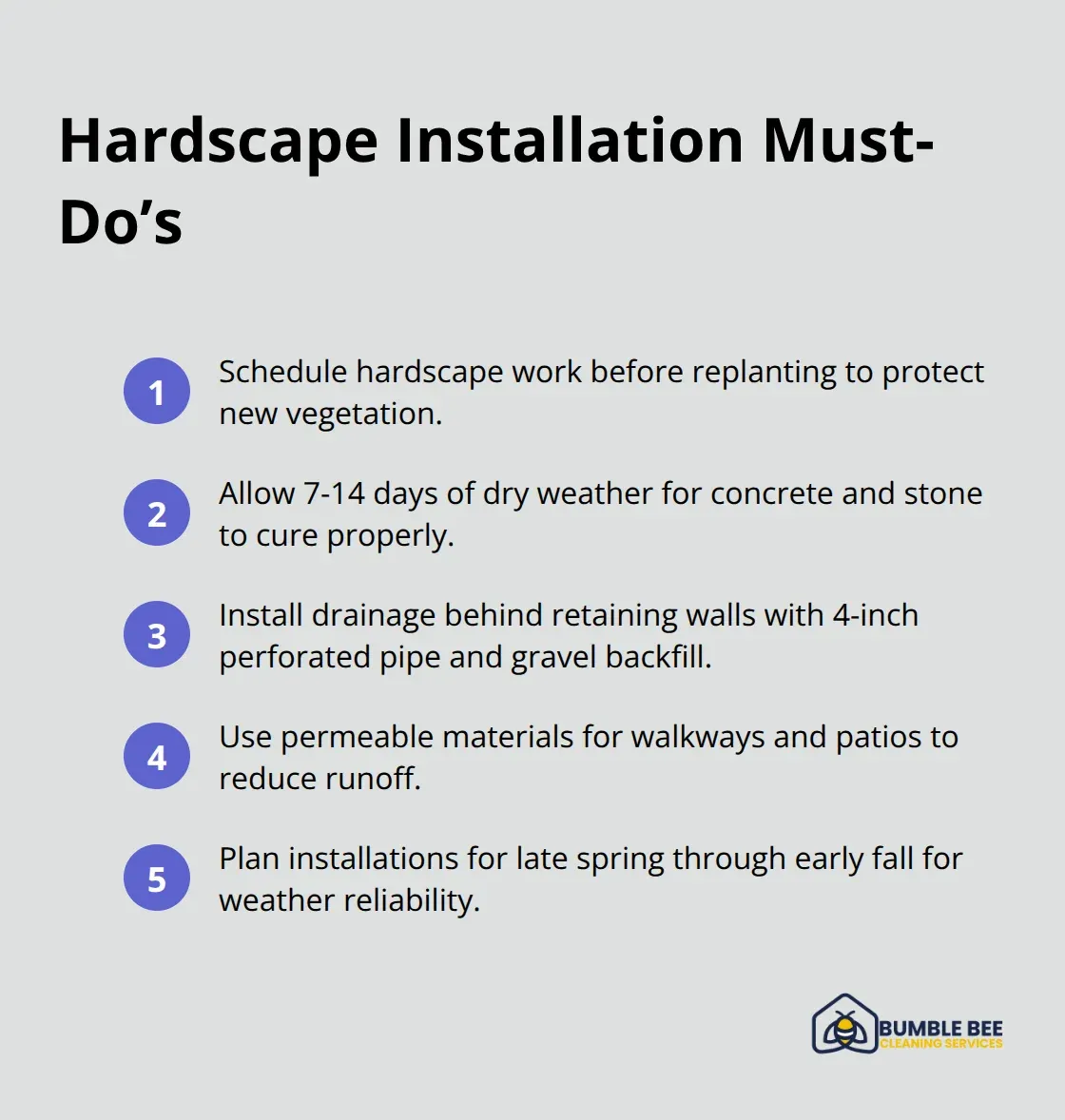
Choose permeable materials like gravel or porous concrete for walkways and patios to reduce runoff problems that Seattle’s 152 annual rainy days create in urban environments. These materials allow water to filter through rather than pool on surfaces.
Final Thoughts
Your outdoor space restoration timeline depends on damage severity and Seattle’s weather patterns. Minor lawn repairs and replanting take 6-8 weeks for visible results, while complete landscape restoration requires 3-6 months for full establishment. Patio restoration and hardscape work should happen first, followed by soil preparation and replanting in spring when temperatures consistently reach 50 degrees.
Professional help becomes necessary when you face extensive soil compaction, drainage problems, or structural damage to retaining walls and decks. We at Bumble Bee Cleaning Services handle the challenging post-construction cleanup that prepares your outdoor areas for restoration work. Our team removes construction debris, power washes surfaces, and tackles the detailed cleanup that DIY efforts often miss.
Long-term maintenance starts with seasonal soil testing through King Conservation District and annual aeration for compacted areas (apply organic compost each fall to maintain soil health). Inspect drainage systems before Seattle’s rainy season begins each year. Regular maintenance prevents costly problems and keeps your restored landscape healthy for years ahead.
