
Seattle businesses are waking up to the fact that green certifications aren’t just marketing buzzwords-they’re proof that your cleaning partner actually meets real environmental standards.
We at Bumble Bee Cleaning Services see this shift happening across the city. Companies want to know their cleaning methods protect their employees and customers while reducing their environmental footprint. The question isn’t whether to go green anymore. It’s how to find a certified partner you can trust.
What Certified Green Cleaning Actually Means
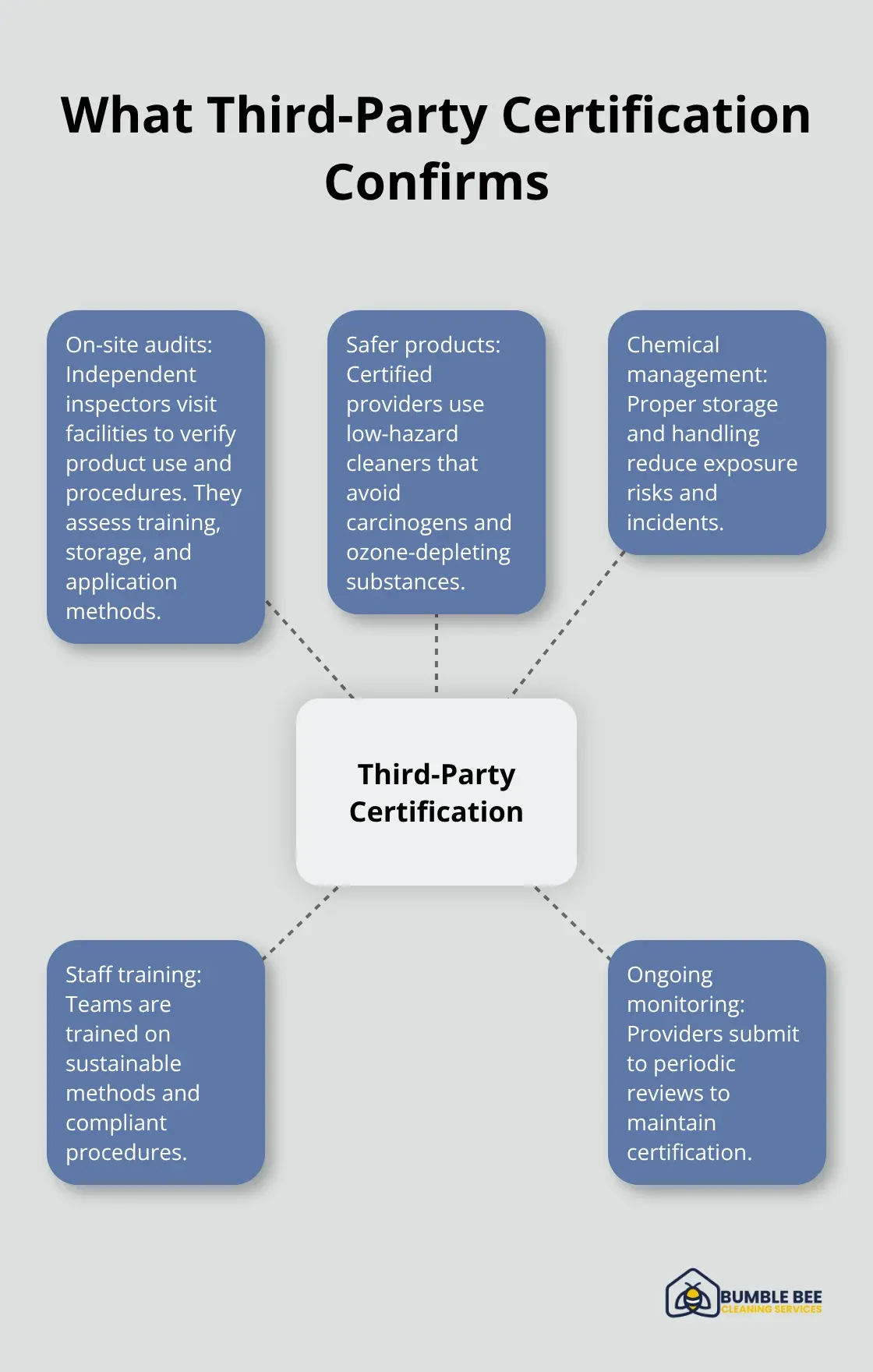
Green Seal certification, the leading third-party standard for cleaning services, requires companies to meet specific benchmarks across products, employee training, client communication, and site-specific cleaning plans. This isn’t a label a company awards itself. Green Seal sends inspectors on-site to verify that certified green cleaning services actually use safer products, handle chemicals properly, and train staff on sustainable methods. EPA Safer Choice and EPA Design for the Environment programs work similarly, certifying individual cleaning products against strict safety and environmental criteria. The difference matters enormously. A company claiming to be green without third-party verification makes a promise with no accountability. A Green Seal-certified cleaner has submitted to audits, documented their practices, and agreed to ongoing monitoring.
Real Standards, Real Verification
Green Seal evaluates whether cleaners use products with low-hazard ingredients, avoid known carcinogens and reproductive toxicants, and eliminate ozone-depleting substances. The certification process includes four steps: application, review, site visit, and certification, with a dedicated Certification Project Manager guiding the entire onboarding. During the on-site review, inspectors verify quality assurance and identify efficiency improvements in cleaning operations. This verification matters because most government facility service contracts now require Green Seal-compliant cleaning programs, which means certification directly affects market access and client trust.
Why Certification Costs More Upfront
Certified green cleaning costs more initially because companies must switch to safer products, implement proper chemical management systems, and invest in staff training. A Chemical Management System with proper storage and handling dramatically minimizes worker exposure compared to unmanaged chemical use. The result is measurable: reduced eye, skin, and respiratory hazards for employees and building occupants. Seattle eco-conscious businesses choosing certified partners gain competitive differentiation by demonstrating leadership in health and sustainability to purchasers, which increasingly matters for corporate procurement requirements.
Real Money Saved, Healthier Teams, Stronger Client Relationships
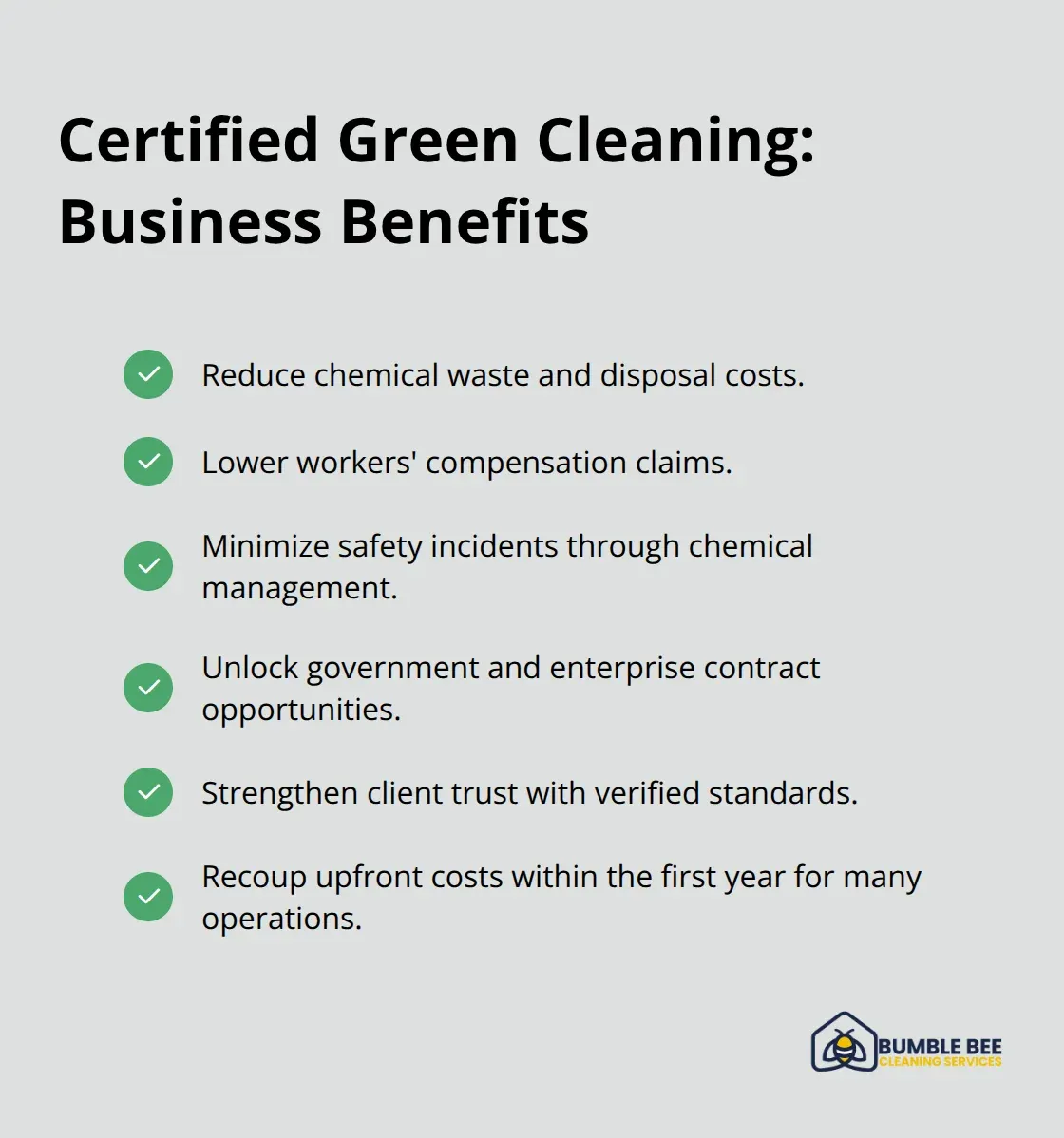
Certified green cleaning delivers tangible financial benefits that extend far beyond the initial investment. When you switch to verified eco-friendly products and proper chemical management systems, waste drops dramatically. Concentrated cleaning formulas handled carelessly create excess disposal costs and safety liabilities. A Chemical Management System with proper storage and handling minimizes worker exposure and eliminates expensive incidents. Seattle businesses report lower workers’ compensation claims after implementing certified green protocols, which directly reduces insurance premiums. Government agencies and major corporations now require Green Seal compliance in their service contracts, meaning certified cleaners access procurement opportunities that standard cleaners cannot reach. This market reality matters: companies without certification lose bids to those who have it. The upfront cost of products and training pays for itself through contract wins and reduced liability expenses within the first year for most commercial operations.
The Employee Health Advantage
Your team’s health directly impacts your bottom line. Eye, skin, and respiratory hazards from traditional cleaning chemicals drive absenteeism and employee turnover. The Occupational Safety and Health Administration tracks workplace injuries from chemical exposure, and respiratory issues remain among the top complaints in cleaning-adjacent roles. Certified green cleaners using EPA Safer Choice and EPA Design for the Environment products reduce these hazards substantially. Workers trained on sustainable methods and low-toxicity products report higher job satisfaction and lower turnover rates. This matters for Seattle businesses because labor retention in the service industry costs thousands per replacement hire. Healthier employees also mean fewer sick days, better productivity, and reduced training expenses. For companies managing in-house cleaning teams, switching to certified green practices improves staff morale and reduces turnover costs significantly.
Client Expectations and Market Positioning
Seattle’s eco-conscious market demands transparency about cleaning practices. Corporate clients and building managers now ask specifically about certifications before signing contracts. Green Seal-certified providers signal to purchasers that occupants will be protected from harmful chemicals, which appeals directly to companies managing sensitive environments like schools and healthcare facilities. This certification becomes a selling point that justifies premium pricing and builds loyalty. Clients choosing certified green cleaners report higher satisfaction because they know their facilities meet both health and sustainability standards. Building operators increasingly recognize that certified cleaning reduces chemical exposure, improves indoor air quality, and supports corporate social responsibility objectives. For Seattle businesses, partnering with certified providers demonstrates genuine commitment to occupant health rather than surface-level green marketing. This credibility matters when competing for contracts with government agencies, LEED-certified buildings, and major corporations that verify vendor certifications. The next section shows you exactly how to identify which certifications actually matter and what questions to ask potential cleaning partners.
Finding a Certified Green Cleaning Partner You Can Actually Trust
Verify Certifications and Ask for Documentation
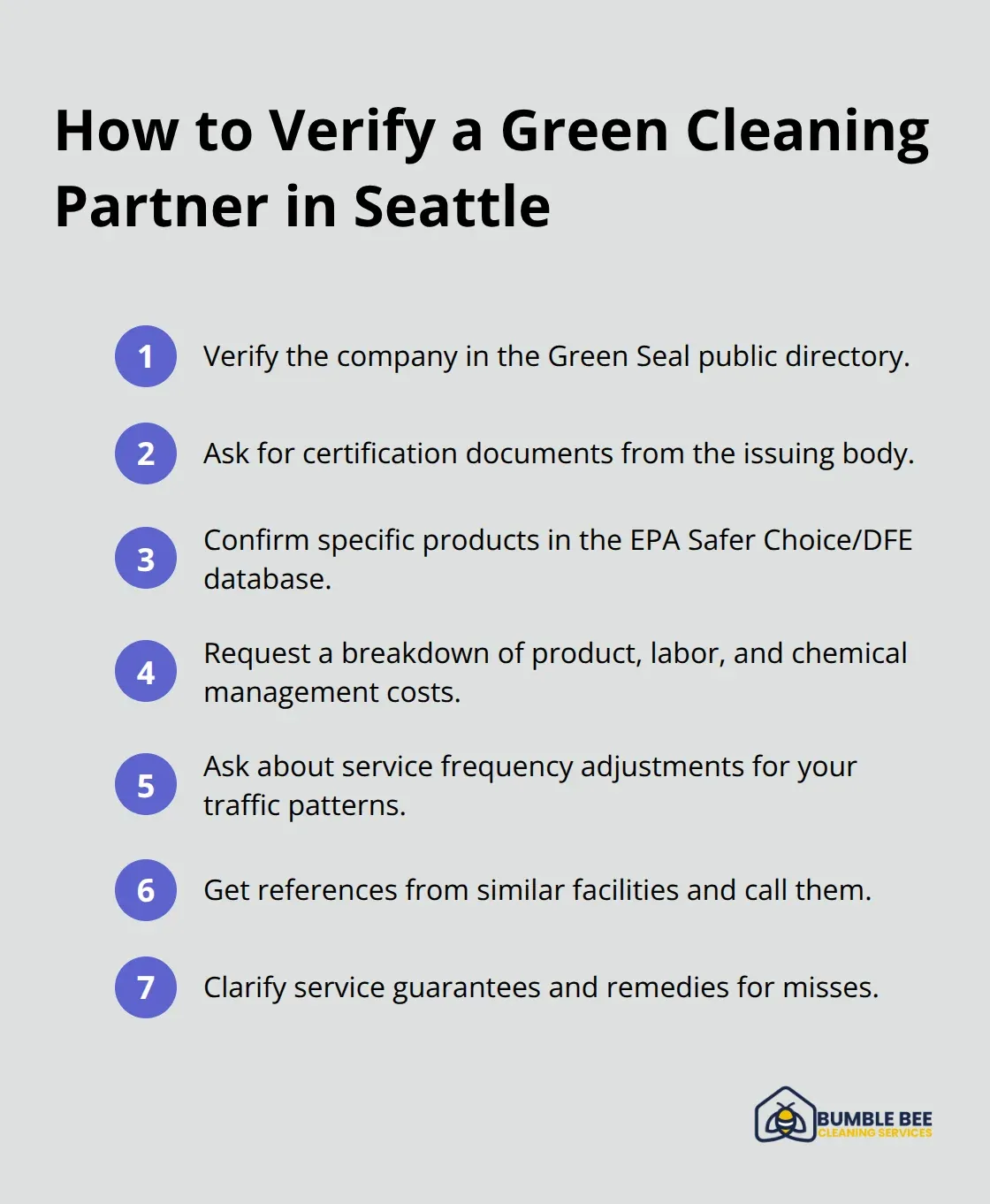
Start by asking for specific certifications, not vague green claims. Green Seal certification is the gold standard for cleaning services because it requires third-party verification, on-site audits, and ongoing compliance monitoring. When a cleaning company claims to be green, ask which certifications they hold and request documentation from the certifying body itself. Green Seal maintains a public directory of certified providers, so you can verify claims independently rather than relying on what a sales representative tells you. EPA Safer Choice and EPA Design for the Environment certifications matter for individual products, so ask which specific cleaners your potential partner uses and confirm those products appear in the EPA database. Companies resistant to sharing documentation or audit results are signaling that their certifications may not be as comprehensive as claimed.
Compare Pricing Models and Service Flexibility
Many Seattle businesses make the mistake of assuming that lower prices mean better value, but certified green cleaning requires investment in staff training and safer products that cost more upfront. Instead of comparing prices alone, calculate total cost including reduced chemical waste, lower workers’ compensation claims, and contract wins that certified status enables. A company charging significantly less than certified competitors either cuts corners on training, uses cheaper non-certified products, or provides less frequent service. Request pricing breakdowns that show what you’re actually paying for, including product costs, labor hours, and any chemical management fees.
Flexibility matters because different facilities need different approaches. A reliable partner should customize cleaning schedules for your specific space rather than applying a one-size-fits-all approach. Ask whether they adjust service frequency based on your facility’s actual traffic patterns, offer seasonal adjustments, or provide additional services during peak times without inflated rates.
Review Customer Testimonials and Service Guarantees
Customer testimonials reveal whether a company delivers on its promises consistently. Look for reviews specifically mentioning certification compliance, staff professionalism, and health improvements after switching to their service. Government agencies and major corporations leave detailed feedback about whether providers actually maintain Green Seal standards across multiple locations, so prioritize testimonials from similar facility types.
Service guarantees matter because they demonstrate confidence in quality. Ask what happens if cleaning doesn’t meet your standards and whether the company offers re-cleaning at no charge or credits for unsatisfactory work. Some providers guarantee specific outcomes like reduced allergen levels or improved indoor air quality, which indicates they track measurable results rather than just completing tasks.
Check for Staff Consistency and References
Seattle eco-conscious businesses should verify that a cleaning partner maintains consistent staff rather than rotating crews, since continuity ensures better understanding of your facility’s specific needs and proper implementation of your chemical management protocols. Request references from three to five existing clients in similar industries and contact them directly to ask about certification compliance, employee reliability, and whether the partner actually delivers the health and environmental benefits promised.
Final Thoughts
Certified green cleaning delivers measurable returns that extend far beyond environmental responsibility. Government agencies, LEED-certified buildings, and major corporations now require green certifications from their cleaning partners, which means certification directly determines whether you can compete for these contracts. Companies choosing certified providers make a business decision based on concrete outcomes: lower workers’ compensation claims, reduced chemical waste expenses, improved employee retention, and access to high-value contracts that standard cleaners cannot reach.
Start by identifying which certifications matter for your facility type and industry. Green Seal certification for cleaning services, EPA Safer Choice products, and staff training documentation represent the baseline standards that signal genuine commitment rather than marketing claims (request documentation from any potential partner and verify their certifications independently through public directories). Ask specific questions about their chemical management systems, staff consistency, and service guarantees rather than accepting vague promises about being green.
We at Bumble Bee Cleaning Services work with Seattle businesses that demand both environmental responsibility and measurable results. Contact us to discuss how certified green cleaning can reduce your facility’s chemical exposure, improve employee health, and position your business competitively in Seattle’s eco-conscious market. The long-term value of sustainable cleaning practices compounds over time through contract wins, reduced liability, and the reputation that comes from genuine environmental leadership.
For more information about our cleaning services in Seattle and Atlanta, or to request a cleaning quote, call or text us at 425-786-1360 or email us at info@qbclean.com
