
Your office restroom is one of the first places employees notice when they walk in each morning. A clean, well-maintained bathroom sends a powerful message about how much you value your team’s wellbeing.
At Bumble Bee Cleaning Services, we’ve seen firsthand how restroom sanitization directly impacts workplace morale and productivity. When bathrooms are neglected, employee satisfaction drops-but when they’re properly maintained, your whole office culture improves.
How Clean Restrooms Shape Your Team’s Mindset
The Psychological Impact of Bathroom Conditions
Your employees spend roughly eight hours a day in your office, and many visit the restroom multiple times throughout that day. What they find there matters far more than most managers realize. When restroom conditions are poor, employees experience genuine stress and anxiety. A dirty bathroom signals neglect, making workers feel undervalued and uncomfortable in their own workspace. This isn’t just about comfort-it’s about psychological wellbeing.
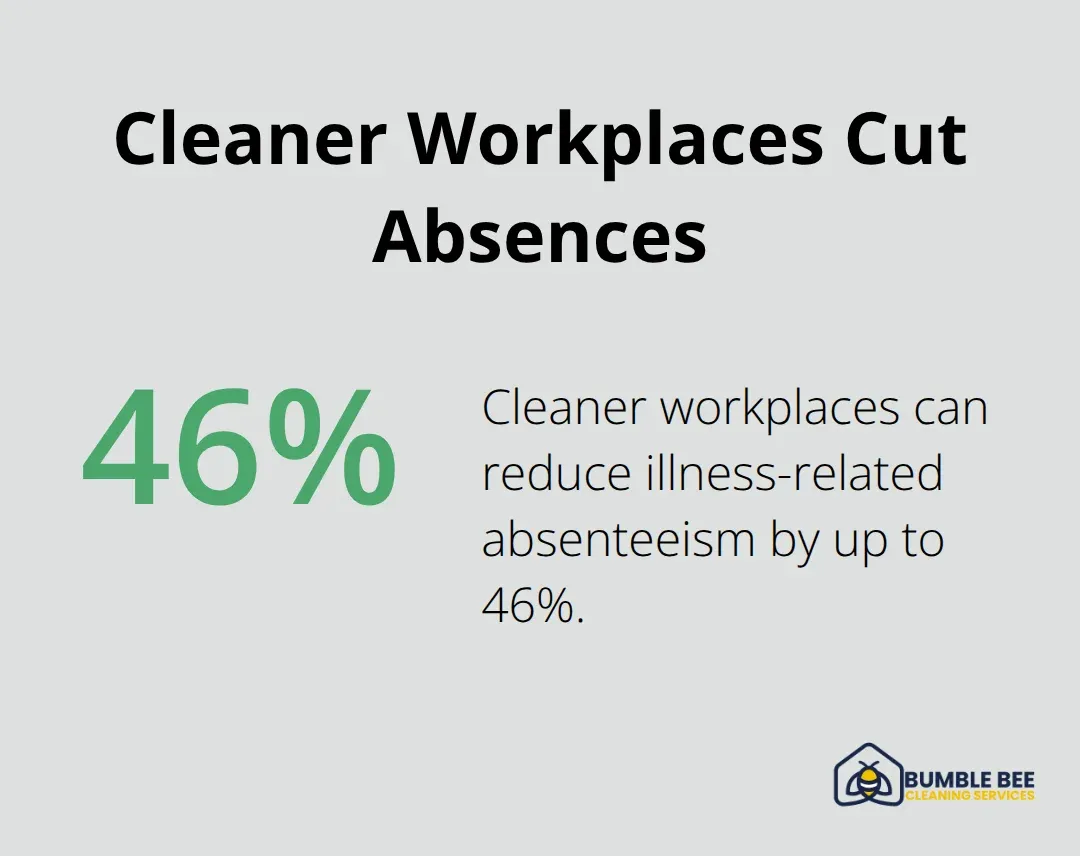
A study in the American Journal of Infection Control found that cleaner workplaces can reduce illness-related absenteeism by up to 46%. That reduction comes partly from fewer germs, but also from the mental boost that comes with working in a space where hygiene is taken seriously. Employees who see well-maintained restrooms develop confidence that their employer cares about their health and dignity. This translates directly into higher job satisfaction and stronger loyalty to your company.
How Restroom Standards Affect Productivity
The practical impact shows up in your productivity numbers. When your team doesn’t worry about restroom conditions, they focus better on their actual work. High-touch surfaces in bathrooms harbor bacteria and viruses that spread illness throughout your office. Regular sanitization of these areas prevents the cascade of sick days that derail projects and drain morale.
Restrooms should be cleaned and sanitized multiple times per day in a busy Seattle office, not once weekly. This frequency matters because bathrooms in high-traffic locations accumulate contaminants rapidly. Your team notices whether surfaces are sticky, whether floors are clean, whether odors linger. These observations accumulate into a gut feeling about workplace standards.
The Message Your Restrooms Send
If restrooms are neglected, employees assume other areas are too, even if they’re not. Conversely, a spotless restroom with fresh supplies and pleasant odor control sends a clear message that standards matter here. This psychological shift improves concentration, reduces stress-related distractions, and creates an environment where people actually want to work.
The connection between restroom sanitization and employee morale isn’t theoretical-it’s rooted in how people experience their physical environment every single day. When you prioritize bathroom cleanliness, you’re not just preventing illness; you’re actively building a workplace culture where employees feel respected and valued. This foundation of care and attention sets the stage for understanding what professional sanitization services can accomplish for your Seattle office.
What Happens When Restrooms Fall Behind
The Rapid Deterioration of Neglected Bathrooms
Neglected restrooms don’t just look bad-they trigger a cascade of problems that spread through your entire office. Sticky countertops and grime buildup become visible within days. Toilets and urinals harbor bacteria colonies that multiply rapidly in moist environments. Floors accumulate residue from foot traffic and spills, creating slip hazards. Odors develop that no air freshener can mask, signaling to everyone who enters that standards have dropped.
The deterioration compounds faster than most managers expect. Once neglect starts, it accelerates exponentially. In Seattle’s humid climate, moisture problems accelerate mold and mildew growth in corners and grout lines, creating health hazards beyond surface dirt. High-touch surfaces like faucet handles, door handles, and stall latches become contamination highways where bacteria thrive.
How Contaminated Restrooms Spread Illness
The health consequences hit your team directly. Employees who regularly use contaminated restrooms contract respiratory infections, gastrointestinal illnesses, and skin infections at higher rates. When multiple team members get sick simultaneously, projects stall and deadlines slip. The stress of working in an unhygienic environment also suppresses immune function, making illness more likely even among staff who don’t catch something directly from the bathroom.
Research shows that cleaner workplaces reduce illness-related absenteeism by up to 46%. The inverse is equally true-neglected restrooms drive sickness up dramatically. Restrooms should be cleaned and sanitized multiple times daily in high-traffic Seattle offices, not once per week. This frequency is non-negotiable if you want to prevent the accumulation of contaminants that trigger both illness and cultural decline.
The Damage to Team Morale and Retention
Poor restroom conditions corrode team morale in ways that damage your workplace culture far beyond what most managers realize. Employees perceive management indifference and feel disrespected, leading to resentment that affects collaboration and retention. High performers often start looking for jobs elsewhere when basic workplace standards slip. The message sent by dirty restrooms-that your company cuts corners on employee wellbeing-undermines trust and loyalty faster than almost any other workplace failure.
When your team works in an environment where restrooms are neglected, they question what other corners you cut. This psychological damage spreads to how employees view their entire workplace experience. The resentment builds quietly until your best people leave for companies that demonstrate they care about basic standards. Understanding these consequences makes clear why professional sanitization matters-it influences job satisfaction, staff morale, and whether your employees stay or seek work elsewhere.
How to Build a Restroom Sanitization Schedule That Actually Works
Match Cleaning Frequency to Your Office Traffic
Restroom sanitization in Seattle offices requires a schedule tied directly to foot traffic, not arbitrary weekly intervals. Start by counting how many employees use your restroom hourly during peak times, then match cleaning frequency to that volume. A restroom serving 30 people needs sanitization every 2-3 hours during business hours, while one serving 100 people needs attention every 60-90 minutes. This isn’t guesswork-it’s the minimum frequency required to prevent bacteria colonies from establishing on high-touch surfaces like faucet handles, door handles, and toilet flush mechanisms.
Document your schedule in writing and assign specific staff members or a professional service to execute it. Without accountability through assignment and documentation, restroom standards slip immediately. This written commitment transforms vague intentions into concrete actions that your team can track and verify.
Create a Detailed Cleaning Checklist
Establish a checklist that covers surface cleaning of sinks and countertops, disinfection of toilets and urinals using EPA-approved disinfectants, floor sanitization appropriate to Seattle’s wet climate, odor elimination through proper ventilation and product selection, mirror polishing, and restocking of supplies like toilet paper and hand soap. EPA-approved disinfectants matter because standard cleaners don’t eliminate viruses and bacteria-disinfectants actively destroy pathogens on contact. Products containing quaternary ammonium compounds or hypochlorite work effectively on bathroom surfaces without damaging fixtures.
Avoid mixing cleaning products, as this creates toxic fumes and reduces effectiveness. Train whoever handles restroom sanitization on proper application, contact time requirements, and safety protocols. Many staff members underapply disinfectants or rinse too quickly, defeating the purpose. If you handle sanitization in-house, allocate a dedicated person rather than rotating responsibility among multiple staff members. Rotation creates accountability gaps and inconsistent standards.
Prioritize High-Touch Surfaces
High-touch surfaces transmit illness fastest because they accumulate bacterial load from dozens of people daily. Faucet handles, door handles, toilet flush mechanisms, and stall latches require disinfection at minimum three times per day in busy Seattle offices, ideally more. Countertops and mirrors require cleaning once daily but benefit from spot-cleaning between scheduled sanitizations when visible residue appears.
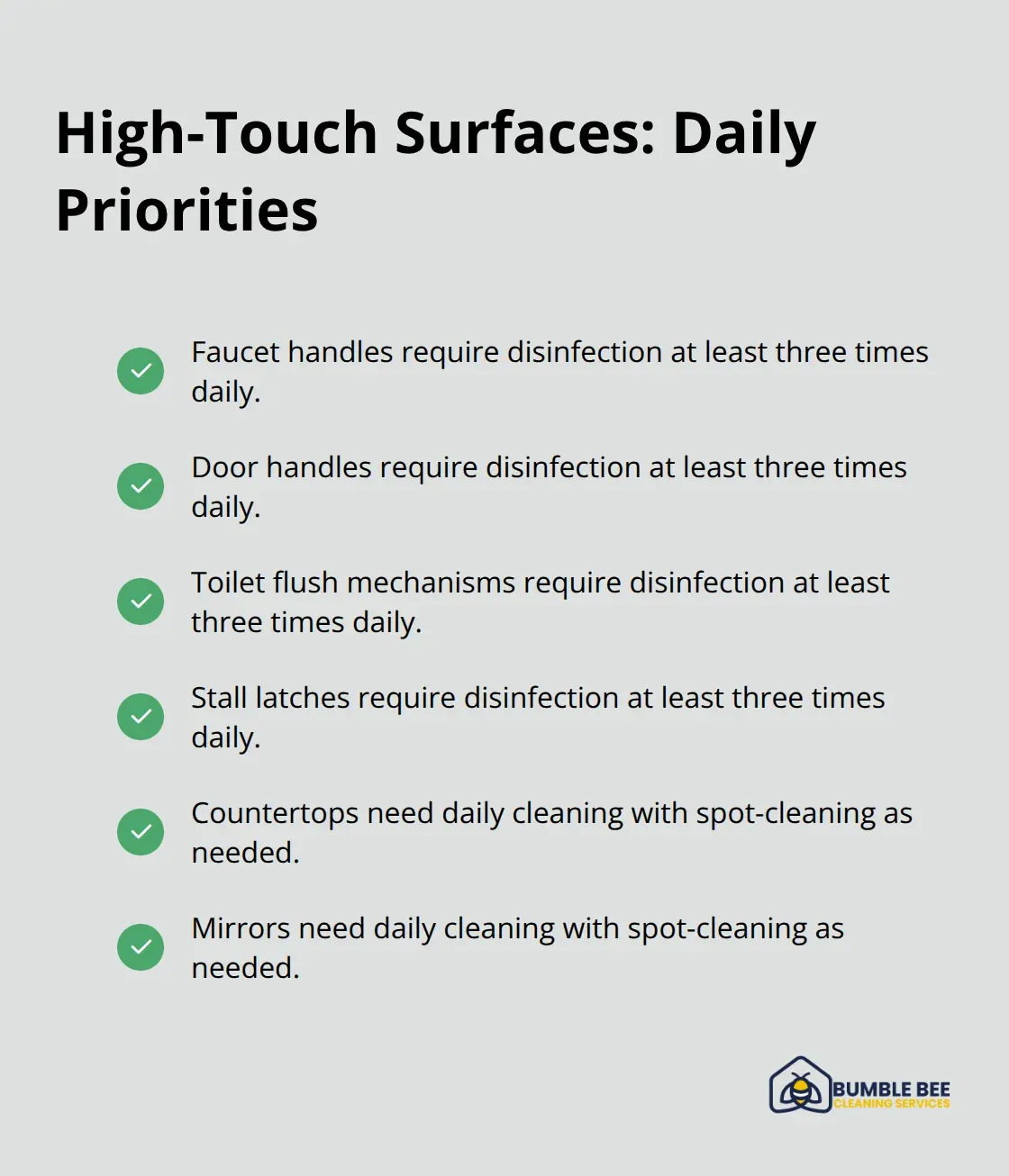
These surfaces demand your attention first because they represent the fastest pathway for germs to spread through your team. When you prioritize these five areas, you interrupt the transmission chain that causes illness outbreaks in offices.
Address Seattle’s Moisture Challenges
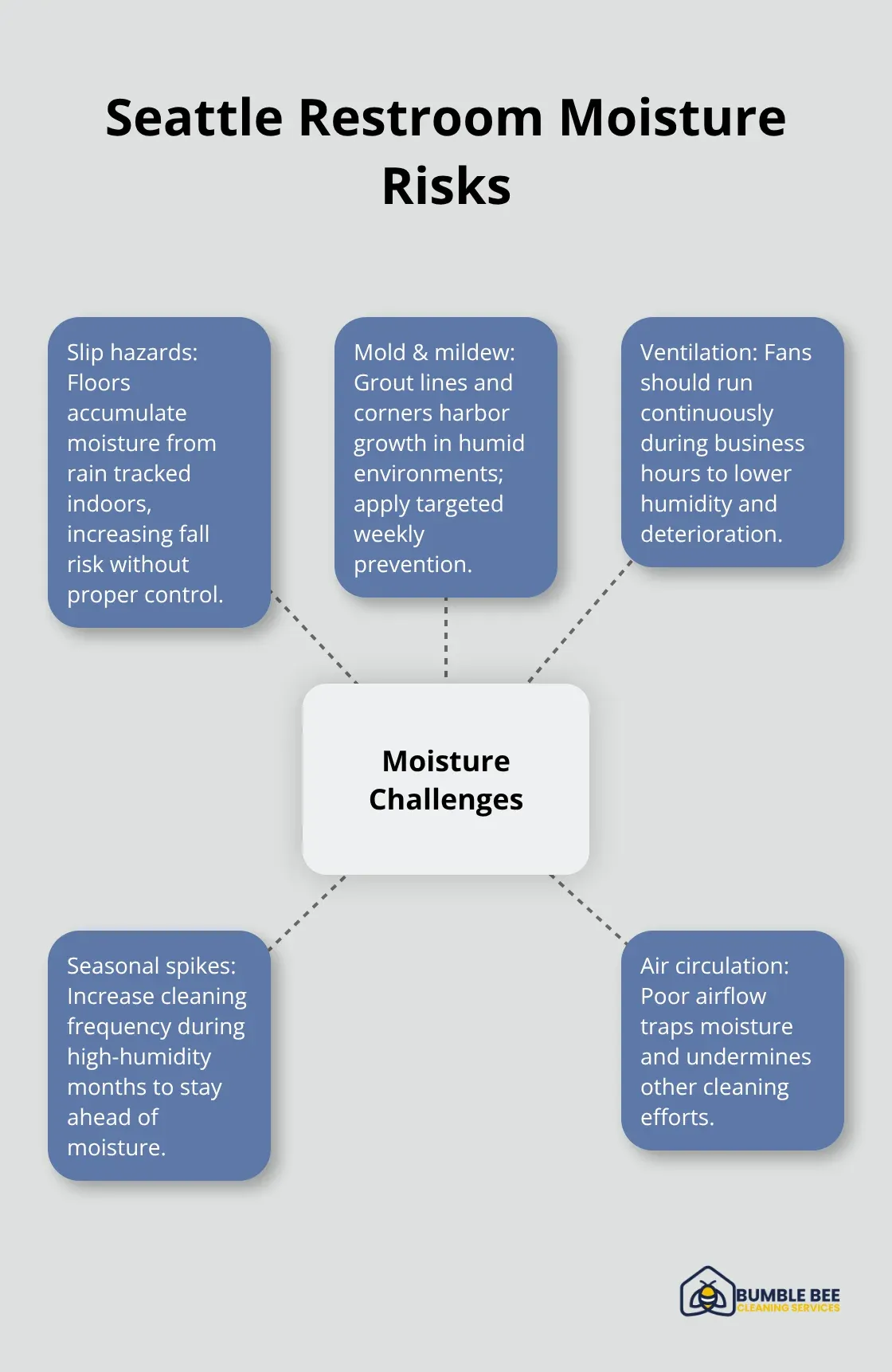
Floors in Seattle restrooms accumulate moisture from rain tracked indoors, making slip hazards and mold growth likely if not addressed properly. Use mop systems designed for moisture control and select disinfectant floor cleaners formulated for Seattle’s humid climate. Grout lines and corners harbor mold and mildew rapidly in moisture-prone environments, requiring targeted attention weekly using products specifically designed for mold prevention.
Ventilation fans should run continuously during business hours to reduce humidity and prevent moisture-related deterioration. If your office experiences seasonal humidity spikes, increase cleaning frequency during those months. Many Seattle facilities overlook restroom ventilation as part of their sanitization strategy, but poor air circulation undermines all other cleaning efforts by trapping moisture that feeds mold and mildew growth.
Final Thoughts
Most Seattle offices struggle to maintain restroom sanitization standards without professional support, and that’s where we at Bumble Bee Cleaning Services step in. Our team handles surface disinfection of high-touch areas multiple times daily, floor care tailored to Seattle’s moisture challenges, odor elimination through proper ventilation and product selection, and consistent restocking of supplies. We work around your schedule, whether that means early morning cleaning before staff arrives or evening sanitization after everyone leaves.
When your team walks into a professionally sanitized restroom, they notice immediately-surfaces gleam, odors vanish, and supplies stay stocked. This consistency builds trust that management takes their wellbeing seriously, so employees stop worrying about germs and start focusing on their actual work. Sick days drop, productivity rises, and retention improves because people feel valued in an environment where standards matter.
Professional restroom sanitization also removes the burden from your internal staff, freeing them to focus on their actual jobs rather than cleaning duties. You gain accountability through documented schedules and quality monitoring that keeps standards high week after week. If you’re ready to transform your office restroom experience and boost team morale, contact Bumble Bee Cleaning Services for a free assessment of your Seattle office restroom needs.
