
Seattle’s wet climate puts your floors under constant pressure. Moisture seeps in, mold creeps up, and what looked fresh last month starts showing wear.
We at Bumble Bee Cleaning Services know that floor maintenance here isn’t one-size-fits-all. The Pacific Northwest demands strategies tailored to humidity, rain, and seasonal shifts that other regions simply don’t face.
How Moisture Damages Your Seattle Floors
Understanding Seattle’s Humidity Problem
Seattle’s humidity levels sit between 70–80% year-round, and that constant moisture attacks your floors relentlessly. Wood floors swell and warp because they absorb water from the air itself, not just from spills. Laminate floors delaminate as moisture seeps between layers, hardwood cupping becomes visible within weeks, and vinyl floors develop gaps and buckle at the seams.
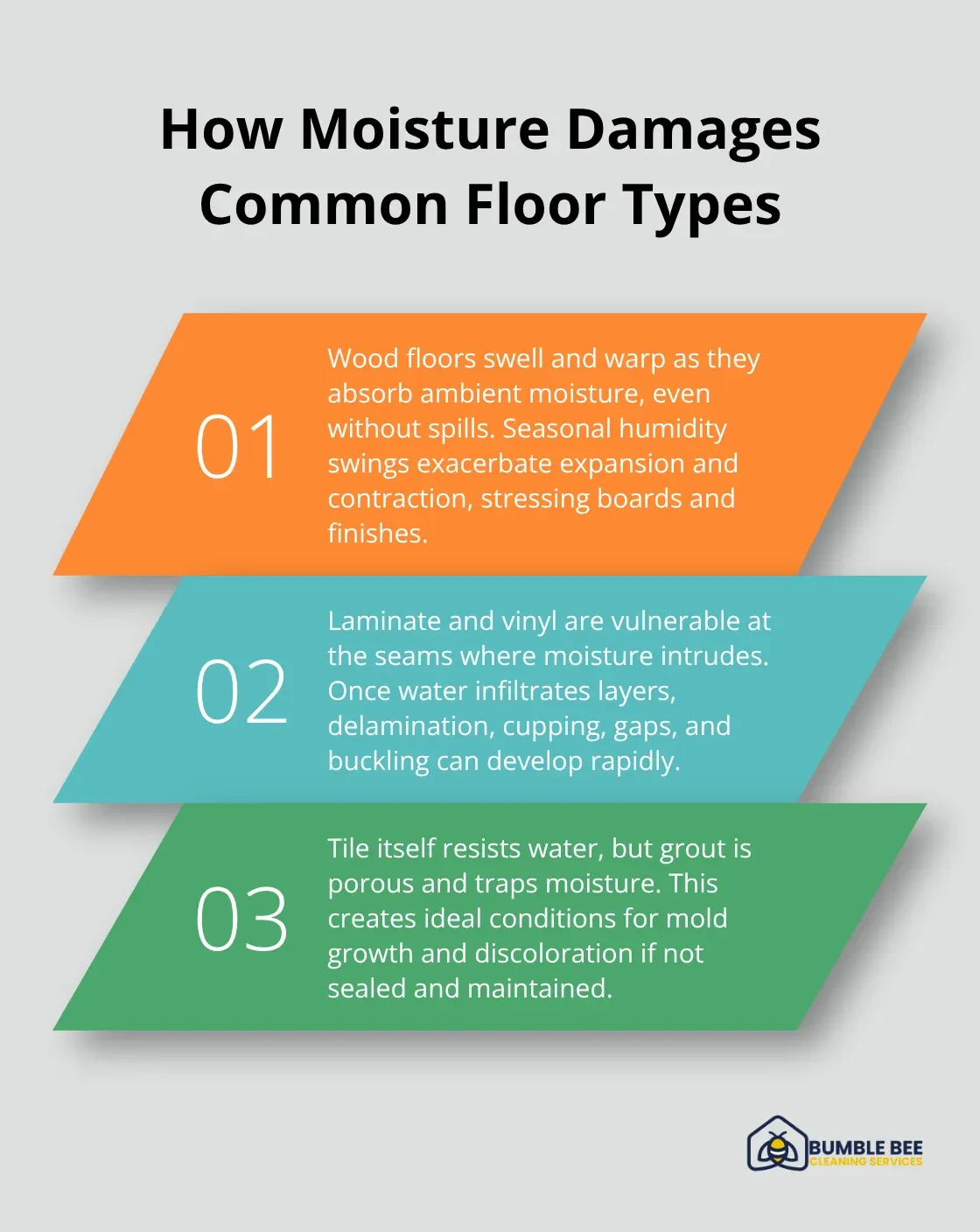
Tile and grout absorb water differently-grout is porous and traps moisture, creating the perfect environment for mold to colonize.
The Hidden Threat Beneath the Surface
The problem isn’t what you see; it’s what happens beneath the surface where mold grows invisibly. According to the University of Arizona, shoes harbor about 421,000 different types of bacteria, and Seattle’s wet climate means you track moisture and microorganisms directly onto your floors daily. Concrete floors in basements and commercial spaces develop efflorescence, that white powdery residue signaling moisture rising from below. Stone floors like marble and granite etch when acidic moisture sits on them, and the damage becomes permanent.
Moisture Control Starts at Your Entryways
Install high-quality doormats both outside and inside your entryways-this single step reduces the mud and moisture that enters your space significantly. Use a dehumidifier in areas prone to dampness; whole-home units work best and help keep indoor humidity between 35–65%, which protects all floor types. Wipe spills within minutes, use microfiber mops that minimize water on the floor, and dry floors promptly after wet cleaning.
Addressing Mold When It Appears
If mold appears on grout or baseboards, a borax solution (1 cup borax per gallon of hot water) works effectively when applied with thorough scrubbing and proper protective gear. Seattle’s rainy season from fall through spring intensifies these challenges, so increase your maintenance frequency during those months rather than waiting for visible damage to appear. These preventative steps protect your investment, but they’re only part of the equation-the daily and weekly routines you establish determine whether your floors stay protected or deteriorate over time.
Daily and Weekly Cleaning Routines That Actually Work
Vacuum or Dry Mop Every Single Day
Vacuum or dry mop your floors every single day, not because it sounds nice but because Seattle’s moisture and foot traffic demand it. A HEPA-filter vacuum traps fine dust and allergens that moisture turns into sticky residue, with HEPA filtration capturing 99.97% of particles as small as 0.3 microns. Dry mopping works even better in Seattle’s climate because it avoids adding water to floors that already fight moisture constantly. Use microfiber mops with a figure-eight pattern starting from a corner, which ensures complete coverage without dispersing dust into the air.
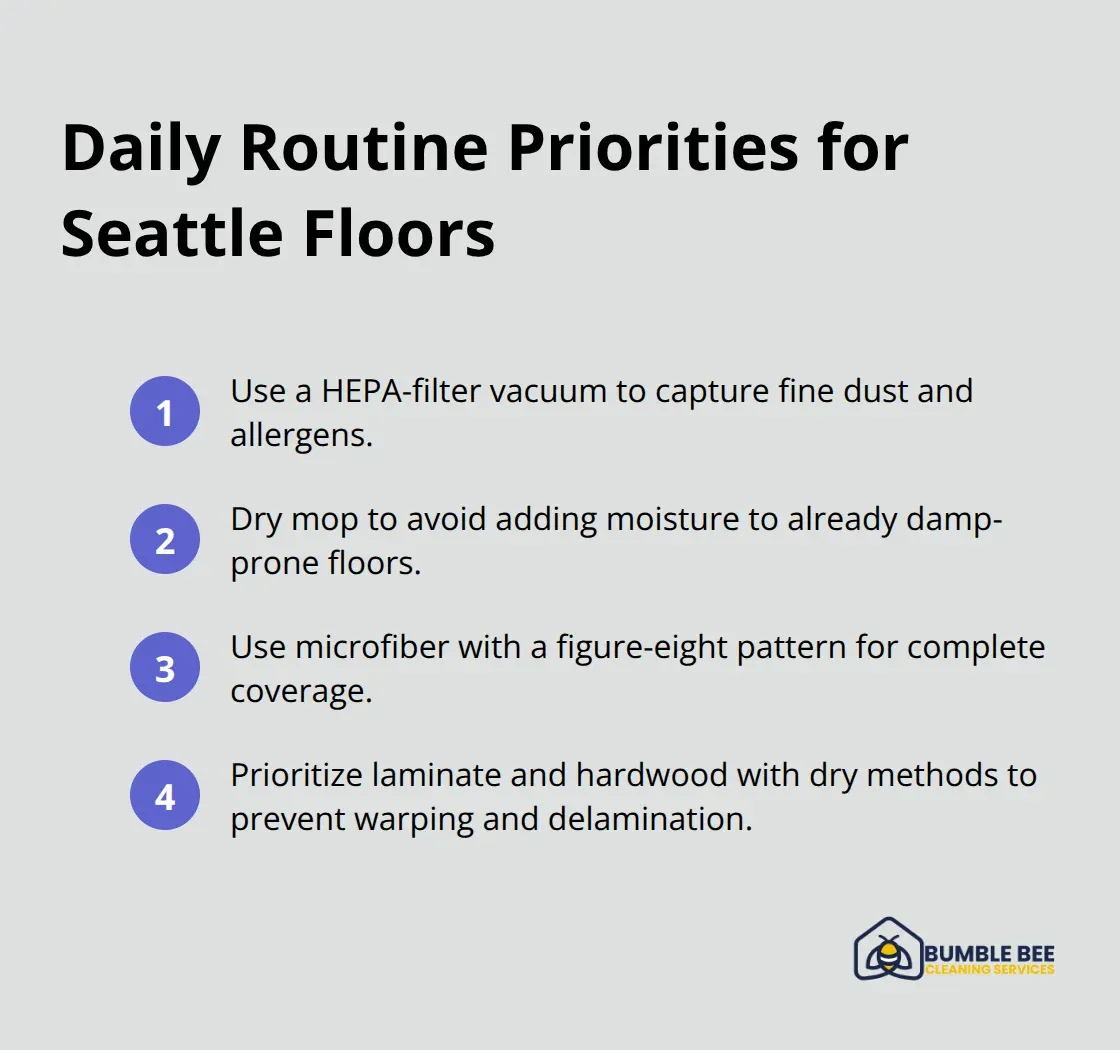
For laminate and hardwood floors specifically, dry mopping prevents warping and delamination when these materials face excess moisture exposure.
Prioritize High-Traffic Entryways First
High-traffic areas like entryways absorb mud and moisture faster than anywhere else, so tackle those zones first during your daily routine. Wipe spills immediately, especially near doorways where tracked-in water pools and creates slip hazards. The National Floor Safety Institute reports that about 1 million people visit emergency rooms yearly for slip-and-fall incidents, and wet floors in entryways account for a significant portion of those accidents. Your daily attention to these zones prevents liability while stopping floors from deteriorating before damage becomes visible.
Weekly Deep Cleaning Separates Success From Failure
Weekly deep cleaning separates floors that last from floors that fail in Seattle homes. Mop hard floors with a microfiber mop and eco-friendly cleaners like Seventh Generation All-Purpose Cleaner or a vinegar-water solution, which cost less and outperform harsh chemicals on sealed surfaces. For tile and grout, weekly scrubbing prevents mold colonization in those porous lines where moisture loves to hide. Stone floors like marble and granite demand pH-neutral cleaners or specialized products from Marble Life or Granite Gold-never vinegar or acidic solutions that etch the surface permanently.
Carpet and Seasonal Adjustments
Carpet needs vacuuming in high-traffic zones twice weekly during Seattle’s rainy season to prevent moisture from settling into fibers. Professional extraction cleaning every 12 to 18 months keeps carpets truly sanitized, not just surface-clean. Focus your weekly effort on areas where shoes track moisture indoors, because that’s where bacteria and mold establish themselves fastest. A structured cleaning schedule reduces stress and prevents the panic of discovering damage that could have been stopped weeks earlier. Consistency in your cleaning habits protects your investment and keeps your home healthy.
Moving Forward With Consistency
Commitment to these routines protects your floors from Seattle’s relentless moisture and foot traffic. The payoff is floors that last years longer and maintain their appearance through seasons of rain and humidity. With daily and weekly habits established, you’re ready to tackle the long-term strategies that truly extend floor life and prevent costly replacements.
Long-Term Floor Protection Strategies
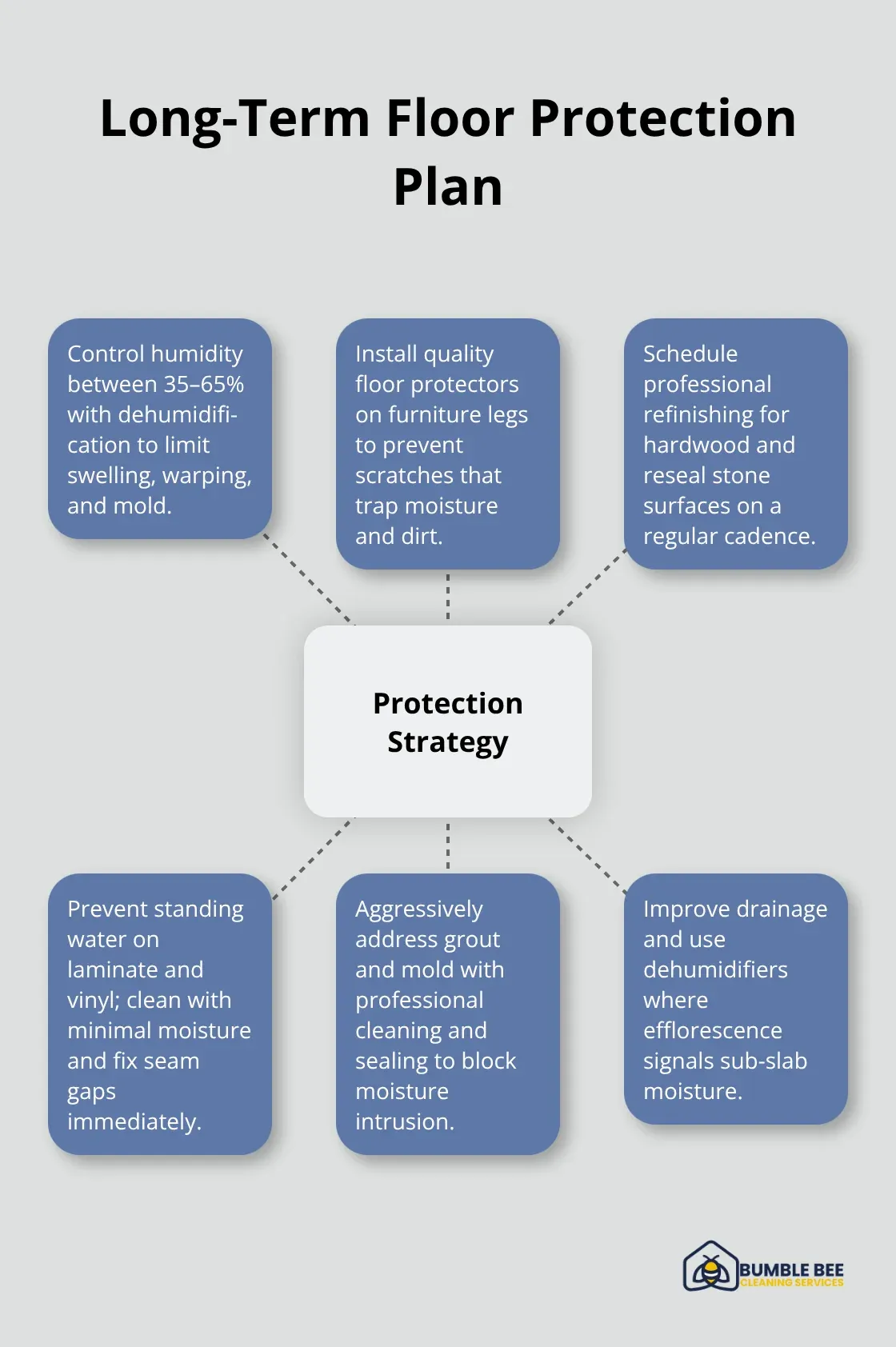
Daily and weekly routines prevent immediate damage, but long-term protection requires a different approach entirely. Seattle’s moisture attacks your floors year after year, and without a strategic plan for deeper intervention, even the best daily habits cannot stop deterioration beneath the surface. Hardwood floors do not need waxing despite what many believe-modern finishes suffer damage from wax buildup, which causes slipperiness and traps dirt. Instead, focus on protective measures: maintain humidity between 35 and 65 percent using whole-home dehumidifiers, install quality floor protectors on furniture legs to prevent scratches that trap moisture, and schedule professional refinishing every few years depending on foot traffic levels.
Protecting Stone and Moisture-Sensitive Floors
Stone floors like marble and granite require periodic resealing to protect their porous surfaces from water penetration and staining. Laminate and vinyl floors deteriorate when moisture reaches the seams, so real protection happens through prevention-never allow standing water to sit on these surfaces, use minimal moisture when cleaning, and address any gaps or damage immediately before water seeps underneath. These materials demand vigilance because once moisture penetrates the seams, replacement becomes your only option.
Tackling Mold and Mildew Aggressively
Mold and mildew in Seattle’s climate demand aggressive intervention rather than reactive treatment. Grout lines are where the real problem hides because they are porous and trap moisture that your daily mopping misses. Professional tile and grout cleaning with industrial-grade equipment removes years of accumulated stains and bacteria that regular cleaners cannot touch, then specialized sealers protect grout from future moisture intrusion. For concrete basement floors where efflorescence appears, that white powder signals moisture rising from below the surface-a dehumidifier and proper drainage matter far more than any cleaner.
Addressing Moisture Problems at Their Source
When you discover mold on grout or baseboards, the borax solution works, but the underlying moisture problem requires fixing first or mold returns within weeks. Professional deep cleaning services handle what homeowners and facility managers cannot manage alone. Seasonal deep cleaning during spring and fall, combined with your weekly routines, creates the comprehensive protection Seattle floors actually need to survive the Pacific Northwest’s relentless humidity.
Final Thoughts on Seattle Floor Maintenance
Your floors face relentless pressure from Seattle’s moisture, but you now understand what stops that damage before it starts. Daily vacuuming or dry mopping, weekly deep cleaning with appropriate products for your floor type, and consistent attention to entryways form the foundation of floor maintenance that actually works. Humidity control through dehumidifiers, immediate spill cleanup, and protective measures like quality doormats prevent the hidden damage that appears months later.
Professional cleaning services extend your floor’s lifespan far beyond what DIY efforts alone can achieve. We at Bumble Bee Cleaning Services bring certified expertise, eco-friendly products, and specialized equipment that removes years of accumulated grime, bacteria, and moisture damage your regular routine cannot touch. Our team handles tile and grout cleaning with industrial-grade cleaners and deep sanitization that protects your family’s health while tailoring strategies for each floor type in your Seattle home.
Seasonal adjustments during rainy months and aggressive mold treatment when it appears keep your floors healthy year-round. Contact Bumble Bee Cleaning Services to discuss a customized floor maintenance plan that fits your Seattle home’s unique needs and protects your investment for years ahead.
