
Renovations transform your Seattle home, but they also introduce risks that aren’t always visible. A post-renovation inspection catches hidden problems before they drain your wallet and compromise your safety.
We at Bumble Bee Cleaning Services know that contractors don’t always get everything right. That’s why a thorough inspection after renovation work is your best defense against costly repairs down the road.
What Skipped Inspections Cost You
Skipping a post-renovation inspection in Seattle is gambling with your home’s future. Contractors make mistakes-framing gets rushed, electrical work cuts corners, plumbing connections leak silently behind walls for months before you notice water stains. Without an inspection, these problems hide until they become expensive emergencies. Seattle’s wet climate accelerates damage. Water that enters through a missed flashing detail or improper grading soaks into wood, triggers mold growth, and compromises structural integrity. According to the EPA, standing water near your foundation signals infiltration risk if it remains for more than 24 hours after rain.
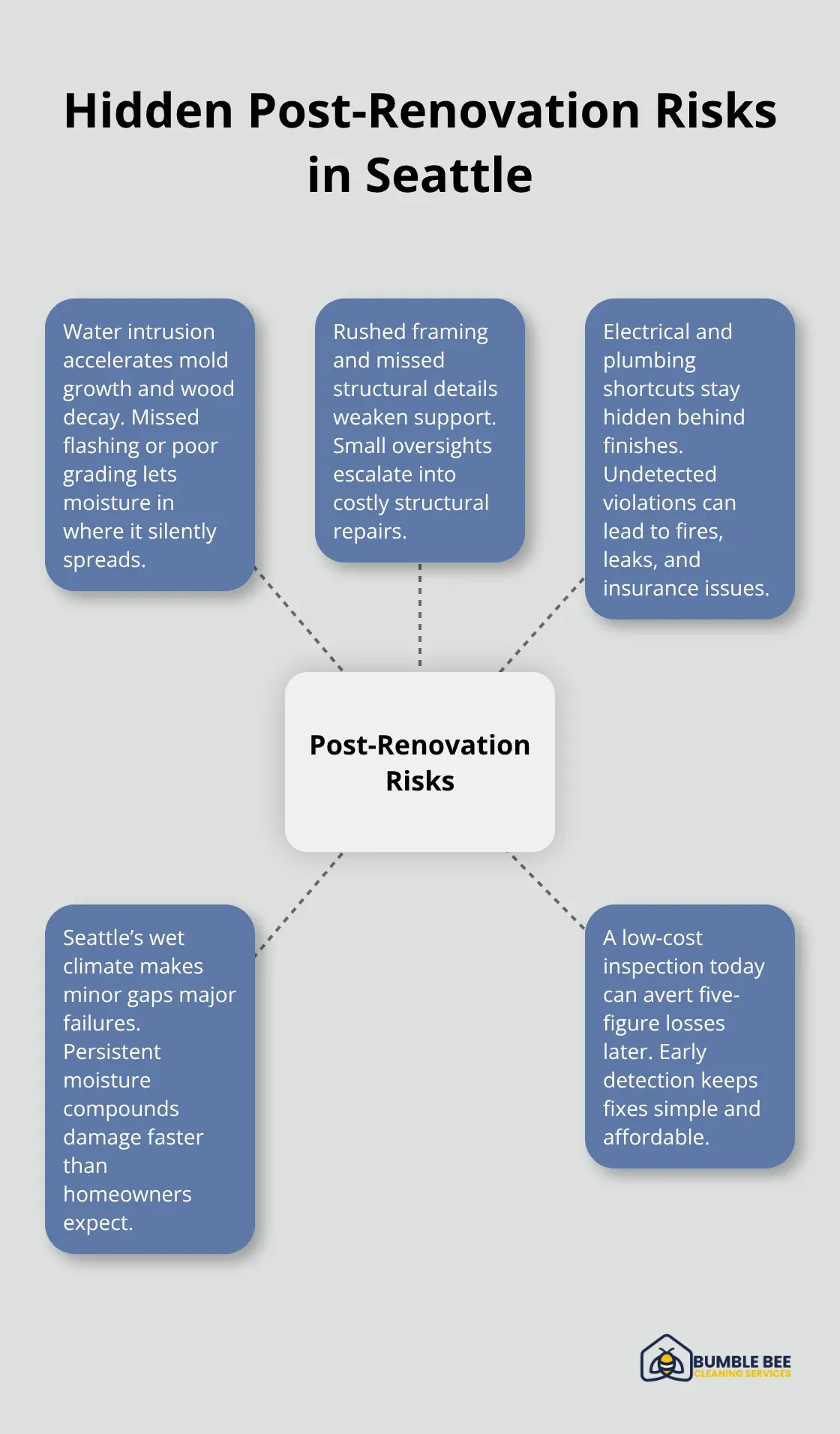
If your basement smells musty after renovation, trapped moisture already works inside walls and crawl spaces. That $500 inspection upfront prevents $15,000 in water damage repairs later.
Structural Problems Hide Until They’re Catastrophic
Contractors occasionally install new walls without proper support, miss foundation cracks during work, or fail to reinforce load-bearing areas. Horizontal cracks in foundation walls indicate serious soil or water pressure and demand immediate evaluation. Stair-step cracks in brick or concrete block signal uneven foundation settlement. Doors that stick or windows that jam after renovation often reveal frame movement from foundation issues the contractor never addressed. These problems don’t stabilize-they worsen. An inspection catches them while correction remains manageable.
Electrical and Plumbing Violations Create Silent Hazards
Code violations in electrical work don’t announce themselves with sparks; they wait for the wrong moment to cause fires. A post-renovation inspection confirms that electrical panels are properly labeled, circuits are accessible, and outdated wiring (knob-and-tube or aluminum) has actually been replaced, not just hidden. Plumbing code violations similarly hide. Galvanized pipes corrode from the inside, cast iron sewer lines fail without warning, and improper water drainage creates backups that flood basements. An inspection identifies these violations before they become safety emergencies or insurance nightmares.
What Inspectors Actually Find
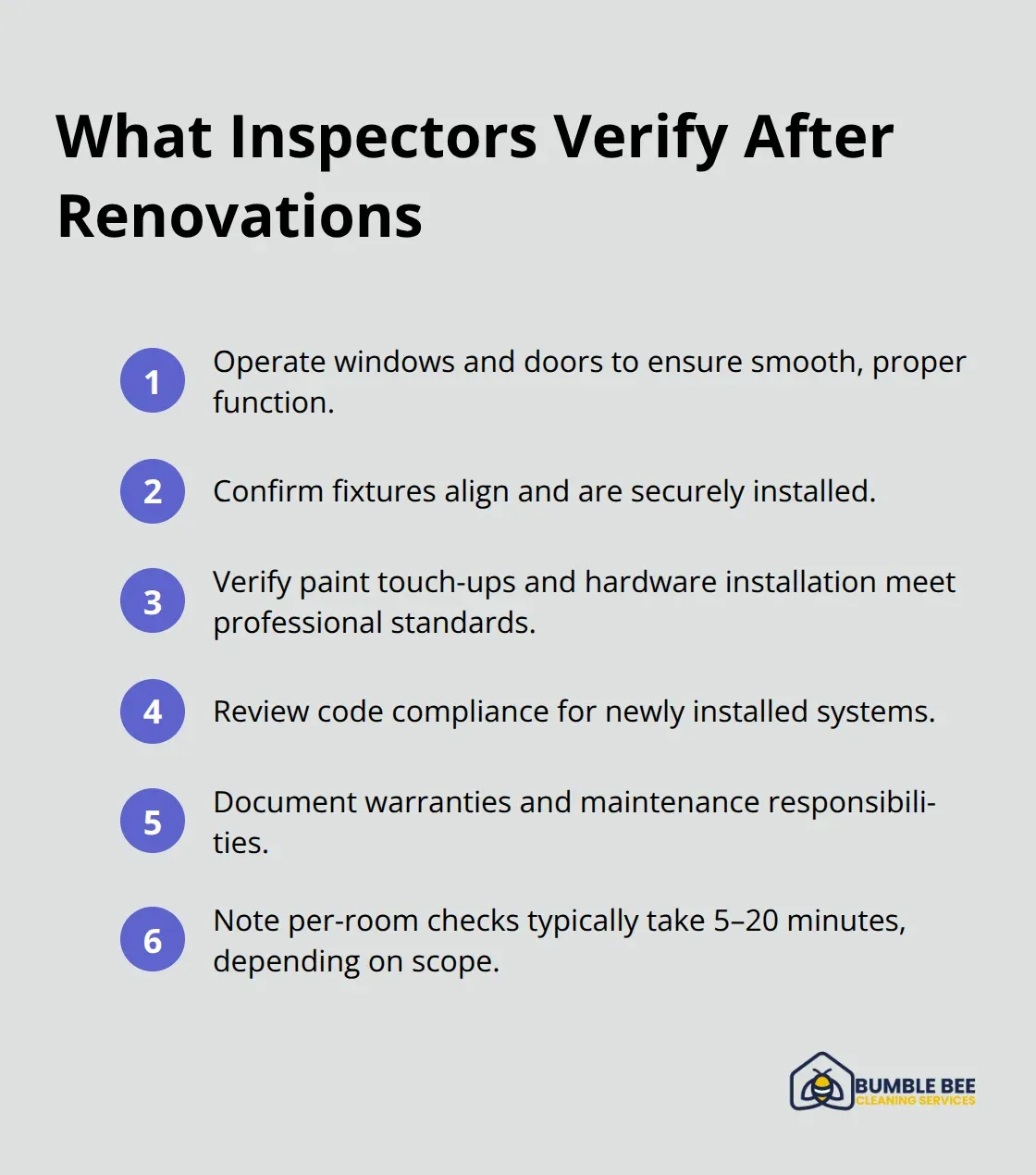
Professional inspectors verify that your contractor completed work to code and that systems function safely. They test windows and doors for proper operation, check that fixtures align correctly, and confirm that paint touch-ups and hardware installation meet standards. They also review warranty documentation and maintenance responsibilities so you understand what coverage protects your investment. This verification process takes 5–20 minutes per room, depending on project scope, yet it catches issues early when fixes remain affordable and straightforward.
What to Inspect in Your Renovated Home
Foundation and Structural Integrity
Foundation cracks demand your immediate attention after renovation work wraps up. Horizontal cracks running across foundation walls signal serious soil or water pressure problems that require professional evaluation before they worsen. Stair-step cracks in brick or concrete block indicate uneven settlement, and cracks wider at one end suggest ongoing foundation movement that needs monitoring. Seattle’s frequent rainfall puts extra pressure on foundations, making these inspections essential.
Doors that stick or windows that jam after your renovation often reveal frame movement caused by foundation shifts your contractor may have missed. Water stains on basement walls or floors show infiltration pathways, while efflorescence on concrete signals water moving through the foundation to the surface. If your basement smells musty, trapped moisture already works inside walls and crawl spaces, and waiting costs thousands in mold remediation and structural repair.
An inspector checks grading improvements, gutter work, and downspout extensions to confirm water drains away from your foundation properly. This verification takes minimal time but prevents foundation problems from becoming catastrophic.
Electrical Systems and Code Compliance
Electrical systems installed during renovation must meet current building codes, and your inspector confirms this by checking that panels are properly labeled, circuits remain accessible, and outdated wiring has actually been replaced rather than concealed. Aging systems like Federal Pacific or Zinsco electrical panels should be identified and documented for buyers or insurance purposes.
Your inspector tests that all connections function safely and that no fire hazards lurk behind walls or in junction boxes. Code violations in electrical work don’t announce themselves with sparks; they wait for the wrong moment to cause fires.
Plumbing Systems and Water Management
Plumbing work requires equal scrutiny: galvanized pipes corrode internally and fail without warning, cast iron sewer lines deteriorate, and improper water drainage creates backups that flood basements. Your inspector tests windows and doors for smooth operation, verifies that fixtures align correctly, and confirms paint touch-ups and hardware installation meet professional standards.
The inspector also collects warranty and maintenance documentation so you understand what coverage protects your investment and what responsibilities fall on you. This thorough verification prevents safety hazards, code violations, and expensive emergency repairs that emerge months after your contractor leaves the job site.
How Inspections Stop Expensive Repairs Before They Start
A post-renovation inspection costs around $400, a reasonable investment that prevents repairs costing $15,000 or more. Early detection matters because small problems compound rapidly in Seattle’s wet climate. Water that seeps through improperly sealed windows or damaged flashing infiltrates walls and crawl spaces, triggering mold growth and structural decay that becomes exponentially more expensive to address months later.
Catch Problems While Contractors Remain Accountable
Electrical code violations discovered during inspection cost a few hundred dollars to correct immediately but can result in insurance claims denials or fire damage if left undetected. Plumbing mistakes like improper slope in drain lines or undersized vents cause backups and water damage that spread through multiple rooms. An inspector identifies these issues while contractors remain accountable and repairs fall within manageable budgets. The difference between fixing a misaligned window during the warranty period and replacing water-damaged framing in a wall cavity represents thousands of dollars in unnecessary expense.
Documentation Protects Your Insurance Coverage
Insurance coverage requirements for electrical, plumbing, and structural work demand proof that installations meet current code standards before approval. Without inspection documentation, you face claim denials when problems surface later. Detailed inspection reports also identify which issues contractors must address under warranty before project completion, establishing clear accountability and preventing disputes months down the road.
Verified Renovations Command Higher Resale Value
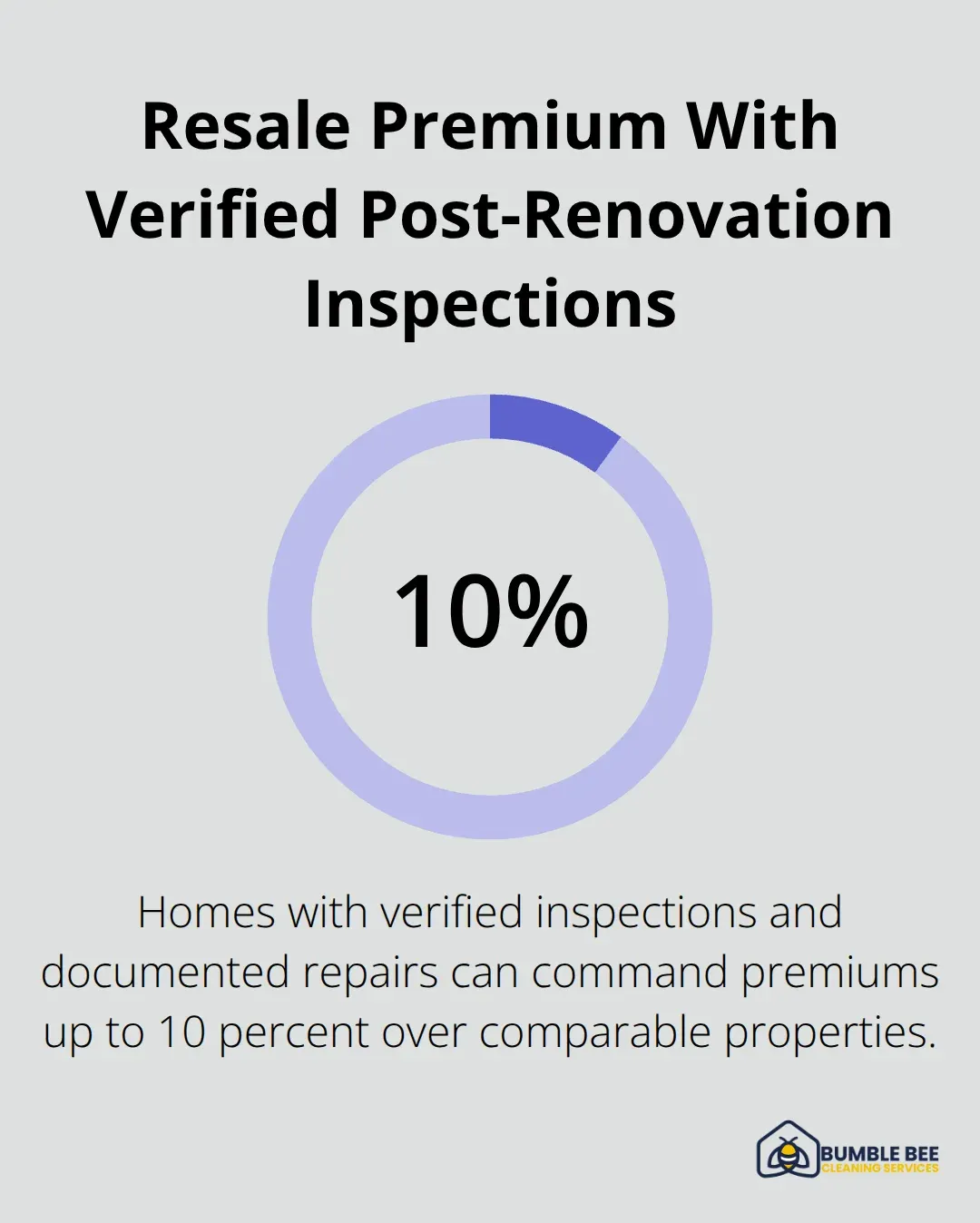
Documentation from a professional post-renovation inspection becomes essential when selling your home. Buyers in Seattle demand move-in readiness and documented proof that renovations meet code standards, with inspection reports and contractor receipts justifying higher offers. Homes with verified post-renovation inspections and documented repairs often command premiums up to 10 percent above comparable properties lacking this verification.
This documentation transforms your renovation from an unverified expense into a verifiable asset that protects your investment and increases your home’s market value.
Final Thoughts
A post-renovation inspection protects your Seattle home from hidden damage that compounds over time. The $400 investment in a professional inspection prevents water damage, electrical hazards, and structural failures that cost thousands to repair later. Without verification, you’re betting that your contractor caught every detail, sealed every gap, and met every code requirement-a gamble that Seattle’s wet climate makes especially risky.
Schedule your inspection within days of project completion, while contractors can still address punch-list items under warranty. Bring notes and photos to document conditions and compare against your expectations. Ask questions about operations, maintenance, and warranty coverage so you understand what protection your investment receives. A thorough post-renovation inspection identifies problems while contractors remain accountable and fixes stay affordable.
After your inspection confirms the renovation meets standards, professional post-construction cleaning removes dust, debris, and hazards that linger in HVAC systems and hard-to-reach spaces. Bumble Bee Cleaning Services specializes in post-construction cleaning with certified technicians who eliminate fine particles and prepare your home for occupancy. A thorough inspection followed by professional cleaning transforms your renovation into a verified asset that protects your family and increases your home’s market value.
For more information about our cleaning services in Seattle and Atlanta, or to request a cleaning quote, call or text us at 425-786-1360 or email us at info@qbclean.com
