
New construction and renovations leave behind fine dust and debris that settle deep in your HVAC system. This contamination circulates through your home every time your heating or cooling runs, exposing your family to particles that trigger allergies and respiratory problems.
We at Bumble Bee Cleaning Services recommend HVAC duct cleaning after any major renovation to remove these hazards before they affect your family’s health. A professional cleaning protects your lungs and keeps your Seattle home’s air genuinely safe to breathe.
How Construction Debris Clogs Your HVAC System
Return Vents Become Dust Entry Points
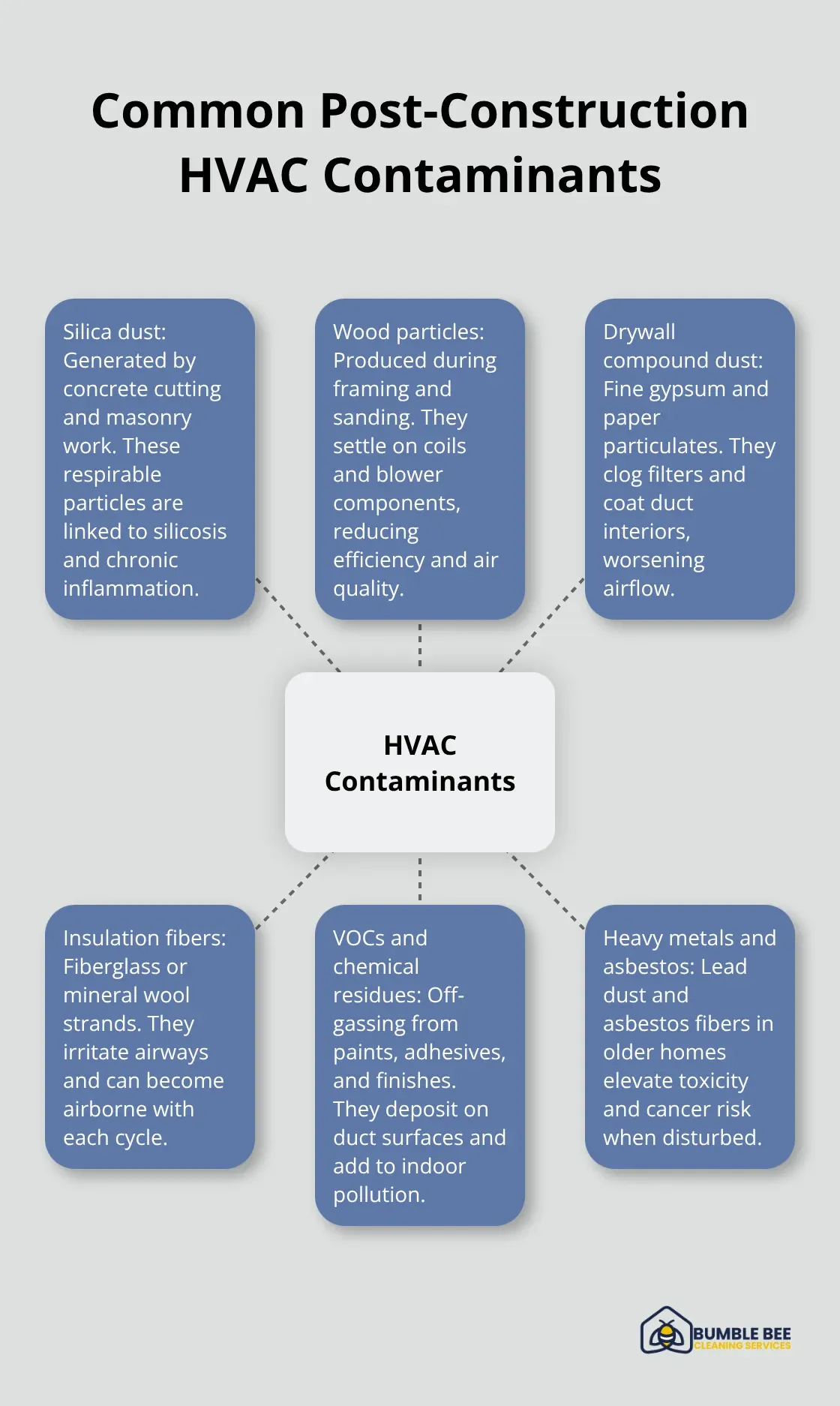
During construction and renovation, fine dust particles bypass your home’s perimeter and travel directly into return air vents, where your HVAC system pulls them into ductwork. They settle on cooling coils, blower motors, and filter media because return vents sit at floor level where dust clouds accumulate, and standard construction barriers rarely seal them completely. Once inside, silica dust from concrete cutting, wood particles from framing, drywall compound, and insulation fibers don’t stay in one spot-your HVAC system circulates them constantly, coating every interior surface of your ducts.
Chemical Pollutants Add to the Problem
The EPA notes that VOC levels indoors reach 2–5 times higher during remodeling than outdoors, and these chemical pollutants deposit in your ductwork alongside particulate matter. Construction dust often contains silica, asbestos in older homes, and heavy metals like lead, according to OSHA guidance. These contaminants don’t leave your system after one cycle; they accumulate and recirculate for months until professional cleaning removes them.
Silica Dust Triggers Progressive Lung Disease
Silica dust exposure causes silicosis, a chronic lung disease marked by inflammation and scarring that can take years to develop but becomes progressively worse, according to the American Lung Association. Children and elderly family members face the highest risk because their respiratory systems are more vulnerable to fine particles penetrating deep into lung tissue. Fine dust particles smaller than 2.5 microns bypass your body’s natural defenses and lodge in the alveoli, where they trigger inflammation and restrict oxygen absorption.
Asbestos and Immediate Symptoms Demand Action
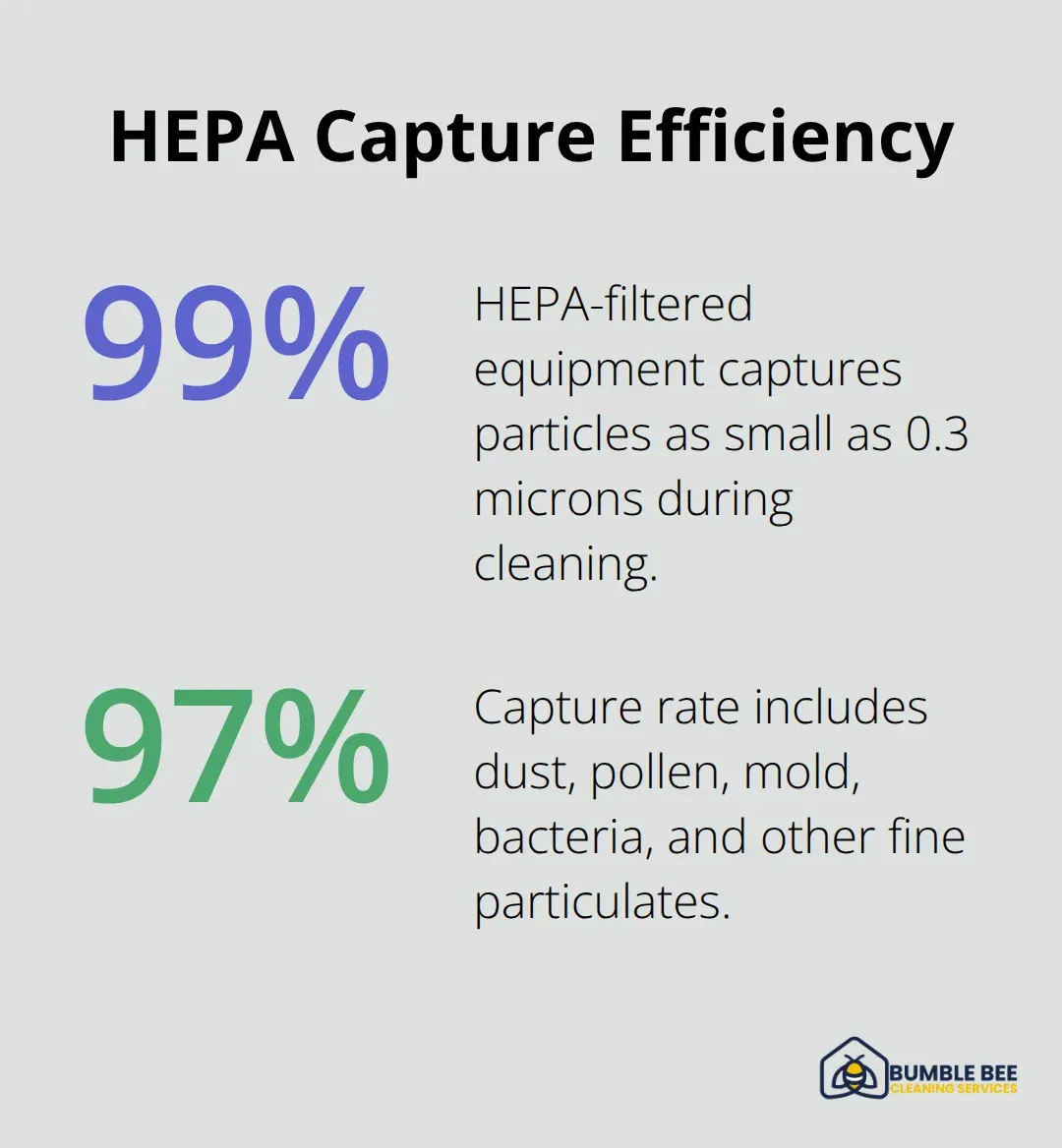
Asbestos fibers present in homes built before 1978 pose an even greater threat-exposure increases mesothelioma risk, a deadly cancer that develops silently for decades. Your family will experience immediate symptoms after returning home: increased asthma attacks, chronic coughing, allergies that didn’t exist before renovation, and persistent sinus inflammation. HEPA filtration can theoretically remove at least 99.97% of dust, pollen, mold, bacteria, and other airborne particles with a size of 0.3 microns, which is why professional post-construction HVAC cleaning using sealed-duct methods and HEPA-filtered equipment matters far more than standard filter upgrades alone. This level of protection requires specialized equipment and expertise that standard maintenance cannot provide.
How Post-Construction HVAC Cleaning Stops Health Problems Before They Start
Professional HVAC cleaning after construction removes silica, asbestos, and chemical residue before your family breathes them daily. Chronic exposure to construction dust worsens asthma and bronchitis symptoms in both adults and children, yet most families move back into renovated homes without addressing ductwork contamination. When you schedule post-construction HVAC cleaning before occupancy, you eliminate the source of respiratory irritation rather than treating symptoms after they develop. HEPA-filtered equipment captures particles as small as 0.3 microns, which means dust that would otherwise lodge in lung tissue gets removed from your system entirely. This single intervention prevents months or years of exposure to hazardous particles that accumulate in ductwork and recirculate every heating and cooling cycle.
Children and Elderly Residents Face the Highest Risk
Your HVAC system becomes a delivery mechanism for construction contaminants when ducts remain uncleaned, and children under five plus adults over sixty-five experience the most severe health effects from inhaled fine particles. Fine dust particles penetrate deep into lung tissue and trigger inflammation that restricts oxygen absorption. Children’s respiratory systems are still developing, so silica exposure during these critical years can cause permanent scarring and reduce lung capacity into adulthood. Elderly family members already deal with declining lung function, and construction dust accelerates respiratory decline significantly. Post-construction HVAC cleaning protects these vulnerable populations immediately by removing settled particles before they enter the bloodstream or lodge in lung tissue.
Silica Accumulation Causes Permanent Lung Damage
Silicosis develops progressively over years as silica particles accumulate in lung tissue, causing scarring that restricts breathing and eventually requires supplemental oxygen or surgical intervention. The damage from silica exposure is largely permanent, meaning once lung scarring begins, treatment focuses on managing symptoms rather than reversing the condition. Professional post-construction HVAC cleaning removes silica dust before it accumulates in your home’s air supply, preventing the initial exposure that triggers this cascade of lung damage. Waiting months after renovation allows particles to embed in your system and recirculate thousands of times, multiplying your family’s total exposure significantly.
Sealed-Duct Cleaning Prevents Recirculation
Standard filter upgrades fail to address contamination already settled inside your ductwork (where particles hide from basic filtration). Sealed-duct cleaning methods physically remove debris from every interior surface of your system, preventing recirculation that would otherwise continue for months. Professional technicians use negative-pressure equipment to contain dust and prevent it from spreading to occupied spaces during the cleaning process. This approach stops the constant reintroduction of hazardous particles that your family would otherwise inhale with every heating and cooling cycle.
Your next renovation presents an opportunity to protect your family’s respiratory health from the moment you return home. The decision to address ductwork contamination before occupancy determines whether construction dust becomes a months-long health hazard or gets eliminated entirely.
What Happens During Professional Post-Construction HVAC Cleaning
Initial Inspection Identifies Contamination Points
Professional post-construction HVAC cleaning starts with a thorough inspection of your entire ductwork system to identify where construction debris has settled. A technician uses video camera equipment to examine duct interiors, assess the extent of contamination, and locate problem areas like return vents where dust entry was heaviest.
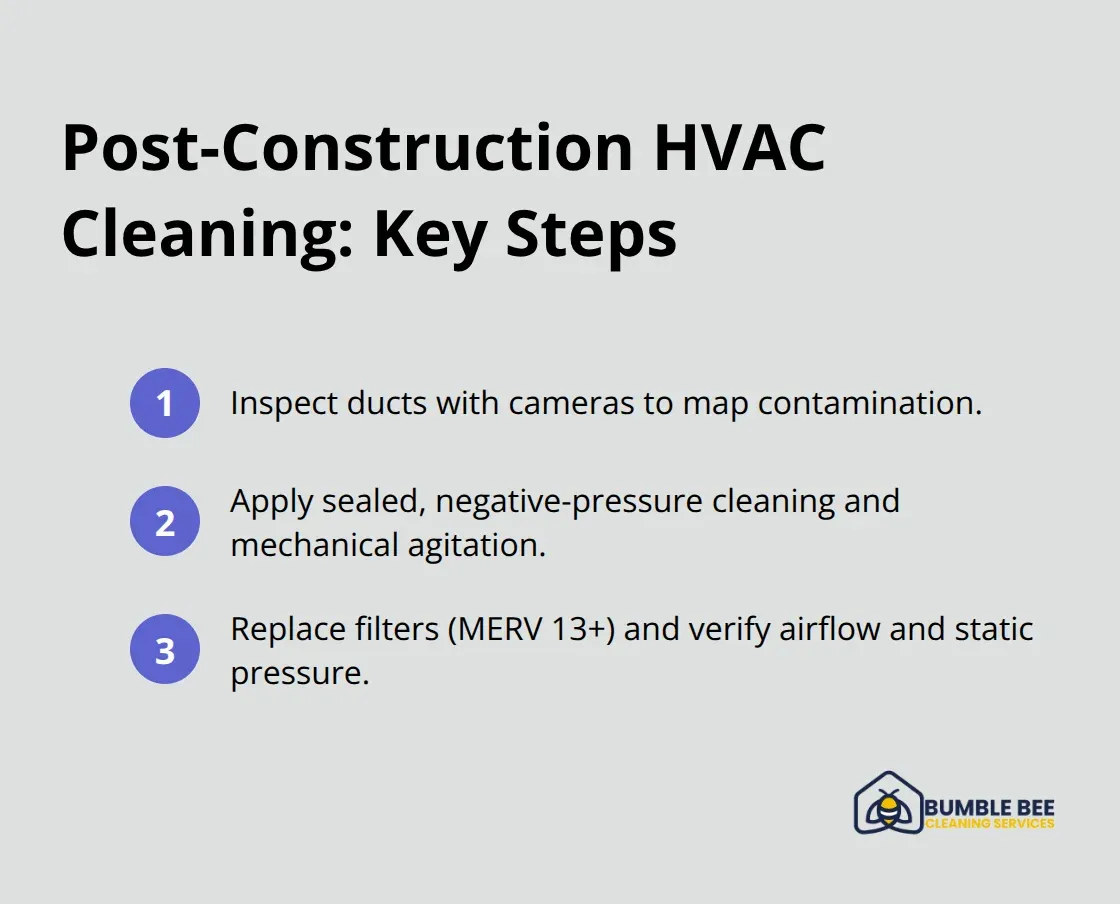
This inspection determines whether standard cleaning will suffice or if specialized remediation is needed for asbestos-containing materials in pre-1978 homes. The assessment also checks your system’s condition against Seattle building codes, which require that HVAC systems maintain proper airflow and filtration standards after construction work. Once the inspection is complete, technicians document findings and outline the cleaning approach they’ll use, giving you a clear picture of what the process entails and how long it will take.
Negative-Pressure Equipment Contains Dust During Cleaning
The actual cleaning uses negative-pressure equipment that contains dust and prevents particles from spreading into occupied spaces while work happens. Technicians seal off the work area, connect industrial-grade vacuums equipped with HEPA filtration to duct access points, and use mechanical agitation tools to dislodge settled particles from duct walls, cooling coils, and blower components. HEPA-filtered equipment captures 99.97% of particles as small as 0.3 microns, which means silica dust and fine construction debris get removed rather than relocated elsewhere in your home. This containment strategy protects your family from exposure during the cleaning process itself, a critical safety measure that standard maintenance cannot provide.
Filter Replacement and System Verification
After mechanical cleaning, technicians replace or upgrade your air filters to MERV 13 or higher rating to maintain improved filtration going forward. The final step involves running your system through a complete cycle to flush out any remaining particulates and verify that airflow meets proper standards. Professional cleaners verify compliance with building codes by confirming that your system’s static pressure and airflow measurements fall within acceptable ranges after cleaning, ensuring your HVAC operates safely and efficiently. This verification step confirms that your system functions at peak performance and that no contamination remains trapped in hidden sections of your ductwork.
Final Thoughts
Construction dust doesn’t disappear on its own, and neither do the health risks it creates for your Seattle family. HVAC duct cleaning removes silica, asbestos, and chemical residue before they accumulate in your lungs and trigger permanent respiratory damage. The particles settling in your ductwork today become the chronic coughing, asthma attacks, and breathing difficulties your family experiences for months after moving back home.
Professional cleaning stops this cycle by physically removing contamination from every interior surface of your system, preventing the constant recirculation that would otherwise expose your children and elderly relatives to hazardous particles with every heating and cooling cycle. Waiting weeks or months after renovation allows construction debris to embed deeper into your system, making removal harder and extending your family’s exposure window significantly. Scheduling cleaning before occupancy eliminates this risk entirely and protects the vulnerable members of your household who face the highest health consequences from inhaled fine particles.
We at Bumble Bee Cleaning Services understand that post-construction cleaning extends far beyond visible surfaces. Our team handles the complete cleanup process, including professional HVAC duct cleaning that protects your family’s respiratory health from day one. Contact us to schedule your post-construction cleaning and take control of your indoor air quality today.
For more information about our cleaning services in Seattle and Atlanta, or to request a cleaning quote, call or text us at 425-786-1360 or email us at info@qbclean.com
