
Construction projects leave behind more than just new walls and fresh paint. Post-construction dust contains harmful particles that settle throughout your home, triggering dust allergens that affect your family’s health.
Seattle’s wet climate creates a unique problem: moisture traps dust particles indoors longer, making professional cleaning essential. We at Bumble Bee Cleaning Services have seen firsthand how families struggle with respiratory issues weeks after construction ends.
What Makes Post-Construction Dust So Dangerous in Seattle Homes
The Hazardous Particles Released During Construction
Post-construction dust isn’t simple dirt you can wipe away with a cloth. When workers cut drywall, concrete, or wood during renovation, they release particles smaller than 10 micrometers that penetrate deep into your lungs and bloodstream, according to the EPA.
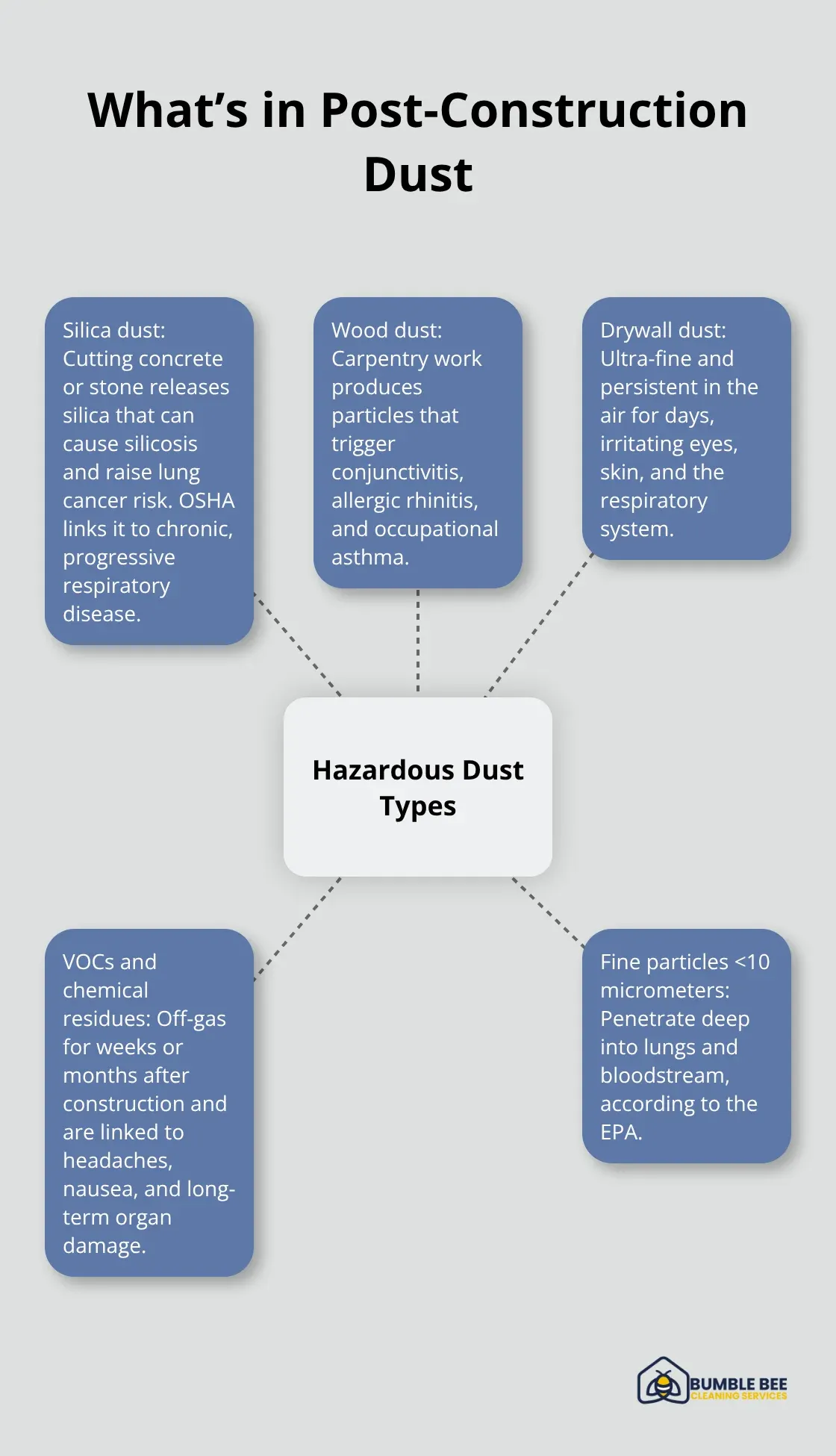
Silica dust from cutting concrete or stone ranks among the most dangerous, increasing the risk of silicosis, lung cancer, and chronic respiratory diseases, as OSHA cautions. Wood dust from carpentry work triggers conjunctivitis, allergic rhinitis, and occupational asthma. Drywall dust remains extremely fine and stays airborne for days, irritating eyes, skin, and the respiratory system. Chemical residues and volatile organic compounds (VOCs) off-gas for weeks or months after construction, and the American Lung Association links VOC exposure to headaches, nausea, and long-term organ damage.
Lead and Asbestos Risks in Older Seattle Homes
Seattle’s older homes built before 1978 add another layer of risk: they may contain lead paint dust, which the Seattle & King County Public Health department warns can cause neurological problems, particularly in children. The composition of post-construction dust varies by project type, but the particle size determines the health impact most significantly. Homes constructed in earlier decades often harbor asbestos in insulation and building materials, and renovation work can release these fibers into your living spaces.
How Seattle’s Climate Traps Dust Indoors
Seattle’s damp climate makes this problem significantly worse than in drier regions. Moisture in the air causes dust particles to cling to surfaces rather than settle quickly, meaning fine particles linger in your home for weeks instead of days. The EPA reports that indoor air pollution can be two to five times higher than outdoor air, and construction dust worsens this problem substantially. Seattle’s humidity also fosters mold growth, and mold spores mixed with construction dust create a compounded respiratory threat.
Why Standard Cleaning Methods Fall Short
Professional HEPA vacuums capture 99.97% of particles as small as 0.3 microns, which standard household vacuums cannot achieve. This difference matters enormously for your family’s health. Post-construction cleaning in Seattle isn’t optional-it’s a health necessity. The combination of fine particles, chemical residues, Seattle’s moisture, and the age of many local homes creates conditions where thorough professional cleaning becomes critical for protecting your family’s lungs and overall health. Understanding these dangers helps explain why the cleaning methods you choose after construction directly impact whether your home truly becomes safe again.
How Post-Construction Dust Damages Your Family’s Health
Immediate Respiratory Threats from Fine Particles
Post-construction dust triggers immediate and serious health problems in Seattle families. When fine particles enter your lungs, they cause inflammation that leads to respiratory distress within hours or days of exposure. Children face particular vulnerability because their lungs are still developing, and prolonged exposure to construction dust can stunt lung function growth. The American Lung Association confirms that inhalation of fine particles penetrates deep into the lungs, causing inflammation that worsens existing asthma and bronchitis.
Silica Dust and Permanent Lung Damage
Silica dust, released when workers cut concrete or stone, causes lung inflammation and scarring that forms nodules-a sign of potential lung cancer. Even short-term silica exposure increases your risk of silicosis, a progressive lung disease with no cure. Once silica-related lung damage occurs, it becomes often permanent because lung tissue cannot regenerate, making prevention your only effective strategy. Wood dust from carpentry triggers conjunctivitis and occupational asthma, while drywall dust irritates eyes and skin immediately.
Chemical Residues and Off-Gassing Effects
Chemical residues and volatile organic compounds off-gas for weeks after construction ends, causing headaches, nausea, and organ damage according to the American Lung Association. These aren’t minor irritations-they represent serious respiratory threats your family faces every day until professional post-construction cleaning removes the dust completely.
Allergic Reactions and Asthma Complications
Allergic reactions and asthma flare-ups become frequent and severe after construction because dust particles contain multiple allergens mixed together. Mold spores thrive in Seattle’s humid climate and mix with construction dust, creating a compounded respiratory threat that triggers asthma attacks in children and adults. The Asthma and Allergy Foundation of America warns that dust from drywall, wood, and old insulation contains allergens that provoke severe reactions in sensitive individuals.
Long-Term Health Consequences
Long-term exposure to fine particulate matter causes permanent damage-the EPA links chronic exposure to higher risk of premature death in people with heart or lung disease, nonfatal heart attacks, irregular heartbeat, and decreased lung function. Lead dust in older Seattle homes causes neurological problems in children, affecting brain development and learning. Professional post-construction cleaning removes fine particles your family breathes daily, making it the only method that truly protects against these documented health risks. Understanding these specific health impacts explains why choosing the right cleaning approach after construction directly determines whether your home becomes genuinely safe for your family again.
How to Actually Remove Post-Construction Dust from Your Seattle Home
Why Professional Equipment Outperforms DIY Methods
Professional post-construction cleaning uses industrial-grade equipment that fundamentally outperforms anything you can rent or buy for DIY work. HEPA vacuums capture 99.97% of particles as small as 0.3 microns, while standard household vacuums leave behind the finest dust that causes respiratory damage. Microfiber cloths trap tiny particles instead of spreading them airborne, and pH-neutral cleaners protect freshly painted walls while removing chemical residues. Air scrubbers filter large volumes of air and significantly reduce airborne contaminants, improving overall indoor air quality during and after the cleaning process.
The Top-Down Cleaning Approach That Prevents Recontamination
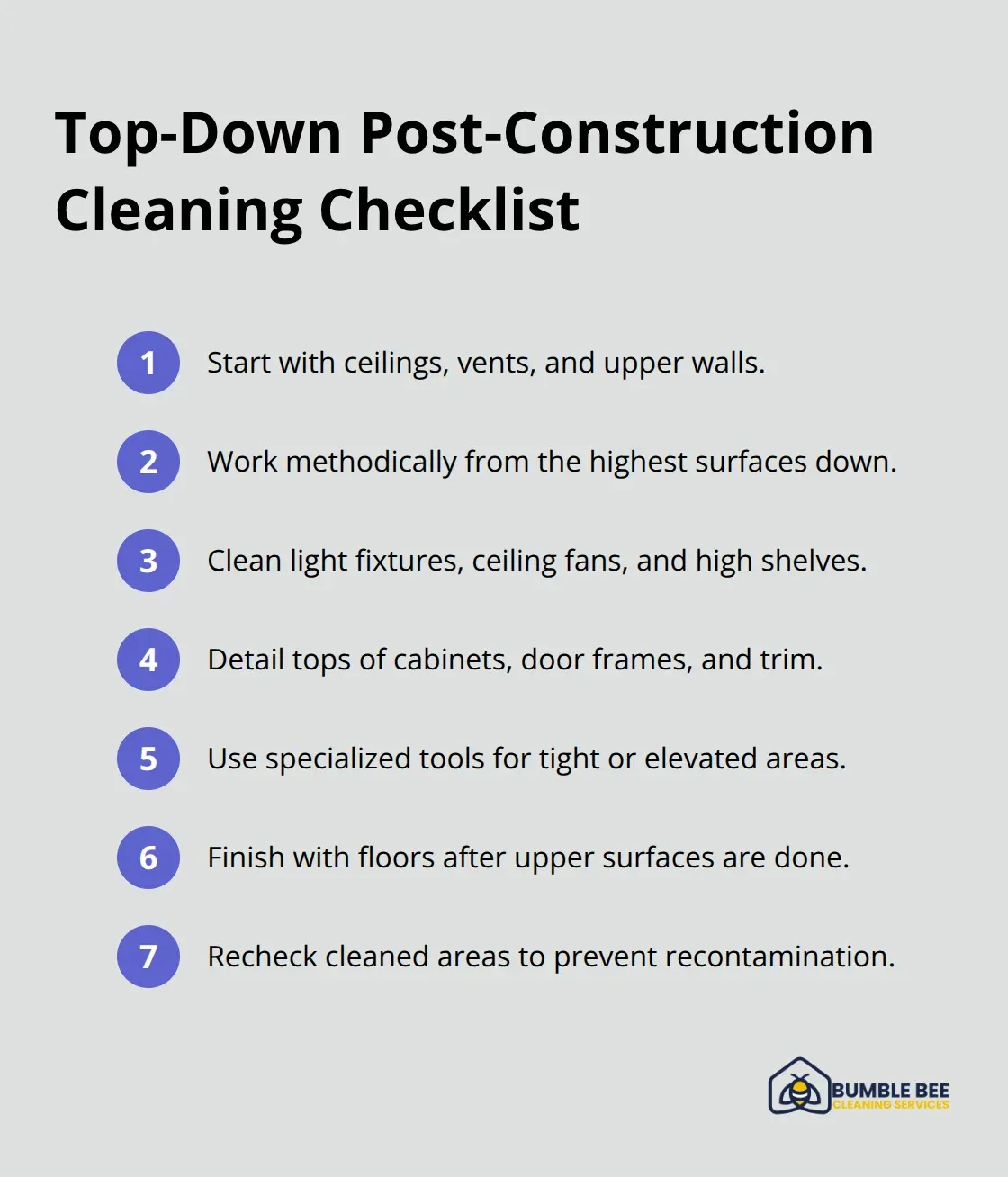
Professional cleaners start from ceilings and work downward to prevent recontamination of cleaned areas. This systematic method stops dust from falling onto surfaces you’ve already cleaned, a mistake that most homeowners make when they attempt post-construction cleaning themselves. Hard-to-reach areas like HVAC ducts, ceiling fans, light fixtures, tops of cabinets, and door frames require specialized tools that professionals have but homeowners typically do not. DIY cleaning methods consistently fall short because they miss the finest dust that lingers in these difficult-to-access spaces, leaving your family exposed to harmful particles.
HVAC System Cleaning and Air Purification
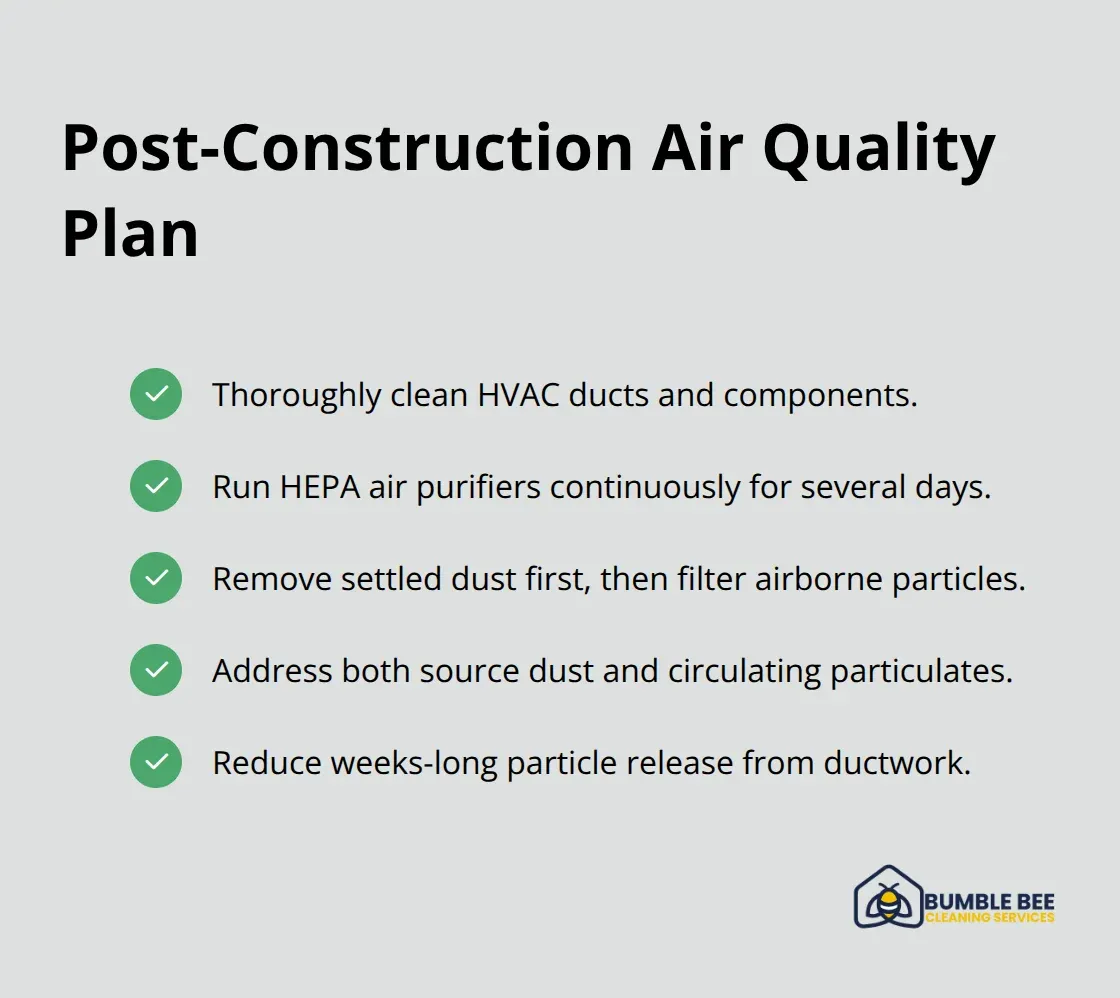
HVAC system cleaning, including air ducts, is essential because dust accumulates inside ductwork where vacuum hoses cannot reach, continuously releasing particles into your home weeks after construction ends. Running HEPA air purifiers continuously for several days after the initial clean captures remaining airborne particles, but only professional cleaning removes the source material first. This two-step approach (initial professional cleaning followed by air purification) addresses both the dust already settled and the particles still circulating through your home’s air.
Hazardous Waste Disposal and Lead Paint Protocols
Proper disposal of construction debris matters significantly, and professionals follow local regulations for hazardous waste that homeowners often overlook. Homes built before 1978 in Seattle require particularly careful cleaning because lead paint dust and asbestos fibers demand containment protocols that exceed standard cleaning methods. Professional post-construction cleaning costs less than treating respiratory diseases, neurological damage, or permanent lung scarring in your family members. The health protection your family receives from thorough professional cleaning directly determines whether your newly renovated home becomes a safe living space or remains a source of ongoing exposure to dangerous particles.
Final Thoughts
Post-construction dust poses genuine health risks to Seattle families that extend far beyond cosmetic concerns. The particles released during renovation work contain silica, lead, asbestos, and chemical residues that trigger respiratory distress, allergic reactions, and permanent lung damage when left uncleaned. Seattle’s damp climate compounds this problem by trapping dust allergens indoors longer than in drier regions, meaning your family continues breathing harmful particles weeks after construction ends.
Standard household cleaning cannot remove the finest particles that penetrate deep into lungs and cause inflammation, making professional intervention the only effective solution. HEPA vacuums capturing 99.97% of particles as small as 0.3 microns, combined with systematic top-down cleaning and air purification, address both settled dust and airborne contaminants that standard vacuums leave behind. Professional cleaning removes dust that DIY methods consistently miss, particularly in hard-to-reach areas like HVAC ducts and ceiling fixtures where particles accumulate and recirculate through your home.
We at Bumble Bee Cleaning Services understand Seattle’s unique post-construction cleaning challenges and provide professional solutions that protect your family’s health. Our team uses eco-friendly products and industrial-grade equipment specifically designed for removing construction dust and dust allergens threatening your family’s respiratory health. Contact us today to schedule your post-construction cleaning and ensure your newly renovated home becomes genuinely safe for your family.
For more information about our cleaning services in Seattle and Atlanta, or to request a cleaning quote, call or text us at 425-786-1360 or email us at info@qbclean.com
