
Construction work in your Seattle home leaves more than just visible mess behind. Dust particles slip past standard filters and settle deep in your HVAC system, where they circulate through every room for months.
We at Bumble Bee Cleaning Services know that proper HVAC maintenance after construction is the difference between a clean home and one plagued by lingering dust and air quality problems. Neglecting this step puts your family’s health and your system’s longevity at risk.
How Dust Infiltrates Your HVAC During Construction
Construction dust doesn’t stay confined to the work area. Airborne construction dust travels throughout a home within hours, and your HVAC system becomes the primary distribution network. During building work, standard furnace filters rated MERV-8 or lower cannot capture fine particles like silica dust and drywall fragments. These particles pass straight through, entering your ductwork where they accumulate in low-velocity zones like bends, joints, and return-air plenums. Silica dust poses a particular threat because prolonged exposure can lead to silicosis and lung cancer.
How Air Pressure Forces Dust Into Your System
Construction sites create positive and negative air pressure imbalances that force contaminated air directly into your HVAC returns, especially when soffit and ridge vents remain open or ductwork sits unsealed during renovation. Unsealed duct joints act as common entry points; EPA guidance notes that incomplete duct sealing allows debris to migrate into supply and return lines. Contractors often seal off registers during work but overlook attic penetrations, soffit vents, and gaps around ductwork, leaving multiple pathways for dust infiltration.
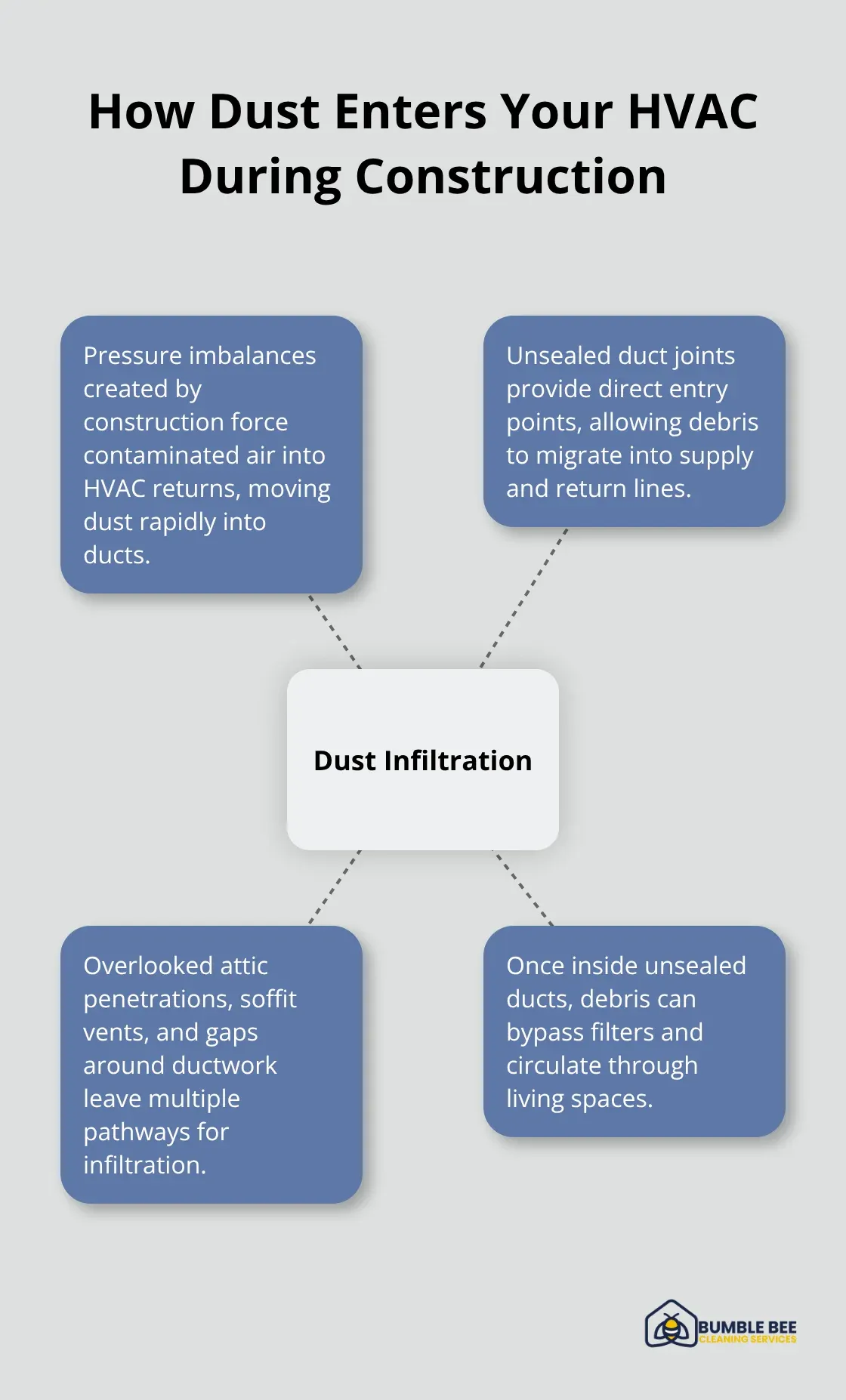
Once debris enters unsealed ductwork, it bypasses your filter entirely and circulates directly through living spaces.
Where Debris Accumulates After Construction Ends
Post-construction debris accumulates fastest in your return-air filter housing and ductwork within two weeks of project completion. Wood dust, cement particles, and insulation fragments settle on duct surfaces and coil assemblies, where they resist standard vacuuming because much of the dirt adheres to interior surfaces rather than remaining loose. Much of the dirt in air ducts adheres to duct surfaces and may not enter the living space, yet this accumulated material still restricts airflow and degrades system efficiency over time.
Why Standard Filters Cannot Handle Construction Loads
Most residential systems run MERV-8 filters designed for normal household dust, not the heavy particulate load construction creates. Professional post-construction cleaning must address this at the source by brushing and vacuuming ductwork with HEPA-filtered equipment that captures particles smaller than 0.3 microns. Immediate post-construction HVAC inspection and cleaning following any major renovation prevents visible problems from developing and protects your system’s performance long-term.
What Happens When Construction Dust Circulates Through Your HVAC
Dangerous Particles Enter Your Breathing Space
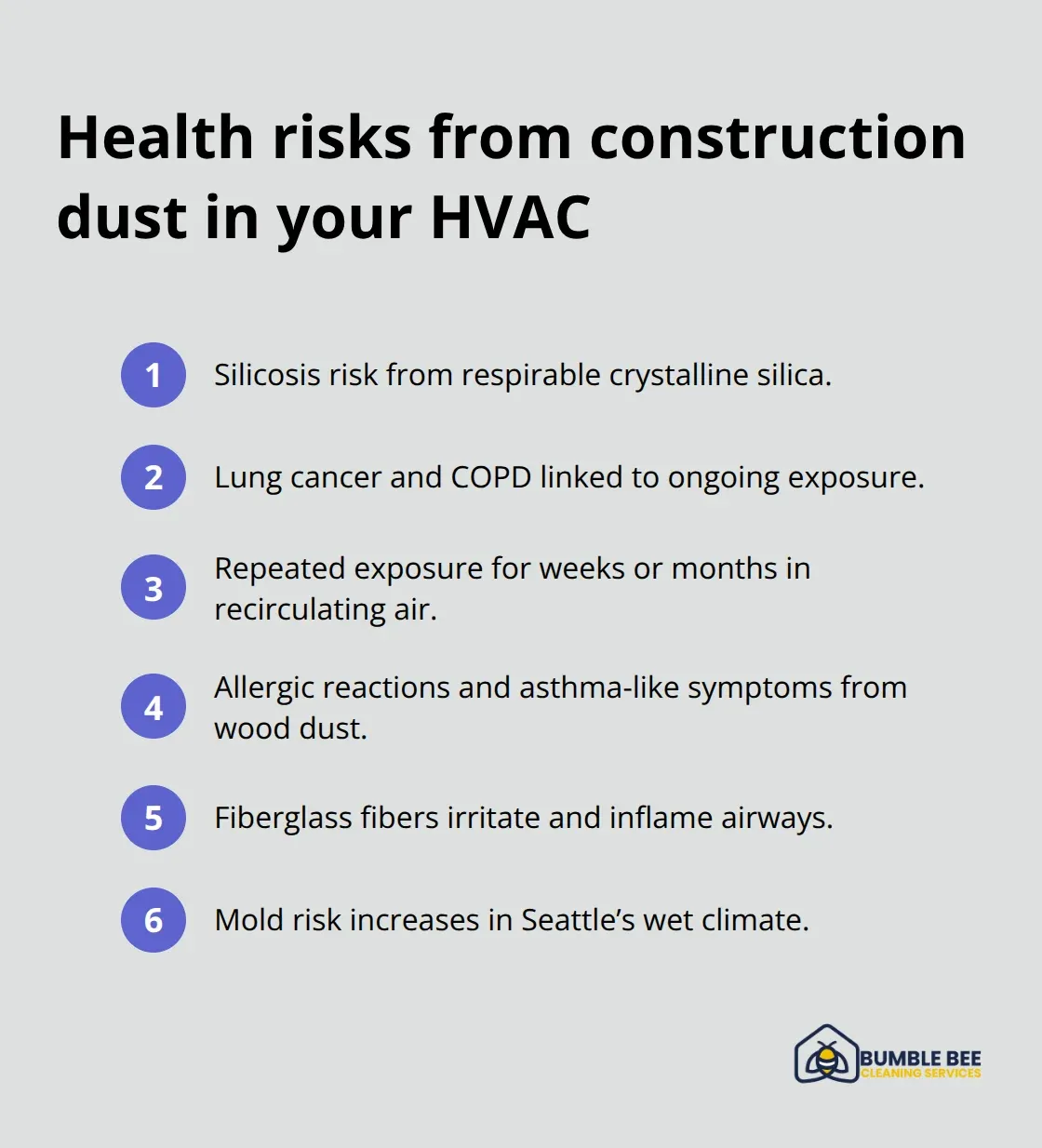
Construction dust contains particles far more dangerous than regular household dirt. Silica dust from concrete cutting and drywall sanding pose the primary threat, with OSHA classifying silica exposure as a serious occupational hazard that causes silicosis, lung cancer, and chronic obstructive pulmonary disease. When these particles enter your home’s HVAC system, your family breathes them repeatedly over weeks or months. Drywall dust contains gypsum and crystalline silica, cement particles carry silica and heavy metals, and insulation fragments shed fiberglass fibers that irritate airways.
The EPA reports that airborne construction dust travels throughout a home within hours, and your HVAC system amplifies this problem by distributing contaminated air to every room. Families with children, elderly members, or anyone with asthma face heightened risk because their respiratory systems are more vulnerable to particulate irritation. Wood dust from framing and finish work triggers allergic reactions and asthma-like symptoms that persist long after construction ends.
How Your HVAC Recirculates Contamination
A contaminated HVAC system becomes a continuous source of exposure, recirculating the same harmful particles multiple times daily through your heating and cooling cycles. Your system doesn’t just spread dust horizontally through rooms-it also forces particles into your attic insulation, where debris blocks ventilation and traps moisture that accelerates mold growth within weeks. Seattle’s wet climate makes this especially problematic because high humidity combined with trapped construction debris creates ideal conditions for mold colonization on insulation and ductwork surfaces.
Mold Growth Compounds Air Quality Problems
Once mold establishes itself in your ducts and insulation, it releases spores that further degrade indoor air quality and trigger respiratory issues beyond what construction dust alone causes. Professional post-construction cleaning following IICRC S500 standards removes debris at the source before it settles permanently into insulation and ductwork. HEPA-filtered equipment captures particles smaller than 0.3 microns that standard household vacuums miss, and wet-cleaning methods prevent dust from becoming airborne during removal.
Delaying this work allows contamination to worsen, making remediation more expensive and leaving your family exposed to health risks that extend far beyond the initial construction period. The window to act is narrow-scheduling HVAC inspection and duct cleaning within two weeks of construction completion prevents particles from embedding permanently and moisture problems from developing into costly mold issues that demand specialized remediation.
Professional HVAC Cleaning After Construction
Why Professional Equipment Outperforms Household Methods
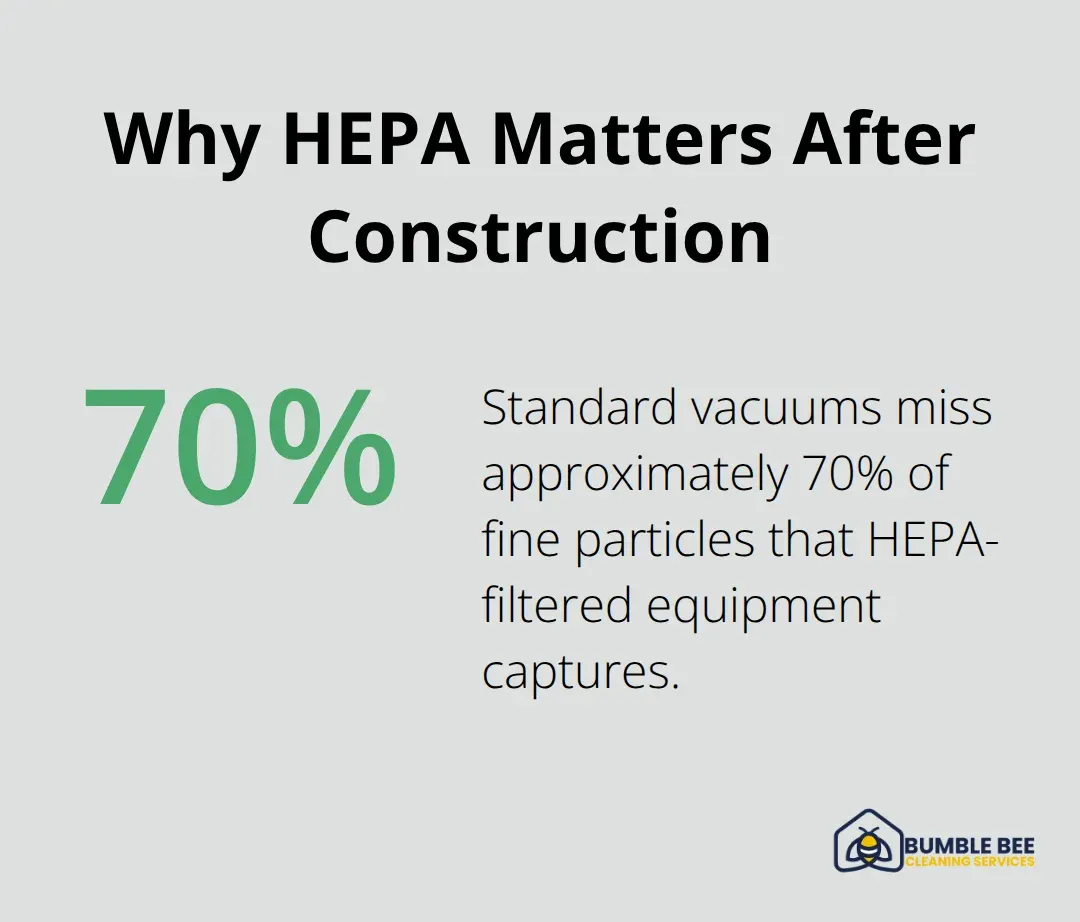
Professional duct cleaning removes debris that standard household vacuums cannot reach, especially particles embedded deep within ductwork where air velocity drops significantly. The EPA notes that much dirt in air ducts adheres to interior surfaces rather than remaining loose, meaning surface-level cleaning leaves contamination behind that continues degrading air quality for months. HEPA-filtered equipment captures particles smaller than 0.3 microns, which standard vacuums miss at a rate of approximately 70 percent, making professional cleanup essential after construction work.
Negative air pressure systems and wet-cleaning methods prevent dust from becoming airborne during removal. This approach targets debris at the source in insulation, ductwork, and surfaces rather than simply pushing contamination around your home. Ductwork brushing and vacuuming restores proper airflow, and clearing soffit and ridge vents prevents moisture from trapping in your attic, which would accelerate mold growth within weeks in Seattle’s damp climate.
What Professional HVAC Inspection Reveals
A professional HVAC inspection after construction reveals damage contractors often cause without realizing it, including crushed ducts, separated joints, and compromised insulation that restrict airflow and waste energy. Particle counters measure contamination levels before and after cleaning, providing measurable confirmation that particles have returned to acceptable ranges. This testing gives you accountability that the work was completed properly and that your system now performs at baseline standards.
Timing Matters for Permanent Results
Construction projects create a narrow window for effective intervention. Within two weeks of construction completion, particles have not yet embedded permanently into insulation and ductwork, where they become far more expensive to remove and can support mold colonization that demands specialized remediation. Professional post-construction cleaning following industry standards prevents this costly scenario from developing and protects your system’s efficiency gains long-term.
Final Thoughts
Seattle’s climate makes post-construction HVAC maintenance non-negotiable. Our region’s persistent moisture and seasonal humidity swings transform construction dust trapped in your ducts into a breeding ground for mold within weeks. Unlike drier climates where dust might sit dormant, Seattle’s wet environment accelerates microbial growth on ductwork surfaces and insulation, turning a dust problem into a health hazard that demands expensive remediation.
Your HVAC system represents a significant investment, and construction work threatens that investment immediately. Particles that embed permanently into ductwork and insulation restrict airflow and force your system to work harder to maintain temperature. This inefficiency drives up energy costs and accelerates component wear, shortening your system’s lifespan by years.
We at Bumble Bee Cleaning Services handle post-construction cleaning with the expertise and equipment required to eliminate contamination at the source. Professional post-construction cleaning protects both your health and your investment, making it the single most important step you can take after renovation work completes.
For more information about our cleaning services in Seattle and Atlanta, or to request a cleaning quote, call or text us at 425-786-1360 or email us at info@qbclean.com
