
Seattle’s wet climate makes mold growth almost inevitable without proper prevention. Between constant rainfall, high humidity, and basement moisture that lingers for months, your home faces serious mold risk year-round.
We at Bumble Bee Cleaning Services know that regular vacuuming and surface wiping simply don’t cut it. Deep cleaning removes the mold spores hiding in carpets, upholstery, and hard-to-reach corners before they spread.
Why Seattle’s Climate Stacks the Odds Against You
Rainfall and Humidity Create Year-Round Mold Risk
Seattle receives approximately 38 inches of annual rainfall, nearly double the U.S. average, and this constant moisture doesn’t simply evaporate. The Puget Sound region maintains humidity levels that hover between 60 and 80 percent during fall, winter, and spring-the exact conditions mold spores need to germinate and spread.
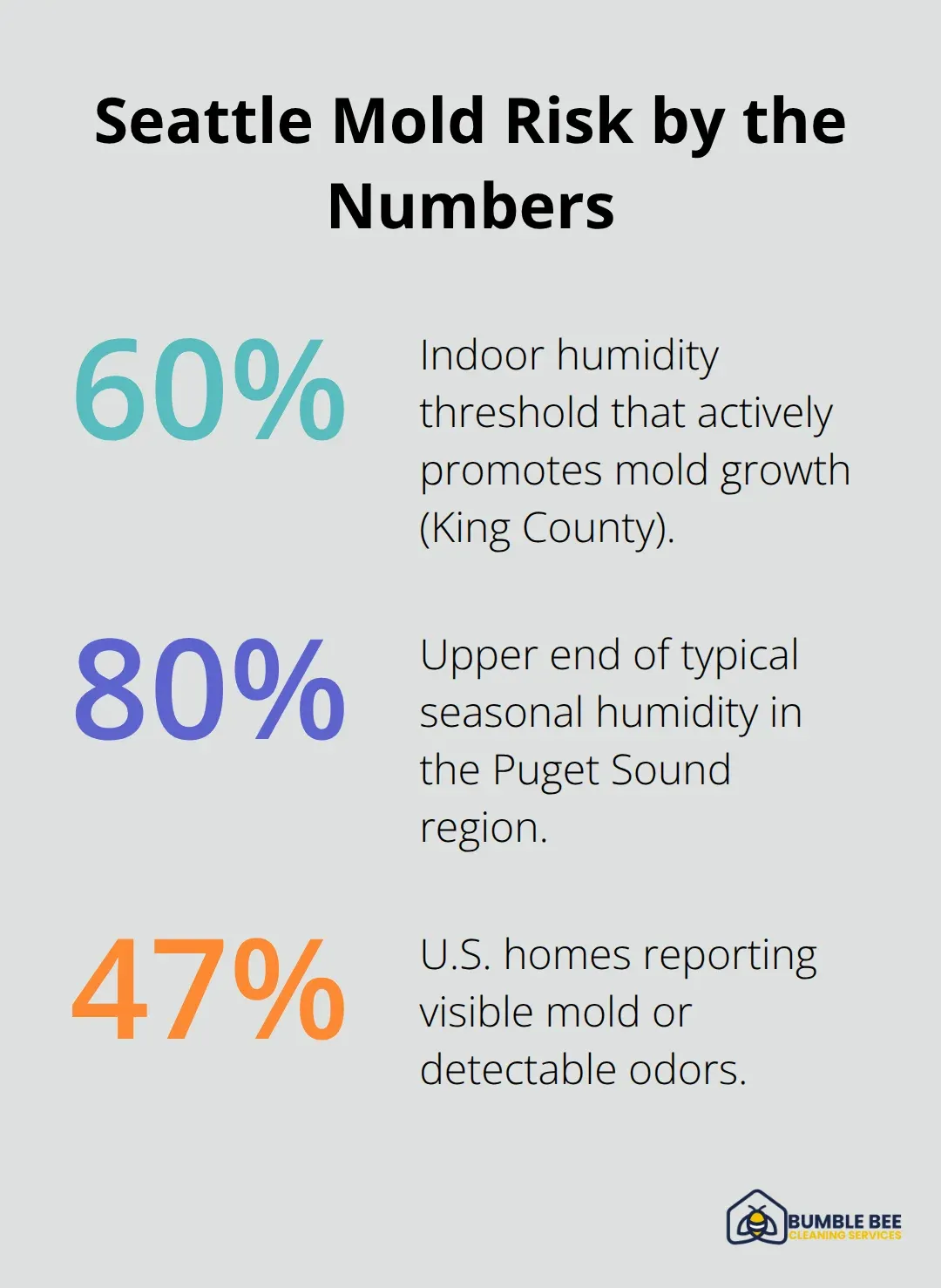
According to King County’s mold prevention guidance, indoor humidity above 60 percent actively promotes mold growth, and Seattle’s natural climate pushes most homes dangerously close to or past this threshold without active intervention.
How Seattle’s Cool Temperatures Slow Drying
Mold doesn’t wait for visible water damage to appear. It starts on wet surfaces within 24 to 48 hours, and because Seattle’s cool temperatures between 45 and 55 degrees Fahrenheit slow evaporation significantly, moisture lingers on carpets, drywall, and wooden baseboards far longer than in drier climates. This combination of relentless rainfall, high baseline humidity, and slow drying creates a perfect storm that makes mold prevention in Seattle homes fundamentally different from prevention in other regions.
The Hidden Financial and Health Costs
National data show approximately 47 percent of residential properties have visible mold or detectable odors, but homes in Washington state face substantially higher risk due to wet conditions. Homes with documented mold history see resale values decline by 20 to 37 percent depending on market conditions, and mold remediation costs average $2,367 and typically range from $1,223 to $3,753. Beyond property value, mold exposure triggers coughing, wheezing, and shortness of breath, with damp conditions linked to a significant share of asthma cases in Seattle and surrounding areas.
Why Surface Cleaning Falls Short
Waiting for visible mold to appear before taking action means you’re already behind. The mold you see represents only a fraction of the problem, because spores spread invisibly through indoor air and settle in carpet fibers, upholstery backing, and the spaces beneath furniture where moisture accumulates and air circulation fails. Surface cleaning alone fails in Seattle homes-it addresses only what you can see, leaving the hidden spores and moisture conditions that fuel regrowth completely untouched. This reality makes deep cleaning not just helpful, but necessary to actually interrupt the mold cycle that Seattle’s climate perpetuates.
How Deep Cleaning Stops Mold Before It Spreads
Carpets and Upholstery Hold Mold Spores You Cannot See
Carpets and upholstery act as massive spore reservoirs in Seattle homes. Mold spores land on these surfaces and germinate within 24 to 48 hours on damp fibers, especially in basements and bathrooms where humidity stays elevated. Professional deep cleaning uses HEPA-filtered extraction equipment that removes mold spores embedded deep within carpet pile and upholstery backing where moisture accumulates and air circulation fails.
The EPA notes that absorbent materials like carpet frequently require removal if mold penetration is severe, but deep cleaning with hot water extraction and antimicrobial treatment stops the problem before it reaches that point. This approach targets the hidden reservoirs that routine vacuuming completely misses.
Moisture-Prone Zones Demand Focused Attention
Hard-to-reach areas beneath furniture, inside closets, and along baseboards collect moisture and dust-the food source mold needs to thrive. These spaces never receive attention during routine cleaning, yet they represent where mold prevention actually happens in Seattle’s wet climate. Deep cleaning focuses on these moisture-prone zones because they’re where spores germinate and spread invisibly through your home.
Targeting these areas interrupts the cycle before visible mold appears on surfaces you can see. The difference lies in treating the environment where mold grows, not just the mold itself.
Antimicrobial Treatments Create Lasting Protection
Antimicrobial treatments applied during deep cleaning create a protective barrier that stops mold regrowth for weeks or months depending on humidity levels in your home. These treatments work by removing the organic material mold feeds on and creating conditions hostile to spore germination on treated surfaces.
The IICRC S520 Standard for Professional Mold Remediation establishes best practices for this work, and certified professionals follow protocols that address both visible contamination and the moisture conditions enabling it. Without addressing moisture first-through dehumidifiers, ventilation, and leak repairs-no treatment prevents regrowth. When moisture control combines with deep cleaning, you interrupt the cycle Seattle’s climate perpetuates.
Why Moisture Control Must Come First
Deep cleaning alone cannot succeed without controlling the moisture that feeds mold growth. Humidity levels, water leaks, and poor ventilation create the conditions that allow spores to germinate on treated surfaces within days. Professional deep cleaning paired with moisture management (dehumidifiers, exhaust fans, and prompt leak repair) creates an environment where mold cannot establish itself.
This combination of moisture control and deep cleaning represents the foundation of mold prevention in Seattle homes. The next step involves establishing a cleaning schedule that maintains this protection year-round.
Deep Cleaning Frequency and Moisture Control for Seattle Homes
Seattle’s wet climate demands a deep cleaning schedule fundamentally different from drier regions. We at Bumble Bee Cleaning Services recommend deep cleaning every three to four months for Seattle homeowners, not the annual or twice-yearly schedules suitable for other climates. This frequency directly addresses moisture control during the seasons when mold spores germinate fastest on damp surfaces. A quarterly schedule intercepts mold growth before it establishes in carpets and upholstery, where spores can remain dormant and multiply for months undetected. Homes with basements, poor ventilation, or recent water damage should move to every six to eight weeks, since these spaces create concentrated moisture pockets where mold grows faster. Between professional deep cleanings, vacuuming with HEPA filters twice weekly in high-traffic areas and bathrooms removes dust and organic material that feeds mold, though this maintenance alone cannot replace the deep extraction and antimicrobial treatment that professional cleaning provides.
Bathrooms, Basements, and Hidden Moisture Zones Require Priority Attention
Bathrooms demand the most aggressive attention because they generate moisture spikes that exceed 80 percent humidity during and after showers. Focus deep cleaning on tile grout, shower enclosures, and the areas beneath sinks where water sits and mold establishes quickly. Basements represent your second priority-Seattle’s wet soil and foundation seepage create persistent dampness that standard cleaning never addresses. Crawlspaces and basement corners should receive deep cleaning before fall and winter when rainfall increases moisture infiltration. Move furniture away from exterior walls to improve air circulation and prevent moisture pockets where mold thrives invisibly. Closets, particularly in bedrooms near exterior walls, accumulate condensation and stagnant air that accelerates mold growth; these spaces need deep cleaning every four to five months.
Exhaust Fans and Timers Stop Moisture at the Source
Running bathroom exhaust fans for 15 minutes after every shower removes the moisture that would otherwise condense on walls and feed mold for days. Install a timer if your fans lack one-this practice prevents manual operation from stopping too early. Kitchen exhaust fans should run during and for 15 minutes after cooking, since simmering liquids and boiling water release significant moisture into indoor air. This targeted ventilation strategy addresses the largest moisture generators in your home and prevents humidity spikes that trigger rapid mold germination.
Dehumidifiers and Air Circulation Control Indoor Humidity
Dehumidifiers set to maintain 30 to 50 percent indoor humidity (measured with an inexpensive hygrometer) stop mold germination at the source. Place units in basements and bedrooms where humidity naturally climbs highest, and empty or drain them daily since Seattle’s climate fills tanks within 24 hours. Air conditioning units naturally dehumidify as they cool, so running AC during warmer months helps control humidity even when cooling isn’t strictly necessary. Open windows for three to four minutes, two to three times daily to circulate fresh air and reduce indoor moisture buildup, though this practice works best during drier months. Clothes dryers must vent to the outside-indoor venting adds substantial moisture that accelerates mold growth throughout your home.
Final Thoughts
Deep cleaning stands as the only practical defense against mold in Seattle’s relentless wet climate. Surface cleaning and standard maintenance fail because they ignore the hidden spores embedded in carpets, upholstery, and the moisture-prone zones where mold actually establishes itself. Quarterly deep cleaning paired with moisture control through exhaust fans, dehumidifiers, and prompt leak repair interrupts the cycle that Seattle’s rainfall, humidity, and cool temperatures perpetuate year-round, while basement moisture problems require immediate attention before visible mold appears and forces expensive remediation.
Homes with mold history lose 20 to 37 percent of resale value, and remediation costs average $2,367 when the problem reaches professional intervention. Mold exposure triggers respiratory problems and worsens asthma in Seattle residents, particularly those living in damp basements or poorly ventilated spaces. Preventing mold through deep cleaning protects both your investment and your family’s health far more effectively than waiting for problems to surface.
Contact Bumble Bee Cleaning Services to establish a deep cleaning plan that protects your home year-round and stops mold from taking hold in the first place. We offer recurring deep cleaning schedules tailored to Seattle’s climate and flat-rate pricing. Our team follows professional standards for deep cleaning and moisture management that actually stop mold growth rather than temporarily masking it.
For more information about our cleaning services in Seattle and Atlanta, or to request a cleaning quote, call or text us at 425-786-1360 or email us at info@qbclean.com
