
A clean workspace isn’t a luxury-it’s a business necessity. Employees working in tidy, well-maintained offices show measurably higher office productivity, fewer sick days, and better focus on their tasks.
We at Bumble Bee Cleaning Services have seen firsthand how Seattle businesses transform when they invest in professional cleaning. This post covers the real connection between workspace cleanliness and employee performance, plus practical solutions to get your office there.
How Clean Workspaces Sharpen Focus and Protect Health
Visual Clutter Competes for Your Brain’s Attention
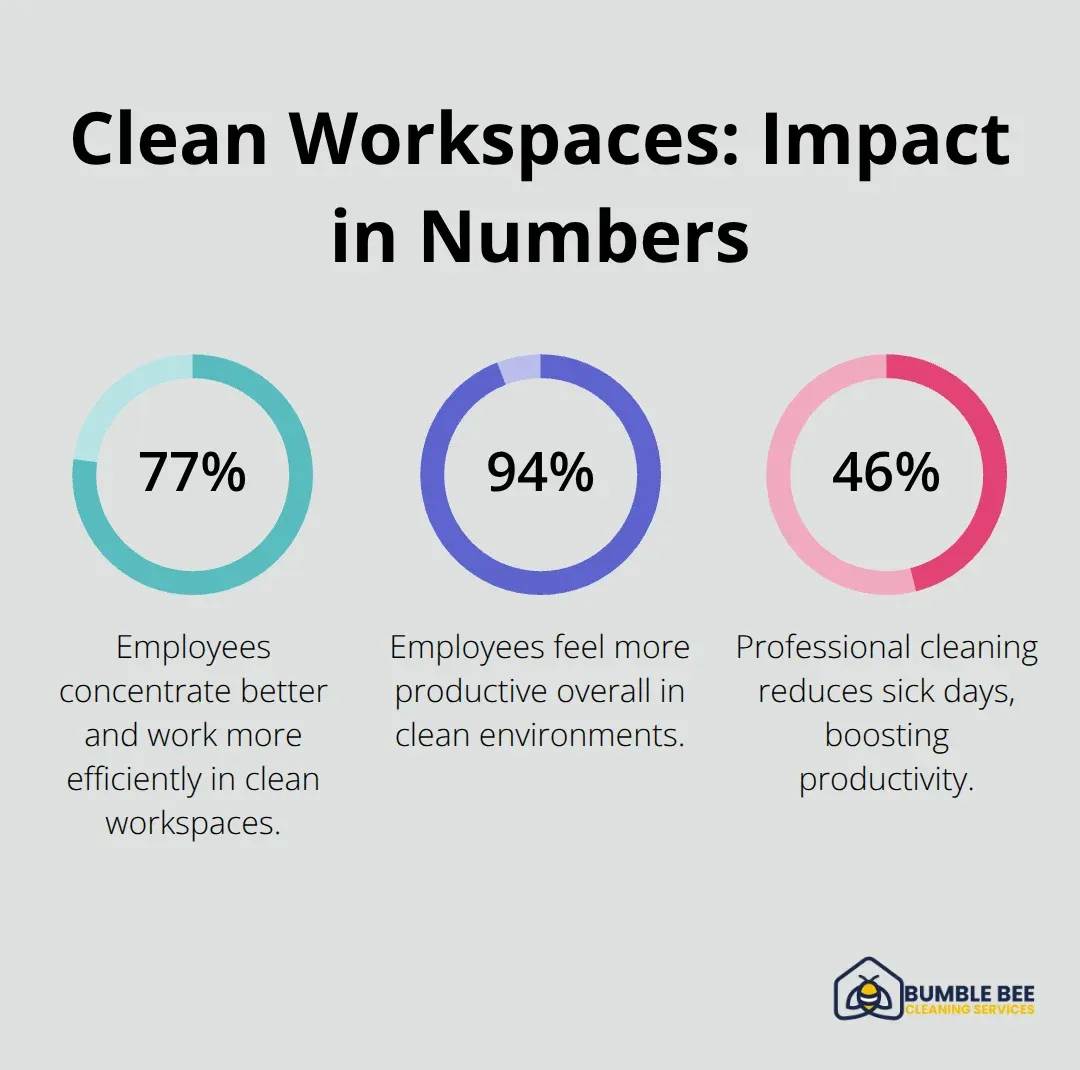
Clutter actively fights your ability to concentrate. Research from the Princeton Neuroscience Institute and UCLA confirms that visual chaos competes for your brain’s attention, reducing your capacity to focus on actual work. When your desk sits buried under papers, your brain processes two things simultaneously: the task in front of you and the visual noise surrounding you. This split attention slows task completion and lowers output quality. Staples research confirms the impact-77% of employees concentrate better and work more efficiently in clean workspaces, while 94% feel more productive overall. The difference isn’t theoretical; it translates into measurable hours lost per week.
Lost Time Searching for Tools and Documents
A cluttered desk wastes hours that could go toward productive work. When everything has a designated place, employees spend less time hunting for tools and documents and more time producing results. In Seattle’s competitive business environment, that time difference compounds rapidly. High-touch surfaces like computer keyboards, desk phones, and shared equipment accumulate bacteria that slow people down through illness. The University of Arizona found that office desks harbor more than 400 times the bacteria of a toilet seat, meaning contaminated workspaces don’t just reduce focus-they make employees sick.
Mental Clarity Follows Physical Order
A tidy environment reduces stress and anxiety by signaling control and stability to your brain. Harvard Business Review research shows that employees in clean offices report higher morale and greater control over their work, which directly strengthens workplace culture. When leadership maintains clean spaces, it communicates that employee health and comfort matter. That message boosts loyalty and engagement far more than any memo or meeting. MindShare Partners found in 2021 that 76% of workers reported mental health symptoms and 84% said workplace conditions contributed to those symptoms. A clean workspace directly counteracts that pressure.
Air Quality and Cognitive Performance
Better air quality amplifies the benefits of physical cleanliness. Harvard University research shows that improved indoor air quality significantly improves performance on cognitive tasks. Dust-free environments mean fewer headaches, less respiratory irritation, and less fatigue-all of which directly boost focus and project completion. These health improvements create the foundation for sustained employee performance.
Understanding how cleanliness impacts focus and health reveals why professional cleaning matters for your bottom line. The next section explores the specific health and safety benefits that clean commercial spaces deliver to Seattle businesses.
How Illness Spreads in Dirty Workspaces and What Actually Stops It
Bacteria Thrives on High-Touch Surfaces
The bacteria on your office desk isn’t just gross-it’s costing you money. University of Arizona research shows desk surfaces harbor more than 400 times the bacteria of a toilet seat, yet most offices only wipe surfaces once a day, which isn’t nearly enough. Eighty percent of common infections spread through touching contaminated surfaces, with high-touch hotspots like doorknobs, elevator buttons, computer keyboards, and shared phones acting as transmission highways. Shared office phones can carry flu viruses for 24 to 48 hours, meaning employees catch illness long after the sick person leaves.
Why Standard Wipes Don’t Work
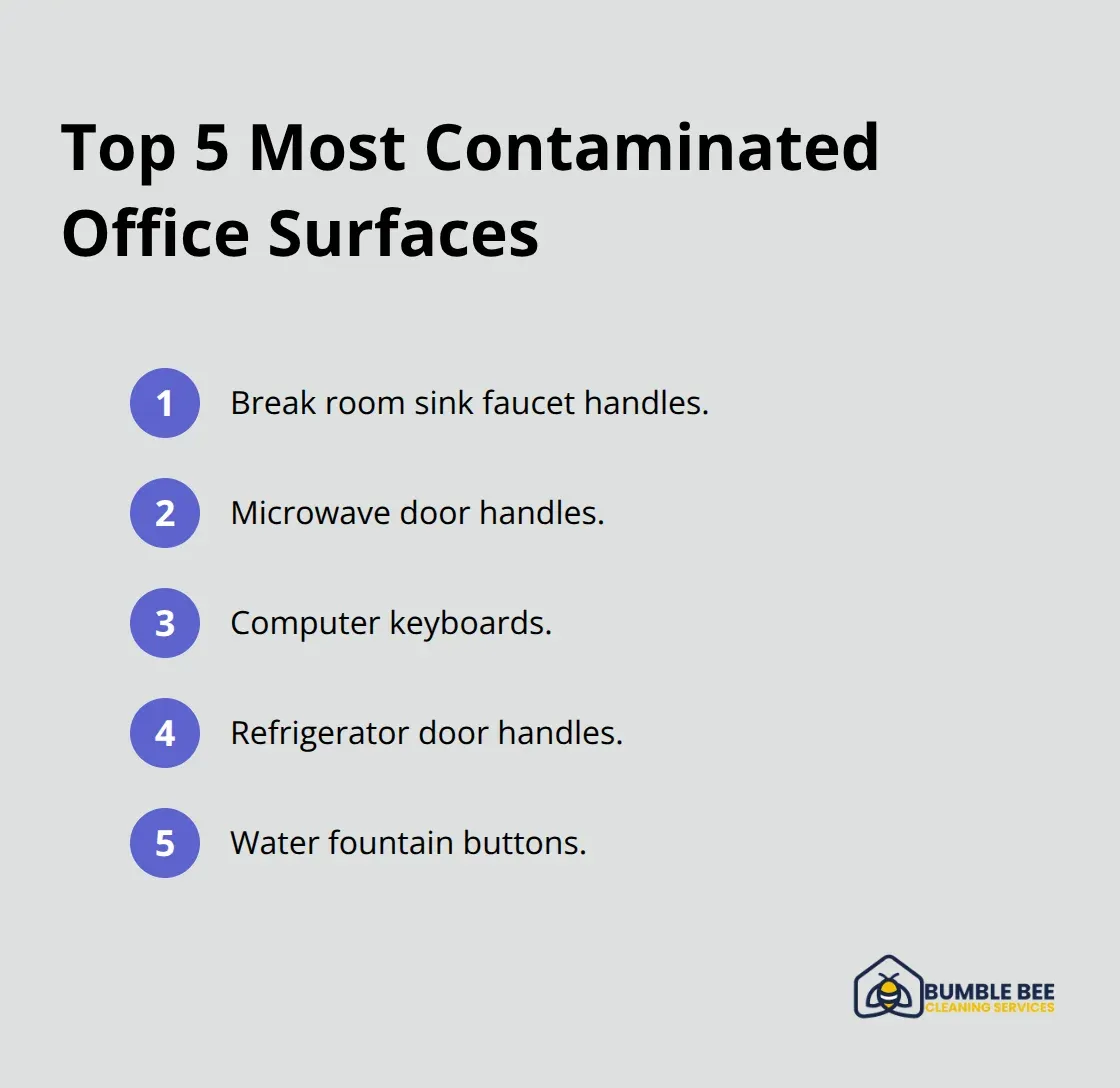
Standard surface wipes fall short because they don’t allow disinfectants enough contact time to actually kill pathogens. Most EPA-approved disinfectants require 10 minutes or longer on a surface to work effectively. This gap between what people think they’re doing and what actually happens explains why professional cleaning reduces sick days by 46%, translating to roughly $20,000 in saved productivity per quarter for a 50-person office. The five most contaminated office surfaces, according to Kimberly-Clark Professional, are break room sink faucet handles, microwave door handles, computer keyboards, refrigerator door handles, and water fountain buttons-exactly where people’s hands go most often. High-touch surfaces need disinfection weekly during cold and flu season, not just daily wipes.
Hidden Contaminants in Carpets and Air
Air quality compounds these health risks even further. Carpets and upholstery trap dust, allergens, and bacteria that regular cleaning misses entirely, and poor indoor air quality triggers allergies, asthma, and fatigue that employees often misattribute to seasonal changes rather than their workplace. Professional extraction methods remove debris that circulating air simply moves around. Including air-vent cleaning in deep cleaning cycles measurably improves respiratory health. Employees in clean offices report fewer headaches, less respiratory irritation, and greater energy-health improvements that directly boost focus and project completion rates.
Building a Sustainable Cleaning Schedule
Scheduling deep cleaning on a predictable quarterly or semi-annual calendar yields consistent improvements in attendance and retention, making it a defensible business decision rather than an optional expense. Seattle’s competitive business environment means every absent employee directly impacts project timelines and team morale. Professional cleaning services emphasize certified expertise and proper disinfection protocols to actually eliminate pathogens rather than just moving dirt around. The next section explores how tailored commercial cleaning solutions fit your specific business needs and industry requirements.
Choosing the Right Cleaning Service for Your Seattle Business
Match Your Industry’s Specific Cleaning Demands
Seattle businesses across healthcare, tech, retail, and professional services face distinct cleaning demands that one-size-fits-all services cannot address. A medical office requires EPA-approved disinfection protocols that meet OSHA standards, while a tech startup prioritizes air quality to support cognitive performance. Janitorial services that work for one industry often fall short for another. The mistake most Seattle businesses make is selecting a cleaning company based on price alone, then discovering mid-contract that the service doesn’t match their actual needs.
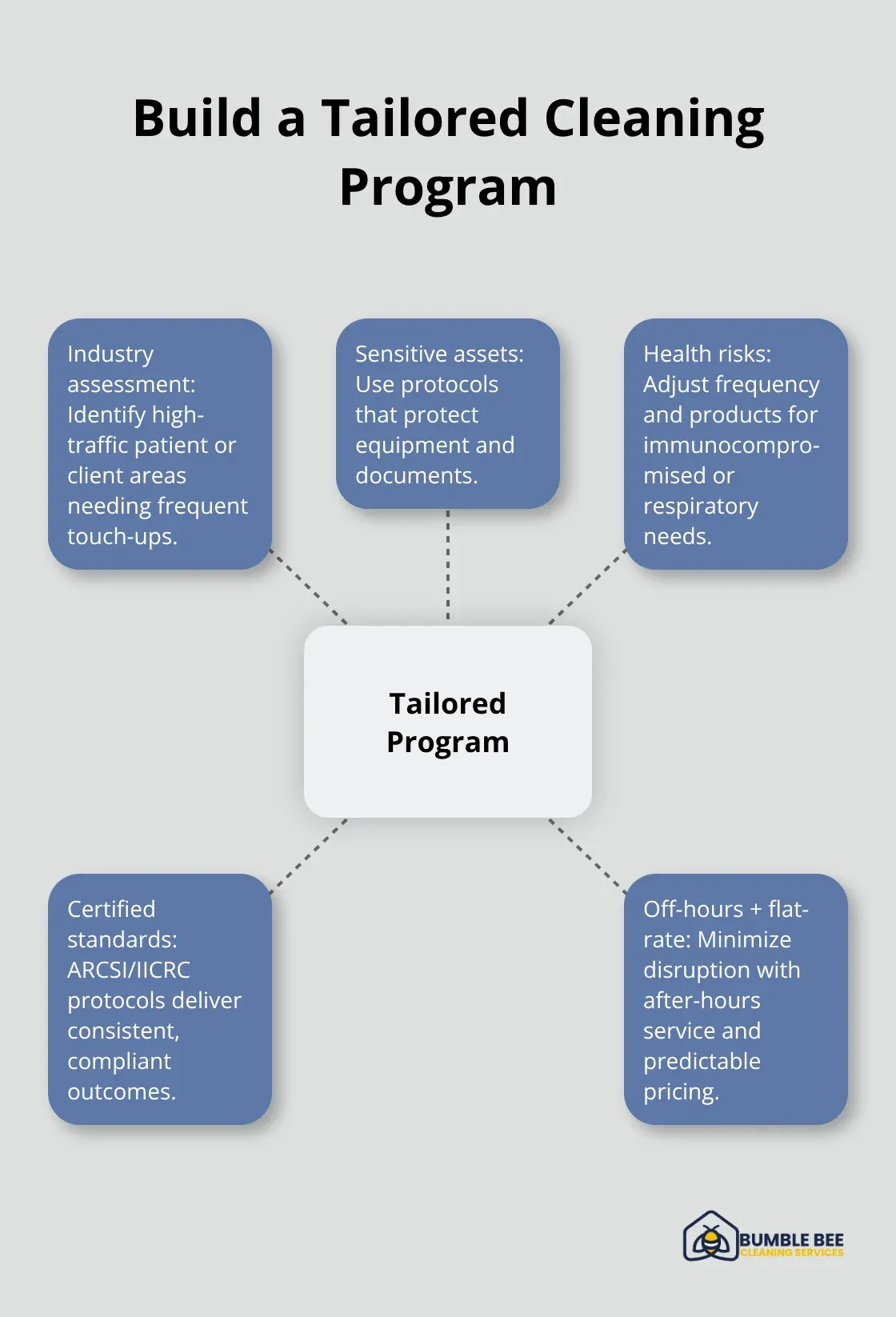
Your cleaning partner should start with an industry assessment. Does your workspace have high-traffic patient or client areas that need hourly touch-ups? Do you have sensitive equipment or documents that require careful handling? Are your employees immunocompromised or prone to respiratory issues? These questions drive the cleaning frequency, product selection, and disinfection intensity your business actually needs. Professional cleaners certified by ARCSI or IICRC bring standardized protocols that adapt to your specific risks rather than applying a generic approach.
Build Recurring Programs Around Contamination Hotspots
Recurring cleaning programs anchor workplace health far more effectively than sporadic deep cleans. A quarterly deep clean catches what daily wiping misses, but the days between matter enormously for preventing illness spread and maintaining focus. Most Seattle businesses benefit from twice-weekly janitorial service covering high-touch surfaces, break rooms, and restrooms (contamination hotspots identified by Kimberly-Clark Professional). This frequency prevents bacteria from accumulating to levels that trigger illness outbreaks while keeping your workspace visibly clean for client impressions and employee morale.
Flat-rate pricing removes budget surprises, and scheduling flexibility means cleaning happens during off-hours when your team works undisturbed. You avoid the disruption of daytime cleaning while maintaining consistent hygiene standards that protect employee health and productivity.
Address Post-Construction Hazards Immediately
Post-construction cleaning deserves separate attention because standard janitorial services cannot handle construction dust embedded in HVAC systems, carpets, and crevices. Construction debris contains silica, drywall particles, and chemical residues that trigger respiratory problems and reduce air quality measurably. Professional post-construction cleaning uses industrial extraction equipment and trained teams to remove these hazards before employees occupy the space. You launch your workspace with optimal air quality and health conditions rather than exposing your team to construction-related respiratory risks.
Final Thoughts
Clean workspaces directly drive office productivity, reduce illness-related absences, and strengthen employee morale in ways that measurably impact your bottom line. The research confirms what Seattle businesses experience firsthand: 94% of employees feel more productive in clean spaces, 77% concentrate better, and professional deep cleaning reduces sick days by up to 46%-translating to roughly $20,000 in recovered productivity per quarter for a 50-person office. These outcomes affect your competitive position because they’re real, measurable results, not theoretical benefits.
Getting started with professional cleaning doesn’t require overhauling your entire operation. Start with a quarterly deep clean targeting high-touch surfaces, carpets, and air vents to remove bacteria and allergens that standard wiping misses, then layer in twice-weekly janitorial service covering break rooms, restrooms, and contamination hotspots. If you’re launching a new workspace, post-construction cleaning removes silica and drywall particles before your team arrives, preventing respiratory problems from day one.
We at Bumble Bee Cleaning Services bring certified expertise and eco-friendly products to Seattle businesses ready to transform their workspaces with flat-rate pricing and flexible scheduling that happens during off-hours. Contact us today to schedule a consultation and discover how professional cleaning elevates your office productivity and employee performance.
For more information about our cleaning services in Seattle and Atlanta, or to request a cleaning quote, call or text us at 425-786-1360 or email us at info@qbclean.com
