
Your basement’s moisture problem is sabotaging your deep cleaning investment. We at Bumble Bee Cleaning Services see this constantly in Seattle homes, where mold and musty odors return within days of professional cleaning.
Moisture remediation must happen before cleaning can stick. This guide shows you exactly why basement dampness undermines your results and what to do about it.
Why Your Cleaned Basement Stays Damp and Dirty
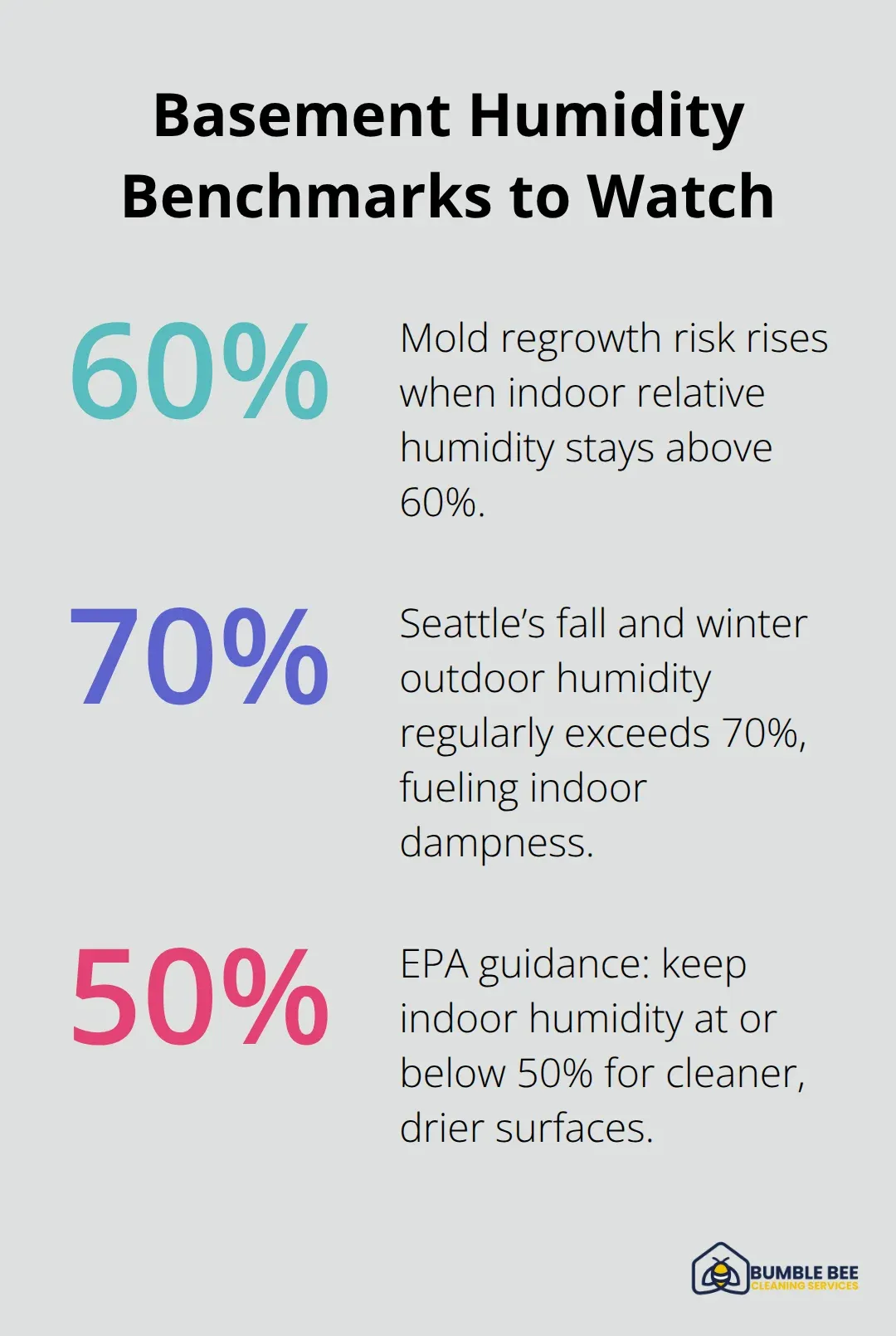
Moisture transforms a freshly cleaned basement into a breeding ground for contamination within days. When humidity levels stay above 60 percent, mold spores that cleaning removes find ideal conditions to regrow. The EPA’s Mold Basics research confirms that moisture control is the key to mold control-without it, mold returns aggressively. In Seattle’s marine climate, where rainfall averages 38 inches annually and humidity regularly exceeds 70 percent during fall and winter months, this cycle repeats relentlessly. A professional deep cleaning removes visible mold and allergens, but if moisture remains unchecked, you prepare a clean surface for rapid recontamination. Dust and allergen particles cling stubbornly to damp surfaces, making your freshly cleaned basement feel grimy within a week. Musty odors intensify because moisture feeds the bacteria and organic compounds that create those smells. You end up paying for cleaning that doesn’t hold, which is why moisture remediation must precede any deep cleaning effort in Seattle basements.
Mold Returns Faster Than You Expect
After professional cleaning removes mold, spores remain dormant in the air and on materials. The EPA guidelines state that if you don’t dry water-damaged areas within 24 to 48 hours, mold growth accelerates. In a damp basement, this window closes instantly. Humidity above 60 percent creates the exact conditions mold needs to colonize again, often within 3 to 7 days. Many Seattle homeowners notice the musty smell returning before they see visible growth, which signals that mold is already establishing itself. This reality means scheduling deep cleaning without first addressing moisture sources wastes money and leaves your basement vulnerable to health risks.
Allergens and Dust Trap Moisture
Damp surfaces attract and hold dust, pet dander, and allergen particles far more effectively than dry ones. These particles accumulate faster on moist materials, undoing your cleaning results. A dehumidifier keeping indoor humidity between 30 and 50 percent (as the EPA recommends) prevents this adhesion and keeps surfaces cleaner longer. Without moisture control, your basement becomes a perpetual cycle of cleaning followed by rapid reaccumulation of contaminants.
This pattern explains why addressing moisture sources before scheduling deep cleaning makes financial and practical sense for Seattle homeowners facing persistent dampness.
Where Seattle’s Basement Moisture Comes From
Seattle’s geography and climate create a perfect storm for basement moisture. The city receives 38 inches of annual rainfall, with the heaviest precipitation occurring between October and March when humidity regularly exceeds 70 percent. This marine climate doesn’t just bring wet weather-it creates sustained moisture that penetrates foundations year-round. Groundwater pressure builds against your foundation walls as soil becomes saturated, pushing water inward through even tiny structural gaps.
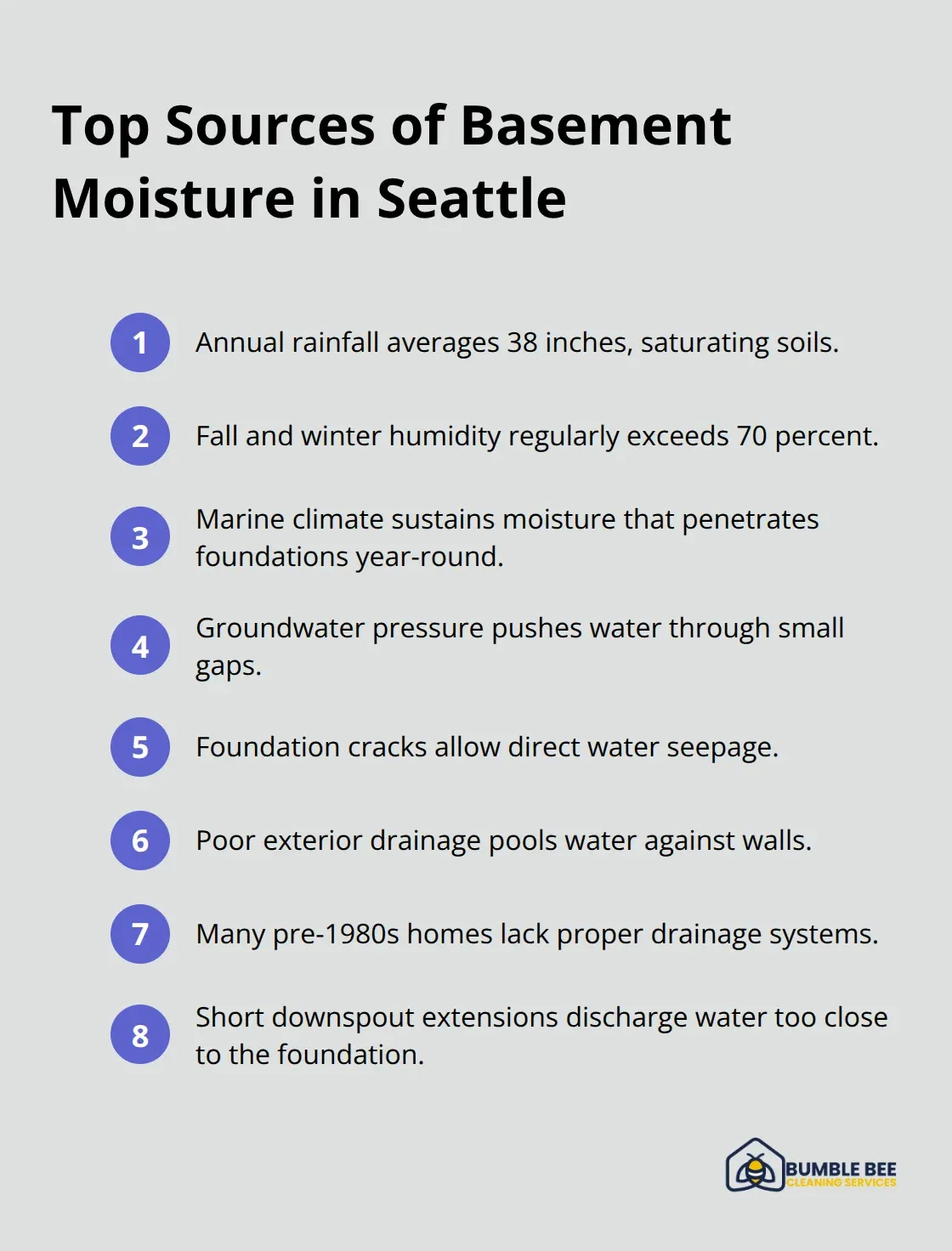
Foundation cracks, whether from settling or age, act as direct pathways for water seepage. Poor exterior drainage compounds the problem significantly. If gutters overflow, downspouts discharge water too close to the foundation, or grading slopes toward your house instead of away from it, water pools against the foundation wall. Many Seattle homes built before the 1980s lack proper drainage systems entirely, meaning water naturally gravitates toward the lowest point-your basement.
Ventilation Gaps Trap Moisture Inside
Even when exterior water sources are minimal, poor air circulation traps moisture that’s already present. Basements typically have limited windows and often sit partially below grade, restricting natural airflow. Without active ventilation, humid air becomes stagnant, and moisture condenses on cooler surfaces like concrete walls and floors. Running a bathroom exhaust fan or opening windows occasionally won’t solve this-you need continuous air movement. The EPA recommends maintaining indoor humidity between 30 and 50 percent using mechanical solutions rather than hoping natural ventilation handles the job. A dehumidifier running year-round becomes necessary in Seattle basements, particularly during fall and winter months when outside humidity approaches saturation.
Foundation Damage Accelerates Water Entry
Foundation cracks wider than 1/8 inch allow water to pass through readily, especially under hydrostatic pressure. Hairline cracks seem insignificant until you realize they’re actively channeling groundwater into your space. Efflorescence-that white, chalky residue on basement walls-signals that water is moving through the concrete itself. Once water seeps past the foundation, it doesn’t stop at the interior surface. It spreads across floors, saturates nearby materials, and creates the persistent dampness that cleaning cannot fix. These structural sources demand attention before you schedule deep cleaning, since addressing them prevents money wasted on temporary solutions.
Why Moisture Control Must Come First
Water problems don’t correct themselves, and ignoring them only accelerates foundation damage and mold growth. The longer moisture sits in your basement, the more it compromises the structural integrity of your home while creating ideal conditions for contamination. Controlling moisture before deep cleaning arrives means your investment in professional cleaning actually produces lasting results instead of temporary improvements that fade within days.
How to Stop Basement Moisture Before It Ruins Your Cleaning
Install a Dehumidifier and Monitor Humidity Levels
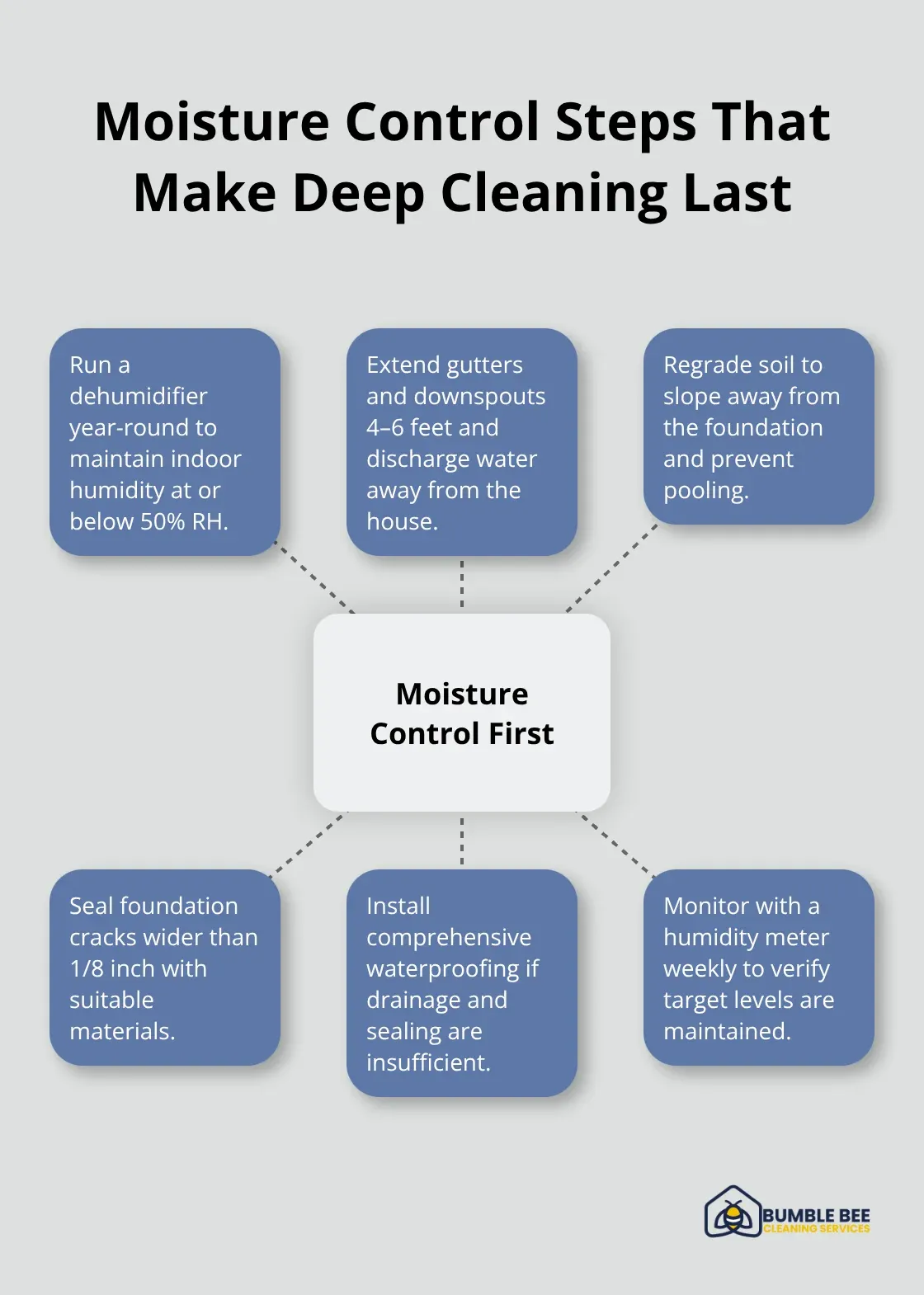
Dehumidifiers are non-negotiable in Seattle basements, and you must run them year-round. The EPA recommends maintaining indoor humidity between 30 and 50 percent, and most Seattle basements sit well above 60 percent without mechanical intervention. A quality dehumidifier costs between $200 and $500 and removes 50 to 70 pints of moisture daily, depending on capacity. You should run it continuously during fall and winter months when outdoor humidity peaks above 70 percent, and maintain it through spring and summer when marine air keeps moisture levels elevated.
Check the unit weekly and empty the collection bucket or connect it to a drain line so you avoid manually emptying water constantly. Position the dehumidifier centrally in your basement rather than against a wall, as air circulation around the unit improves its effectiveness significantly. Pair your dehumidifier with a humidity meter (available for $10 to $50) so you can verify that moisture levels actually drop into the target range. Without this verification, you’re guessing whether your equipment works, and a damp basement proves it doesn’t.
Fix Your Gutters and Downspouts First
Foundation drainage improvements tackle the problem at its source, stopping water before it reaches your basement walls. Gutters and downspouts matter far more than homeowners realize-gutters should extend at least 4 to 6 feet from your foundation, and downspouts must discharge water away from the house, not toward it. If your grading slopes toward the foundation instead of away from it, water pools directly against the basement wall and forces its way through cracks and joints.
Regrading costs $500 to $2,000 depending on the area around your home, but it eliminates one of the largest moisture sources permanently. This investment prevents water from pooling against your foundation and stops the cycle of moisture infiltration that undermines cleaning efforts.
Seal Cracks and Assess Waterproofing Needs
Seal foundation cracks wider than 1/8 inch with hydraulic cement or polyurethane sealant-these materials accommodate minor foundation movement while blocking water infiltration. Hairline cracks seem insignificant until you realize they actively channel groundwater during Seattle’s wet season. If your basement shows efflorescence (that white chalky residue on concrete), water is already moving through the foundation itself, signaling that sealing alone won’t solve the problem.
In those cases, a comprehensive waterproofing system combining exterior drainage, crack sealing, and interior moisture control becomes necessary. Professional assessment identifies whether your moisture comes from surface runoff, groundwater pressure, or structural gaps-each source demands different solutions. This evaluation prevents you from wasting money on incomplete fixes that leave moisture problems unresolved.
Final Thoughts
Moisture remediation must happen before deep cleaning delivers results that last. We at Bumble Bee Cleaning Services have seen countless Seattle homeowners invest in professional cleaning only to watch mold and musty odors return within days because the underlying moisture problem went unaddressed. A damp basement defeats even the best cleaning efforts, since your foundation cracks, poor drainage, and Seattle’s relentless humidity create conditions where mold regrows faster than cleaning can remove it.
A dry basement opens possibilities that dampness blocks entirely. Your foundation stays structurally sound instead of deteriorating under constant water pressure, mold and allergens stop cycling through your space, and you gain usable basement square footage without the smell and visible contamination that moisture brings. Property value increases when buyers see a dry, well-maintained basement rather than water stains and efflorescence on concrete walls.
Once your moisture problem is solved, professional deep cleaning becomes genuinely effective. Bumble Bee Cleaning Services specializes in deep cleaning for moisture-prone spaces, using our experience to restore basements that have suffered from dampness and contamination. Address your moisture sources first, then let professional cleaning complete the job properly.
For more information about our cleaning services in Seattle and Atlanta, or to request a cleaning quote, call or text us at 425-786-1360 or email us at info@qbclean.com
