
Your Seattle commercial space needs more than basic cleaning-it needs practices that align with green certifications and environmental standards. LEED-certified cleaning protects both your building’s compliance and your team’s health.
We at Bumble Bee Cleaning Services understand that sustainable cleaning isn’t optional anymore. It’s what forward-thinking Seattle businesses demand to stay competitive and responsible.
What LEED Certification Actually Requires From Your Cleaning Program
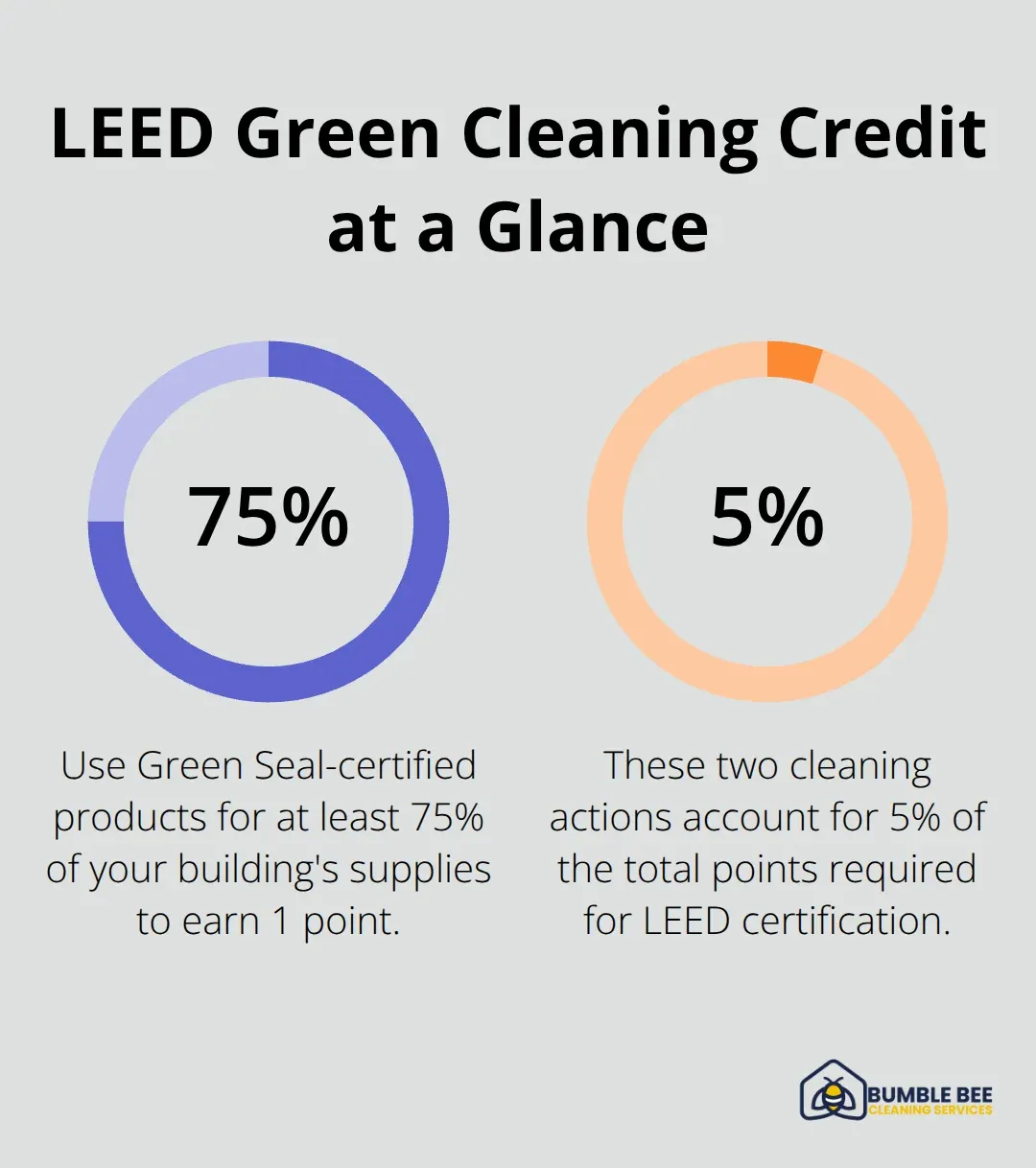
LEED certification from the U.S. Green Building Council isn’t just about energy efficiency or building materials-your cleaning operations directly affect whether your Seattle commercial space qualifies. The Green Cleaning Credit in LEED v5.0 explicitly rewards two specific actions: hiring a Green Seal-certified cleaning service earns 1 point, and using Green Seal-certified products for at least 75% of your building’s supplies earns another point. Together, these 2 points represent 5% of the 40 points required for LEED certification, making cleaning decisions measurable and consequential.
Green Seal standards are science-based and cover the full product lifecycle, meaning you purchase products verified to be safer for occupants and the environment. The certification process requires third-party verification, so your cleaning provider must demonstrate compliance through documentation and ongoing assessments, not marketing claims.
Green Seal Spans Seven Critical Product Categories
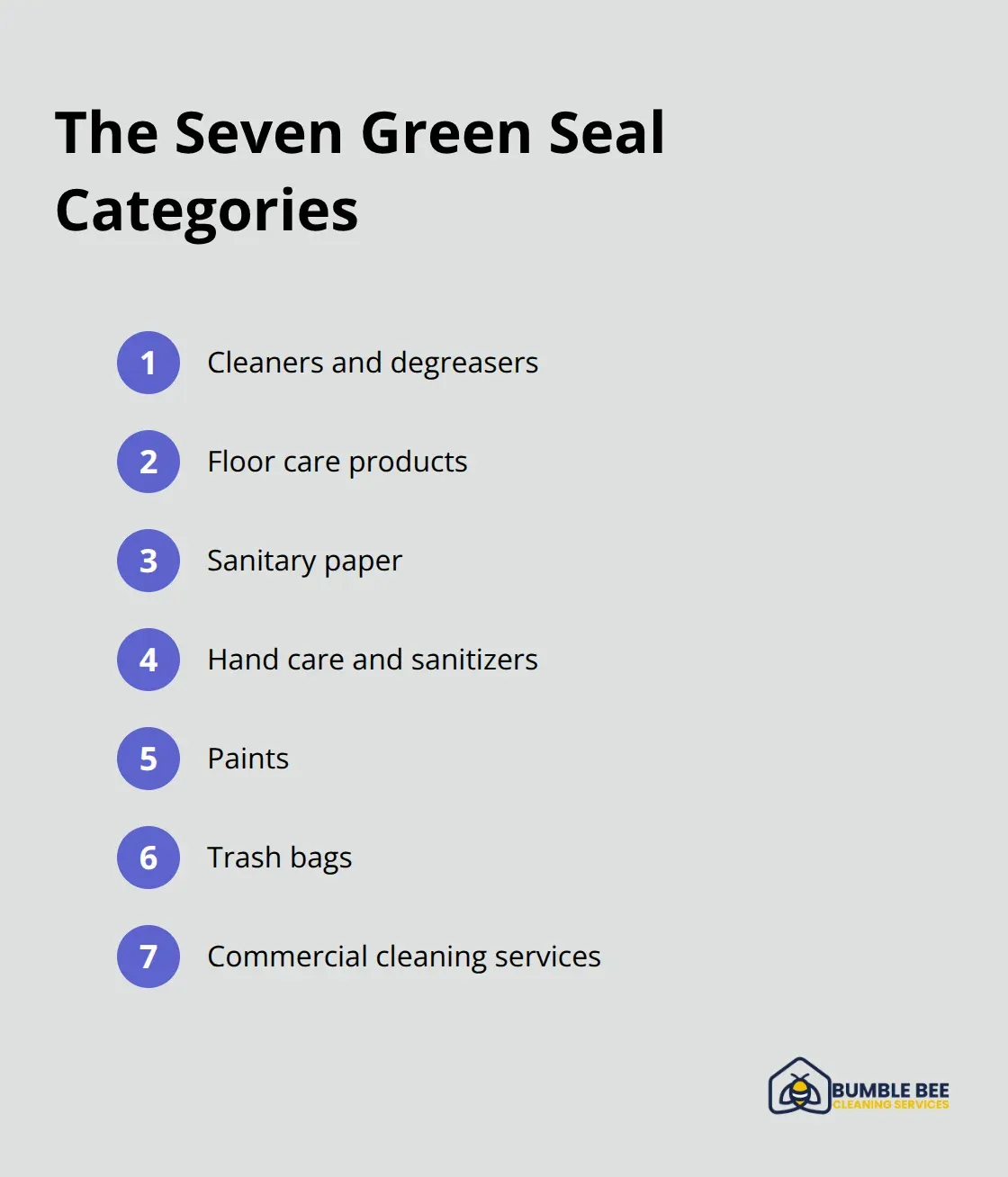
Green Seal certification covers seven product and service categories that span your entire cleaning operation: cleaners and degreasers, floor care products, sanitary paper, hand care and sanitizers, paints, trash bags, and commercial cleaning services. This breadth matters because you cannot cherry-pick compliance-LEED’s 75% threshold means most of your supplies must meet the standard. If your current cleaning vendor has not pursued Green Seal certification, you likely miss these LEED points entirely.
Your vendor must maintain records showing product certifications, staff training on green practices, and adherence to sustainable procedures to satisfy LEED’s documentation requirements.
Third-Party Verification Proves Your Commitment
Documentation serves as proof, not bureaucracy. LEED requires that your cleaning provider maintain records throughout your certification period. Washington’s Clean Buildings Performance Standard became mandatory in 2026 for buildings over 50,000 square feet, reinforcing this requirement by mandating energy management plans and operation and maintenance programs. Your cleaning practices directly support these mandates because reduced chemical use lowers indoor air contamination, which helps maintain the healthier building environment that LEED rewards. Assessors verify compliance during certification renewal, so your cleaning program cannot be a one-time effort-it becomes part of your building’s permanent operational framework.
How Your Cleaning Vendor Demonstrates Compliance
Your cleaning provider must show that they understand Green Seal requirements across all seven categories and implement them consistently. This means your vendor tracks which products carry Green Seal certification, trains staff on proper application of these products, and documents everything for audits. The vendor also maintains certifications and renews them as required, ensuring your building stays compliant year after year. When you select a cleaning partner, ask directly whether they hold Green Seal certification and request documentation of their compliance records.
Your building’s path to LEED certification depends on these cleaning decisions. The next section examines how these certified practices translate into measurable health and environmental benefits for your Seattle commercial space.
Health and Environmental Benefits of LEED-Certified Cleaning
Improved Indoor Air Quality for Employees and Clients
LEED-certified cleaning directly improves the air your employees and clients breathe. Green Seal-certified products contain lower volatile organic compounds (VOCs) than conventional cleaners, which means fewer chemical particles circulate through your HVAC system. Commercial buildings using low-VOC products show measurably better indoor air quality, particularly in spaces with high foot traffic where conventional cleaners accumulate in carpets and on surfaces.
When your cleaning vendor uses Green Seal products across all seven categories-from floor care to hand sanitizers-the cumulative effect matters. A single conventional degreaser might seem harmless, but when multiplied across weekly deep cleaning cycles and daily maintenance, conventional chemicals build up in your building’s ecosystem. Green Seal-certified alternatives deliver the same cleaning performance without this chemical load. Your HVAC system works less hard to filter contaminated air, which extends equipment life and reduces energy costs.
Employees exposed to lower chemical levels report fewer respiratory complaints, fewer headaches, and better focus, though these gains rarely appear on a balance sheet until you calculate reduced sick days and turnover.
Reduction of Toxic Chemical Exposure
The reduction in toxic chemical exposure extends beyond VOCs to include safer alternatives for disinfection, hand care, and floor treatment. Conventional sanitary products often contain antimicrobial agents that persist in water systems and contribute to antibiotic resistance. Green Seal-certified hand sanitizers and disinfectants use proven active ingredients without these persistent chemicals.
Your janitorial team handles these products daily, so exposure matters professionally-certified green products reduce occupational health risks for the people maintaining your space.
Lower Water Consumption and Waste Management
Water consumption and waste generation shrink under LEED-certified cleaning protocols. Green Seal-certified floor care products are formulated to work at lower concentrations, meaning your vendor uses less product per application while achieving identical results. Trash bag waste decreases when your vendor implements proper waste segregation and composting protocols that Green Seal certification requires.
The documentation your cleaning provider maintains shows exactly how much water, chemical, and waste your building generates under certified practices, giving you concrete data rather than assumptions. Over a year, a mid-sized Seattle commercial space can reduce cleaning-related water consumption by 15 to 25 percent simply through certified product formulations and vendor protocols. That reduction translates directly to lower water bills and lower wastewater treatment costs, both measurable line items.
Your building’s waste stream becomes lighter because certified vendors source products with minimal packaging and actively manage what goes to landfills. This matters for Washington’s Clean Buildings Performance Standard compliance, which requires documented operation and maintenance programs tracking resource use. Certified cleaning becomes part of your permanent building performance record, not a temporary initiative. These measurable improvements in health and resource management create the foundation for understanding why Seattle businesses actively seek out LEED-certified cleaning services to maintain competitive advantage.
Why Seattle Businesses Pursue LEED-Certified Cleaning
Competitive Advantage in Seattle’s Real Estate Market
Seattle’s commercial real estate market explicitly rewards buildings that achieve LEED certification. Tenants increasingly negotiate lease terms based on LEED status because they recognize that certified buildings command higher occupancy rates and attract workforce talent unwilling to work in chemically contaminated spaces. A building without LEED certification faces measurable disadvantages when competing for corporate tenants, particularly in the technology and professional services sectors concentrated in Seattle. LEED-certified cleaning directly addresses this competitive pressure because it demonstrates to prospective tenants that your building management takes health and operational standards seriously. Your cleaning vendor’s Green Seal certification becomes a tangible asset in lease negotiations, allowing you to justify premium rental rates and reduce vacancy periods.
Buildings that achieve LEED certification typically see rental rate premiums compared to uncertified peers, according to the U.S. Green Building Council, which administers LEED standards. This premium compounds over a five-year lease cycle, generating tens of thousands of dollars in additional revenue from a single large tenant. Seattle property managers who delay implementing certified cleaning practices effectively leave money on the negotiating table because their buildings lack the documented compliance that institutional tenants demand.
Meeting Tenant and Customer Expectations
The competitive disadvantage becomes permanent once a neighboring building achieves LEED certification and captures the tenant demographic that prioritizes environmental responsibility. Prospective tenants now expect certified cleaning as a baseline standard rather than a premium feature. Your building’s cleaning practices signal operational maturity to potential occupants, and documented Green Seal certification removes objections during lease negotiations. Tenants in Seattle increasingly require proof that their workspace meets health and sustainability standards, making certified cleaning a non-negotiable expectation rather than a differentiator.
Long-Term Cost Savings Through Sustainable Practices
Long-term cost savings emerge not from dramatic reductions but from systematic elimination of waste across multiple operational categories. Green Seal-certified cleaning products concentrate more effectively than conventional alternatives, meaning your vendor applies less product per cleaning cycle while maintaining identical performance standards. Over twelve months, a mid-sized commercial space reduces chemical purchasing costs by 12 to 18 percent through concentrated formulations and optimized application protocols.
Water consumption drops because certified vendors implement low-flow cleaning methods and eliminate unnecessary rinsing cycles mandated by conventional product formulations. Waste management costs shrink when your vendor properly segregates recyclables and compostable materials rather than disposing everything as general waste. These individual savings seem modest until consolidated, at which point a 2,000-square-foot office typically saves between 4,000 and 6,500 dollars annually in cleaning-related operational expenses.
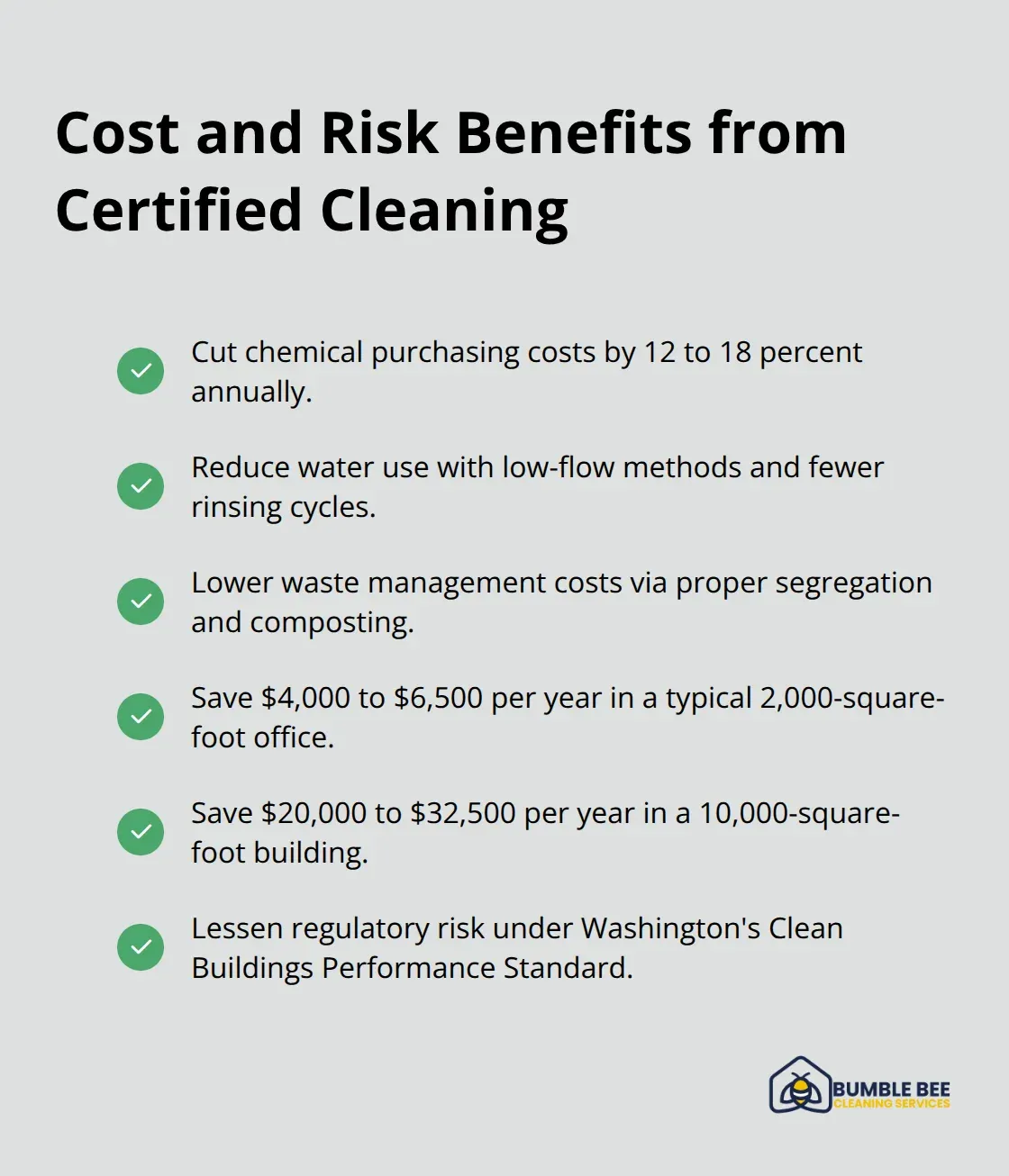
The savings multiply across larger commercial spaces, with 10,000-square-foot buildings realizing annual reductions of 20,000 to 32,500 dollars. Beyond direct cost reductions, certified cleaning reduces your building’s exposure to regulatory violations under Washington’s Clean Buildings Performance Standard, which became mandatory in 2026 for buildings exceeding 50,000 square feet. Non-compliance triggers penalties and mandatory remediation costs that dwarf cleaning expenses, making certified practices essential insurance against regulatory risk.
Final Thoughts
LEED-certified cleaning protects your Seattle commercial space through measurable compliance, healthier indoor environments, and documented cost reductions. Green certifications like Green Seal demonstrate that your building management prioritizes occupant health and operational responsibility, directly addressing what Seattle tenants and customers now expect. The 2 LEED points earned through certified cleaning and products represent 5% of your path to certification, a meaningful contribution that compounds when combined with other green building practices.
Your competitive position in Seattle’s real estate market depends partly on these cleaning decisions because certified buildings command higher occupancy rates and rental premiums compared to uncertified peers. Selecting a cleaning vendor who holds Green Seal certification and maintains documentation across all seven product categories matters more than ever as Washington’s mandatory Clean Buildings Performance Standard (now in effect for buildings exceeding 50,000 square feet) requires documented operation and maintenance programs. Ask your current vendor whether they pursue this certification, and request proof of their compliance records and staff training protocols.
The investment in certified cleaning pays for itself through reduced chemical and water costs, lower regulatory risk, and the rental rate premiums that LEED certification enables. Contact Bumble Bee Cleaning Services to discuss how certified cleaning practices align with your Seattle commercial space’s sustainability and profitability goals.
For more information about our cleaning services in Seattle and Atlanta, or to request a cleaning quote, call or text us at 425-786-1360 or email us at info@qbclean.com
