
Construction waste disposal isn’t optional in Seattle-it’s a legal requirement with real consequences. Get it wrong, and you face fines, project delays, and damage to your reputation.
We at Bumble Bee Cleaning Services have seen contractors lose thousands because they didn’t understand local regulations or failed to segregate materials properly. This guide walks you through Seattle’s waste disposal rules, proven management strategies, and how proper handling actually saves money.
What Seattle Requires for Construction Waste
Mandatory Waste Stream Separation
Seattle’s waste disposal framework is stricter than most cities, and that matters for your bottom line. The city operates under a mandatory waste stream separation system governed by Seattle Municipal Code sections 21.36.080 and 21.36.083.A, which requires garbage, recycling, and food/yard waste to remain completely separate in designated containers. This isn’t a suggestion-it’s law. The Seattle Public Utilities department enforces these rules through inspections and fines that start at hundreds of dollars and escalate quickly for repeated violations.
Solid Waste Plan Review and Approval Timeline
Construction projects specifically fall under the Solid Waste Plan Review requirement outlined in SMC 23.54.040, which means new construction must obtain approval before waste management begins. The review process typically takes around two weeks, and both the city and your contracted hauler must sign off. Skipping this step or failing to implement the approved plan results in project delays that cost far more than proper planning would have.
Construction and Demolition Debris Classification
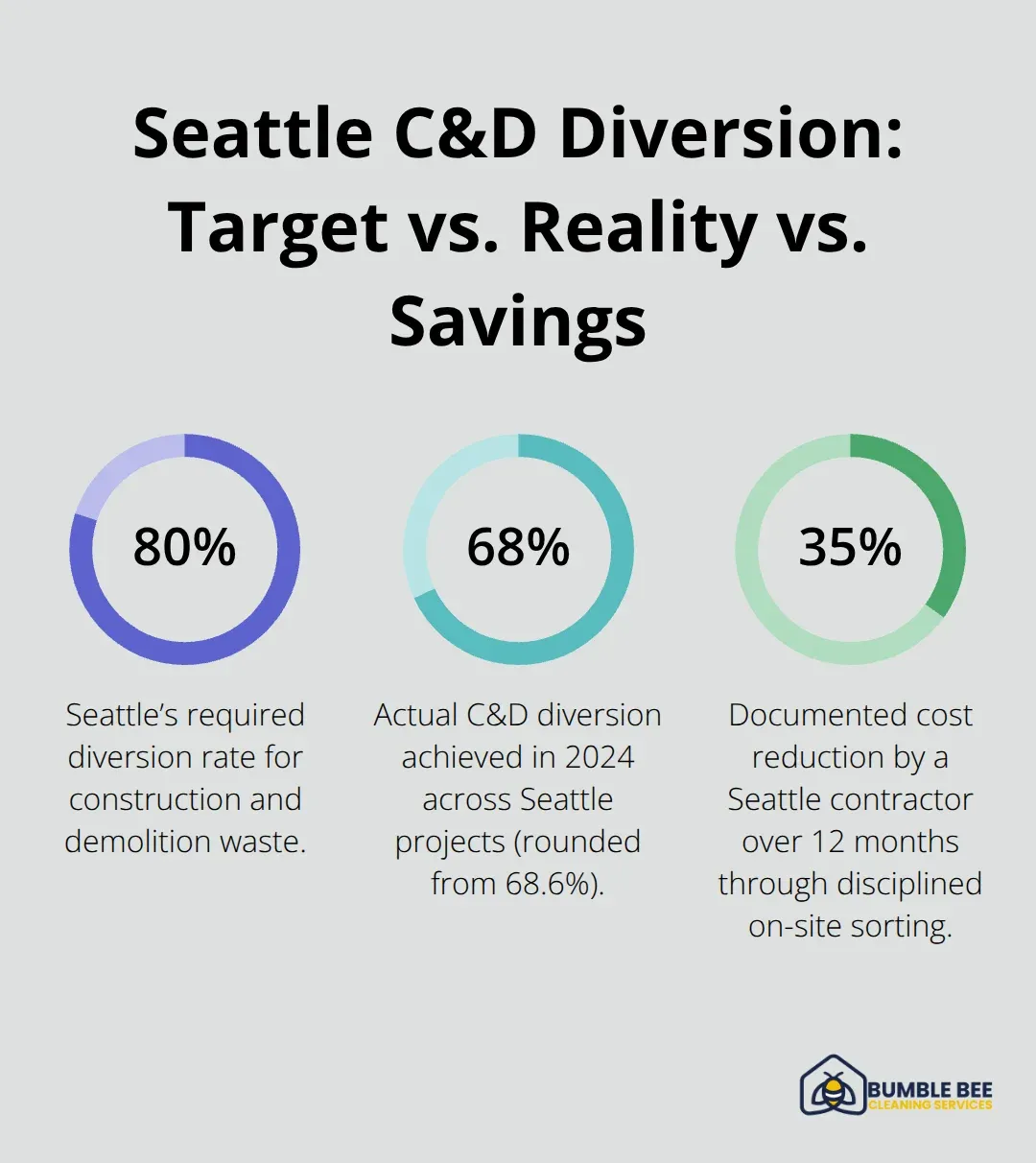
Construction and demolition debris presents specific classification challenges. The EPA reported that construction and demolition waste totaled about 600 million tons nationally in 2018, yet Seattle mandates that your project achieve at least 80% diversion from landfills through recycling and reuse. Concrete, metal, wood, drywall, and other materials must be sorted on-site and directed to qualified C&D recycling facilities. Seattle’s 2024 Annual Solid Waste Report shows that C&D diversion reached 68.6% in 2024, falling short of the 80% target, which tells you the city is intensifying enforcement.
Contracting with Licensed Haulers and Storage Requirements
You must contract with a licensed private hauler like Waste Management or Recology-SPU doesn’t provide dumpsters. Your hauler must confirm they use facilities approved under SPU Administrative Rule SPU-DR-01-07. Additional costs apply if containers sit more than 25 feet from the right-of-way or require unlocking, so plan your storage layout carefully on private property with at least 10 feet of alley clearance for truck access.
Hazardous Materials and Compliance Risks
Non-compliance brings fines, project shutdowns, and potential liability if hazardous materials like asbestos or lead dust aren’t handled according to OSHA guidelines and local codes. Understanding these requirements upfront protects your project timeline and budget, but the real challenge lies in executing proper waste management on-site-which is where segregation strategies and containment methods make all the difference.
How to Sort, Store, and Manage Construction Waste on Your Seattle Site
Set Up Material Sorting Before Work Begins
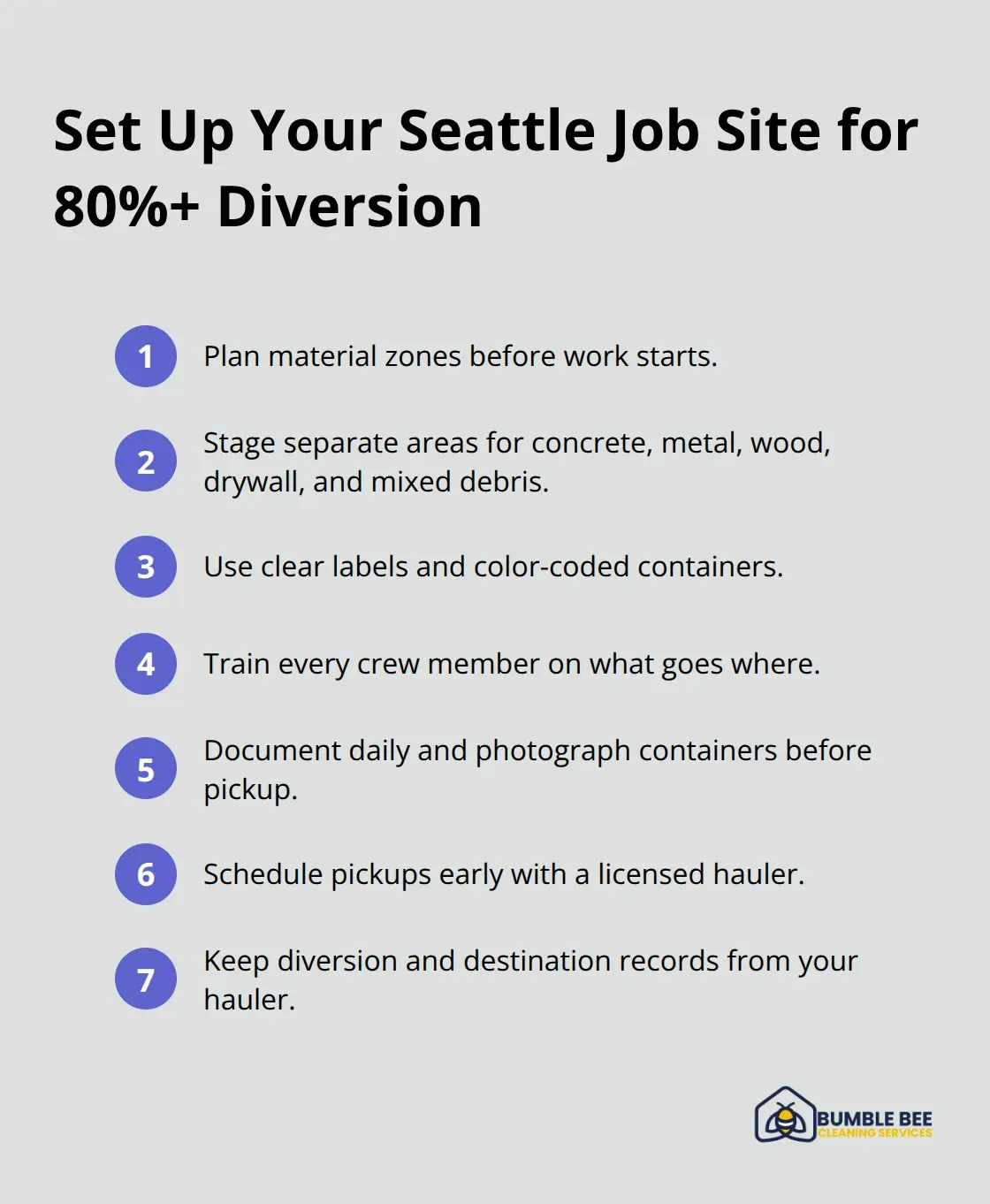
Sorting construction waste on-site separates compliant projects from those facing fines. The difference comes down to execution, not intention. Seattle’s requirement for 80% diversion means you cannot treat waste management as an afterthought. Create separate staging areas for concrete, metal, wood, drywall, and mixed debris before equipment arrives on your site. This upfront investment in space and labeling prevents cross-contamination that renders materials unrecyclable.
Many contractors lose diversion rates because they dump everything into one container, then scramble to sort at the facility-a costly mistake. Qualified C&D recycling facilities in the Seattle area accept pre-sorted materials at lower tipping fees than mixed waste, so your sorting discipline directly reduces costs.
Implement Color-Coded Containers and Crew Training
Set up color-coded containers or clearly marked zones for each material stream on your property. Train every crew member on your site about what goes where, because one worker throwing drywall into the metal bin undermines the entire system. Document your on-site sorting daily and photograph containers before pickup to prove compliance if SPU inspectors visit your location.
Position Containers for Legal Compliance and Access
Position your dumpsters or roll-off containers on private property with a minimum 10 feet of alley clearance-this requirement affects truck access and avoids SPU violations. If containers sit more than 25 feet from the right-of-way, your licensed hauler will charge additional driver access fees, so measure distances during planning. Measure twice and position once to avoid costly access charges.
Coordinate Pickups and Maintain Documentation
Contact your licensed hauler at least two weeks before needing pickup to confirm they service qualified facilities under SPU Administrative Rule SPU-DR-01-07. Many projects slip behind schedule because haulers lack capacity, so lock in your service dates early. Request pickup schedules that prevent containers from sitting in the street longer than allowed-SPU Director’s Rule 406 permits street placement for only 12 hours before or after scheduled pickup.
If your project spans months, coordinate multiple pickups rather than one massive haul at the end. This keeps your site clean, reduces pest issues, and demonstrates active waste management to regulators. Your licensed hauler should provide documentation showing where materials went and diversion percentages achieved. Keep these records for your project file-they prove compliance and protect you if disputes arise.
The waste management foundation you establish now determines whether your project meets Seattle’s diversion targets and avoids costly delays. Once your sorting and storage systems run smoothly, the next critical step involves understanding how environmental compliance directly impacts your project budget and long-term reputation in the Seattle construction market.
Why Proper Waste Disposal Cuts Your Project Costs
Lower Tipping Fees Through On-Site Sorting
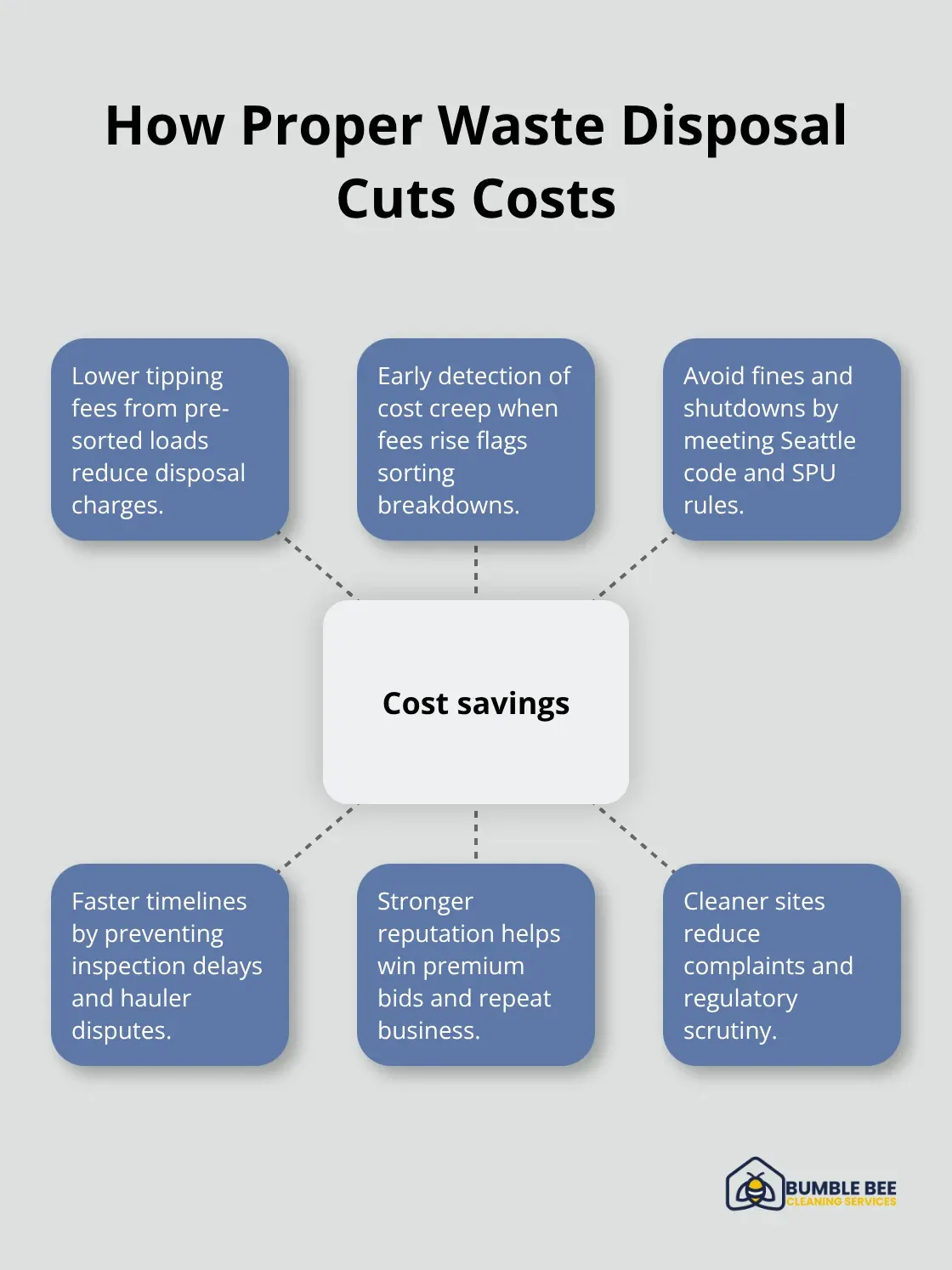
Proper waste disposal directly reduces what you pay for your Seattle construction project. When you sort materials on-site instead of dumping everything into one container, your licensed hauler charges lower tipping fees for pre-sorted loads compared to mixed debris. Concrete, metal, and wood sorted before pickup cost significantly less to process than commingled waste, which haulers charge premium rates to sort at the facility.
Seattle’s construction and demolition diversion reached 68.6%, meaning projects achieving higher diversion rates qualify for cost advantages that projects falling short do not receive. Your hauler should itemize tipping fees by material stream on invoices, so track these numbers across your project timeline.
Catch Cost Creep Early
If you see tipping fees rising mid-project, your crew likely stopped sorting properly and mixed materials are being charged at higher rates. Catching this early prevents budget overruns. Additionally, qualified C&D recycling facilities under SPU Administrative Rule SPU-DR-01-07 offer incentives for high-quality sorted loads, sometimes crediting your account rather than charging fees.
One Seattle contractor reduced waste disposal costs by 35% over a 12-month period simply through maintaining discipline in on-site sorting and scheduling pickups strategically rather than requesting emergency hauls that incur rush charges.
Avoid Fines and Project Delays
Avoiding fines matters equally to reducing tipping fees. Non-compliance with Seattle Municipal Code sections 21.36.080 and 21.36.083.A starts at hundreds of dollars per violation and escalates for repeated infractions, plus project shutdowns cost far more than preventive measures. Proper waste management also shortens project timelines because you avoid delays from failed SPU inspections or disputes with haulers over material quality.
Every day your project sits idle waiting for compliance resolution represents labor costs, equipment rental fees, and scheduling conflicts that multiply quickly.
Build Market Reputation and Win Premium Bids
Your reputation in Seattle’s construction market depends on demonstrating environmental responsibility to clients, general contractors, and municipal inspectors. Projects that achieve higher diversion rates attract repeat business from environmentally conscious developers and property owners who specifically seek contractors with proven waste management records.
When you document your diversion rates and maintain sorted material records, you create marketing material that differentiates your company from competitors who treat waste disposal as a compliance checkbox. Clients increasingly ask contractors about their waste diversion rates before awarding projects, particularly for commercial and multifamily developments where sustainability standards influence tenant attraction and property valuations.
Request documentation from your licensed hauler showing where materials went and diversion percentages achieved, then incorporate these results into your project portfolio. This proof of performance strengthens bids on future projects and allows you to command premium pricing from clients prioritizing environmental stewardship.
Protect Your Reputation Through Clean Job Sites
Maintaining clean, organized job sites through active waste management reduces neighborhood complaints and regulatory scrutiny, which protects your reputation with city officials and community stakeholders. Contractors who leave job sites cluttered with unsorted debris face complaints that trigger SPU inspections, creating unnecessary exposure.
Proper waste disposal is not a cost center; it is a competitive advantage that reduces project expenses, accelerates timelines, and positions your company as the responsible choice in Seattle’s construction market.
Final Thoughts
Proper waste disposal in Seattle construction isn’t just regulatory compliance-it’s the foundation of profitable, efficient projects. Segregate materials on-site before pickup, contract with licensed haulers approved under SPU rules, and document everything for your records. Projects that follow these steps consistently achieve higher diversion rates, pay lower tipping fees, and avoid the fines and delays that derail timelines and budgets.
Contractors who build a reputation for responsible waste disposal win repeat business from developers and property owners who specifically seek partners demonstrating environmental accountability. Your diversion rates become marketing material that differentiates your company in a competitive market, and clients increasingly ask about waste management practices before awarding contracts, particularly for commercial and multifamily developments where sustainability influences tenant attraction and property values. When you document your results and maintain sorted material records, you create proof of performance that strengthens future bids and allows you to command premium pricing.
If managing construction waste feels overwhelming or you lack the expertise to execute proper sorting and containment on-site, professional help exists. We at Bumble Bee Cleaning Services specialize in post-construction cleaning and debris management, working with contractors to ensure job sites meet Seattle’s waste disposal standards. Our certified team handles the cleanup and waste coordination so you can focus on construction.
For more information about our cleaning services in Seattle and Atlanta, or to request a cleaning quote, call or text us at 425-786-1360 or email us at info@qbclean.com
