
Your laundry room works harder than any other space in your home, yet it often gets the least attention when it comes to deep cleaning.
Seattle’s humid climate creates perfect conditions for mold, mildew, and soap buildup that can damage your appliances and create unpleasant odors. We at Bumble Bee Cleaning Services see these issues daily in homes across the city.
A thorough deep clean transforms this overlooked space into a fresh, efficient area that actually makes doing laundry enjoyable again.
How Do You Start Deep Cleaning Your Laundry Room
Remove and Clean All Detachable Components
Remove all detachable parts from your washer and dryer completely. Pull out lint traps, detergent dispensers, fabric softener compartments, and any removable shelving. Soak these components in warm water mixed with white vinegar for 30 minutes to dissolve soap residue and mineral deposits.
Open windows and run exhaust fans throughout the process. Proper ventilation helps maintain indoor humidity between 30 and 50 percent, which prevents mold growth in Seattle’s humid climate.
Deep Clean Your Washing Machine and Dryer
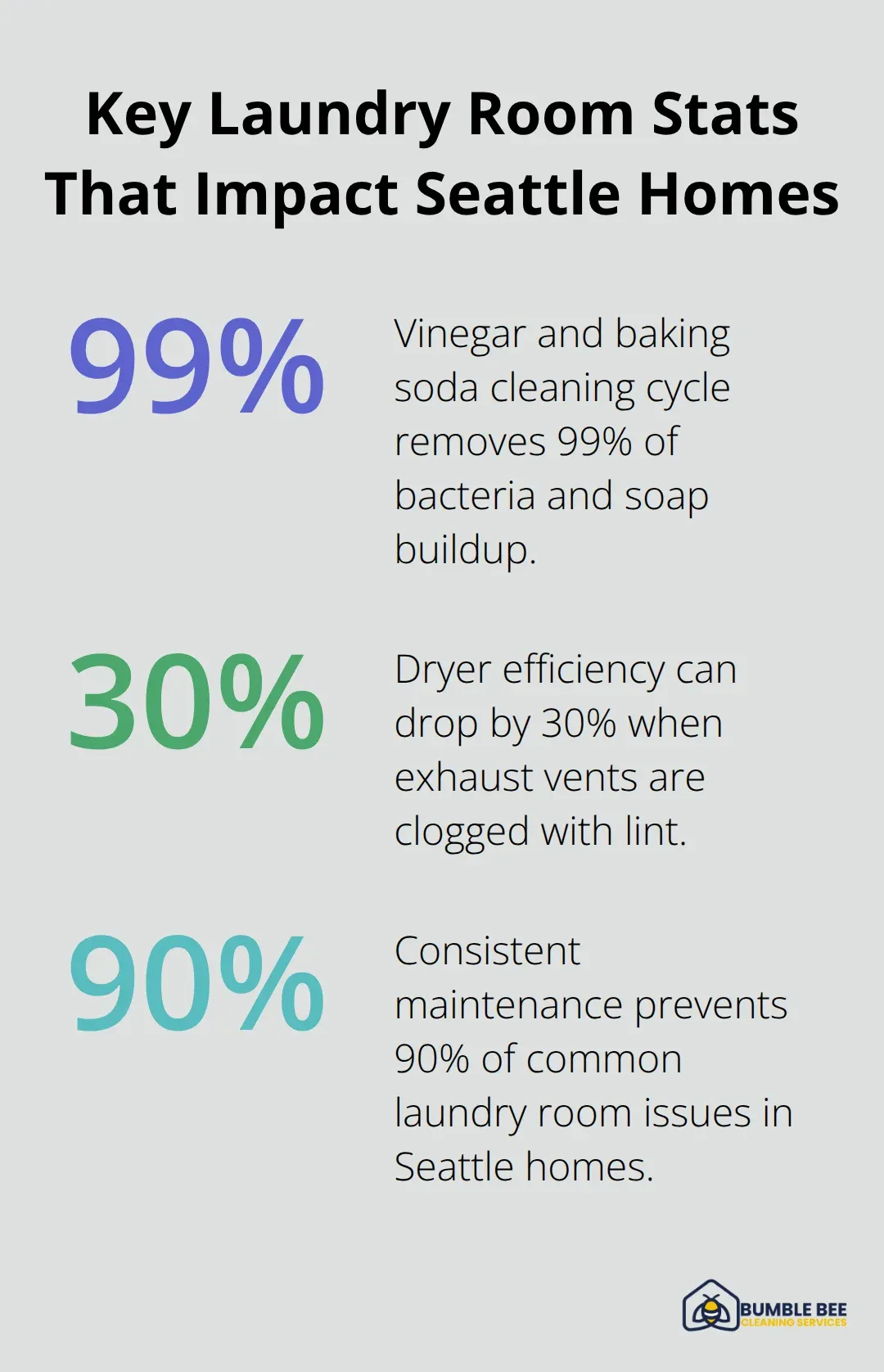
Run an empty hot water cycle with two cups of white vinegar in your washing machine. Follow this with a second cycle using half a cup of baking soda. This method removes 99% of bacteria and soap buildup according to appliance manufacturers.
Vacuum the lint trap housing thoroughly in your dryer. Wipe down the drum with a damp microfiber cloth to remove any remaining residue and lint particles.
Sanitize All Surfaces and Storage Areas
Scrub all surfaces with a solution of warm water and dish soap. Pay special attention to areas behind appliances where moisture accumulates and creates breeding grounds for mold.
Clean storage shelves, cabinets, and folding surfaces with disinfectant to eliminate germs that transfer from dirty laundry. Wash or vacuum floor mats and mop floors with an antimicrobial cleaner.
Address Safety and Maintenance Issues
Check dryer vents for blockages since clogged vents cause approximately 13,820 house fires annually. Replace worn door seals on front-loading washers where mold commonly grows.
Wipe down light fixtures, switches, and outlet covers that collect dust and lint. Apply a moisture-resistant sealant around plumbing connections to prevent future water damage.
Once you complete these deep cleaning steps, you’ll need to identify the specific problem areas that plague Seattle laundry rooms year-round.
What Problems Plague Seattle Laundry Rooms
Moisture Creates Perfect Conditions for Mold Growth
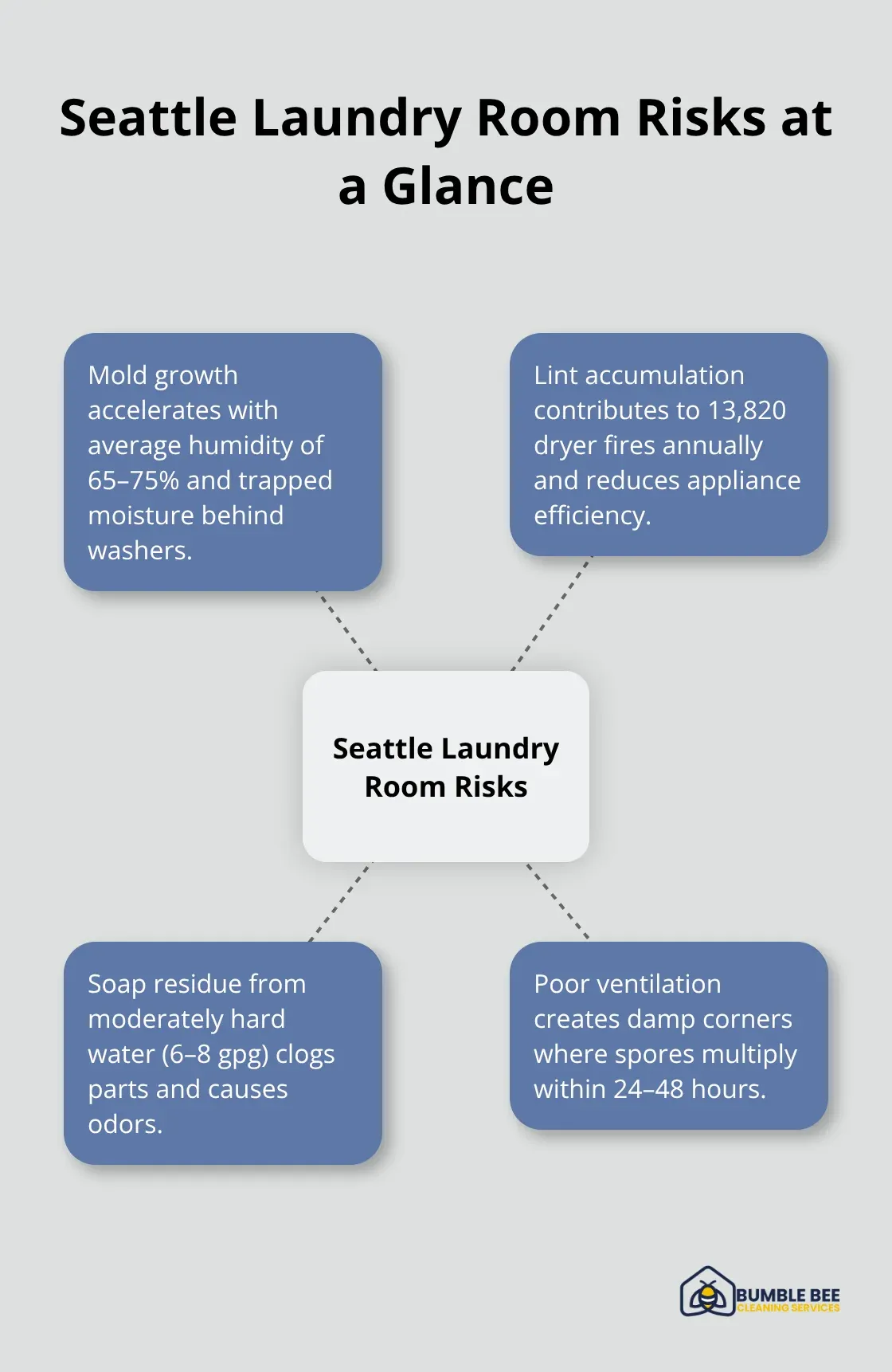
Seattle’s average humidity levels hover between 65-75% year-round, which creates ideal conditions for mold in your laundry room. Mold spores multiply within 24-48 hours in moisture-rich environments, particularly behind washers and in poorly ventilated corners. The rubber door seals on front-load washers trap moisture and soap residue, which develops black mold patches that spread to walls and floors.
Homeowners who ignore these areas face costly appliance replacements and health issues from prolonged mold exposure. Professional cleaning services address these problem areas before they cause permanent damage to your home.
Lint Accumulation Poses Fire Hazards and Efficiency Problems
Dryer lint builds up faster in Seattle homes due to increased indoor drying during rainy months. The National Fire Protection Association reports that failure to clean dryer vents causes 13,820 house fires annually, with lint blockages as the leading factor. Your dryer efficiency drops by 30% when lint clogs exhaust vents, which forces the appliance to work harder and increases energy costs by approximately $300 per year.
Check your exterior dryer vent monthly – if you see lint accumulation or notice clothes take longer to dry, schedule professional vent cleaning immediately. This simple step prevents both fire hazards and expensive utility bills.
Soap Residue Builds Up from Hard Water and Overuse
Seattle’s moderately hard water contains 6-8 grains per gallon of dissolved minerals that react with detergents to form sticky soap scum. This residue coats washer drums, clogs dispensers, and creates foul odors that transfer to clean clothes. Fabric softener leaves waxy buildup on dryer drums and lint screens, which reduces airflow by up to 25% and creates fire risks.
Clean your washer’s detergent drawer weekly and run monthly cycles with white vinegar to prevent these issues from damaging your appliances. These problems require different approaches depending on whether you tackle them yourself or hire professionals.
Should You Hire Professionals or DIY Your Laundry Room Deep Clean
Professional Services Handle Complex Problems
Professional cleaning services tackle issues that DIY methods cannot address safely or effectively. Professionals handle dryer vent cleaning that extends deep into wall cavities, where homeowners risk damage to ductwork or miss dangerous lint blockages. Professional-grade equipment provides thorough cleaning that household vacuum cleaners cannot match.
Mold remediation requires specialized training and EPA-approved antimicrobial treatments that prevent spores from spreading throughout your home during the cleaning process. Call professionals when you discover black mold patches larger than 10 square feet, notice persistent musty odors after cleaning, or find water damage behind appliances.
Professional services cost between $200-400 for complete laundry room deep cleaning but prevent thousands in appliance replacement costs and potential health issues from improper mold treatment.
DIY Methods Work for Routine Maintenance
White vinegar, baking soda, and dish soap handle most laundry room cleaning tasks effectively at minimal cost. These supplies cost under $15 total and clean multiple rooms. Run monthly vinegar cycles in your washer, scrub surfaces with baking soda paste, and vacuum dryer vents accessible from the exterior.
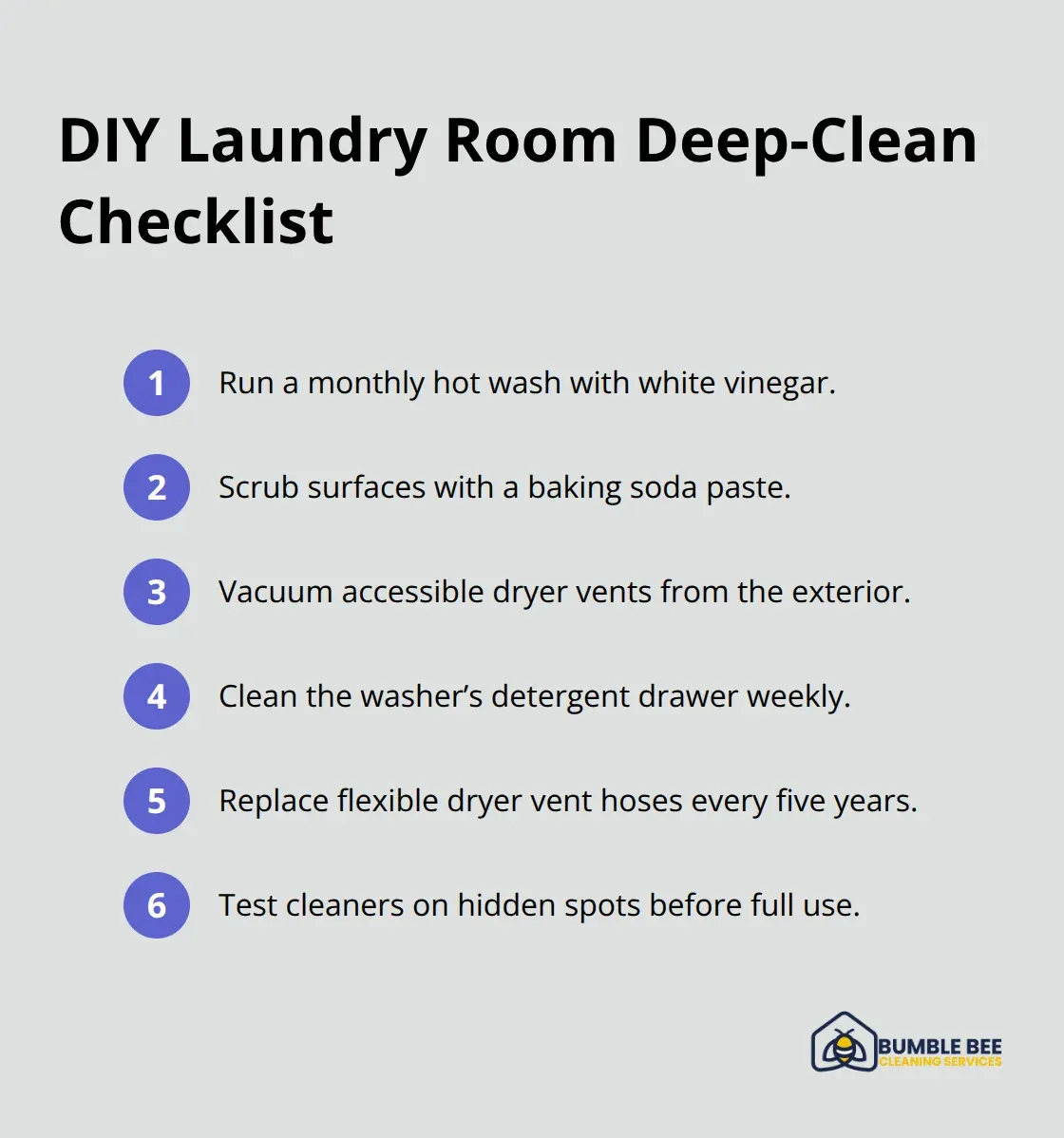
Replace dryer vent hoses every five years since flexible aluminum ducts develop tears that trap lint. Test cleaning solutions on hidden areas first to prevent permanent stains on painted surfaces or plastic components.
Safety Considerations for Deep Cleaning
Avoid bleach-based cleaners near ammonia products, which create toxic chloramine gas when mixed. Never use steel wool on appliance surfaces since scratches harbor bacteria and void warranties. Open windows and run exhaust fans during cleaning to maintain proper ventilation (especially important in Seattle’s humid climate).
Check electrical connections before cleaning around outlets and switches. Turn off power to the laundry room at the circuit breaker when cleaning behind appliances or near electrical components.
Final Thoughts
Regular deep cleaning transforms your laundry room from a neglected utility space into an efficient, pleasant area that extends appliance life and improves air quality. Monthly maintenance prevents the costly problems we see throughout Seattle homes – mold growth, lint fires, and premature appliance failure. These issues cost homeowners thousands in repairs when left unchecked.
Keep your space fresh when you run monthly vinegar cycles, clean lint traps after every load, and wipe surfaces weekly. Check dryer vents quarterly and replace worn door seals immediately. These simple steps prevent 90% of common laundry room issues that plague Seattle homes.
Professional maintenance makes the biggest difference for long-term results. We at Bumble Bee Cleaning Services provide comprehensive deep cleaning that addresses hidden problem areas homeowners often miss. Our team uses eco-friendly products and tackles the tough jobs that keep your laundry room safe and efficient (especially important in Seattle’s humid climate).
