
Running a janitorial operation in Seattle means juggling dozens of moving parts every single day. Supply management is one area where small improvements add up to real savings and smoother operations.
We at Bumble Bee Cleaning Services know that when your team has the right supplies at the right time, everything runs better. This guide walks you through proven strategies to streamline your inventory, cut costs, and keep your team productive.
How to Track Supplies So You Never Run Out
Getting your supply inventory right transforms how your janitorial team operates. Most Seattle facilities waste money through one of two mistakes: ordering too much and letting supplies gather dust in storage, or ordering too little and scrambling when you run out mid-week. The International Sanitary Supply Association found that typical spending on cleaning and restroom supplies ranges from $25 to $50 per employee monthly, which adds up to around $60,000 yearly for a 200-person facility. That’s money you can’t afford to lose to poor tracking. Treat your supply management like any other business function that deserves attention and data.
Start by Tracking Actual Consumption
Document what gets used, how much, and how often at each location-your restrooms, break rooms, warehouses, and offices all have different needs. This takes discipline, but it pays off fast. Within a few months, you’ll spot patterns. You’ll see that your main lobby uses twice as much floor cleaner as your back office, or that winter months demand extra mold treatments because of Seattle’s 150 rainy days. Once you have three to six months of solid usage data, you can set reorder points that match reality instead of guesses. A reorder point is simple: when your stock hits a certain level, you order more. Set it high enough that you never hit zero, but low enough that you’re not sitting on excess inventory.
Use Digital Tools to Remove Guesswork
Digital tracking tools eliminate human error and the burden of manual updates. Spreadsheets work if your team actually updates them, but janitorial teams are busy-they’re cleaning, not typing. Tools like Inventory Express and Keep-Full systems automate much of this work. They alert you when stock drops below your reorder point, preventing the panic of discovering you’re out of toilet paper on a Friday afternoon. These systems also show you seasonal patterns that matter in Seattle. Spring brings pollen cleanup needs, summer increases foot-traffic debris, fall brings leaf moisture, and winter brings salt and de-icer residue. Your supply orders should shift with these demands. Track consumption by location so you understand exactly which areas need what. Over time, this data becomes your supply guide-it tells you how much to order, when to order it, and from which supplier. Start simple if you need to: use a spreadsheet with daily or weekly entries, but commit to keeping it current.
Conduct Monthly Audits to Catch Problems Early
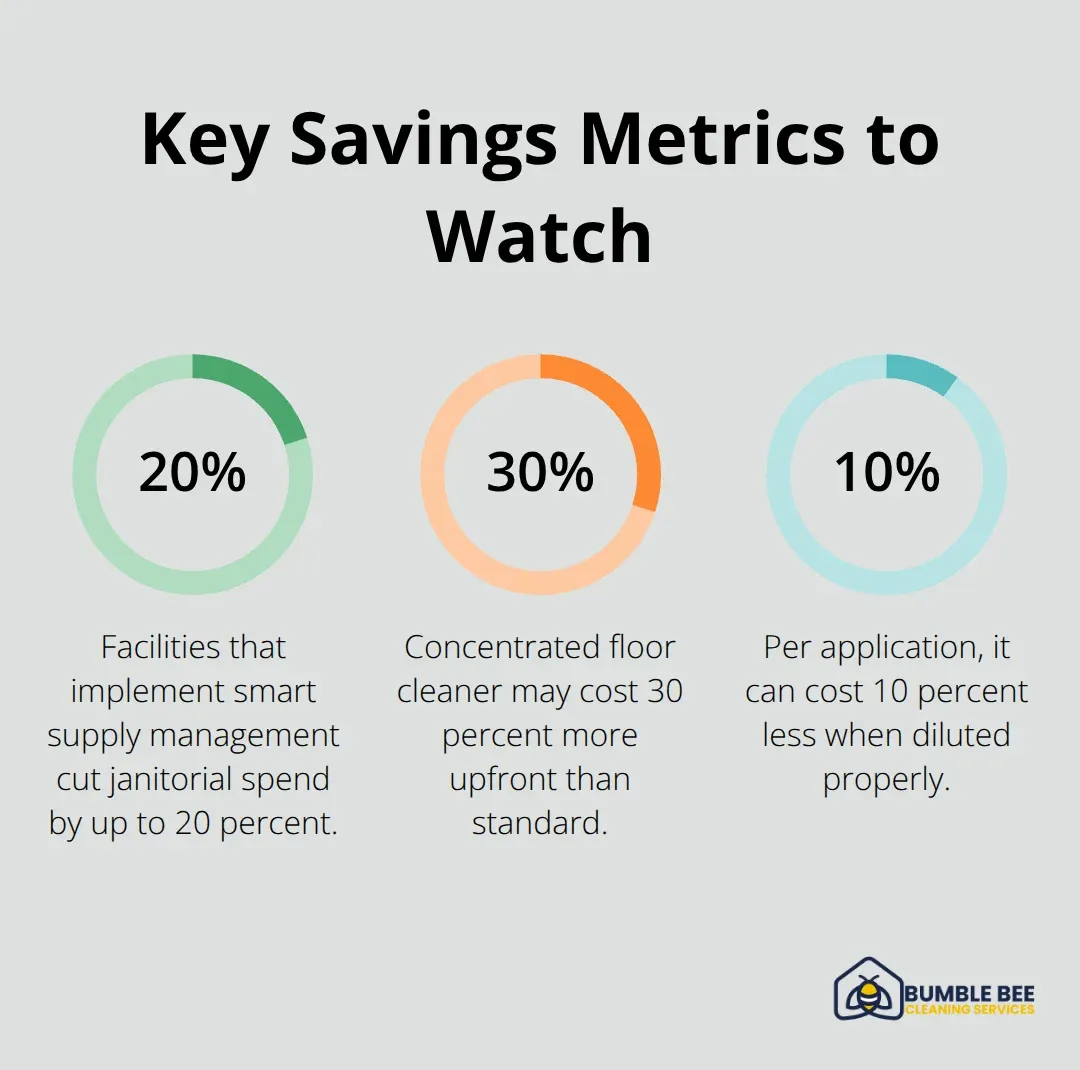
Count what you actually have against what your tracking system says you should have every month or two. These audits reveal leaks in your system fast. You might discover that supplies are disappearing because staff members are taking them home, or that you’re overstocking items that sit unused for months. Audits also show you which products your team actually uses versus which ones seemed like good ideas but never get touched. That’s money you can redirect. When you find discrepancies between what your system says and what’s physically there, investigate. Are staff members grabbing supplies without logging them? Is a particular product damaged or expired? Once you know the problem, you can fix it. Overshooting on inventory-say, ordering 10 extra cases of soap when you only need six-wastes cash. Undershooting creates service gaps that frustrate your team and damage your reputation. The goal is balance. It typically takes about a year of usage data to get your consumption patterns really accurate, but savings start the moment you begin tracking. Facilities that implement smart supply management cut janitorial spend by up to 20 percent while also cutting the internal time staff spend managing orders.
With your tracking system in place and audits running smoothly, you’re ready to tackle the next piece of the puzzle: negotiating better prices with your suppliers.
Where to Buy Supplies Without Breaking Your Budget
Consolidate Vendors to Unlock Volume Discounts
Consolidating your suppliers ranks among the fastest ways to cut janitorial costs, yet most Seattle facilities spread purchases across multiple vendors without realizing the damage. When you buy from five different suppliers instead of one or two, you lose volume discounts and spend time managing separate contracts and invoices. Long-term contracts with a single trusted vendor often yield better pricing across a wide range of items than scattered retail purchases from places like Staples or Costco.
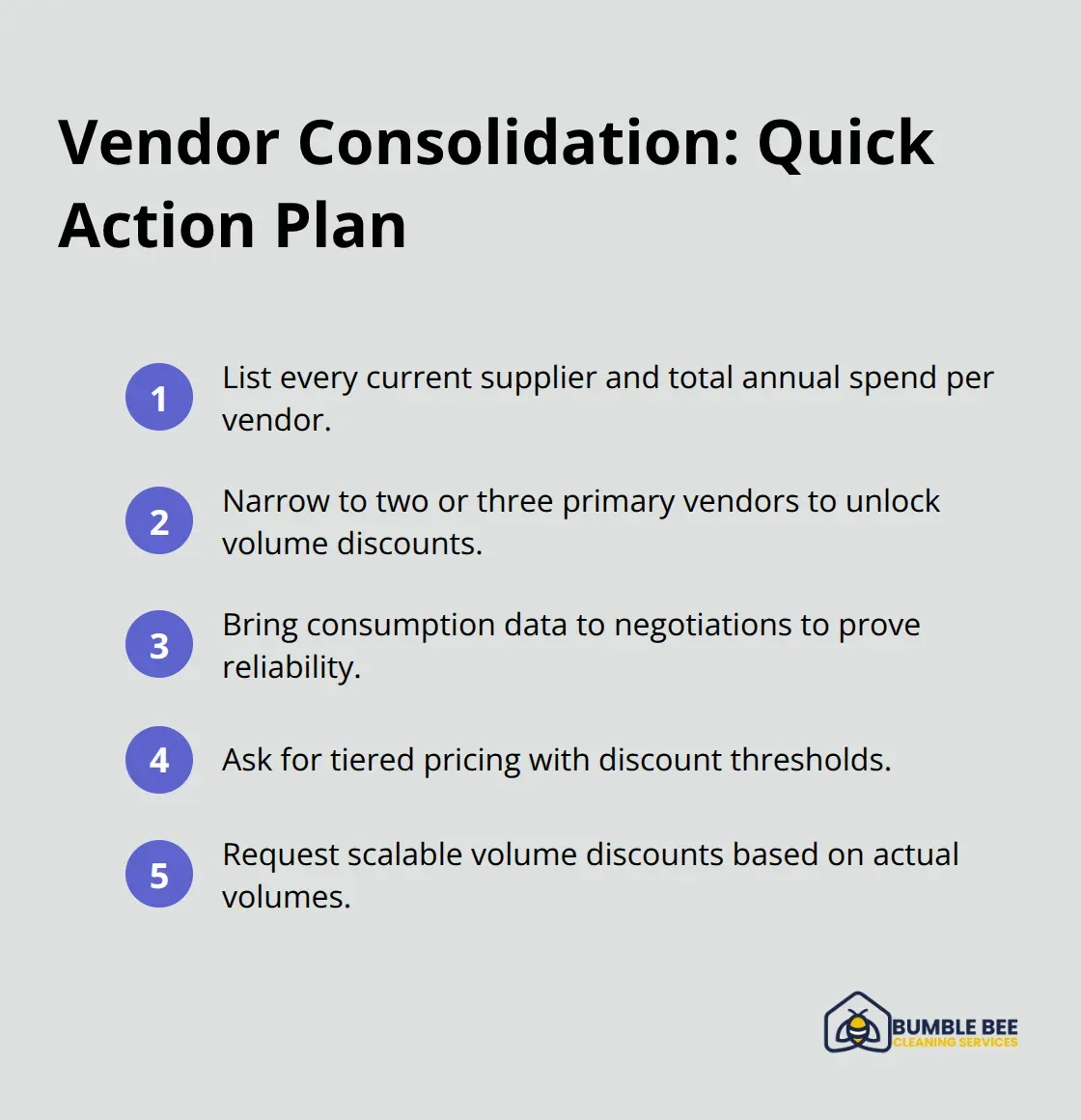
Start by listing every supplier your team currently uses, then calculate your annual spending with each one. You’ll likely find that consolidating to two or three primary vendors unlocks significant savings through volume discounts. When negotiating, bring your consumption data from the tracking system you built in the previous section. Vendors respect numbers. Show them exactly what you buy, how often, and over what timeframe. This transparency gives them confidence to offer better rates because they know you’re a reliable, predictable customer.
Ask for tiered pricing where orders above certain thresholds trigger discounts. Many suppliers offer this structure but won’t mention it unless you ask. Request volume discounts that scale with your actual purchase volumes, not theoretical maximums.
Calculate True Cost for Eco-Friendly Products
Eco-friendly products don’t have to drain your budget. Concentrated eco-cleaners often cost more per bottle upfront but deliver lower per-use costs because you dilute them properly. A concentrated floor cleaner that costs 30 percent more than a standard product might actually cost 10 percent less per application. Calculate true cost per use, not just price per unit.
Bulk purchasing of eco-products amplifies these savings. When you commit to buying large quantities, suppliers reduce their per-unit cost, which means your green cleaning program becomes financially competitive with conventional options. Seattle’s push toward sustainability also means local suppliers increasingly stock eco-friendly lines at competitive prices, giving you more leverage in negotiations.
Partner with Local Suppliers for Speed and Flexibility
Local suppliers matter more than most janitorial teams realize. Local vendors reduce delivery times from days to hours, meaning you avoid paying rush fees when you miscalculate consumption. They also understand Seattle’s specific cleaning challenges (the rain, the mold risk, the seasonal shifts) and stock products optimized for our climate.
Building relationships with local suppliers creates flexibility. When you need an emergency reorder or want to test a new product before committing to bulk purchases, local vendors accommodate faster than national chains. They’re also more willing to negotiate on pricing because they value long-term relationships with facilities in their community.
Control Rogue Purchasing with Clear Processes
Establish a clear approved-supplier list and straightforward approval workflows so your team doesn’t circumvent your consolidation strategy by making ad hoc purchases. Rogue buying destroys your volume discounts and wastes administrative time. Educate staff about why consolidation matters-show them the savings numbers so they understand this isn’t bureaucracy, it’s smart business.
Give your team an easy process to request items through approved suppliers, and make sure those suppliers can fulfill requests quickly enough that staff don’t feel tempted to run to a retail store. Monitor usage data monthly and continuously refine your orders based on what you’re actually consuming. Seasonal changes and business cycles shift your needs, so your supplier agreements should flex with those changes.
With your purchasing strategy locked in and your vendors aligned, you’re ready to tackle the physical side of supply management: organizing and storing everything so your team can find what they need instantly.
How to Store and Organize Supplies for Maximum Efficiency
The way you store supplies directly affects how fast your team works and how much money you waste. A chaotic storage area forces your staff to hunt for items, burns time they should spend cleaning, and leads to duplicate purchases when people can’t find what they need. Seattle janitorial teams lose thousands annually to poor storage alone-supplies get damaged by moisture in our rainy climate, staff grab wrong products because labeling is unclear, and inventory counts become impossible when everything sits in random piles.
Arrange Everything by How Often You Use It
Your most-used supplies should sit within arm’s reach of where your team starts their shift. Floor cleaner, toilet paper, and hand soap get grabbed multiple times daily, so these items belong at eye level on easily accessible shelves near your loading area or main storage entrance. Less frequent items-specialty mold treatments for spring, de-icer residue cleaners for winter, or deep-clean equipment-can go higher up or toward the back of your storage space. This simple arrangement cuts the time your team spends searching for supplies and reduces the frustration that leads people to buy duplicates from retail stores.
Track which items your team actually reaches for first, then physically reorganize your storage to match those patterns. If your team consistently grabs mop heads before buckets, swap their positions. Most facilities organize by product category instead of by frequency of use, which wastes countless hours every month. Create a high-traffic zone in your storage area where your top ten most-used items sit in one concentrated spot.
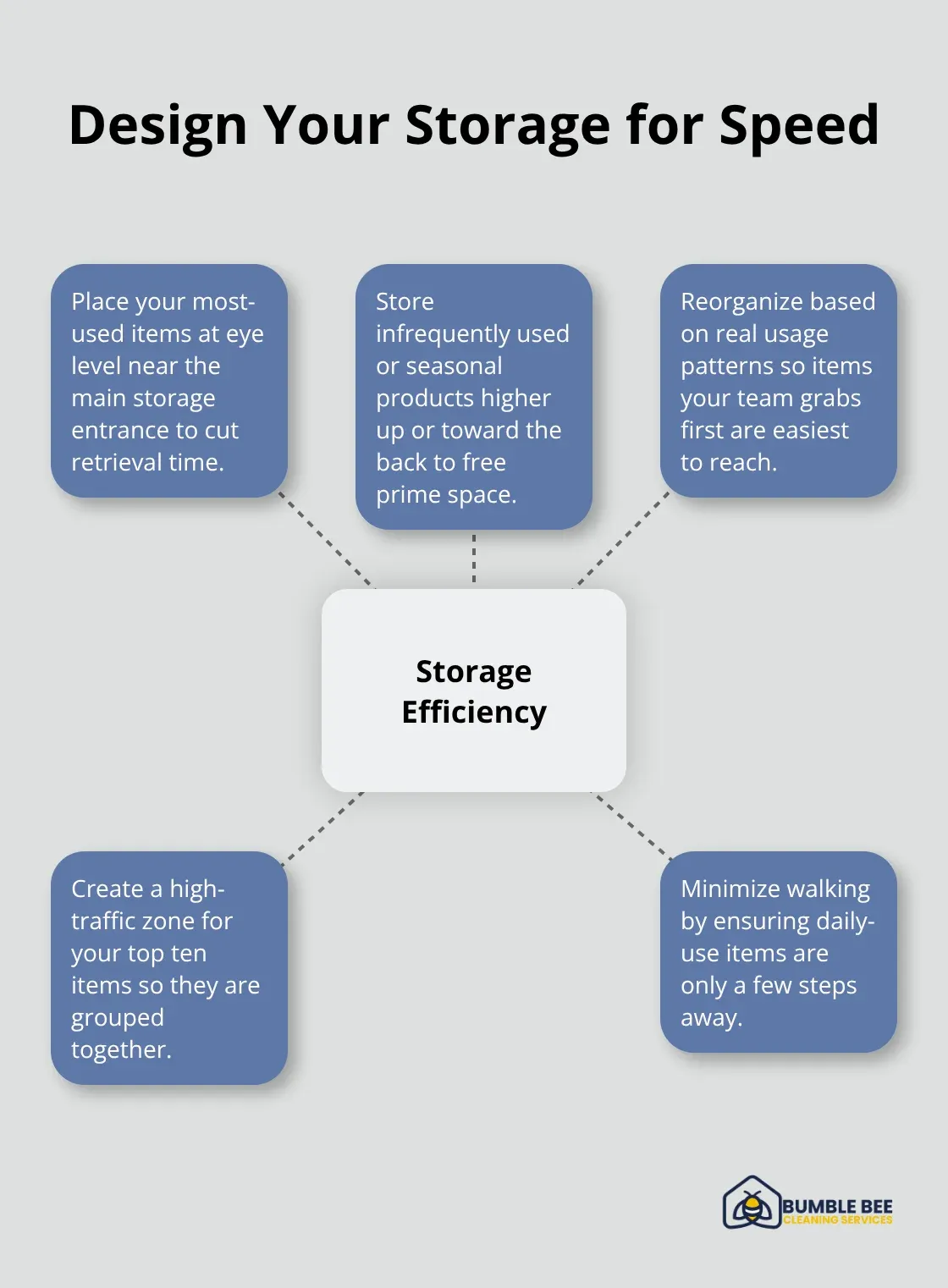
Your team should never need to walk more than a few steps to grab what they use daily.
Label Everything with Clear, Durable Tags
Unclear labeling creates chaos faster than you’d expect. Staff members grab the wrong product, waste time reading faded labels, or simply leave items unlabeled and hope someone figures it out later. Use a label maker with durable, waterproof labels on every container, shelf, and storage bin. Include the product name, dilution ratio if applicable, and the date you received it.
For concentrated eco-products or anything requiring proper mixing, include dilution instructions right on the label so your team doesn’t guess. Color-coding works too-assign specific colors to different product categories like floor care, restroom supplies, and disinfectants. Your team learns the system in days and grabs the right product instantly without reading. Organize your storage by location as well. If you service multiple buildings or floors, label supplies by which building they serve so your crew doesn’t accidentally load supplies meant for the downtown office into the truck heading to the warehouse.
Invest in a good label maker and make labeling part of your monthly audit process. When you conduct those monthly counts, update labels for any items that have moved or changed. Moisture damages labels in Seattle’s climate, so replace them annually even if they’re still readable.
Control Moisture and Temperature to Extend Product Life
Seattle’s 152 rainy days mean moisture threatens your stored supplies constantly. Mold thrives in damp storage areas, and water exposure ruins cardboard boxes, degrades product effectiveness, and creates health hazards. Store supplies in a dry, well-ventilated area with proper drainage. Install a dehumidifier if your storage space tends to collect moisture, and check for leaks monthly.
Elevate supplies off the floor using shelving units-never stack boxes directly on concrete where ground moisture seeps in. Temperature swings matter too. Extreme heat or cold degrades cleaning products and makes concentrated solutions less effective. Keep your storage area between 50 and 80 degrees Fahrenheit if possible. This proves especially important for eco-friendly products, which sometimes have narrower temperature ranges than conventional cleaners.
Proper storage conditions mean your supplies last longer and work better, which directly reduces your per-use costs. Check expiration dates quarterly and rotate stock so older products get used first-a simple first-in, first-out system prevents waste. Store hazardous products separately in a locked cabinet with proper ventilation, following EPA and OSHA guidelines. Your team should know exactly where emergency supplies live and how to handle spills safely.
Final Thoughts
Smart supply management transforms how your Seattle janitorial team operates. You’ve learned how to track consumption accurately, negotiate better prices with consolidated vendors, and organize supplies so your staff finds what they need instantly. These three pillars work together to cut costs, reduce waste, and keep your team productive.
Facilities that implement these strategies cut janitorial spend by up to 20 percent while also cutting the internal time staff spend managing orders. You avoid the panic of stockouts and the waste of overstocking. Your team spends less time hunting for supplies and more time doing what they do best-keeping your facility clean.
Start implementing these strategies this week and pick one area-tracking, purchasing, or storage-to focus on first. Once that system runs smoothly, move to the next, and you don’t need to overhaul everything at once. If managing supply chains feels overwhelming or you want expert guidance on optimizing your janitorial operations, Bumble Bee Cleaning Services brings experience and certified expertise to help Seattle facilities run efficiently.
