
Seattle homes face unique cleaning challenges with our wet climate and busy lifestyles. We at Bumble Bee Cleaning Services know that residential cleaning advice for Seattle needs to account for moisture, mold risks, and the reality that most families have limited time.
This guide covers weekly routines, seasonal tasks, and shortcuts that actually work for Pacific Northwest homes. You’ll find practical steps to keep your space clean without spending your entire weekend scrubbing.
Weekly Cleaning Tasks That Actually Work for Seattle Homes
Seattle’s damp climate causes dirt and allergens to accumulate faster than in drier regions, so a structured weekly routine prevents moisture from settling into carpets and creating mold conditions. High-traffic areas like entryways collect tracked-in moisture, mud, and debris that seep into flooring and attract dust mites, so these spaces need attention twice weekly rather than once. Vacuuming at least once a week with a quality vacuum cleaner prevents dirt from grinding into fibers-especially critical in Seattle where humidity makes carpets retain moisture longer.
Tackling Entryways and High-Traffic Zones
Start your week by vacuuming entryways and hallways thoroughly, then wipe baseboards and door frames with a microfiber cloth to capture the fine dust that accumulates in our moisture-rich air. This two-step approach removes both loose debris and settled particles that standard vacuuming misses. Focus on corners and transitions between rooms, where moisture and dust collect undisturbed.
Managing Bedroom Allergens
Bedrooms trap allergens in textiles and corners, so dust ceiling fans, light fixtures, and window sills weekly using a damp cloth that captures particles rather than spreading them into the air like dry dusting does. Focus on closet shelves and the tops of furniture where dust settles undisturbed; these hidden spots harbor allergens that trigger respiratory issues, particularly in homes with pets or children. Damp cloths work better than dry methods in Seattle’s humid environment because they prevent particles from becoming airborne.
Kitchen and Bathroom Sanitization
Kitchens and bathrooms in Seattle homes develop mold and mildew faster because moisture lingers longer, so these spaces demand regular disinfection, not just wiping. Clean your kitchen sink and disposal thoroughly, then disinfect countertops and backsplashes with a product that kills bacteria and mold spores; don’t just wipe them down with water. Bathrooms require scrubbing the toilet, tub, and shower weekly to prevent soap scum and mold growth in grout lines; use a vinegar-water solution for mineral deposits common in our water supply.
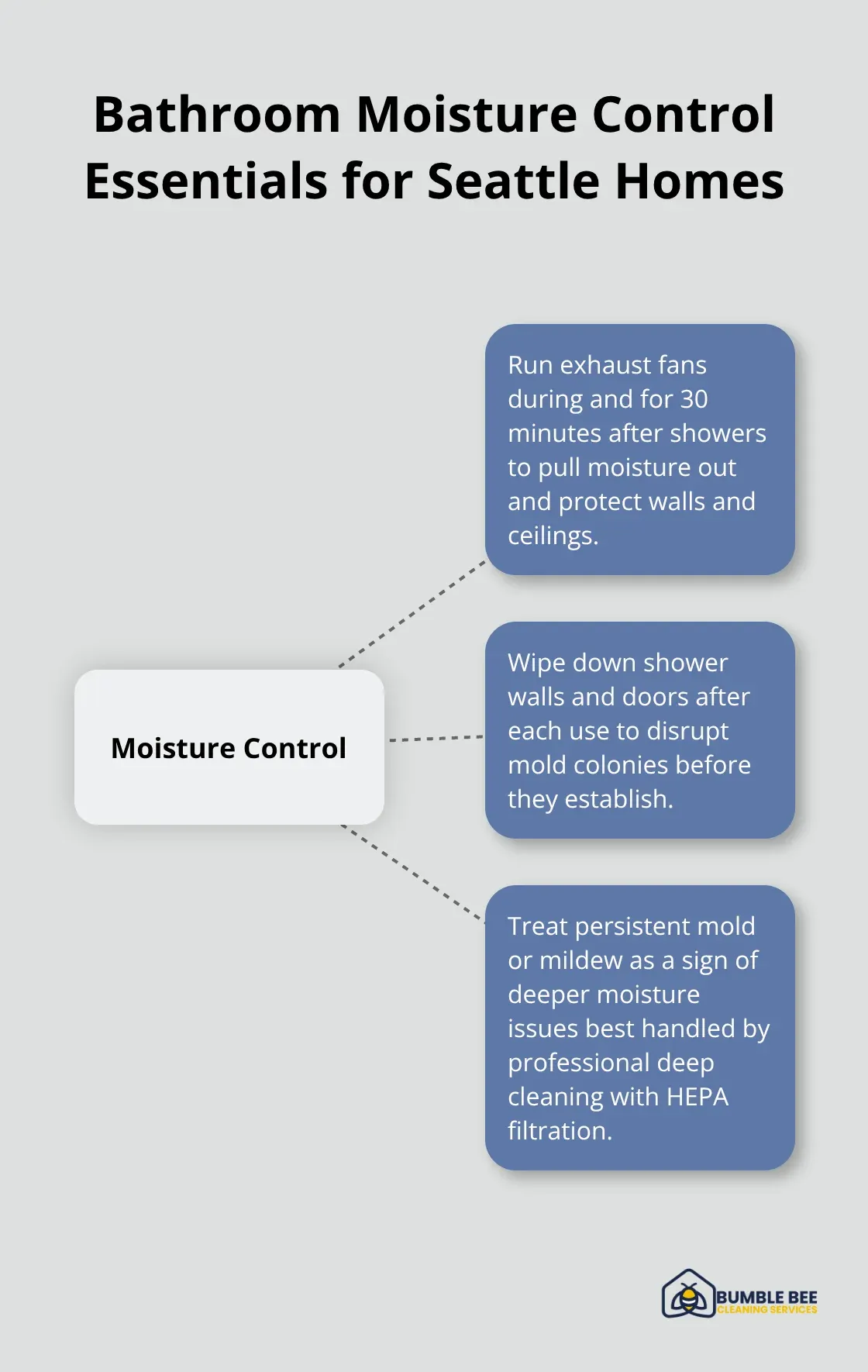
Ventilation matters enormously in Seattle, so run exhaust fans during and for 30 minutes after showers to pull moisture out of the space, which prevents mold from establishing in walls and ceilings. Wipe down shower walls and doors after each use rather than waiting for weekly cleaning, because mold colonies start forming within 24 to 48 hours on wet surfaces. If persistent mold or mildew appears despite weekly cleaning, that signals deeper moisture issues that professional deep cleaning with HEPA filtration can address more effectively than standard routines-a reality that makes seasonal deep cleaning strategies essential for Pacific Northwest homes.
Seasonal Deep Cleaning Tasks for Pacific Northwest Climates
Seattle’s seasonal shifts demand aggressive cleaning strategies that weekly routines simply cannot handle. Spring arrives with moisture that has accumulated all winter, creating ideal conditions for mold colonies in walls, under carpets, and inside HVAC systems where standard vacuuming never reaches.
Spring Mold Prevention and Deep Cleaning
Start your spring deep clean by removing baseboards and vacuuming behind them with a HEPA-filter vacuum, since mold spores settle in these protected zones during months of high indoor humidity. Air vents require complete attention: remove covers, vacuum inside ductwork if accessible, and replace furnace filters that have trapped moisture and allergens all winter. Your carpets have absorbed months of Seattle moisture, so professional steam cleaning or a rented deep-cleaning machine works far better than surface vacuuming. Grout lines in bathrooms and kitchens accumulate mold deep within the porous material, requiring a stiff brush and a vinegar-water solution or oxygen-based cleaner that penetrates where mold lives, not just where it shows.
Window and Frame Treatment
Windows and window tracks collect mold spores and moisture residue, so clean frames thoroughly and leave windows open on dry days to allow air circulation that prevents future mold growth.
Fall Preparation Before Rain Arrives
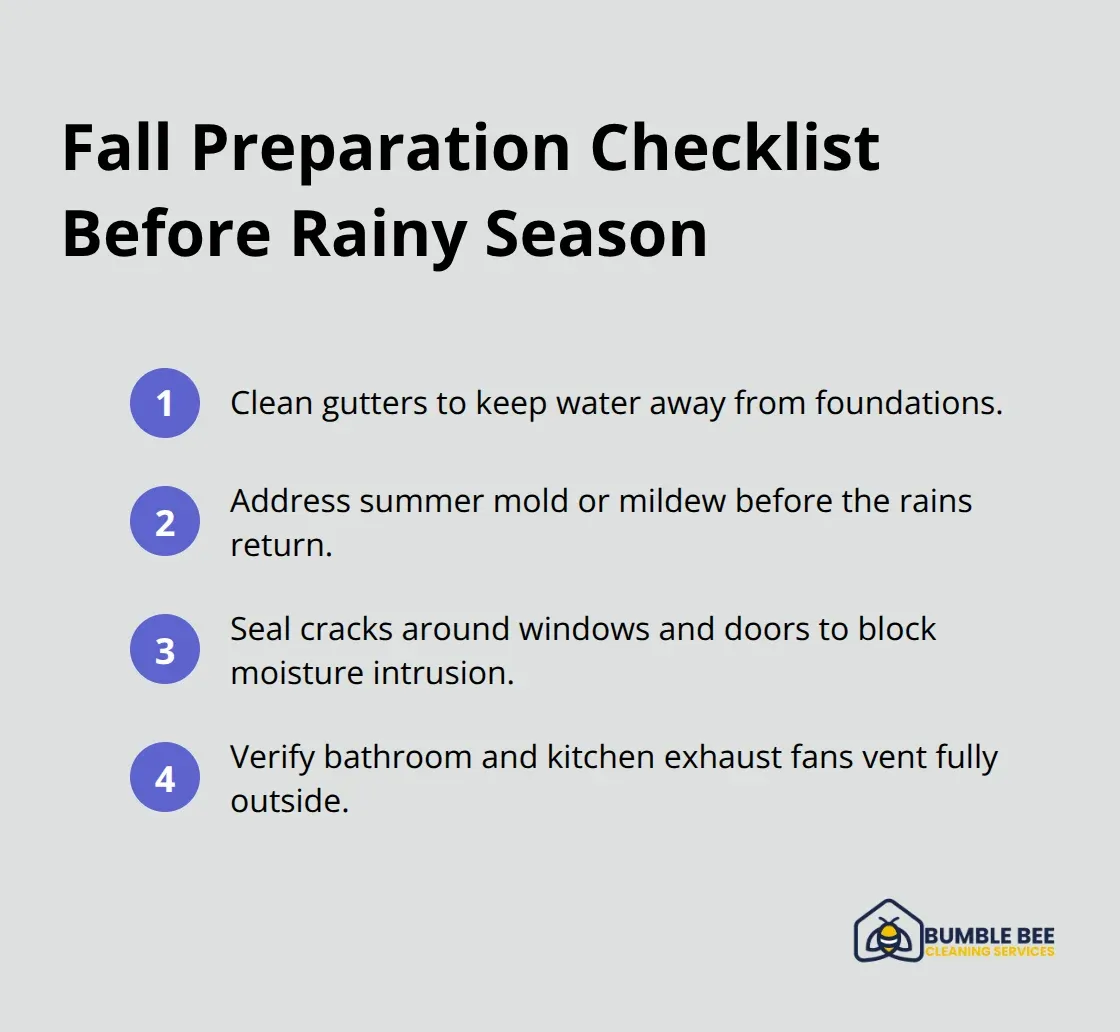
Fall preparation in the Pacific Northwest is not optional if you want to avoid winter moisture damage. September and October are your window to address any mold or mildew that developed during summer humidity before rain arrives and traps moisture indoors for months. Inspect your home’s exterior: clean gutters completely so water drains away from foundations and doesn’t seep into basements or crawl spaces where mold thrives unchecked. Interior preparation means sealing any cracks around windows and doors where moisture enters, and checking that exhaust fans in bathrooms and kitchens vent completely outside rather than into attics.
Winter Moisture Management
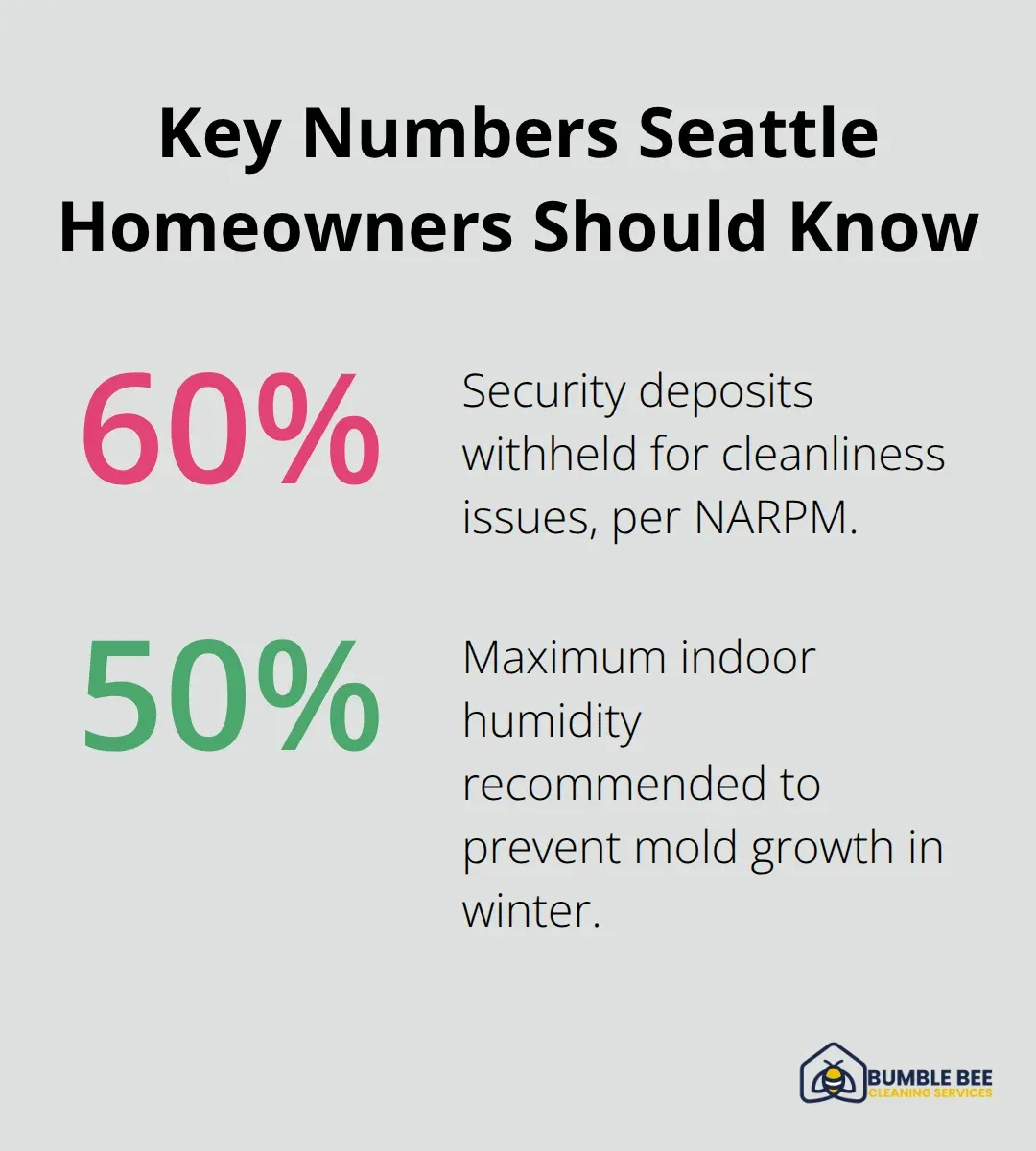
Winter in Seattle brings persistent moisture that makes homes vulnerable to mold growth in closets, under sinks, and in poorly ventilated corners. Run dehumidifiers in bedrooms and basements to keep humidity below 50 percent, which prevents mold from establishing. Inspect under-sink areas monthly where slow leaks go unnoticed for weeks, creating mold in cabinet interiors and wall cavities.
When Professional Deep Cleaning Becomes Necessary
If your home shows signs of persistent moisture problems despite these seasonal efforts, professional deep cleaning services with HEPA filtration and antimicrobial treatments address hidden mold that standard cleaning misses. These seasonal challenges set the stage for understanding how busy families can maintain cleanliness year-round without sacrificing their weekends.
Time-Saving Cleaning Hacks for Busy Seattle Families
Grouping similar tasks together cuts your weekly cleaning time significantly because you stay focused on one activity rather than switching between different rooms and methods. Wash all mirrors and windows in your home during a single session instead of cleaning the bathroom mirror, then the kitchen window, then the bedroom glass-this approach reduces setup time and keeps your supplies in one place. Dust all surfaces in your home consecutively using the same cloth and technique, which trains your muscle memory and prevents you from hunting for supplies between rooms. A structured approach like this can streamline your cleaning routine compared to random room-by-room cleaning.
Invest in Tools That Work for Seattle’s Climate
The right tools make an enormous difference in Seattle homes where moisture and dust accumulate faster than in drier climates. A HEPA-filter vacuum captures fine mold spores and allergens that standard vacuums release back into the air-this single upgrade prevents you from cleaning the same spaces twice. Microfiber cloths trap dust particles instead of spreading them around, meaning you clean surfaces once rather than multiple times. A quality mop with a microfiber head and a spray bottle of vinegar-water solution handles most floor cleaning without requiring a separate bucket, bleach, or multiple products. These investments cost more upfront but reduce your cleaning time because you spend less time on surfaces that require repeated attention.
Match Tasks to Your Child’s Actual Ability
Children as young as two can place toys in a basket, while four-year-olds can wipe low surfaces with a damp cloth under supervision. Ages six through eight handle vacuuming with guidance, and children nine and older tackle bathroom cleaning and kitchen tasks with instruction. The key is matching difficulty to actual capability rather than age alone-a responsible eight-year-old might handle more than a distracted twelve-year-old. Rotating duties prevents boredom and builds competence across multiple tasks, so your teenager who cleaned bathrooms last month handles kitchen sanitization this month.
Create a Chore Chart That Eliminates Nagging
Write a simple chore chart showing which person handles which task and when it occurs, then post it where everyone sees it daily. A chart works better than verbal reminders because it removes the need for you to nag, which saves your energy and reduces family friction. Expect imperfect results initially-a nine-year-old’s vacuumed floor won’t match your standard, but consistency matters more than perfection at this stage. Acknowledge completed tasks immediately rather than waiting until they become problems, because positive feedback sustains participation far better than criticism. If a task goes undone, address it once without lecture, then move forward. Families that assign specific tasks to specific people report lower stress and faster completion rates because responsibility becomes clear rather than assumed.
Final Thoughts
Seattle’s wet climate and packed schedules make consistent cleaning routines non-negotiable if you want to prevent mold, allergens, and the stress that comes with a chaotic home. The weekly tasks, seasonal deep cleaning strategies, and time-saving hacks outlined here work because they address the specific moisture and dust challenges that Pacific Northwest homes face year-round. Batching similar tasks, investing in HEPA-filter vacuums and microfiber cloths, and delegating age-appropriate chores to family members cuts your cleaning time dramatically while building responsibility in your household.
Residential cleaning advice Seattle residents often overlook is recognizing when professional help actually saves money and sanity. If mold persists despite your seasonal efforts, if your family’s schedule leaves no realistic time for deep cleaning, or if you’re preparing for a move or post-renovation cleanup, hiring professionals makes financial sense. About 60 percent of security deposits get withheld for cleanliness issues according to the National Association of Residential Property Managers, which means a professional move-out cleaning protects your money far better than rushing through it yourself.
We at Bumble Bee Cleaning Services handle recurring maintenance, deep cleaning, move-out cleaning, and post-construction cleanup with eco-friendly products and transparent pricing. Starting with a professional deep clean creates a baseline that makes your weekly routines easier to maintain, then transitioning to recurring biweekly or monthly service keeps your home consistently clean without the weekend burden. Contact us for a free quote to discover how professional cleaning paired with your own weekly efforts creates the clean, healthy home your family deserves.
For more information about our cleaning services in Seattle and Atlanta, or to request a cleaning quote, call or text us at 425-786-1360 or email us at info@qbclean.com
