
Losing your security deposit over cleaning oversights is frustrating and preventable. Most landlords have specific standards for move-out inspections, and missing even small details can cost you hundreds of dollars.
We at Bumble Bee Cleaning Services have helped countless renters understand exactly what landlords expect. This checklist walks you through every room and every surface that matters.
What Landlords Actually Check During Move-Out Inspections
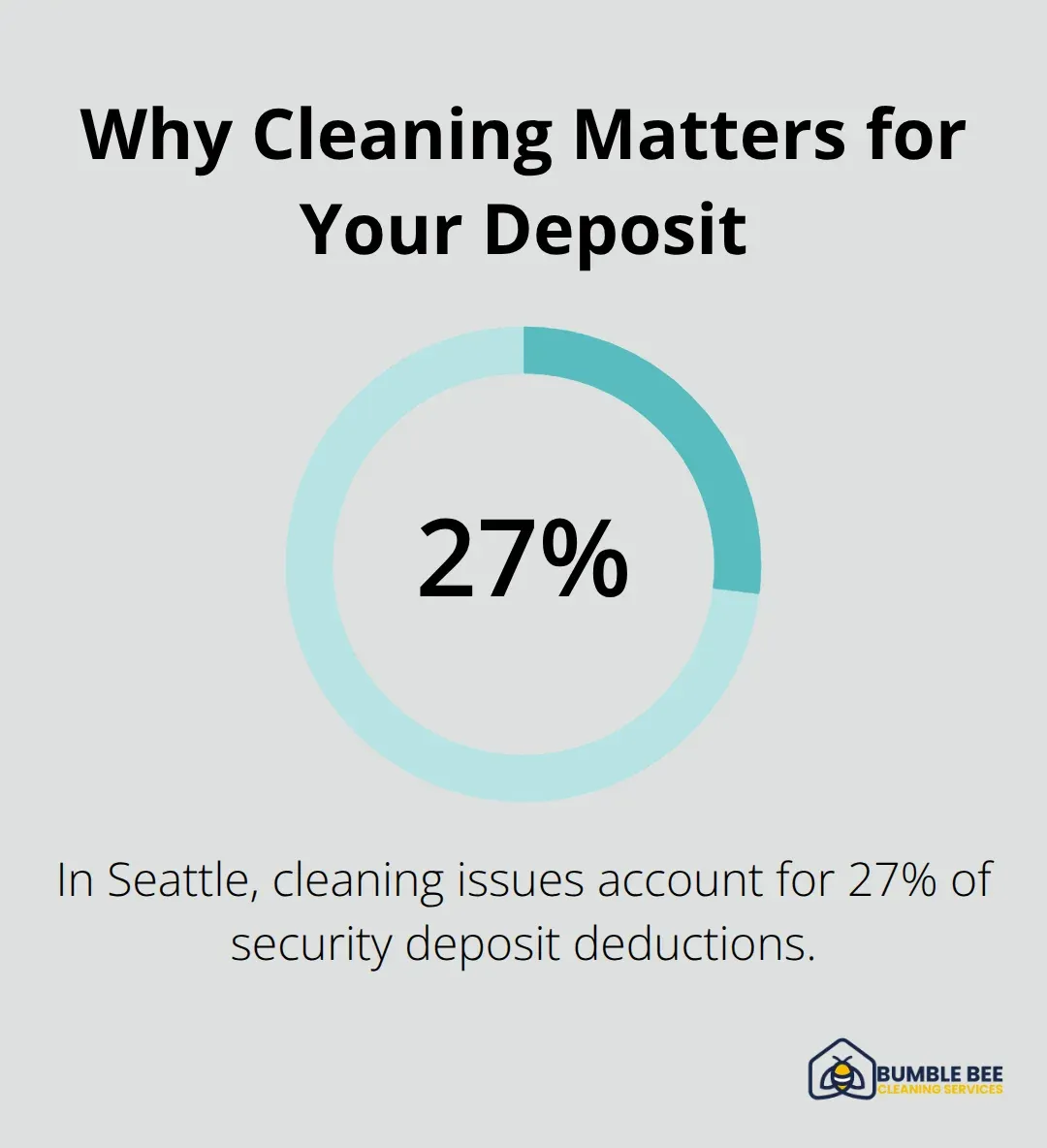
Landlords focus on three areas during move-out inspections: appliances, bathrooms, and floors. These aren’t random priorities-they directly impact whether you get your full security deposit back. In Seattle, cleaning issues account for 27% of security deposit deductions, making it the second-largest reason after damage charges.
Washington state law requires landlords to return your deposit within 21 days and provide itemized deductions for any charges, but only if those charges reflect the cleanliness standard documented at move-in. This means your responsibility isn’t meeting some generic standard-it’s matching the condition your landlord documented when you moved in.
The Kitchen Gets the Closest Inspection
Your landlord will open every cabinet, drawer, and appliance. The refrigerator interior matters more than most renters realize-landlords specifically check behind and underneath it because that’s where dirt accumulates and odors develop. Clean the refrigerator shelves with warm water and baking soda to eliminate odors. The stovetop and oven receive heavy scrutiny because grease and burnt residue signal poor maintenance. Run heavy-duty oven cleaner and scrub thoroughly. The dishwasher also gets examined; run it empty with white vinegar to sanitize the interior and remove odors. Countertops must be wiped down completely, and backsplashes need attention because dried food and grease are visible from a distance. Don’t overlook cabinet interiors and exteriors-a sample move-out cleaning invoice showed window tracks, baseboards, and wooden blinds were noted as very dirty, suggesting landlords expect these details cleaned throughout the entire unit.
Bathrooms Reveal Neglect Quickly
Bathrooms are where tenants lose deposits most often because mold, soap scum, and hard-water stains are obvious. Scrub the toilet thoroughly, including the base and behind the seat where urine can accumulate and create odors. Remove soap scum and mildew from shower and tub walls aggressively, especially in Seattle’s humid climate where mold grows rapidly. Clean grout with a toothbrush and baking soda paste rather than relying on spray cleaners alone. Polish mirrors and chrome fixtures until they shine, and clean the exhaust fan because dust buildup signals poor ventilation and cleanliness. Cabinets need inside and outside cleaning-landlords open them and look for crumbs, stains, and old shelf liners.
Floors and Walls Determine Your Entire Deposit
Carpet stains and odors are deal-breakers. Professional carpet cleaning is worth the investment if your lease requires it because landlords compare carpet condition to move-in photos. Normal wear and tear on carpet isn’t deductible, but stains, burns, or pet damage can trigger charges. Hard floors need complete sweeping, vacuuming, and mopping-don’t leave pet hair or dust. Baseboards throughout the entire unit get inspected because they accumulate dust and show neglect instantly. Wipe them with a damp cloth or flexible dust mop. Walls matter too; remove all nails, patch holes, and repair damage. If you changed paint colors, repaint to neutral or obtain written landlord approval to keep non-neutral colors, because landlords won’t accept color changes without permission. Light switches and door frames get wiped because they’re high-touch surfaces, and fingerprints or grime are visible during walk-throughs. Document the cleaned condition with timestamped photos from multiple angles in each room-compare these with move-in photos to prove the condition and protect yourself if disputes arise over charges.
What Happens When You Miss These Details
These three areas (kitchen, bathroom, floors) account for the majority of deposit deductions because they’re visible, measurable, and directly tied to tenant responsibility. Missing baseboards, light fixtures, or carpet stains gives landlords concrete reasons to withhold funds. The next section walks you through a room-by-room checklist that covers every surface landlords inspect, so you can tackle each space systematically and avoid costly oversights.
What to Clean in Every Room
Bedrooms and Living Areas
Dust all horizontal surfaces, including ceiling fans-use the pillowcase technique to contain dust while you clean each blade individually. Wipe window sills and tracks thoroughly with a damp cloth because landlords specifically inspect these areas. Remove wall marks, nail holes, and scuffs by patching with spackling compound and touching up with neutral paint. Wipe baseboards throughout with a damp microfiber cloth since dust settles there visibly. Clean door frames, doorknobs, and light switches with a disinfectant because these high-touch surfaces show fingerprints instantly.
Vacuum carpets thoroughly, including under furniture where pet hair and dust hide. If your lease requires professional carpet cleaning, hire a service at least two weeks before move-out to allow time for drying. Hard floors need complete sweeping, vacuuming, and mopping to remove grime and water marks.
The Kitchen Demands the Most Intensive Effort
Empty every cabinet and drawer, wiping interiors and exteriors completely. Clean behind and underneath the refrigerator where odors develop from spilled food and condensation. Wipe refrigerator shelves with warm water and baking soda to eliminate odors that linger even after food is removed. Run heavy-duty oven cleaner on the stovetop and inside the oven, scrubbing burnt residue thoroughly because grease signals poor maintenance to landlords.
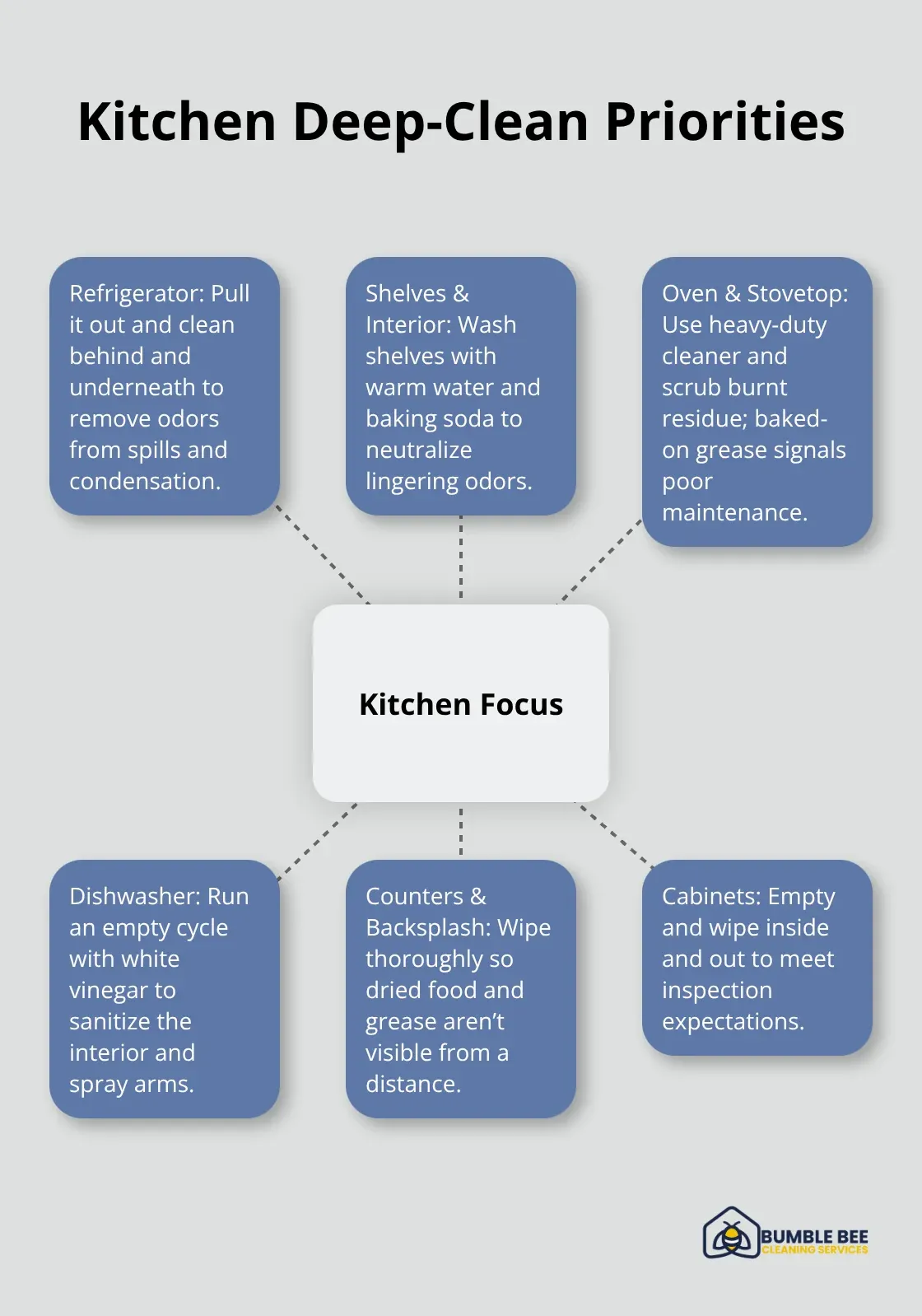
Sanitize the dishwasher by running it empty with white vinegar to remove food particles and odors from the spray arms and interior. Wipe down all countertops, backsplashes, and the sink until they shine. Clean window sills, tracks, and frames in the kitchen because these areas trap grease and dust. Wipe baseboards with the same attention you gave other rooms. Vacuum and mop the floor completely, removing all crumbs and debris.
Bathrooms Require Aggressive Treatment
Attack mold and soap scum aggressively because Seattle’s humidity creates growth conditions quickly. Scrub the toilet thoroughly, including the base and behind the seat where urine accumulates and creates odors. Attack shower and tub walls with a scrub brush and mildew remover, paying special attention to grout lines. Use a toothbrush and baking soda paste on grout to remove discoloration that spray cleaners won’t eliminate.
Polish mirrors and chrome fixtures until they reflect light without streaks. Clean cabinet interiors and exteriors, removing old shelf liners and wiping down all surfaces. Wipe walls and light switches, then clean the exhaust fan because dust buildup signals poor ventilation. Mop the bathroom floor thoroughly, ensuring no water spots or residue remain.
High-Touch Surfaces and Final Details
Light switches, doorknobs, and door frames throughout your entire unit receive close attention during inspections. Wipe these surfaces with a disinfectant cloth to remove fingerprints and grime. Baseboards in every room accumulate dust and show neglect instantly-don’t skip them in hallways, closets, or less-visible areas. Document the cleaned condition with timestamped photos from multiple angles in each room and compare these with move-in photos to prove the condition and protect yourself if disputes arise over charges.
These room-by-room details form the foundation of what landlords expect, but the mistakes renters make during this process often undermine even thorough cleaning efforts. The next section reveals which oversights cost tenants their deposits most frequently.
Common Move-Out Cleaning Mistakes That Cost You Your Deposit
Baseboards and Light Fixtures Reveal Everything
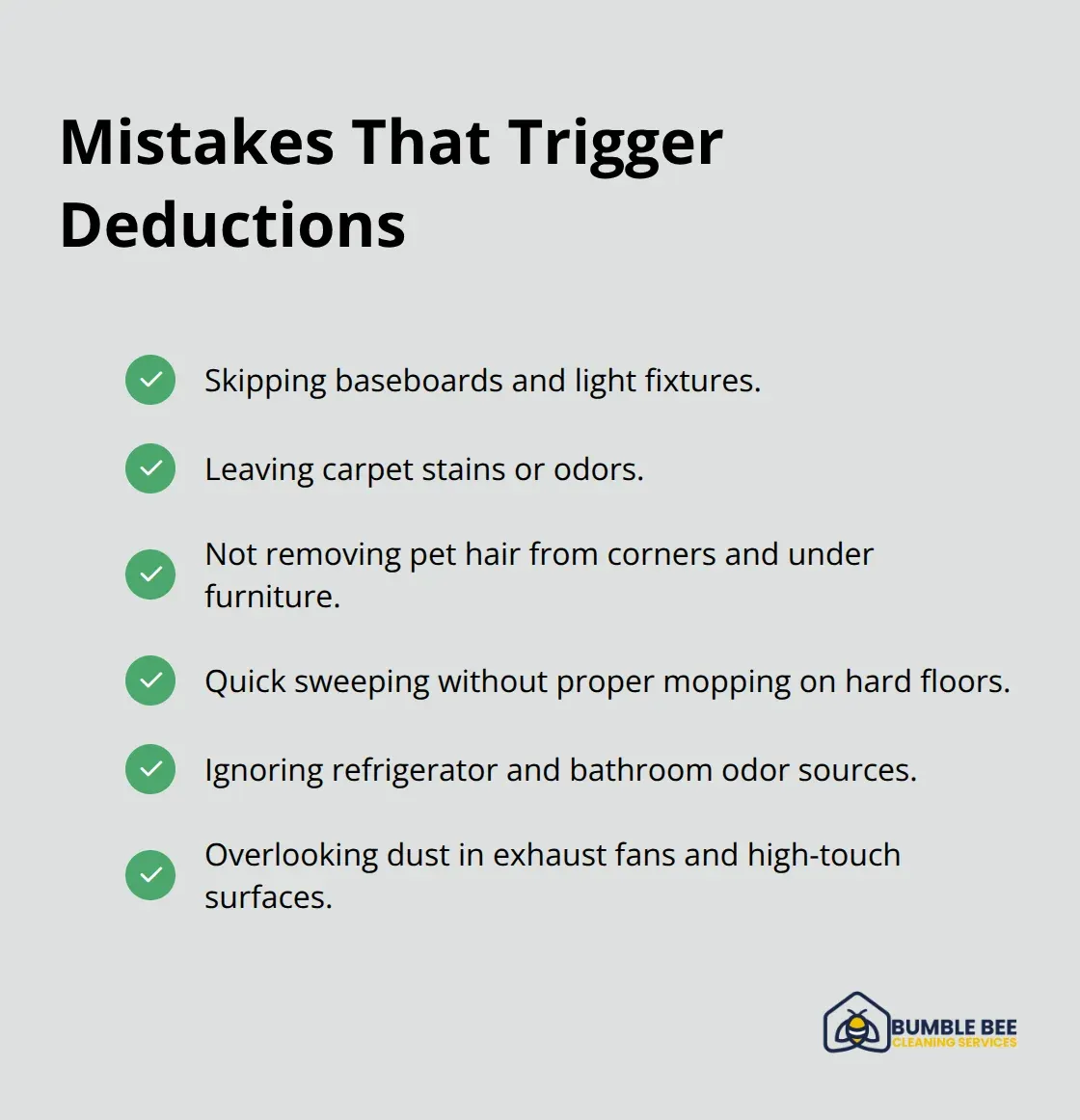
Baseboards and light fixtures are the first places landlords inspect because they reveal how thoroughly you cleaned, yet most renters skip them entirely or clean them hastily. Baseboards accumulate dust and pet hair over months, and a quick wipe won’t remove ground-in dirt. You need a damp microfiber cloth and multiple passes along the entire length of each baseboard in every room, including hallways and closets. Light switches and fixture covers require the same attention because fingerprints and dust buildup are visible under inspection lighting. If you skip these details, landlords see negligence and withhold deposits even when larger surfaces look clean.
Carpet and hard floors Trigger the Biggest Disputes
Carpet and hard floors are where the biggest disputes happen because landlords compare your move-out condition directly to move-in photos and often hire professional cleaners afterward, then charge you the difference if your cleaning falls short. Hard floors need complete vacuuming followed by mopping with appropriate floor cleaner, not just a quick sweep. Pet hair hidden under furniture and in corners signals poor cleaning to landlords, and water spots or streaks on hard floors trigger additional charges.
Odors and Stains Cost Renters Thousands
Odors and stains cost renters thousands in deductions annually because they’re difficult to remove without industrial equipment and indicate poor maintenance throughout the tenancy. Refrigerator odors develop from spilled food and condensation, and simply removing food won’t eliminate them; you must wipe shelves with warm water and baking soda to neutralize odors at the source. Bathroom odors from urine behind and around the toilet base require scrubbing with bleach or enzymatic cleaners, not just surface wiping. Carpet stains from pet accidents, food, or beverages often require professional extraction equipment to remove completely, especially if the stain has set for days or weeks. If your lease specifies professional carpet cleaning and stains remain after DIY attempts, landlords will hire professionals and bill you for the full service cost, which typically ranges from $150 to $600 depending on the property size. Mold and mildew in bathrooms develop rapidly in Seattle’s humid climate and must be treated aggressively with proper fungicides, not just bathroom spray. Leaving any of these issues unaddressed guarantees deductions because landlords document everything photographically and provide itemized bills showing exactly what they paid to fix problems you left behind. The difference between losing your deposit and getting it back often comes down to whether you address these three categories thoroughly or overlook them hoping landlords won’t notice.
Final Thoughts
Renters move-out cleaning requires attention to three critical areas: kitchens, bathrooms, and floors. Missing baseboards, light fixtures, or carpet stains gives landlords concrete reasons to withhold your security deposit. The room-by-room checklist in this guide covers every surface landlords inspect, from refrigerator interiors to toilet bases to window tracks, and odors or stains cost renters thousands annually because they signal poor maintenance and often require professional remediation that landlords bill directly to you.
Professional move-out cleaning eliminates guesswork and protects your deposit. We at Bumble Bee Cleaning Services understand exactly what landlords expect because we’ve completed hundreds of move-out cleanings across residential properties. Our team handles the intensive work-aggressive mold treatment, deep appliance cleaning, carpet extraction-that DIY efforts often miss, and with a 100% quality service guarantee, you receive documented proof that every detail meets landlord standards, which protects you if disputes arise over charges.
The cost of professional move-out cleaning typically ranges from $150 to $400 depending on property size, but this investment pays for itself by reducing the risk of large deposit deductions. Start your move-out cleaning at least two weeks before your move date to allow time for professional carpet cleaning if required by your lease, and contact Bumble Bee Cleaning Services for a flat-rate quote and easy online booking.
For more information about our cleaning services in Seattle and Atlanta, or to request a cleaning quote, call or text us at 425-786-1360 or email us at info@qbclean.com
