
Construction projects leave behind stubborn stains on concrete surfaces that regular cleaning methods can’t handle. Oil spills, paint splatters, and rust marks require specialized techniques to remove completely.
We at Bumble Bee Cleaning Services see these challenging stains daily across Seattle properties. Professional concrete cleaning methods can restore your surfaces to their original condition when DIY approaches fall short.
What Types of Construction Stains Affect Seattle Concrete
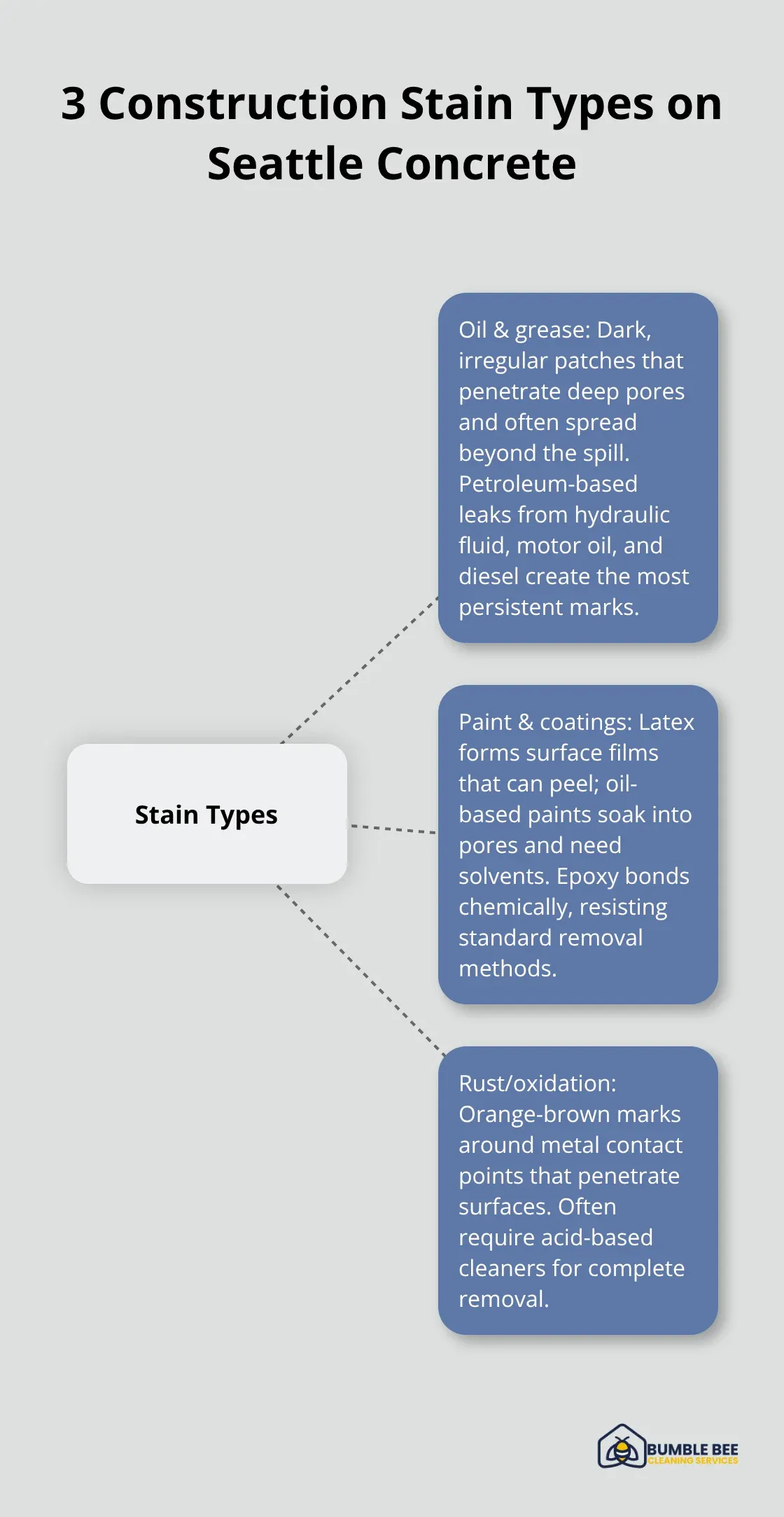
Construction equipment deposits three distinct stain patterns that demand different removal approaches. Oil and grease stains appear as dark, irregular patches that penetrate deep into concrete pores and often spread beyond the original spill area. These petroleum-based stains from hydraulic fluid, motor oil, and diesel fuel create the most persistent marks on concrete surfaces.
Fresh oil stains spread rapidly through concrete’s porous structure, which makes immediate treatment necessary to prevent permanent discoloration.
Heavy Equipment Oil Contamination
Hydraulic equipment creates the deepest oil penetration in concrete surfaces. Construction machinery leaks hydraulic fluid during operation, creating concentrated petroleum compounds that bond with concrete at the molecular level and require specialized degreasers that contain surfactants to break the chemical bonds. Standard household cleaners fail against these industrial-grade oil stains because they lack the chemical strength to penetrate beyond surface level.
Paint and Coating Residue Patterns
Paint spills create sharp-edged stains with concentrated color deposits that vary based on paint type. Latex paint forms surface films that peel away in sheets when dried, while oil-based paints penetrate concrete pores and require solvent-based removal methods. Epoxy coatings create the most stubborn stains and form chemical bonds with concrete that resist standard approaches. Pool maintenance chemicals and exterior stains leave concentrated color marks that require pH-specific removal techniques.
Metal Oxidation and Rust Deposits
Rust stains manifest as orange-brown marks with irregular edges around metal contact points. Iron-rich groundwater in Seattle creates widespread rust stains during construction phases when metal reinforcement materials contact wet concrete. These oxidation marks penetrate into concrete surfaces and require acid-based cleaners that contain oxalic or phosphoric acid for complete removal. Standard pressure wash removes only surface rust particles while it leaves embedded iron oxide deposits intact, making professional treatment necessary for deep stains.
These construction stains require specific removal techniques that match their chemical composition and penetration depth.
How Do You Remove Construction Stains Yourself
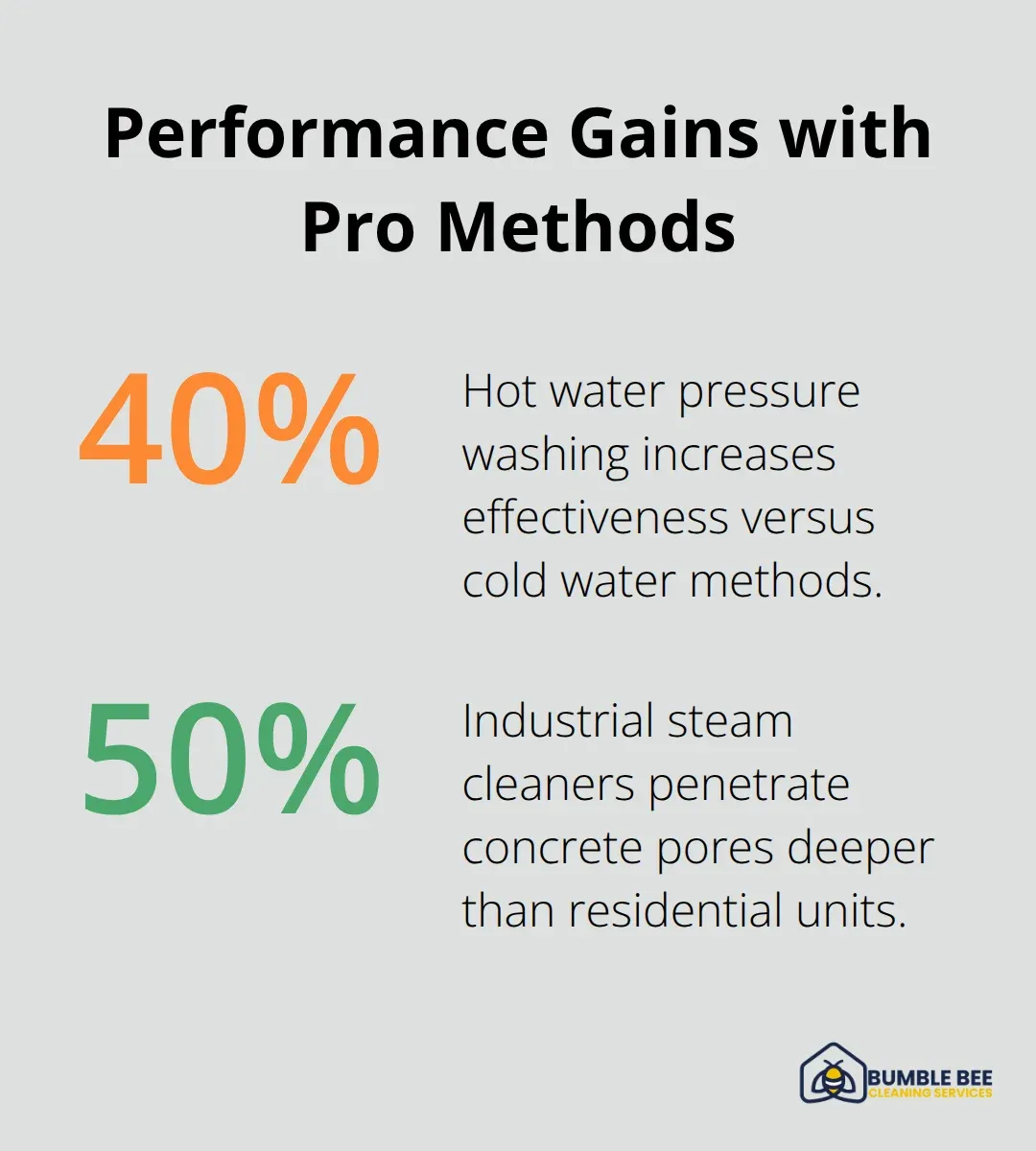
Pressure washing removes surface-level stains but requires specific techniques for construction residue. A 1,300 to 2,000 PSI pressure washer works best for residential concrete surfaces, while 25-degree nozzles prevent surface damage on older concrete. Start pressure washing from the outside edges of stains and work toward the center to prevent contamination spread. The Washington State Department of Ecology recommends you maintain 12-inch distance from concrete surfaces during pressure washing to avoid etching damage. Hot water pressure washing increases effectiveness by 40% compared to cold water methods, which makes equipment rental worthwhile for heavy stains.
Chemical Degreasers Attack Oil Stains Effectively
Commercial degreasers that contain surfactants break down petroleum-based construction stains that pressure washing alone cannot remove. Apply degreaser at full strength on oil stains and let it sit for 20 minutes before you scrub with stiff brushes in circular motions. Muriatic acid removes rust stains effectively but requires protective gear (gloves, eye protection, and respirators) due to toxic fumes. Cat litter absorbs fresh oil spills within 24 hours when you apply it immediately, which makes cleanup easier before permanent stains set. Regular concrete maintenance helps prevent permanent stain buildup when you perform it monthly.
Natural Solutions Show Limited Results
Baking soda mixed with water removes light dirt stains but fails against deep oil penetration from construction equipment. White vinegar breaks down mineral deposits and efflorescence but lacks chemical strength for industrial-grade stains. A vinegar and water mixture works on fresh paint spills within the first hour, but older paint requires solvent-based removal methods. Natural solutions cost less but require multiple applications and extended treatment times that often exceed professional service value for severe construction stains.
Equipment Rental Costs Add Up Quickly
Professional-grade pressure washers rent for $75-150 per day in Seattle (plus fuel and cleaning solution costs). Chemical degreasers cost $25-40 per gallon and often require multiple applications for stubborn stains. Safety equipment adds another $50-75 to your total project cost when you factor in respirators, protective clothing, and disposal fees. These expenses accumulate rapidly when DIY methods fail to remove deep-set construction stains completely.
When Should You Hire Professional Cleaners
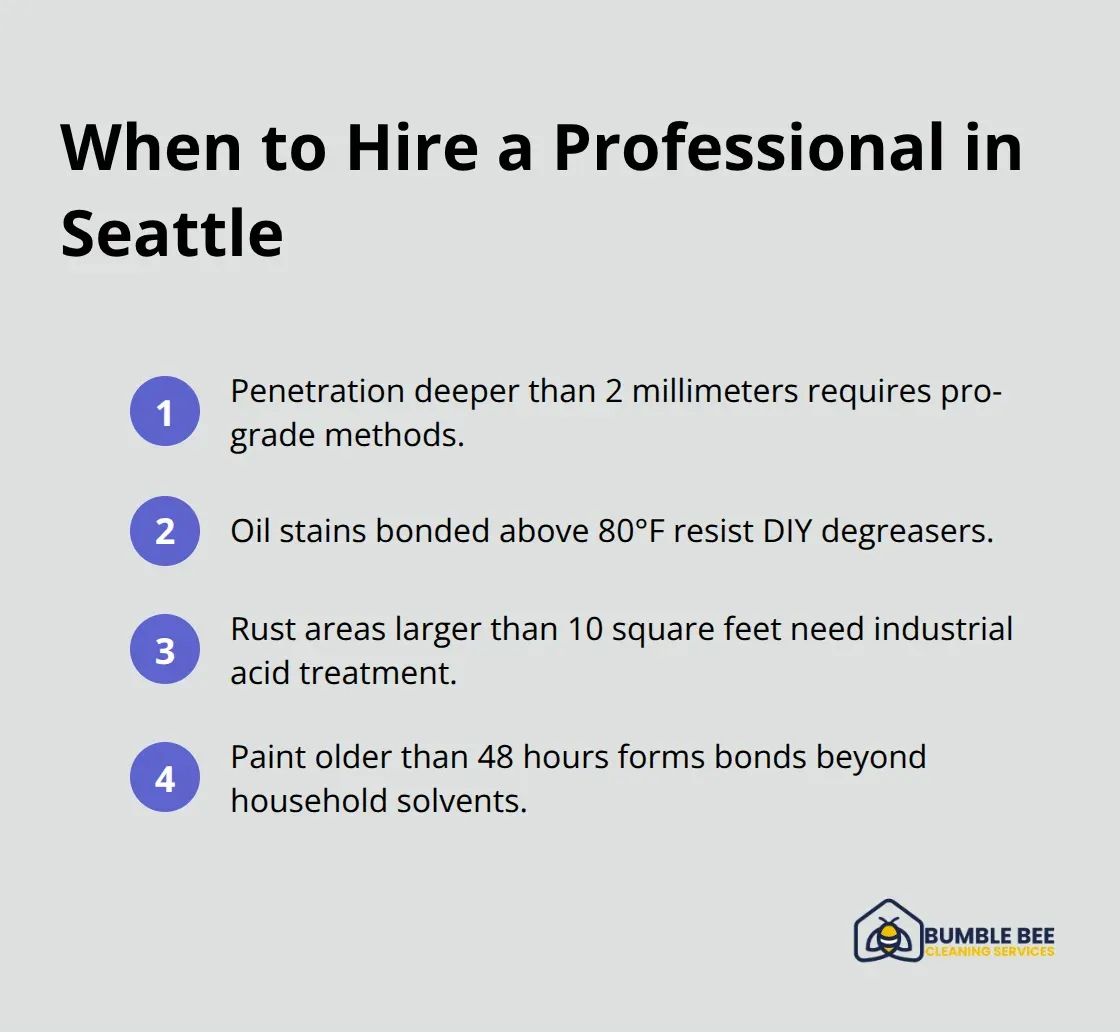
DIY methods fail when construction stains penetrate deeper than 2 millimeters into concrete surfaces. Set-in oil stains from hydraulic equipment resist standard degreasers because petroleum compounds chemically bond with concrete at temperatures above 80 degrees Fahrenheit. Rust stains that cover areas larger than 10 square feet indicate widespread iron contamination that requires industrial-grade acid treatments beyond typical homeowner capabilities. Paint stains older than 48 hours form permanent chemical bonds with concrete that household solvents cannot break down effectively.
Chemical Safety Requires Professional Training
Muriatic acid treatments for rust removal produce toxic chlorine gas when workers mix them incorrectly, which creates serious respiratory hazards that require OSHA-certified safety protocols. Professional cleaners carry liability insurance for chemical accidents and maintain proper ventilation equipment that costs $2,000-5,000 per unit. The Environmental Protection Agency classifies many industrial degreasers as hazardous materials that require special disposal permits costing $150-300 per incident. Professional services complete acid treatments in 2-3 hours versus 8-12 hours for untrained applications, which reduces exposure time significantly.
Professional Equipment Delivers Superior Results
Commercial pressure washers operate at 3,000 PSI with cold water systems that remove embedded stains in single applications versus multiple DIY attempts. Professional concrete cleaners charge $0.25-0.75 per square foot compared to $150-200 daily equipment rental plus chemical costs that often exceed professional service rates. Industrial-grade steam cleaners penetrate concrete pores 50% deeper than residential pressure washers, which removes stains that DIY methods leave behind.
Time Efficiency Favors Professional Services
Professional teams complete 500-1,000 square feet per hour compared to 100-200 square feet for homeowner efforts, which makes time savings substantial for large construction cleanup projects. Trained technicians identify stain types immediately and apply targeted treatments that eliminate multiple trial-and-error attempts. Professional services complete most construction stain removal projects within 4-6 hours (including setup and cleanup), while DIY approaches often require multiple weekends to achieve similar results.
Final Thoughts
Construction stain removal success depends on how well you match the right method to each stain type. Pressure washing works best for surface-level contamination, while chemical degreasers handle deep oil penetration from heavy equipment. Natural solutions like baking soda and vinegar provide limited results against industrial-grade stains but work well for light surface marks.
Quick action on fresh construction stains prevents permanent concrete damage. Oil spills penetrate deeper into concrete pores within the first 24 hours (making immediate treatment necessary). Fresh paint removes easily with soap and water, while set-in paint requires specialized solvents that cost significantly more.
Professional concrete cleaning becomes necessary when DIY methods fail against deep-set stains. We at Bumble Bee Cleaning Services handle stubborn construction stains that resist standard removal techniques. Our team uses industrial-grade equipment and eco-friendly products to restore concrete surfaces completely, and professional cleaning services provide guaranteed results with proper safety protocols and specialized chemical treatments that homeowners cannot access safely.
