
Your office is only as clean as its hidden corners. Dust settles on baseboards, bacteria grows in neglected vents, and high-traffic areas wear down fast-all while your team works around the mess.
We at Bumble Bee Cleaning Services know that office deep cleaning tips matter because they directly impact employee health, client trust, and your bottom line. A sparkling office isn’t just about appearances; it’s about creating a space where people actually want to work.
Why Deep Cleaning Protects Your Bottom Line
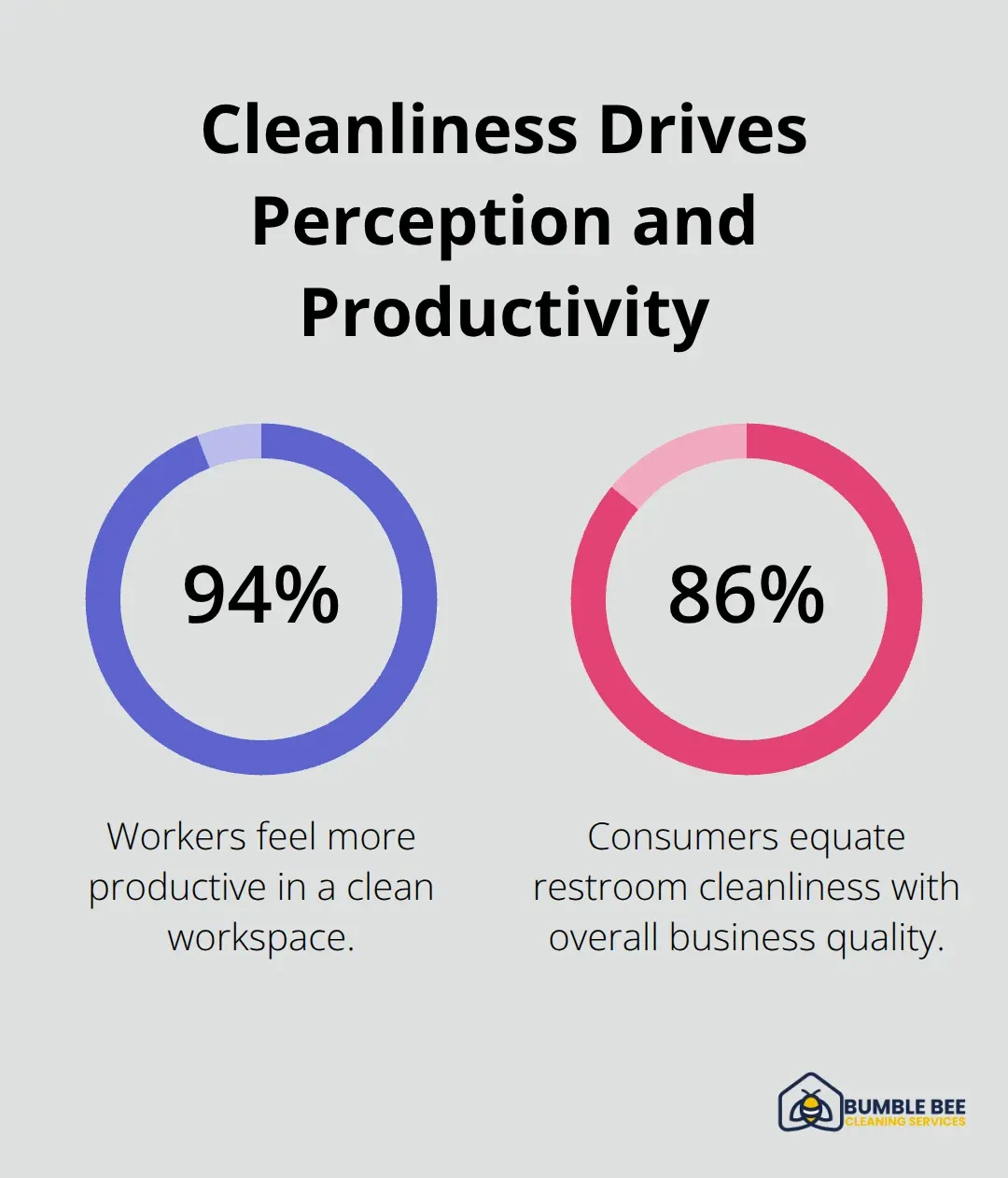
A typical office desk harbors 400 times more bacteria than a toilet seat, according to research from the University of Arizona. That statistic alone explains why surface-level cleaning fails-bacteria thrive in places your daily wipe-down never reaches. Office deep cleaning targets these hidden hotspots and delivers measurable returns that go far beyond appearances. 94% of workers feel more productive in a clean workspace, and the productivity boost translates directly to output and profit margins. When you skip deep cleaning, you actively reduce what your team can accomplish.
Employee Health Directly Impacts Your Payroll
The Bureau of Labor Statistics reports that businesses lose approximately 2.8 million workdays annually due to injuries and illnesses. A significant portion stems from workplace contamination. Neglected high-touch surfaces like door handles, elevator buttons, and shared keyboards become transmission vectors for pathogens. Deep cleaning targets these zones with proper disinfection protocols that go beyond standard sanitizing. The CDC distinguishes between cleaning, sanitizing, and disinfecting-and deep cleaning incorporates all three steps. First, surfaces get cleaned with soap and water to remove visible dirt and many germs. Then sanitizing reduces remaining germs, and finally disinfecting kills the rest. Skipping any step weakens the entire process. Regular deep cleaning reduces sick days, keeps employees healthier, and reduces the hidden cost of presenteeism-when workers show up ill and perform poorly.
Client Impressions Form in Milliseconds
A study from the University of Wolverhampton found that people form first impressions in about 0.1 seconds. Your office lobby, conference rooms, and restrooms create that impression instantly. Harris Interactive research reveals that 86% of consumers equate restroom cleanliness with overall business quality-and clients extend that logic to your entire office. A dirty office signals carelessness, cutting corners, and low standards. A spotless one signals professionalism and attention to detail. That perception directly influences whether prospects sign contracts or walk away. Deep cleaning removes the grime that accumulates in grout lines, baseboards, ceiling vents, and inside cabinets (the places clients notice when they’re looking for reasons to doubt you). These visible improvements in overlooked areas separate offices that clients trust from those they avoid.
Where Dirt Hides and How to Find It
Start at the Top and Work Down
Start at the ceiling and work downward-this single shift in cleaning strategy eliminates the most common deep cleaning mistake. Dust and debris always settle downward, so cleaning baseboards before ceiling vents means you recontaminate surfaces you just finished. Teams spend hours on floors, then dust ceiling fans and undo all that work. High-traffic zones like entryways, conference room doors, and elevator lobbies demand attention first because foot traffic continuously deposits soil. These areas need cleaning every two weeks minimum, while standard offices can stretch to monthly deep cleaning.
Hidden Spaces Multiply Contamination
The real problem isn’t the high-traffic zones themselves-it’s that neglected spaces multiply the contamination problem. Baseboards accumulate dirt because air currents push dust to floor edges. Ceiling vents become bacterial breeding grounds because nobody looks up. Inside cabinet hinges and door frames collect grime that clients spot during facility tours. Hidden areas require cleaning before sanitizing or disinfecting, because impurities like dirt make it harder for sanitizing chemicals to kill germs.
Build a Two-Tier Cleaning System
Create a two-tier system: assign daily maintenance tasks to staff and schedule professional deep cleaning quarterly. Daily tasks take 30 minutes per shift and include disinfecting high-touch surfaces (door handles, light switches, shared keyboards), emptying trash, and light vacuuming in traffic zones. Quarterly deep cleaning addresses everything else: baseboards get scrubbed, ceiling vents get cleaned, grout lines get treated, and walls get washed. This approach costs significantly less than attempting full deep cleaning monthly, and it maintains consistent hygiene between professional visits.
Document Everything With a Checklist
Document your schedule with a checklist that specifies surface types and cleaning methods. Tile requires different products than hardwood; upholstered chairs need different techniques than leather ones. Mixing products on incompatible surfaces damages materials and wastes money. Always clean first with soap and water to remove visible dirt, because grime shields bacteria from disinfectants. A written checklist prevents staff from skipping steps or using wrong products, and it creates accountability. With your maintenance system in place, the next challenge surfaces when your team actually executes these tasks-and that’s where most offices stumble.
What Kills Your Deep Cleaning Results
Wrong Products Damage Surfaces and Waste Money
Most offices fail at deep cleaning because teams grab whatever product sits under the sink and apply it everywhere. Tile floors need alkaline degreasers, but hardwood floors need pH-neutral solutions that won’t strip finishes. Leather furniture requires conditioners, while upholstered chairs need extraction cleaners that remove trapped dirt without oversaturating fabric. Mixing products on incompatible surfaces creates worse problems than the dirt itself. A manager applies bleach-based disinfectant to a marble countertop and etches it permanently. Someone uses an oil-based cleaner on sealed wood and leaves a slippery film. The IICRC standards for professional cleaning specify that surface type determines product selection, and ignoring this costs thousands in replacement expenses. Before you clean anything, identify the material. Test products on inconspicuous areas first. Create a product inventory that matches your surfaces: alkaline degreasers for tile, appropriate disinfectants for each surface type per EPA guidelines. Document which product goes where so staff stops improvising.
Neglected Spaces Harbor Peak Contamination
Offices skip the spaces clients never see until they need to look, and that’s exactly when contamination peaks. Baseboards accumulate dust because air currents push particles toward floor edges. Inside cabinet hinges trap grime for months. Ceiling vents require attention because cleaning the system helps restore filtration efficiency and reduces particle bypass. Elevator button panels get touched hundreds of times daily but rarely receive deep cleaning. Wall corners collect spider webs and dust that signal neglect to anyone touring your facility. These hidden areas require attention because they multiply the overall contamination problem across your entire office.
Timing Your Deep Cleaning Prevents Recontamination
Attempting deep cleaning during business hours guarantees failure because foot traffic recontaminates surfaces, noise disrupts work, and staff moving through the space creates new dirt faster than cleaners can remove old dirt. Schedule deep cleaning outside business hours, ideally during evenings or weekends when the office sits empty. This approach prevents recontamination, allows cleaners to access all areas without interruption, and protects your team from chemical exposure during the workday. If your office operates 24/7, coordinate with management to block specific zones during low-traffic windows rather than attempting full deep cleaning during peak hours.
Final Thoughts
Office deep cleaning tips work because they address the root cause of contamination rather than masking surface dirt. The strategies outlined here-starting from the top, targeting hidden spaces, using correct products, and scheduling outside business hours-form a complete system that prevents recontamination and extends the life of your office assets. Carpet typically costs $3–$5 per square foot, meaning a 10,000 square foot office represents $30,000–$50,000 in flooring alone, and regular deep cleaning extends carpet life by 3–5 years, translating to substantial savings.
Professional deep cleaning services handle the heavy lifting that in-house staff cannot manage consistently. We at Bumble Bee Cleaning Services bring certified expertise, proper equipment, and eco-friendly products to eliminate the guesswork from your cleaning program. Our team understands surface compatibility, disinfection protocols, and scheduling strategies that keep your office pristine without disrupting operations.
Start by documenting your current office condition and identifying which areas need immediate attention. Schedule a quarterly deep cleaning cycle and assign daily maintenance tasks to staff. Contact Bumble Bee Cleaning Services to discuss a customized office deep cleaning plan that fits your budget and operational needs.
For more information about our cleaning services in Seattle and Atlanta, or to request a cleaning quote, call or text us at 425-786-1360 or email us at info@qbclean.com
