
Drywall dust settles into every corner of your home after construction or renovation work. This fine powder creates serious cleaning challenges that regular vacuuming simply can’t handle.
We at Bumble Bee Cleaning Services see homeowners struggle with this stubborn dust daily. The right approach makes all the difference between a truly clean home and one that looks clean but still harbors hidden particles.
Why Drywall Dust Creates Unique Cleaning Challenges
The Science Behind Drywall Dust Problems
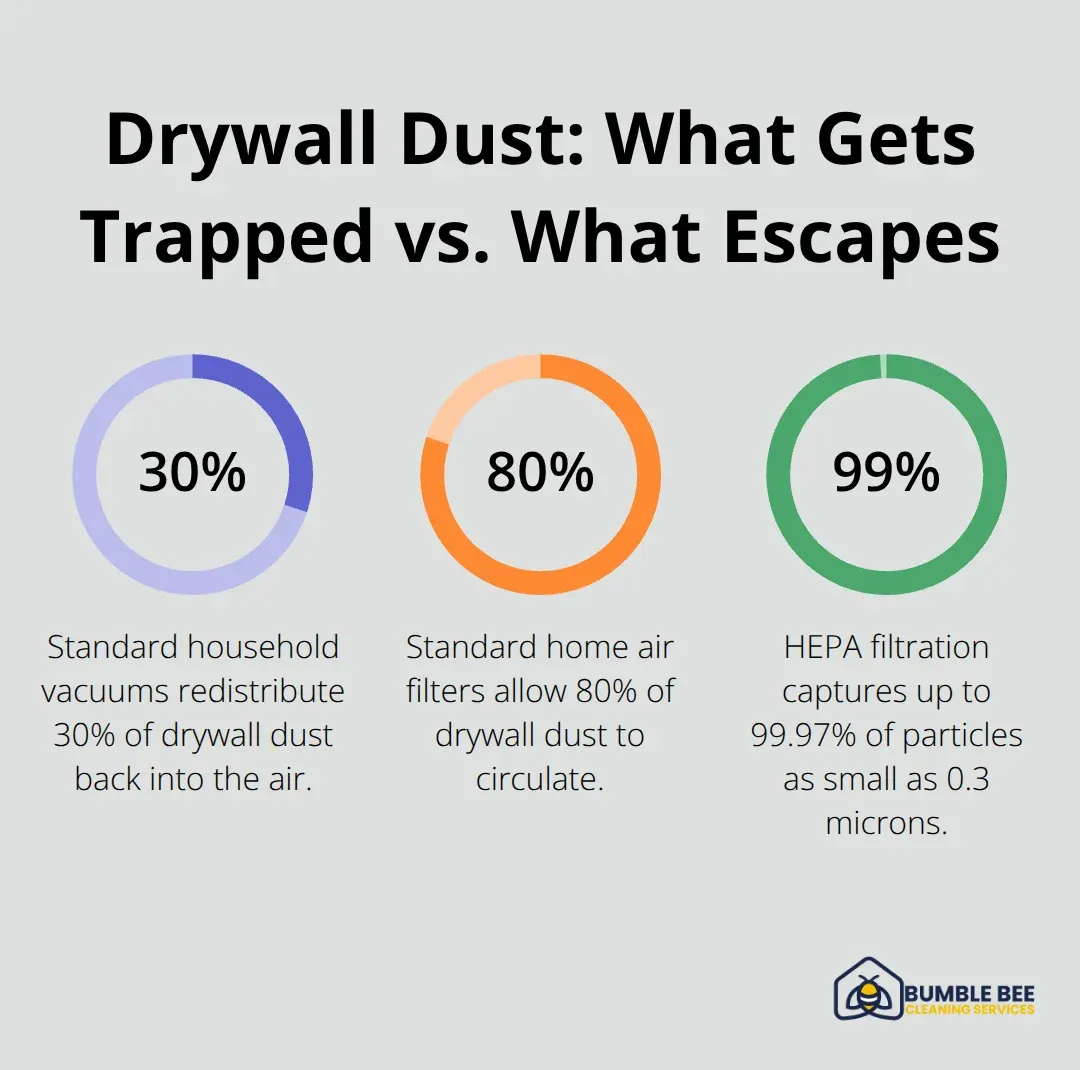
Drywall dust particles measure between 0.5 and 100 microns, which makes them 50 times smaller than the width of human hair. These microscopic particles become electrostatically charged during sanding, which causes them to cling to surfaces and resist traditional cleaning methods. Standard household vacuums lack HEPA filtration and actually redistribute 30% of these particles back into the air. Particles under 10 microns penetrate deep into lung tissue, while those under 2.5 microns enter the bloodstream directly.
Health Impacts You Cannot Ignore
Prolonged exposure to construction dust triggers respiratory inflammation within 24 hours, according to Occupational Safety and Health Administration studies. Workers exposed to gypsum dust show increased rates of asthma development, with symptoms that appear 3-6 months after initial exposure. Children face heightened risks because their respiratory systems process 50% more air per pound of body weight than adults. Drywall dust contains crystalline silica, which OSHA classifies as a lung carcinogen when exposure exceeds 50 micrograms per cubic meter over an 8-hour period.
How Dust Spreads Through Your Home
Air currents carry drywall particles through HVAC systems and deposit them in rooms 200 feet away from the original work site. Doors that open create pressure differentials that push dust into adjacent spaces within minutes. Homeowners discover dust on kitchen countertops three floors above basement renovation projects. Standard home air filters capture only particles larger than 10 microns (allowing 80% of drywall dust to circulate freely). Carpet fibers trap particles for months and release them each time someone walks across the surface.
Why Standard Cleaning Methods Fail
Regular cleaning tools push drywall dust around rather than remove it completely. Feather dusters and regular vacuums redistribute particles rather than capturing them effectively. Mops spread wet dust into streaks that dry and leave residue behind. Even high-end vacuum cleaners without proper filtration blow fine particles through their exhaust systems. This explains why you need specialized equipment and techniques to tackle this persistent problem effectively.
What Equipment Do You Need for Effective Drywall Dust Removal
Professional-Grade Vacuum Systems and HEPA Filtration
Shop vacuums with drywall-specific filters capture particles as small as 0.3 microns with 99.97% efficiency, while standard home vacuums miss 80% of construction dust. The Festool CT 36 and Ridgid WD1450 models feature dual-stage filtration systems that protect motors from fine particle damage. HEPA-rated air purifiers like the Honeywell HPA300 process 300 cubic feet of air per minute and need filter replacement every 3-4 months during active dust removal. Wet-dry vacuums with cyclonic separation technology prevent filter clogs that reduce suction power by 60% in standard models.
Surface Protection and Containment Strategies
Plastic sheeting rated at 6 mil thickness creates effective barriers that stop dust migration to clean areas. Painter’s tape with low-tack adhesive protects delicate surfaces without leaving residue on painted walls or finished wood. Professional contractors use zippered doorway systems that maintain negative air pressure in work zones. Furniture covers made from anti-static materials prevent dust attraction, while cardboard floor protection absorbs moisture from damp methods.
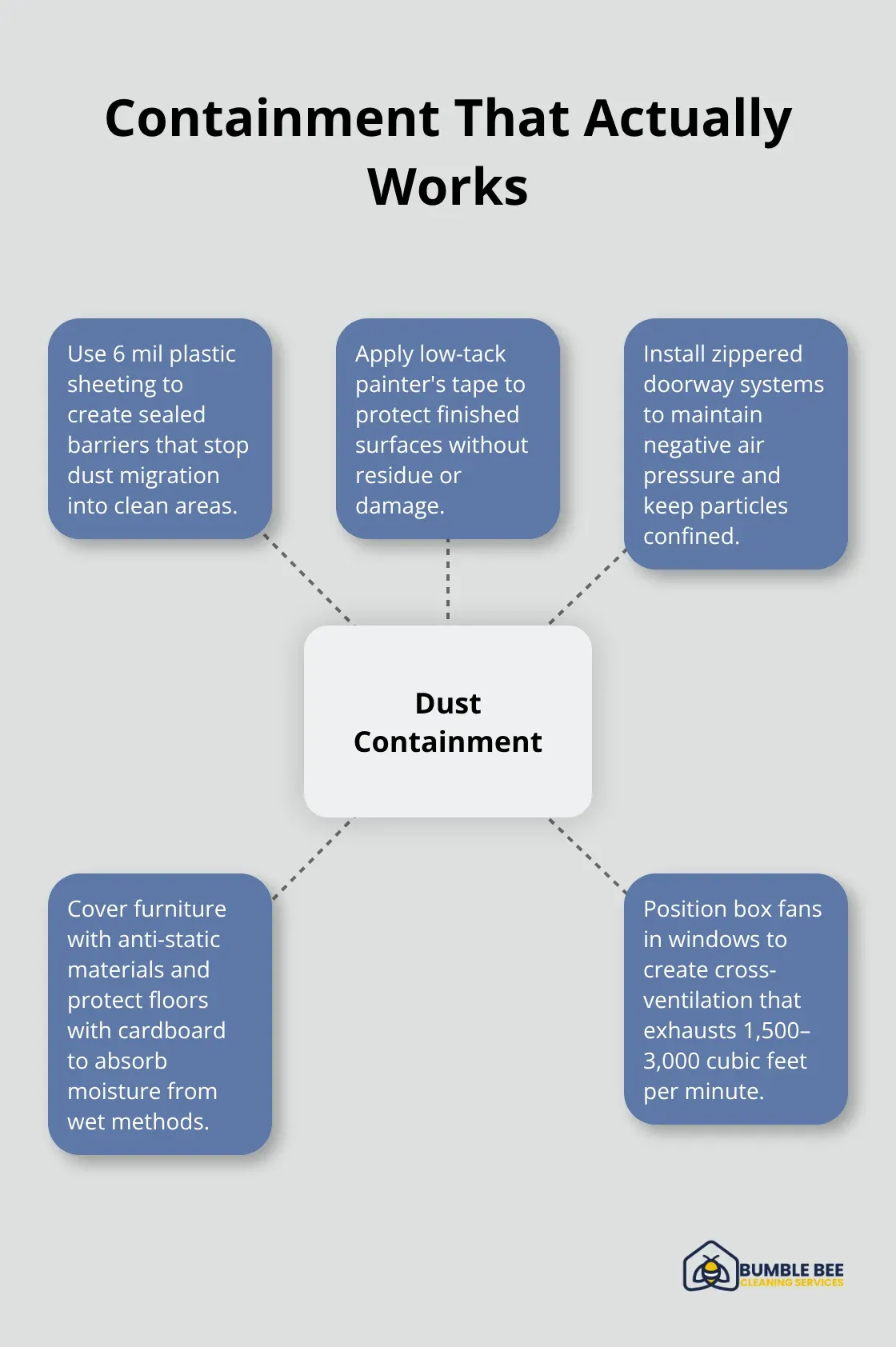
Strategic placement of box fans in windows creates cross-ventilation that exhausts airborne particles at rates of 1,500-3,000 cubic feet per minute.
Safety Equipment and Respiratory Protection
N95 respirators filter 95% of particles larger than 0.3 microns, but P100 masks provide superior protection against construction dust with 99.97% filtration efficiency. Safety glasses with wraparound designs prevent eye irritation from airborne particles (which cause corneal scratches in 25% of unprotected workers). Disposable coveralls eliminate the transfer of contaminated clothes to clean areas of your home. Nitrile gloves resist punctures from sharp debris while maintaining dexterity for detailed tasks. Work boots with non-slip soles prevent falls on dust-covered surfaces that increase slip risks by 300% compared to clean floors.
Specialized Tools for Different Surfaces
Microfiber cloths trap particles through electrostatic attraction rather than just pushing dust around like cotton rags do. Damp sponges control dust when you clean surfaces before paint application (wet methods prove more effective than dry techniques for drywall dust). Wall cleaners like Zep Wall Cleaner tackle stubborn residue when you follow manufacturer instructions carefully. Electrostatic dusters attract charged particles without chemicals, making them perfect for electronics and delicate finishes.
Once you have assembled your equipment arsenal, the next step involves implementing a systematic approach that addresses every surface in your home methodically.
How Do You Clean Drywall Dust Room by Room
Turn Off HVAC and Start from the Top
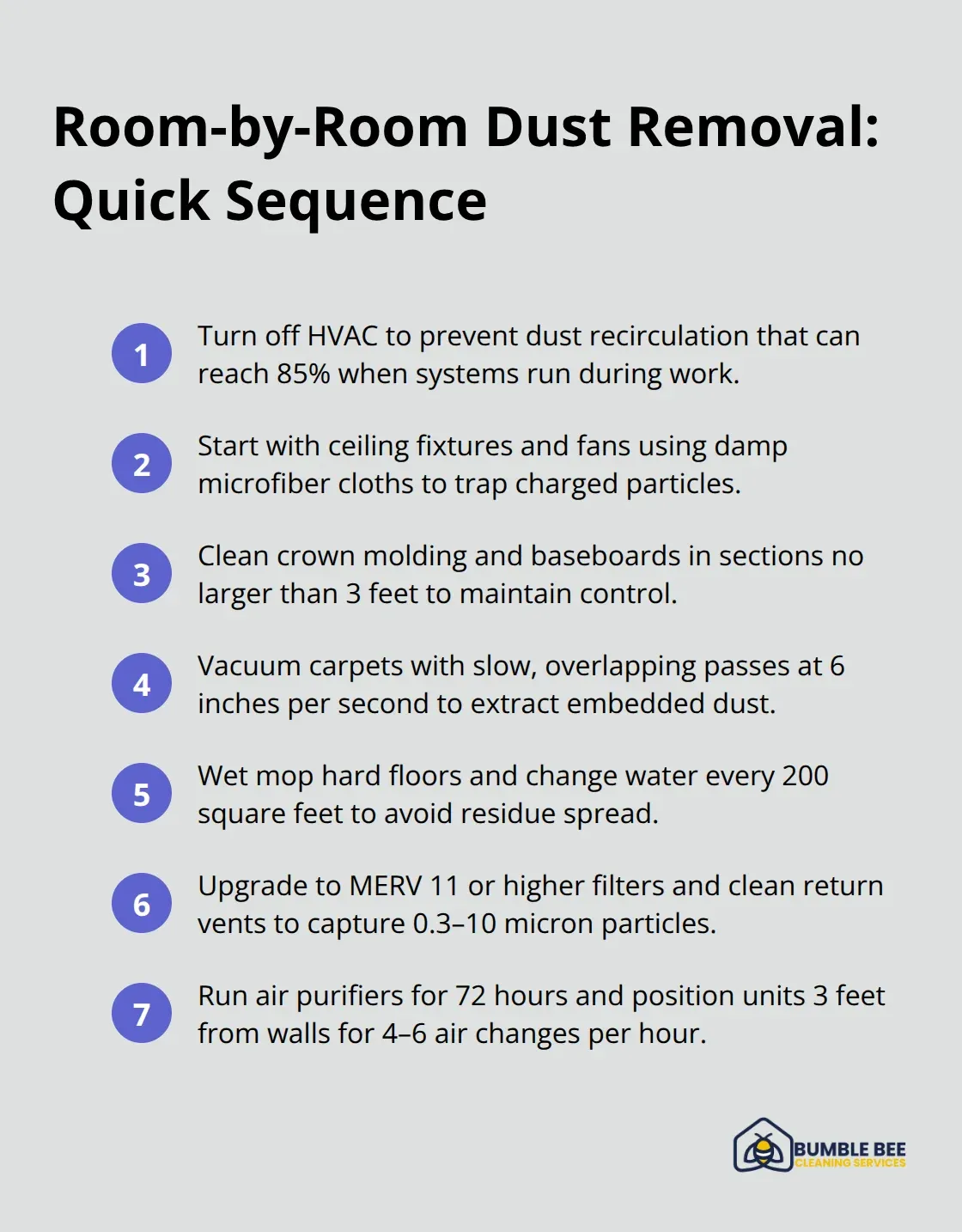
Turn off your HVAC system completely before you begin any dust removal work to prevent particle circulation throughout your home. Air systems redistribute 85% of disturbed dust when they run during operations. Start with ceiling fixtures and fans using damp microfiber cloths that trap electrostatically charged particles instead of dispersing them. Clean crown molding and baseboards with slightly dampened sponges, working in sections no larger than 3 feet to maintain control over dust levels.
Attack Carpets and Hard Floors Systematically
Vacuum carpets using slow, overlapping passes at 6 inches per second, which allows HEPA filters to capture 95% more particles than quick passes. The slow speed gives your vacuum time to pull embedded dust from carpet fibers that settle deep after construction work. Hard floors require wet mopping with clean water that you change every 200 square feet to prevent dust residue spread. Mop in straight lines rather than circular motions (which redistribute particles you just removed).
Target HVAC Systems for Long-Term Air Quality
Replace all HVAC filters with MERV 11 or higher ratings that capture particles between 0.3 and 10 microns. Standard fiberglass filters miss 70% of construction dust particles, while pleated filters with electrostatic properties remove 90% of airborne contaminants. Clean return air vents with vacuum attachments followed by damp cloth wiping to remove accumulated particles that recirculate through your home. Professional duct cleaning becomes necessary when visible dust accumulates on supply registers or when family members experience respiratory irritation lasting more than 48 hours after construction completion.
Deploy Air Purifiers for Maximum Particle Removal
Run air purifiers continuously for 72 hours after dust removal, positioning units 3 feet from walls for optimal air circulation patterns that process room air 4-6 times per hour. HEPA filters can remove up to 99.97% of airborne particulates down to 0.3 microns in size. Place purifiers in rooms where you spend the most time first, then move them to secondary areas. Change HEPA filters every 30 days during active dust removal periods (compared to the standard 90-day replacement schedule for normal use).
Final Thoughts
Drywall dust removal demands systematic planning and proper equipment to protect your family’s health. HEPA filtration systems capture 99.97% of particles while standard vacuums redistribute 30% back into your air. The key steps include turning off HVAC systems, working from top to bottom, and running air purifiers for 72 hours after cleanup.
Professional services become necessary when drywall dust covers areas larger than 1,000 square feet or when family members experience respiratory symptoms lasting more than 48 hours. We at Bumble Bee Cleaning Services handle post-construction cleanup with specialized equipment that homeowners typically lack. Our team addresses every surface methodically to eliminate persistent particles that standard methods miss.
Long-term dust prevention starts with sealing work areas during future projects and changing HVAC filters monthly instead of quarterly (rather than the standard quarterly schedule). Replace standard filters with MERV 11 ratings that capture particles between 0.3 and 10 microns. For comprehensive post-construction cleaning services that eliminate every trace of construction debris, contact our certified team for a thorough assessment of your Seattle home’s specific needs.
