
Industrial facilities in Seattle face unique cleaning demands that standard janitorial services simply can’t handle. Grease buildup, chemical residue, and construction debris require specialized expertise and equipment.
We at Bumble Bee Cleaning Services understand what it takes to maintain industrial spaces properly. This guide walks you through the challenges, solutions, and how to find a partner who gets the job done right.
What Makes Industrial Cleaning in Seattle So Demanding
Common Contaminants in Industrial Facilities
Industrial facilities across Seattle deal with contaminants that go far beyond dust and surface dirt. Grease accumulates on machinery, oil residues coat floors, chemical spills stain surfaces, welding slag scatters across work areas, and construction debris litters spaces. These contaminants don’t respond to standard office cleaning protocols. Grease buildup on equipment reduces operational efficiency and creates fire hazards. Chemical residue corrodes machinery and contaminates finished products. Construction dust contains particles as small as 0.3 microns that standard vacuums miss entirely.
Seattle’s Climate Amplifies Industrial Cleaning Challenges
Seattle’s wet climate compounds these problems significantly. The region’s frequent rain and high humidity cause mud, moisture, and mineral deposits to accumulate faster than in drier climates. Concrete floors absorb water, creating slip hazards and promoting mold growth. Metal surfaces oxidize more rapidly in humid conditions. Drying times after cleaning stretch longer, which disrupts production schedules if proper equipment isn’t deployed. Industrial facilities need specialized approaches that address both the type of contamination and Seattle’s environmental conditions.
Why Generic Cleaning Falls Apart on Industrial Sites
Standard commercial cleaning methods fail in industrial settings because they lack the right equipment, expertise, and safety protocols. A typical office vacuum with HEPA filtration captures particles down to 0.3 microns, but industrial dust often contains finer particles and heavier debris that require specialized equipment. Pressure washers, industrial floor scrubbers, and HEPA-rated shop vacuums become non-negotiable for heavy-duty jobs.
Generic cleaners also ignore the compliance layer that industrial facilities must maintain. OSHA standards require documented cleaning schedules, proper handling of hazardous materials, and worker safety training that most janitorial services don’t provide. The 2023 rate of fatal work injuries for all industries was 3.5 deaths per 100,000 full-time workers, with slip-and-fall hazards accounting for significant incidents. Industrial facilities that skip proper cleaning protocols expose workers to preventable injuries and face potential fines.
Compliance and Documentation Requirements
Seattle facilities must comply with Washington state-specific regulations that go beyond federal OSHA minimums. Post-construction cleanup demands a three-phase approach: rough debris removal, light dusting, and final deep cleaning.
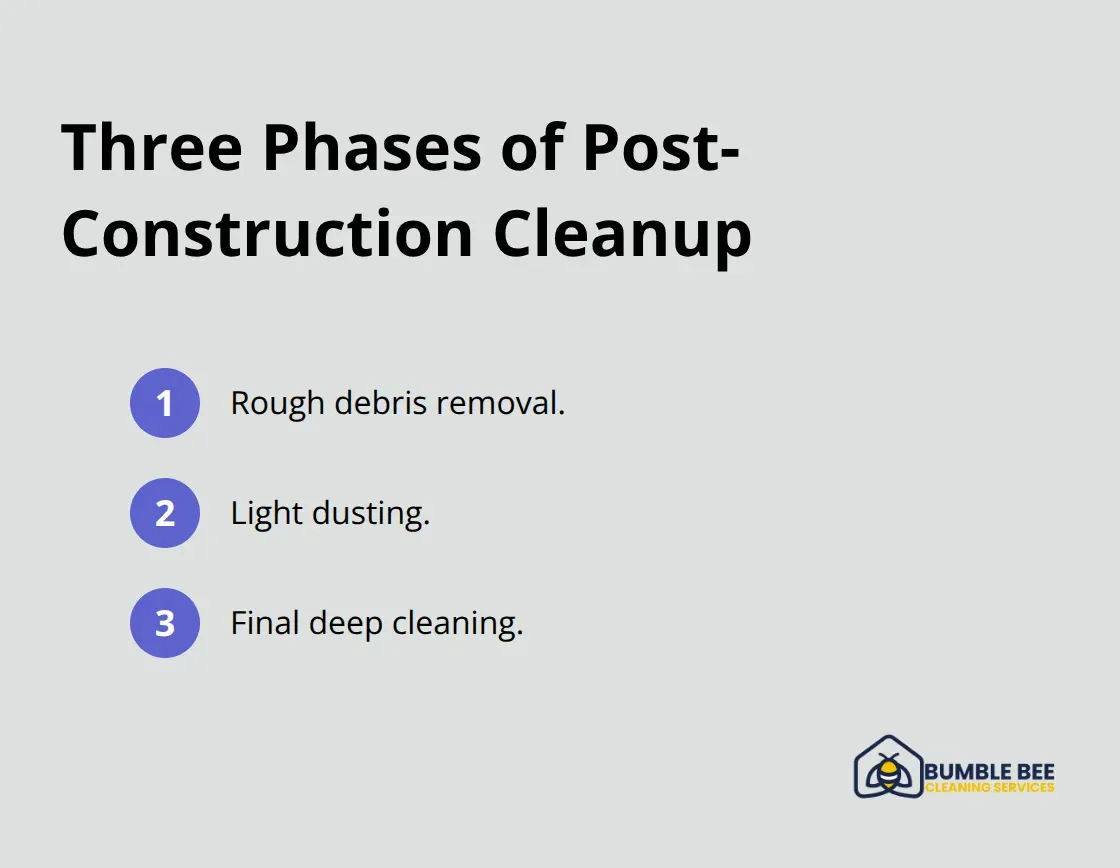
Rushing through these phases or using inadequate equipment leaves fine particles that compromise air quality and create operational problems. Industrial cleaning requires a partner who understands equipment safety, material-specific cleaning agents, and the documentation needed for regulatory audits. This foundation of compliance and precision sets the stage for selecting the right cleaning partner who can handle your facility’s specific needs.
How Industrial Cleaning Gets Done Right
Industrial-Grade Equipment Makes the Difference
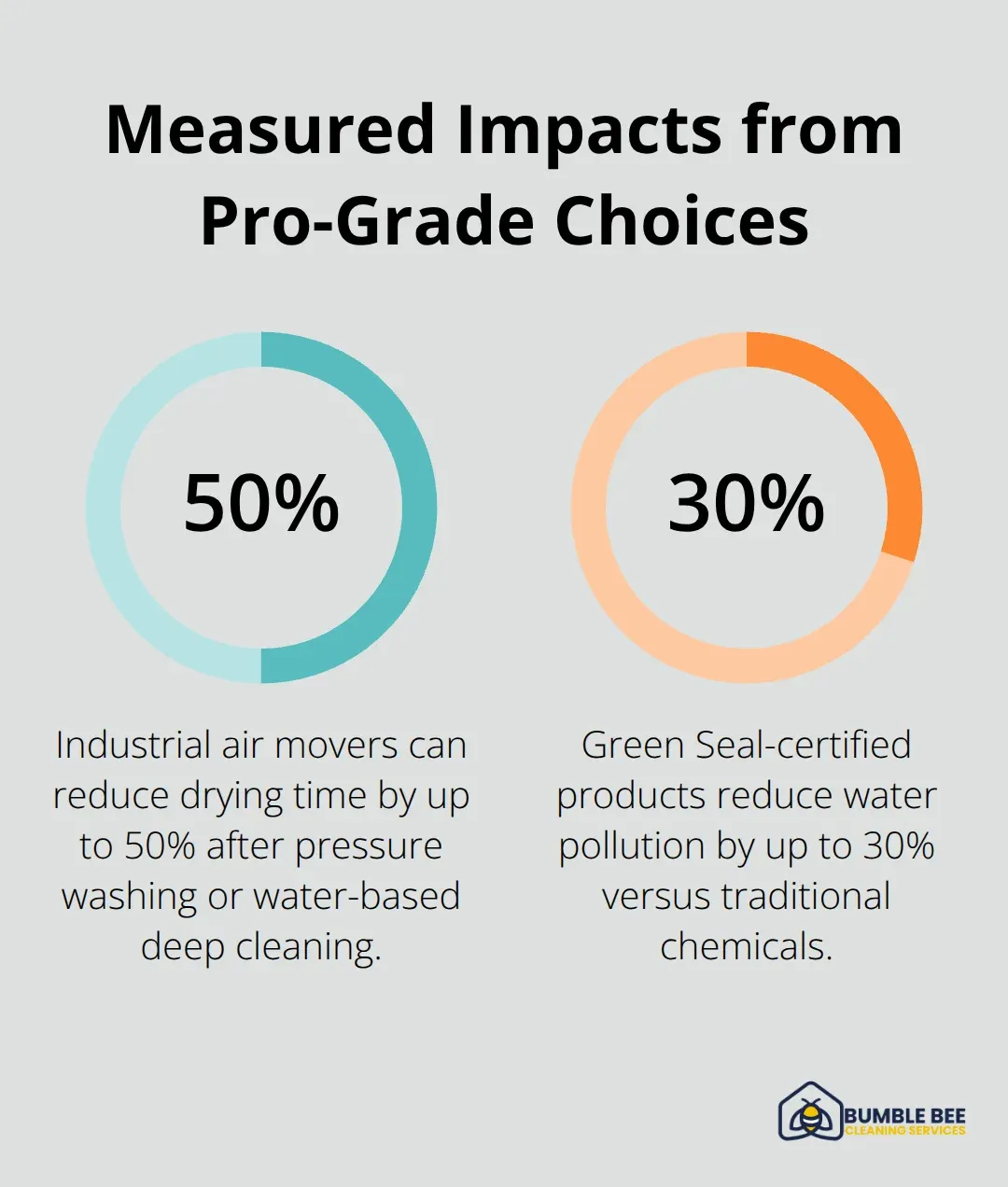
Heavy-duty industrial cleaning demands equipment that standard janitorial services simply don’t own. Industrial-grade floor scrubbers with planetary heads strip grease from concrete faster than push brooms ever could. HEPA-filtered shop vacuums capture particles as small as 0.3 microns, which matters when construction dust or metal fines contaminate your facility. Pressure washers rated for 3000+ PSI remove stubborn residue from machinery and loading docks without damaging surfaces when operators know the right pressure settings for each material. Air scrubbers with activated carbon filters eliminate odors and particulates that linger after heavy work. Professional post-construction cleanups complete in roughly one-third the time DIY approaches take because teams have the right tools staged and ready. Seattle’s wet climate makes industrial air movers essential too-they reduce drying time by up to 50% after pressure washing or water-based deep cleaning, which keeps production schedules on track.
Maintenance Prevents Equipment Failures
Equipment maintenance matters as much as the tools themselves. Monthly filter changes for high-traffic buildings, pre-use inspections of cords and hoses, and documented maintenance logs prevent breakdowns mid-project. Microfiber cloths need replacement every 3 to 6 months depending on usage to avoid spreading contaminants instead of removing them. A rolling cart system with dedicated compartments for restroom products, general cleaners, and disinfectants speeds tasks and reduces cross-contamination risk.
Safety Protocols Protect Workers and Facilities
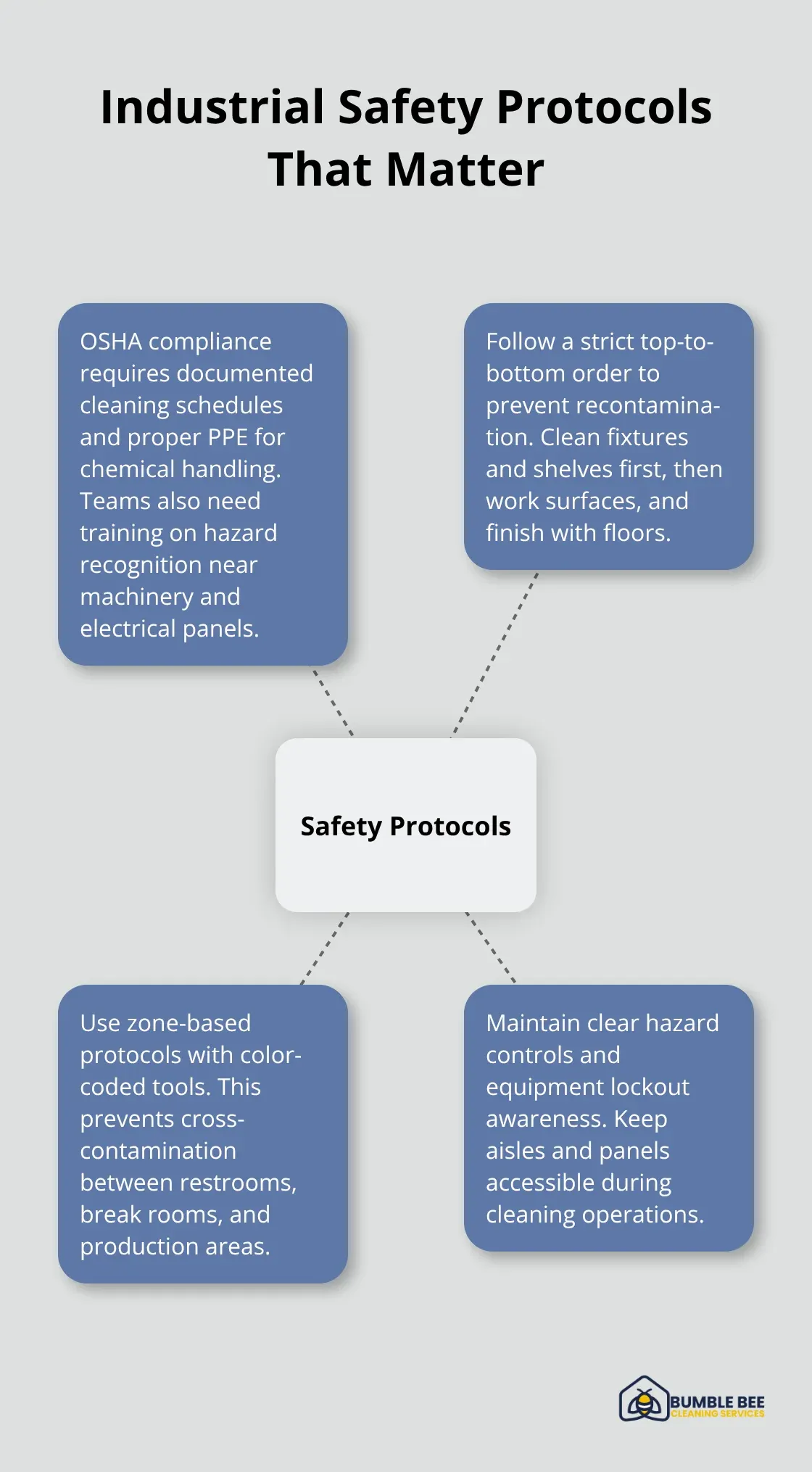
Safety protocols separate professional industrial cleaning from amateur attempts. OSHA requires documented cleaning schedules, proper PPE for chemical handling, and training on hazard recognition around machinery and electrical panels. Professionals follow a top-to-bottom sequence-fixtures and shelves first, then work surfaces, then floors-to prevent recontamination. Zone-based protocols with color-coded tools prevent cross-contamination between restrooms, break rooms, and production areas.
Compliance and Certifications Matter
Post-construction cleanup in Seattle follows three distinct phases: rough debris removal, light dusting, and final deep cleaning. Green Seal-certified products reduce water pollution while meeting EPA registration requirements for disinfection. Teams trained in ANSI-accredited standards like S400 for facility-wide cleaning programs and S410 for infection prevention protocols understand what industrial facilities actually need. Compliance documentation-what was cleaned, by whom, and when-creates accountability and supports regulatory audits. Industrial facilities that invest in proper protocols and trained teams avoid OSHA fines, reduce slip-and-fall injuries, and protect equipment longevity.
Finding a Partner With the Right Credentials
When you select an industrial cleaning partner, verify their certifications and experience with heavy-duty work. Look for teams trained in ARCSI and IICRC standards, which demonstrate commitment to industry best practices. Ask about their equipment inventory, maintenance schedules, and documentation systems before signing any contract. The right partner brings both the tools and the knowledge to handle your facility’s specific contaminants and compliance requirements.
What to Look For in an Industrial Cleaning Partner
Verify Certifications and Industry Standards
Selecting an industrial cleaning partner requires more than checking references. You need to verify certifications, understand their equipment depth, and confirm they operate with eco-conscious practices that align with modern facility standards. When you evaluate any partner, ask directly about their training in S400 (Professional Cleaning, Maintenance, and Restoration of the Commercial Built Environment) and S410 (Professional Cleaning of the Built Environment for Infection Prevention and Control). These standards aren’t theoretical-they define how professionals handle post-construction debris, hazardous materials, and compliance documentation that OSHA auditors review. Partners certified by ARCSI and IICRC follow ANSI-accredited standards for facility-wide cleaning programs and infection prevention protocols.
Inspect Equipment Maintenance Records
Request maintenance logs for equipment like floor scrubbers and HEPA vacuums. If a partner can’t produce documented monthly filter changes and pre-use inspection records, their equipment degrades faster and spreads contaminants instead of removing them. Ask how many industrial projects they’ve completed in Seattle specifically. Regional experience matters because our climate demands different drying protocols than facilities in Arizona or Colorado. A partner who understands that industrial air movers reduce drying time by 50% in our humid environment knows what they’re doing.
Evaluate Eco-Friendly Practices and Documentation
Eco-friendly practices should be non-negotiable, not optional. Green Seal-certified products reduce water pollution by up to 30% compared with traditional chemicals while maintaining EPA registration for effective disinfection. This matters in Seattle where stormwater runoff feeds into Puget Sound. Ask your potential partner which cleaning agents they stock and whether they can provide safety data sheets for every product. Verify they use color-coded tools and zone-based protocols to prevent cross-contamination between restrooms, break rooms, and production areas.
Request Detailed Documentation Systems
Request a sample of their documentation system-what they record about what was cleaned, by whom, and when. This documentation protects your facility during regulatory audits and demonstrates accountability. A partner who quotes a flat rate upfront without understanding your specific contaminants, facility layout, and compliance needs is cutting corners. The right industrial cleaning partner invests time in site assessment, understands your equipment and production schedule, and structures their work to minimize operational disruption.
Demand Customized Protocols Over Generic Checklists
They should offer detailed written protocols tailored to your facility rather than generic checklists they apply everywhere. Site-specific assessment identifies high-risk zones, heavy equipment traffic, and sensitive areas for targeted cleaning. A facility-specific plan concentrates resources where they matter most while minimizing operational disruption. Partners who develop customized approaches demonstrate they understand industrial complexity and won’t treat your facility like a standard office space.
Final Thoughts
Industrial cleaning in Seattle demands precision, the right equipment, and a partner who understands both the technical and compliance layers of heavy-duty work. The contaminants you face-grease, chemical residue, construction debris-won’t disappear with standard janitorial methods. Your facility’s safety, equipment longevity, and regulatory standing depend on professionals who invest in proper protocols, maintain their tools, and document everything.
Professional industrial cleaning protects your investment in multiple ways. Proper maintenance prevents slip-and-fall hazards that cost workers’ compensation claims and OSHA fines. Regular deep cleaning extends equipment life by removing buildup that causes operational failures, while documented cleaning schedules demonstrate compliance during audits and protect your facility from penalties. Seattle’s wet climate makes this even more critical-moisture accelerates corrosion and mold growth, so drying protocols and humidity control become operational necessities.
The right partner brings certifications in ARCSI and IICRC standards, maintains detailed equipment logs, and develops site-specific protocols rather than applying generic checklists to your facility. Contact Bumble Bee Cleaning Services to discuss your industrial cleaning needs across Seattle and receive a quote that reflects the precision your space deserves.
For more information about our cleaning services in Seattle and Atlanta, or to request a cleaning quote, call or text us at 425-786-1360 or email us at info@qbclean.com
