
Construction odor elimination isn’t optional-it’s essential for your team’s comfort and your building’s reputation. The smell of fresh paint, new materials, and dust can linger for weeks, making your space feel incomplete.
We at Bumble Bee Cleaning Services know that standard cleaning won’t cut it after construction wraps up. This guide walks you through proven methods to clear those stubborn odors fast.
What Causes Construction Odors in Commercial Spaces
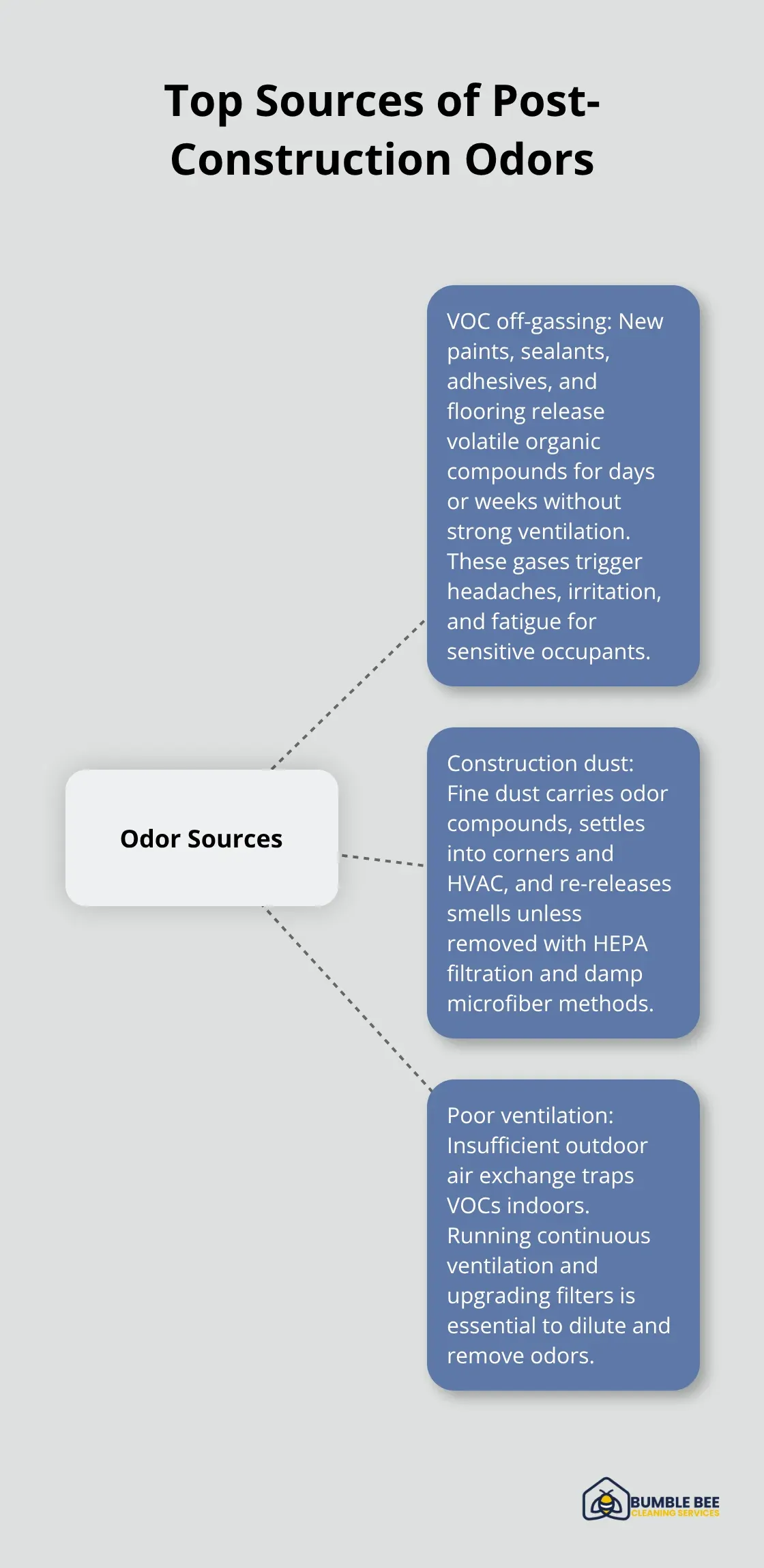
Volatile organic compounds, or VOCs, are the real culprit behind construction odors. Paint, solvents, adhesives, sealants, and flooring materials release these compounds into the air, and the U.S. Environmental Protection Agency confirms they can linger for days or weeks without proper ventilation. Exposure to construction VOCs causes headaches, dizziness, eye and throat irritation, and fatigue, particularly for sensitive occupants. Your team will feel these effects immediately when they return to work, which is why addressing odors isn’t cosmetic-it’s a health issue. New drywall, concrete, and finishing materials continue off-gassing long after construction crews leave, meaning the problem won’t resolve on its own.
Construction Dust Traps Odors and Spreads Contamination
Dust from drywall sanding and concrete work does more than settle on surfaces; it carries odor-causing particles throughout your space. This dust sticks to HVAC systems, clings to walls, and accumulates in corners, creating pockets where smells concentrate and persist. Without HEPA-filter vacuums that capture 99.97% of particles as small as 0.3 microns, standard cleaning equipment misses the fine particles that trap and re-release odors. Seattle’s humid climate makes this worse-moisture causes dust to adhere more stubbornly to surfaces, requiring damp wiping with microfiber cloths rather than dry methods. Inadequate dust removal during the rough-cleaning phase means odors continue cycling through your space for weeks.
Poor Ventilation Locks Odors Inside
Ventilation is the most effective control for odor removal, yet many commercial spaces operate with insufficient air exchange during and after construction. The American Society of Heating, Refrigerating and Air-Conditioning Engineers sets standards through ASHRAE Standard 62.1, which specifies outdoor air requirements for commercial buildings. Most construction sites fail to maintain continuous ventilation while materials off-gas, trapping VOCs indoors. Even after construction ends, many facilities don’t increase outdoor air circulation aggressively enough to dilute odors. Contaminated HVAC filters compound the problem-odors circulate repeatedly through occupied zones when filters aren’t replaced regularly. Your building’s air quality won’t improve until you actively replace HVAC filters with MERV 13 or higher ratings and run continuous ventilation for several days before occupancy.
These three factors-VOC off-gassing, dust accumulation, and weak ventilation-work together to create stubborn odors that standard cleaning alone cannot fix. Understanding what causes the problem is the first step; the next is knowing which methods actually work to eliminate these odors fast.
How to Actually Clear Construction Odors From Your Space
Ventilation alone won’t solve your odor problem-you need aggressive action across multiple fronts. Start by opening every window and door in your facility and running HVAC systems continuously at maximum capacity for at least 48 to 72 hours before occupancy. This isn’t optional; the EPA confirms that increasing outdoor air circulation is the single most effective method to dilute and remove VOCs. Set your thermostat to maintain moderate temperatures between 65 and 72 degrees Fahrenheit, since higher heat accelerates off-gassing from new materials and makes odors worse. Replace all HVAC filters immediately with MERV 13 or higher ratings-standard filters miss the fine particles carrying odor compounds. For large commercial spaces, deploy portable HEPA air scrubbers with activated carbon filters in problem zones; activated carbon absorbs VOCs directly from the air rather than just circulating them. Position these units near the strongest odor sources and run them for 24 hours minimum. The combination of continuous ventilation plus targeted air filtration removes odors far faster than waiting for natural dissipation.
Deep Cleaning Removes Trapped Odor Sources
Surface cleaning after construction is non-negotiable because dust and residue harbor odor-causing particles. Start from the ceiling and work downward to prevent recontamination-remove sealant overspray from ceiling materials first using a plastic scraper and warm water with dish soap, then move to walls and trim. For adhesive residues and stubborn marks, use specialized low-VOC solvents designed for construction cleanup rather than harsh chemicals that introduce new odors into your space. Grout haze on ceramic tiles responds well to white vinegar applied with microfiber cloths; this method avoids the chemical smell that comes with commercial grout cleaners.
HEPA Vacuuming Captures Microscopic Odor Particles
Vacuum all surfaces with HEPA-filter equipment that captures 99.97% of particles down to 0.3 microns-this is the only vacuum standard that prevents fine dust from re-entering the air. For carpeted areas, hot water extraction deeply removes soil and allergens according to the Carpet and Rug Institute, making steam cleaning far superior to dry methods for eliminating trapped odors.
Hard Floors Require Moisture Control
Hard floors need pH-neutral cleaners; acidic or alkaline products can damage new finishes while failing to address odor sources. Damp-mop with microfiber cloths rather than dry methods to trap 99% of dust and bacteria instead of spreading particles. Seattle’s humid climate means you must dry floors thoroughly afterward using industrial air movers to reduce drying time by up to 50%-moisture left behind encourages mold growth that creates new odors.
The number 100% seems to be not appropriate for this chart. Please use a different chart type. Once your surfaces are clean and your air quality improves, professional post-construction cleaning services can handle the remaining work that DIY efforts often miss.
Professional Cleaning Beats DIY After Construction
The Real Cost of DIY Post-Construction Cleanup
DIY post-construction cleanup costs far less upfront than hiring professionals, but this math falls apart quickly when you factor in time, equipment rental, and health risks. Professionals clean up to 3 times faster than the average person due to experience and specialized equipment. A HEPA vacuum rental alone runs around $100 per day, and air scrubbers cost $150–$200 daily, adding up fast for multi-day projects.
Beyond cost, OSHA identifies construction dust as a significant hazard. Without proper respiratory protection and training, DIY cleaners expose themselves to health risks that professionals mitigate through safety protocols and insurance coverage. Professional teams understand material-specific cleaning methods that prevent damage-certain cleaners etch natural stone, and aggressive scrubbing ruins fresh paint finishes.
Why Professional Standards Matter
Professional post-construction cleaning follows the ANSI/IICRC S700 Standard for Professional Fire and Smoke Damage Restoration, which outlines assessment, cleaning, and documentation procedures for odor-prone spaces. This standard matters because it demonstrates adherence to established protocols rather than guesswork. Certified professionals follow industry best practices that DIY approaches cannot replicate, protecting both your space and your team’s health during the transition to occupancy.
The Three-Phase Professional Cleaning Approach
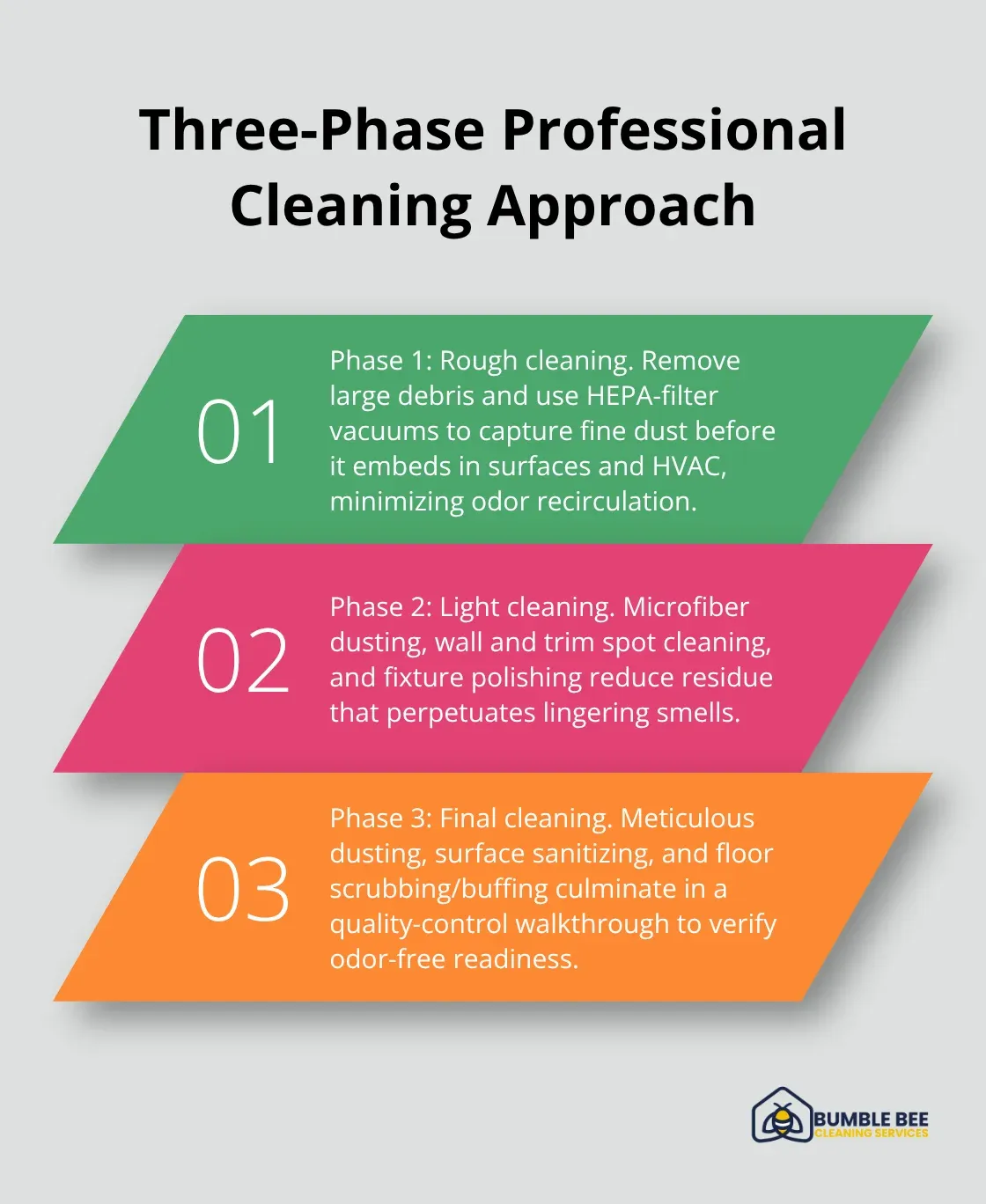
Phase 1 focuses on rough cleaning-removing large debris and using HEPA-filter vacuums to capture fine dust before it embeds deeper into surfaces and HVAC systems. Phase 2 involves light cleaning with microfiber dusting, spot cleaning on walls and trim, and polishing fixtures to reduce lingering smells that surface residue perpetuates. Phase 3 delivers final cleaning with meticulous dusting, surface sanitizing, floor scrubbing and buffing, and a quality-control walk-through to verify odor-free results before you occupy the space.
Advanced Odor Removal Techniques
Professional teams open HVAC vents, replace filters with high-efficiency options, and consider duct cleaning for large projects to prevent odor recirculation through occupied zones. They deploy air scrubbers with activated carbon filters in sensitive areas and use eco-friendly, low-VOC cleaning products plus pH-neutral formulas to eliminate construction smells without introducing new chemical scents that compound the problem. Proper documentation-progress photos, disposal receipts, and quality checklists-supports your project timeline and compliance with local building codes and air quality standards.
Choosing the Right Professional Partner
When selecting a post-construction cleaning service, verify that the company holds certifications from recognized industry associations and maintains insurance coverage. We at Bumble Bee Cleaning Services bring a decade of experience in post-construction cleanup, certified by ARCSI and IICRC, and we use eco-friendly products with a 100% quality service guarantee. Look for providers who offer detailed quotes, clear descriptions of their cleaning process, and references from similar commercial projects in your area.
Final Thoughts
Construction odors typically dissipate within two to four weeks with aggressive ventilation and professional cleaning, though some VOCs can linger longer in poorly ventilated spaces. The timeline depends on your building’s size, ventilation capacity, and how quickly you act after construction ends. Waiting passively for odors to fade on their own wastes weeks of lost productivity and exposes your team to health effects that could have been prevented.
Acting immediately after construction wraps makes the difference between a space ready for occupancy in days versus one that remains unusable for months. Every day you delay allows dust to settle deeper into HVAC systems and materials to continue off-gassing without interruption. Your first step should involve opening windows and running ventilation at maximum capacity while simultaneously scheduling professional post-construction cleaning.
We at Bumble Bee Cleaning Services handle odor elimination for Seattle commercial spaces through our post-construction cleaning service. Our team follows the three-phase professional approach, deploys HEPA equipment and activated carbon filtration, and documents every step to verify results before you move in. Contact us today for a detailed quote on your post-construction cleaning project.
For more information about our cleaning services in Seattle and Atlanta, or to request a cleaning quote, call or text us at 425-786-1360 or email us at info@qbclean.com
